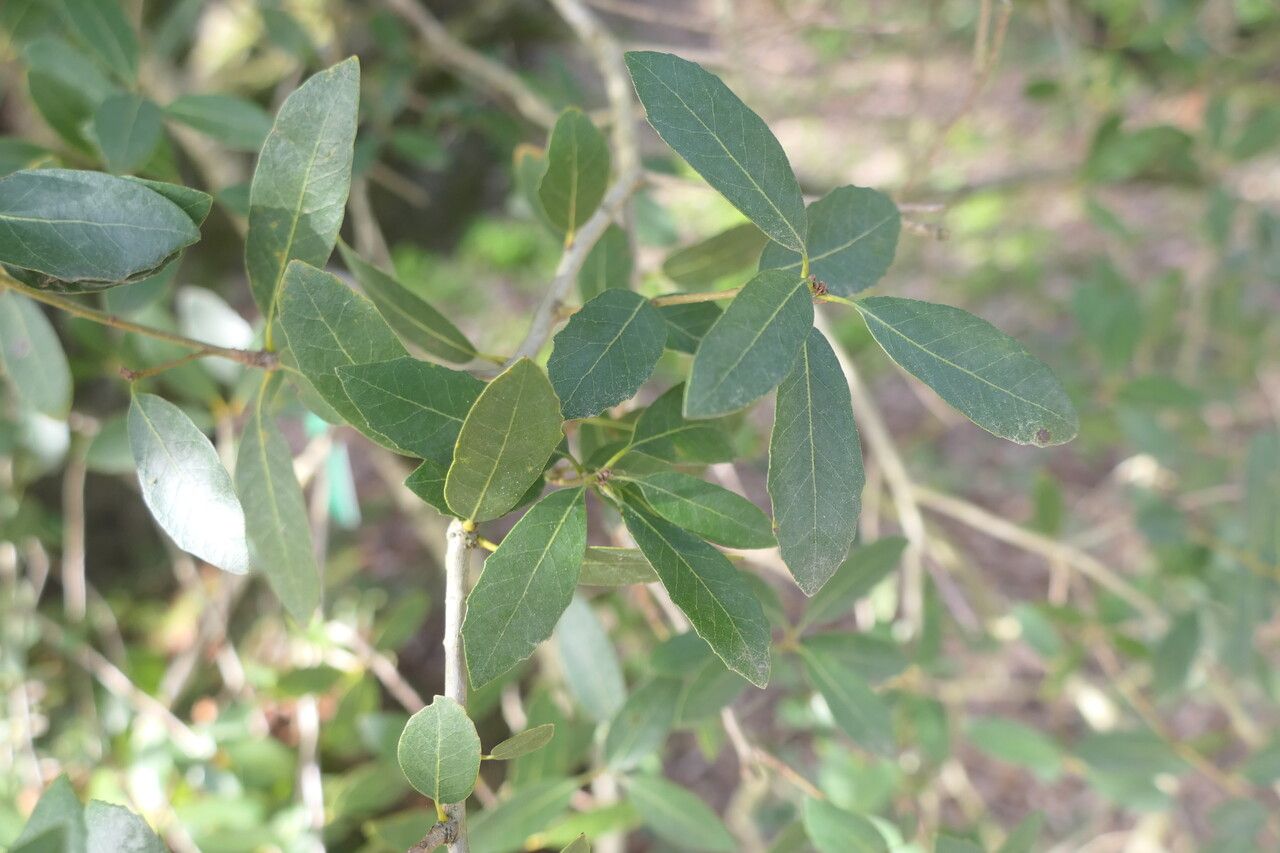
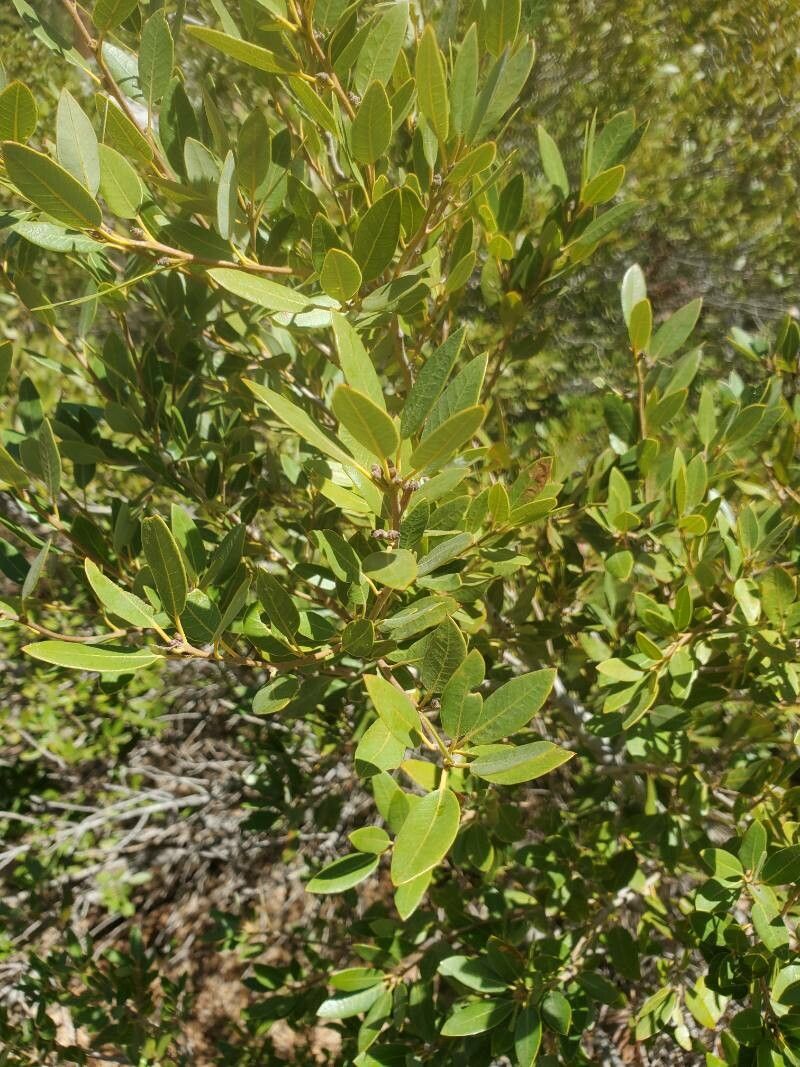
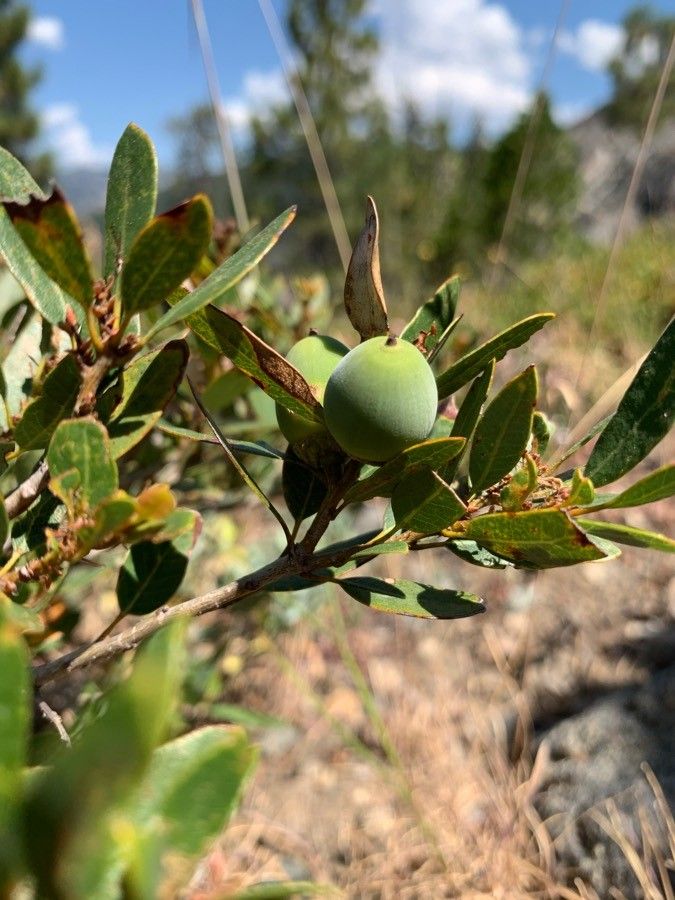
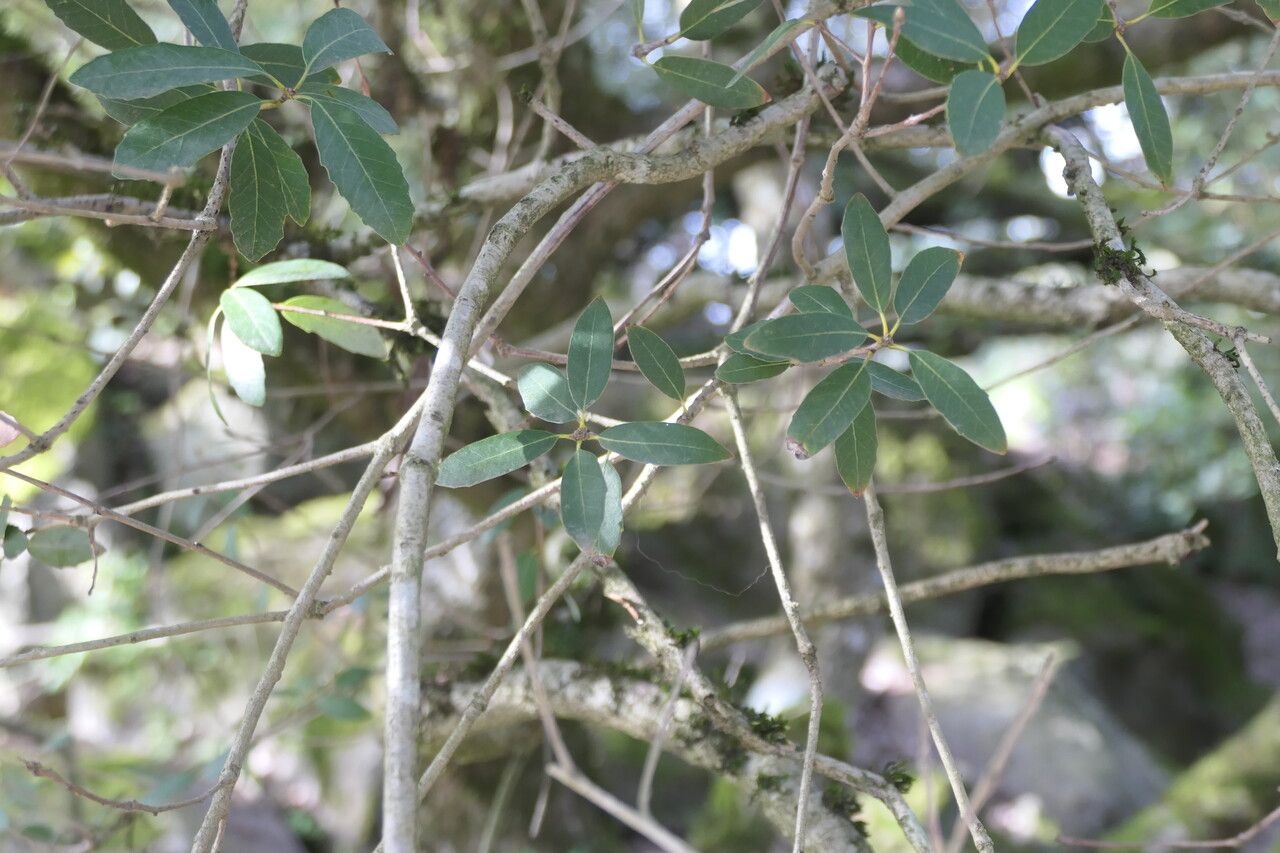
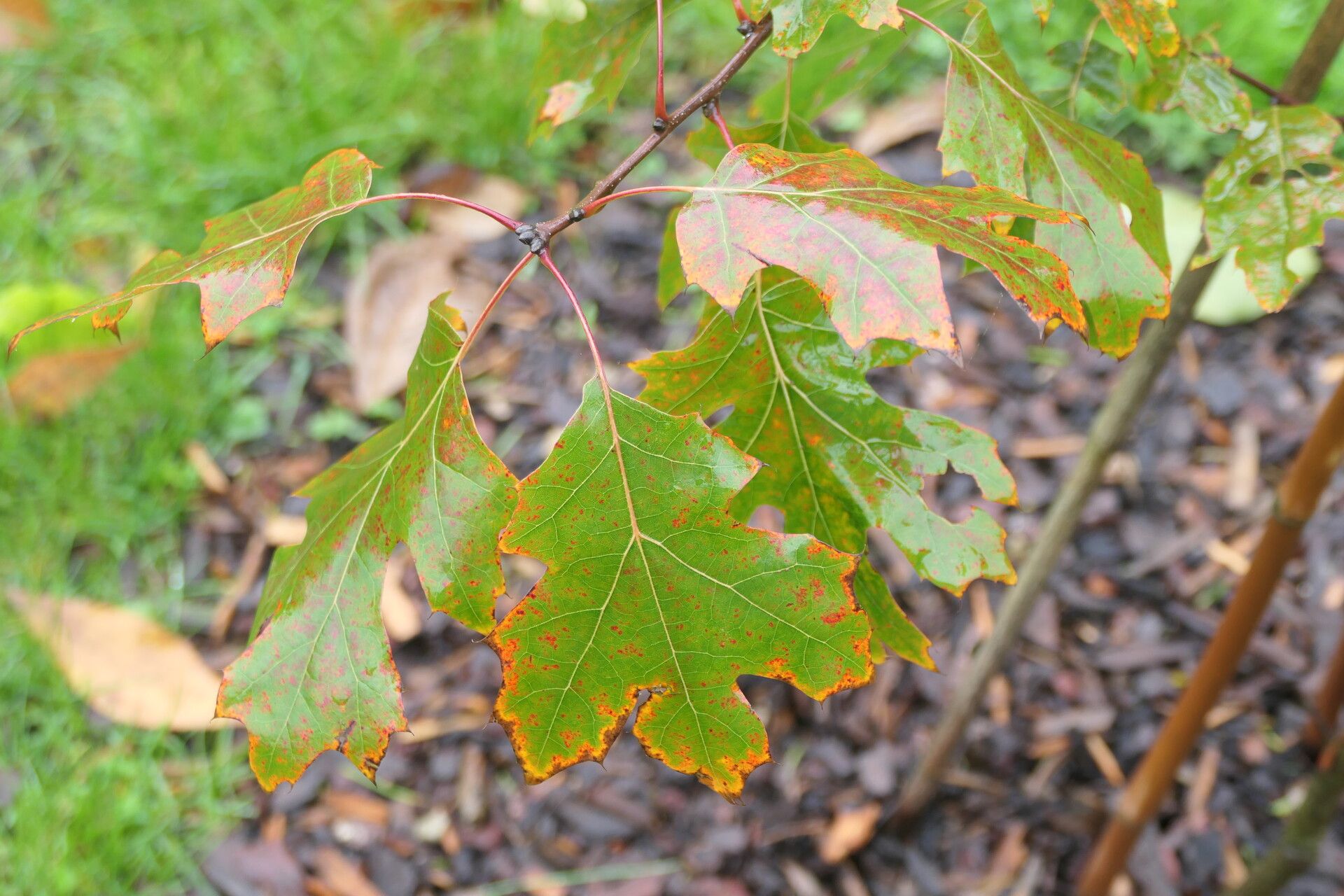
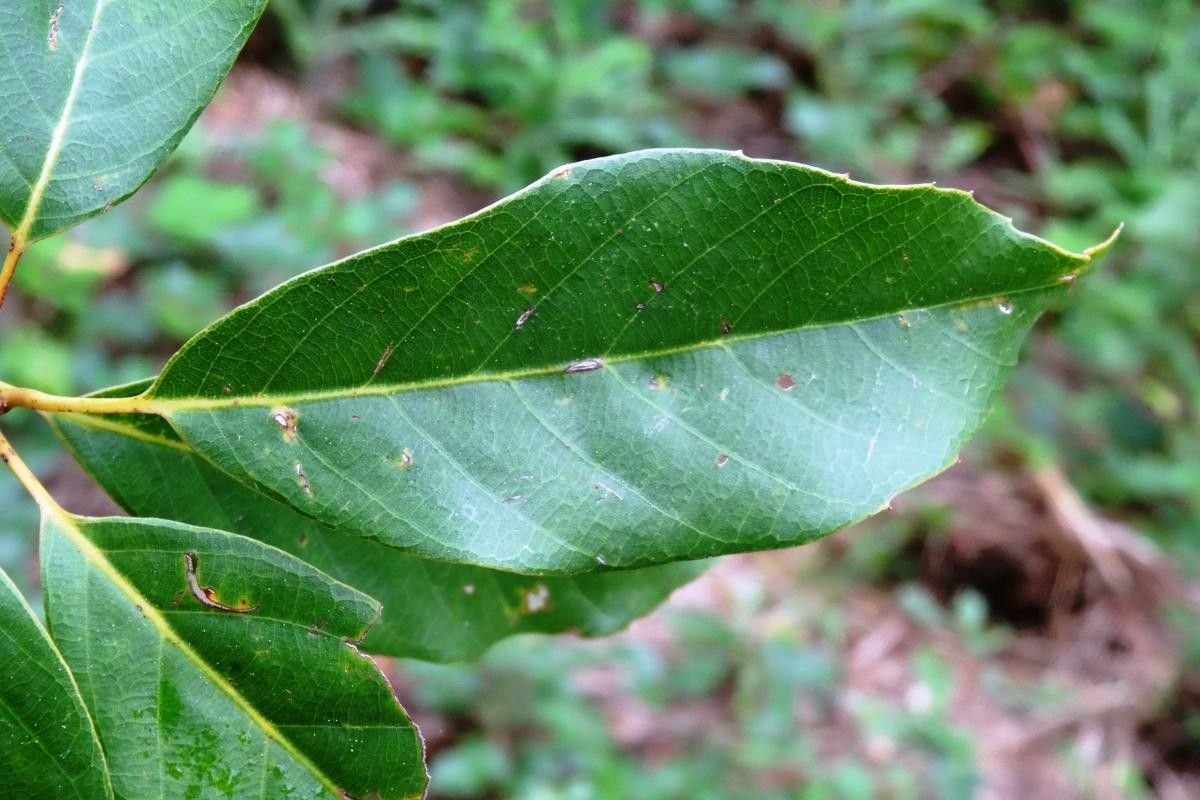
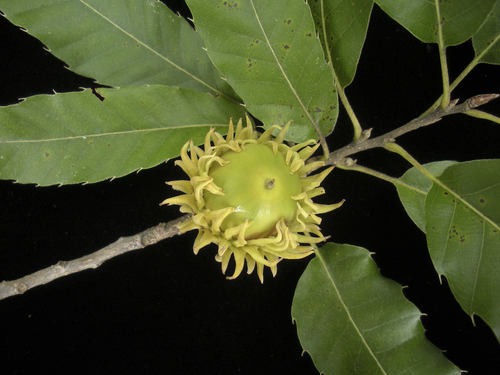
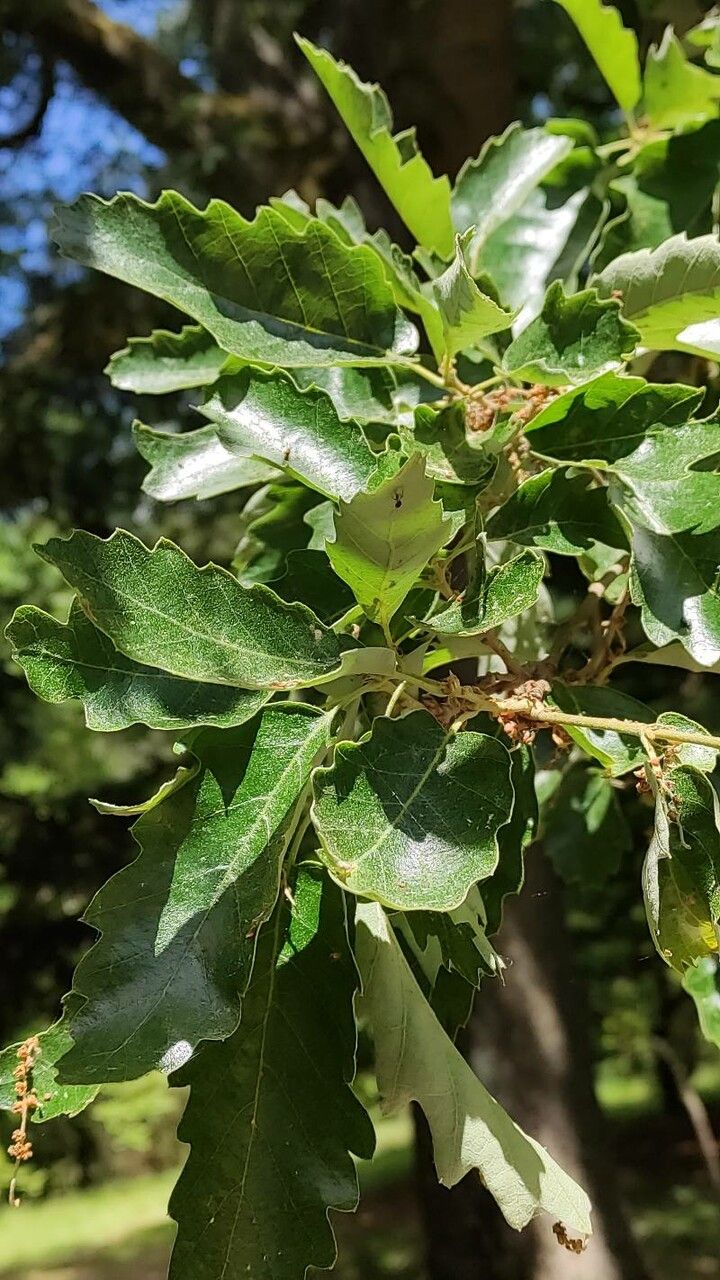
Quercus vacciniifolia (sometimes spelled Q. vaccinifolia), the huckleberry oak, is a member of the Protobalanus section of genus Quercus. It has evergreen foliage, short styles, very bitter acorns that mature in 18 months, and a woolly acorn shell interior.
Huckleberry Oak exhibits good resistance to disease and is generally not susceptible to illnesses. Regarding care, this plant is relatively low-maintenance. When grown outdoors, it requires minimal watering, and larger plants usually do not need pruning. Smaller plants, however, should be pruned after they have bloomed. Huckleberry Oakt is suitable for anyone with an outdoor space, such as a garden or deck, and does not require a lot of care experience.
How to keep Quercus Vacciniifolia.
Light
Huckleberry Oak grows best in settings with plentiful sunlight but also tolerates locations with moderate light. Constant sun supports the oak's continuous growth. Too little sunlight can slow its development, while excessive sun does not cause harm. It originally inhabited areas that were rich in sunlight.
Water
Huckleberry oak naturally comes from dry environments, so it thrives with very little water. It typically needs watering only once every 2 to 3 weeks. Its drought resistance makes it well-suited for outdoor cultivation. However, because it is deciduous, it requires more frequent watering during the growing season to support its growth and leaf production.
Temperature
Huckleberry Oak is native to habitats with temperatures between 32 and 100 °F (0 to 38 ℃). It favors moderate climates, so adjustments may be needed during extreme seasons to keep temperatures within that range.
Fertilizer
Apply fertilizer to your Huckleberry Oak in early spring to encourage healthy growth. Consistent fertilizing improves overall health, leading to robust growth, increased tolerance of adverse conditions, and enhanced resistance to diseases and pests. Keep a set fertilization routine for your Huckleberry Oak to preserve foliage that is vibrant, deeply colored, and lush.
Pruning
The Huckleberry Oak is a resilient shrub known for its dense growth. To maintain its health and appearance, it’s best to prune between early and late winter. During this time, remove dead branches and shape the plant as needed. Light thinning helps improve air circulation and encourages healthy growth, while excessive pruning can stress the shrub. By pruning properly, you can enhance the shrub's structure, aesthetics, and overall vitality.
Botanical profile.
- Plant Type
- Tree
- Life Cycle
- Perennial
- Genus
- Quercus
- Family
- Fagaceae
- Hardiness Zone
- 2-11
- Mature Height
- 1.52 m
- Mature Spread
- 0.3 m to 3.05 m
- Leaf Color
- Dark Green, Olive Drab
- Leaf Type
- Evergreen
- Flower Color
- Yellow, Green
- Bloom Time
- Early summer, Mid summer
- Planting Time
- Autumn, Spring
- Harvest Time
- Late summer, Early fall, Mid fall
Other names.
Reader questions.
What are the sunlight requirements for Huckleberry Oak?
Huckleberry Oak requires abundant sun exposure to thrive, doing well in both full sun (above 6 hours of sunlight) and partial sun (about 3-6 hours of sunlight). Although it is resilient in moderate exposure, insufficient sun can inhibit its growth, while it remains unharmed by excessive sun exposure. It's important to observe your garden's light patterns to ensure the right balance for your plant's needs.
What temperature range is ideal for Huckleberry Oak?
The Huckleberry Oak thrives in environments where temperatures range from 32 to 100°F (0 to 38°C). This plant prefers moderate climates, and maintaining this temperature range might require making adjustments during more extreme seasons. Although the Huckleberry Oak has a strong resistance to cold and usually does not need special frost protection measures in winter, preparations should be made to protect the plant if temperatures are expected to drop significantly below its cold tolerance limit. This protection can involve wrapping the trunk and branches with non-woven fabric or cloth. It's also advised to water the plant thoroughly before the first freeze of autumn to ensure the soil remains moist, which helps prevent drought stress during the winter and early spring months.
How can artificial lighting be used for indoor Huckleberry Oak plants?
Indoor Huckleberry Oak plants may need artificial lighting, especially when natural sunlight is inadequate. LED lights are recommended for their ability to provide specific wavelengths needed by plants. For full sun plants, 30-50W per square foot is ideal; partial sun plants require 20-30W per square foot, and full shade plants need 10-20W per square foot. The light source should be placed 12-36 inches above the plant, mimicking the natural sunlight's intensity and duration (8-12 hours per day) for optimal growth.
How does Huckleberry Oak respond to low temperature, and what measures should be taken?
The Huckleberry Oak is cold-tolerant, flourishing best when temperatures are kept above its minimum suitable growth temperature. Throughout the winter, it's vital to maintain temperatures above its tolerable growing temperature minimum. If temperatures fall below its growth limit, the tree might not show immediate signs of distress in winter, but come spring, the branches may become brittle, dry, and fail to produce new shoots. In response to these symptoms of cold stress, it's recommended to prune away the dead branches in the spring to encourage healthy new growth.
What are the signs of insufficient or excessive sunlight in Huckleberry Oak?
Signs of insufficient sunlight in Huckleberry Oak include smaller new leaves, leggy or sparse growth, faster leaf drop, slower or halted growth, and pale or irregularly colored new leaves. Excessive sunlight can lead to chlorosis (leaves turning yellow), sunscald (pale, bleached areas on leaves), leaf curling, wilting, and leaf scorching (brown, dry patches on leaves). These symptoms indicate the plant's struggle with its light environment and necessitate adjustments in its care.
How does Huckleberry Oak react to high temperatures, and what are the recommended solutions?
During the summer, it's important for the health of the Huckleberry Oak to keep temperatures below its maximum suitable growth threshold. Exceeding its tolerable maximum temperature can lead to the leaves lightening in color, tips drying and becoming withered, and an increased susceptibility to sunburn. To combat these issues, the recommended approach includes trimming away the sunburned and dried parts of the plant. Providing shade during the midday and afternoon sun is crucial, either by relocating the plant or using a shade cloth. Additionally, watering the plant in the morning and evening will help maintain necessary soil moisture.
How can you mitigate sunlight-related issues for Huckleberry Oak plants?
To address insufficient sunlight for indoor Huckleberry Oaks, gradually move them to sunnier spots until they get at least 6 hours of direct sunlight daily, utilizing south-facing windows and keeping curtains open. If moving the plant isn't feasible, consider artificial lighting, keeping lamps on for at least 8 hours daily. For outdoor plants, introduce them to sunnier areas gradually to prevent sunburn. Removing obstructions or transplanting to a brighter location can also help. Note that damaged parts may not recover, but new growth will be healthy with improved light exposure.