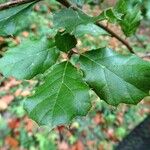
Quercus wislizeni
Sierra live oak · Interior live oak
Description
Source: leafsnapQuercus wislizeni, commonly known as the interior live oak, is a species of oak tree native to California and Arizona in the United States. This tree ranges from medium to large in size, growing up to 80 feet tall, and features a broad, spreading crown. Its leaves are evergreen, leathery, and have wavy, deeply lobed margins. The tree produces large acorns, each with a distinctive cap that covers about one-third of the nut. Quercus wislizeni is significant in its native habitat as it provides essential shelter and food for numerous wildlife species, including birds, squirrels, deer, and bears. Additionally, it holds cultural importance for indigenous peoples who have traditionally used its acorns as a food source. This oak species prefers well-drained soils and can thrive in both full sun and partial shade. Once established, it is drought-tolerant and resistant to oak root fungus, making it an excellent choice for landscaping projects. Overall, Quercus wislizeni is an attractive evergreen tree with cultural significance. It supports important wildlife habitats in its native range and is resilient against common diseases, making it an ideal choice for landscaping projects and restoration efforts in suitable conditions.
🌳 The bark of interior live oak is an important material for the leather industry, supplying high-quality tannins. These organic substances are essential for converting animal hides into leather that is more durable and less biodegradable through a process called tanning. Although the tree is widespread, its tannin-rich bark often goes unused and provides a sustainable alternative to chemical tanning agents.
🎭 Security, Wellness, Finances
Care Guide
💧 Water Every 7 days
Interior live oak thrives in dry habitats thanks to its excellent drought tolerance. It only needs watering every 2-3 weeks. This tree is best grown outdoors, where well-draining soil is crucial to prevent root rot. It also demonstrates adaptability to various climates.
☀️ Light Full sun
The interior live oak comes from environments where sunlight is present throughout the day, which promotes robust growth. The tree thrives with continuous, plentiful light, though it can tolerate reduced sunlight. Both too much and too little light can cause growth problems, such as leaf scorching in the first case or stunted growth in the second.
What are the sunlight requirements for an Interior Live Oak?
Interior Live Oak requires full sun, defined as receiving over 6 hours of sunlight daily, to thrive. However, it can also survive in partial sun conditions, where it receives about 3-6 hours of sunlight. It's essential to observe your garden's light conditions closely to ensure the right balance of light and shade for your plants, optimizing their health and growth.
Why is proper lighting essential for the growth of Interior Live Oak?
Proper lighting is crucial for the growth of Interior Live Oak, which naturally originates from areas with full-day sun exposure. This exposure encourages strong and vigorous growth. Whether under excessive or insufficient light, the tree may face growth challenges such as leaf burns or slow development. Artificial lighting can supplement natural sunlight, especially in less sunny locations or during winter, by providing the necessary light intensity and duration to promote healthier plant growth.
How can indoor plants benefit from artificial lighting?
Indoor plants, including Interior Live Oak, benefit significantly from artificial lighting, particularly when natural sunlight is insufficient. Artificial lights, such as LEDs, can be tailored to offer specific wavelengths needed for optimal plant growth. The recommended intensity is 30-50W/sq ft for full sun plants, 20-30W/sq ft for partial sun plants, and 10-20W/sq ft for full shade plants. Proper placement and duration of artificial lighting, mimicking natural daylight hours, is essential for promoting robust plant growth.
What are the symptoms of light deficiency in Interior Live Oak?
Symptoms of light deficiency in Interior Live Oak include smaller new leaves, leggy or sparse growth, early leaf drop, halted new growth, lighter-colored new leaves, and several conditions resulting from excessive sunlight like chlorosis, sunscald, leaf curling, wilting, and leaf scorching. These symptoms reflect the tree's struggle with inadequate sunlight and its efforts to adapt to suboptimal lighting conditions.
What solutions can help improve light exposure for Interior Live Oaks?
To improve light exposure for Interior Live Oaks, gradually increase sunlight by relocating them closer to light sources weekly until they receive at least 6 hours of direct sunlight if indoors, or find the best outdoor sunlight spot. Utilize artificial light for additional support, place plants by a south-facing window, or consider professional grow lights. For outdoor plants, adapt them to sunlight changes to prevent sunburn. If obstructions limit light, prune surrounding foliage or relocate smaller plants to brighter spots, ensuring proper drainage and maximal light exposure.
🌡️ Temperature 10–35°C
Interior live oak is a plant native to habitats where temperatures typically range from 50 to 95 °F (10 to 35 ℃). It does best when kept within that temperature range. Limit its exposure to extreme heat and cold to promote optimal growth.
What is the native temperature range for Interior Live Oak?
Interior live oak thrives best in environments with a typical temperature range of 50 to 95 °F (10 to 35 °C). It is well-adapted to these conditions, benefiting from moderation in exposure to both extreme hot and cold temperatures for optimal growth.
What are the measures for protecting Interior Live Oak in cold conditions?
Although Interior live oak has strong cold resistance, if winter temperatures are expected to drop below the plant's tolerance threshold, it's important to provide protection. This can include wrapping the trunk and branches with non-woven fabric or cloth and watering the plant abundantly before the first freeze of autumn to keep the soil moist. Such measures help the plant to withstand water scarcity and drought during the winter and early spring.
How does low temperature affect Interior Live Oak and what are the remedial actions?
Interior live oak is cold-tolerant and shows optimal growth above its minimum suitable growth temperature. However, when temperatures drop below the plant's growth limit, branches may become dry and brittle by springtime without new shoots emerging. The solution is to prune any dead branches in spring to promote new growth.
What impact does high temperature have on Interior Live Oak, and how can it be mitigated?
Interior live oak should be kept below its maximum suitable growth temperature during summer. Exceeding the tolerable maximum temperature can lead to lighter leaf color, dry and withered tips, and increased susceptibility to sunburn. Mitigation includes trimming sunburned parts, relocating the plant to a shaded area or using a shade cloth, and watering in the morning and evening to maintain soil moisture.
💨 Humidity
🪴 Soil 6-7
🌱 Fertilizer
Fertilize your Interior live oak in early spring to encourage healthy growth. Regular feeding improves overall health, producing vigorous growth, greater resilience to difficult conditions, and enhanced resistance to pests and diseases. Keep a consistent fertilization schedule for your Interior live oak to preserve foliage that is vibrant, deeply colored, and lush.
🪴 Pot & Repot
✂️ Pruning
Interior live oak thrives when pruned from early to late winter, with an emphasis on removing dead branches and thinning the foliage to enhance airflow. To reduce stress on the tree, avoid heavy pruning in spring and summer. Using clean, sharp tools is essential for making precise cuts, which helps promote plant health and minimizes the risk of disease.
🌿 Propagating
🐛 Diseases & pets
☠️ Toxicity
Characteristics
- Plant Type
- Tree
- Life Cycle
- Perennial
- Genus
- Quercus
- Family
- Fagaceae
- Hardiness Zone
- 6-10
- Mature Height
- 7.62 m to 24.38 m
- Mature Spread
- 10.36 m
- Leaf Color
- Green
- Leaf Type
- Evergreen
- Flower Color
- Yellow, Green
- Bloom Time
- Mid spring, Late spring
- Planting Time
- Autumn, Spring
- Harvest Time
- Mid summer, Late summer, Early fall