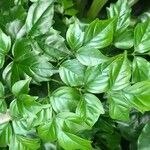
Radermachera sinica
China doll plant · China doll · Emerald tree · China Doll Tree
Description
Source: leafsnapRadermachera sinica, commonly known as the China Doll Plant, is a popular houseplant that belongs to the Bignoniaceae family. Native to Southeast Asia, this plant can grow up to 6 feet tall in its natural habitat. It features glossy, dark green leaves that are pinnate and can reach up to 12 inches in length. The leaves are uniquely arranged in a whorled pattern around the stem. For optimal growth, the China Doll Plant requires bright but indirect light and well-draining soil. It thrives in warm temperatures ranging from 60-75°F (15-24°C) and prefers high humidity levels. While relatively easy to care for, the China Doll Plant needs regular watering as it does not tolerate drought well. However, overwatering should be avoided, as it can lead to root rot. Propagation of Radermachera sinica can be achieved through stem cuttings or air layering during the spring or summer months. In addition to being an attractive houseplant, Radermachera sinica has been used in traditional medicine for its anti-inflammatory properties and its ability to treat respiratory ailments such as asthma and bronchitis. However, it is important to note that ingesting any part of the plant may cause gastrointestinal distress in humans or pets if consumed in large quantities.
🌳 China doll is not only prized for its decorative appeal; it also possesses a latent ability to purify air. Research indicates that indoor plants like china doll can absorb volatile organic compounds (VOCs) and other airborne pollutants. This makes china doll a contender for inclusion in biophilic design and sustainable architecture initiatives aimed at reducing indoor air pollution and creating healthier living environments.
🎭 Life and abundance, peace and the start of new life
Care Guide
💧 Water Every 7 days
The emerald tree flourishes in moderate humidity and can withstand short periods of drought. Water it every 1 to 2 weeks and occasionally mist it to increase humidity. During its active growing season, keeping the soil consistently moist is essential for vibrant foliage and the tree's overall health.
How should I water my Emerald tree?
Watering your Emerald tree is flexible, as it will thrive with different watering tools. You can use common tools like watering cans, hoses, or cups without any issues. When watering, it's best to apply the water directly to the soil, ensuring that all areas receive equal moisture for the entire root system. Filtered water is preferable to tap water, as it may contain harmful particles. Additionally, using water at or slightly above room temperature is preferable to avoid shocking the tree. However, the Emerald tree typically responds well to any type of water it receives.
What should I do if I give my Emerald tree too much or too little water?
Outdoor plants, especially newly planted ones or seedlings, are prone to lack of watering. Remember to water them adequately for a few months while they are small or just planted. Once the roots are established, the Emerald tree can rely on rain most of the time. When your Emerald tree is planted in pots, overwatering is often a common problem. If you accidentally overwater your tree, take immediate action to address the situation. First, stop watering the plant right away to minimize the negative effects. Then, remove the Emerald tree from its pot to inspect its roots. If you find no signs of root rot, you can return it to its container. However, if root rot is present, trim affected roots and consider using a fungicide to prevent further damage. Lastly, repot the tree in well-draining soil. For an underwatered Emerald tree, simply water it more frequently. This is an easy fix, as the leaves will droop, dry out, and fall off when underwatered. Once you provide sufficient watering, the leaves will quickly regain fullness. Correct your watering frequency promptly when underwatering occurs.
How many times a week should I give water to my Emerald tree?
Here are some guidelines to help you determine how often to water your plants: 1. Most outdoor plants can rely on rainfall for their watering needs. However, if your area doesn't get enough rain, you should consider watering your plants every 2 weeks during the spring and fall. In the summer, when plants need more water, you'll need to water them more frequently. In the winter, when plants grow slower and require less water, you can water them sparingly or not at all. 2. If you have a young or newly planted Emerald tree, it's important to water it more often to help it establish and grow into a more adaptable and drought-tolerant plant. 3. For potted plants, there are two main approaches to determine watering frequency. The first is to set a regular watering schedule, such as once a week or once every other week. However, this may not take into account the specific conditions of your Emerald tree's environment. 4. You can also adjust the watering frequency based on the season. During the summer, when water needs are highest, a predetermined schedule may not be enough. Instead, it's best to wait until the top two to four inches of soil in the pots have completely dried out before watering again. By following these guidelines, you can ensure that your Emerald tree and other plants receive adequate water to thrive.
How much water does my Emerald tree require?
To properly water your Emerald tree, remember that it doesn't always require a lot of water. If only a few inches of soil have dried since your last watering, giving it about five to ten ounces of water each time will promote healthy growth. You can also gauge the water volume based on the moisture in the soil. Keep track of how many inches of soil have dried out between waterings. To ensure the tree receives enough moisture, water it until all the dry soil layers from the previous watering are moistened. If over half of the soil is dry, consider increasing the amount of water. In such cases, continue adding water until it begins to drain from the pot's drainage holes. If your Emerald tree is situated in a location that receives ample rainfall, additional watering may not be necessary. For young or newly established trees, aim for 1-2 inches of rain per week. As it matures, the tree can rely solely on the rainwater. Only during hot weather spells without any rainfall for 2-3 weeks, should you offer a full watering to prevent any stress.
How can I know if I'm giving enough water to my Emerald tree?
The Emerald tree is often overwatered, which leads to specific signs. Look for yellowing leaves and possible leaf drop. Overwatering can also cause the plant's structure to shrink and can lead to root rot. On the other hand, an underwatered Emerald tree will also wilt and may have brown or brittle leaves. If you notice signs of overwatering or underwatering, take action to restore your Emerald tree's health.
☀️ Light Partial sun
China doll thrives with moderate sunlight but can tolerate both strong and low light conditions. In its native habitat it is familiar with a range of sun exposures. Too little or too much sunlight can harm it, potentially causing dull leaf color or stunted growth.
What are the sunlight requirements for an Emerald tree?
An Emerald tree thrives under moderate sunlight but is adaptable to a range of light conditions, from intense to minimal exposure. It requires partial sun, defined as about 3-6 hours of sunlight daily, but can also handle full sun or full shade, which equates to more than 6 hours of sunlight per day. It's crucial to observe how sunlight moves through your garden to find the ideal location that offers a balance of light and shade, ensuring the plant's well-being.
How can artificial lighting be used for the Emerald tree?
When natural sunlight is insufficient, artificial lighting becomes crucial for an Emerald tree's growth, especially indoors during winter or in less sunny locations. LED lights are recommended for their ability to provide specific light wavelengths needed by plants. The required intensity of artificial light varies with the plant's sunlight needs: 30-50W/sq ft for full sun plants, 20-30W/sq ft for partial sun plants, and 10-20W/sq ft for full shade plants. The artificial light source should be positioned 12-36 inches above the plant, and the duration should mimic natural daylight hours, typically around 8-12 hours per day.
What are some symptoms of light deficiency in an Emerald tree?
Symptoms of light deficiency in an Emerald tree include faster leaf drop, slower or no new growth, leggy or sparse growth, small leaves, chlorosis (yellowing leaves due to a breakdown of chlorophyll), sunscald (damaged leaves or stems from intense sunlight), leaf curling, wilting, and leaf scorching. These symptoms indicate the plant is not receiving adequate sunlight, affecting its health and growth.
What are some solutions to light deficiency problems in an Emerald tree?
To address light deficiency in an Emerald tree, gradually increase its sun exposure by moving it to sunnier spots each week until it receives 3-6 hours of direct sunlight daily. For large or immobile plants, consider using artificial light for at least 8 hours a day. For outdoor plants, avoid sudden changes in light to prevent sunburn. If sunlight is blocked, prune any branches or leaves causing shade or transplant smaller plants to a sunnier location with good drainage during their dormant period, typically late winter or early spring.
🌡️ Temperature 20–37.8°C
The China doll develops best in its native habitat at temperatures of 68 to 100.4℉ (20 to 38 ℃). It favors steady temperatures and needs occasional adjustments with seasonal shifts to keep temperatures within 64.4 to 100.4℉ (18 to 38℃).
What are the ideal temperature conditions for growing an Emerald tree?
The Emerald tree thrives best in its native environment, ideally requiring a temperature range of 68 to 100.4°F (20 to 38°C) to grow well. It loves heat and does not tolerate cold temperatures well. During seasonal changes, it is necessary to adjust its environment slightly to keep the temperature within 64.4 to 100.4°F (18 to 38°C). To protect the plant from cold, especially in autumn, it is advisable to move outdoor-grown Emerald trees indoors near a bright window but away from direct heat sources. During winter, maintaining temperatures above 20°C is crucial for its growth, and temperatures nearing 5°C can harm the plant.
What should I do if my Emerald tree is exposed to low temperatures?
Emerald trees prefer warm temperatures and struggle in low temperatures. If during winter, the temperature drops below 20°C, or worse, falls below 1°C, the leaves may discolor, turning lighter and eventually browning or blackening as frost damage sets in, accompanied by wilting and drooping. To mitigate frost damage, trim the damaged parts of the plant and move it to a warmer indoor location immediately. Placing the plant near a south-facing window can ensure it receives enough sunlight without the risk of dry air from heaters or air conditioning vents.
How should I care for my Emerald tree during high temperatures?
In the summer, it is important to ensure that the Emerald tree's surrounding temperature does not exceed 100.4°F (38°C). High temperatures above 109.4°F (43°C) can lighten the leaves' color and increase the risk of sunburn. To care for the plant under such conditions, remove any sunburned or dried-up parts and relocate the plant to a cooler area with shade during the intense midday and afternoon sun. Watering the Emerald tree in the morning and evening will help keep the soil moist and further protect the plant from heat stress.
💨 Humidity high (>60%)
This plant needs special care because it loves high humidity levels of 60-80% or more. The best way to achieve this is by placing a humidifier near the plant. Daily misting is also essential! Make sure the room has good ventilation.
🪴 Soil 6-7
🌱 Fertilizer
Fertilizing is essential for caring for a China doll. Regular feeding during the growing season provides energy for its showy leaves and supports overall growth. If fertilization is neglected, leaves can become unhealthy, the plant's ornamental value may decline, and growth can be stunted or weak and prone to breaking.
Why is it necessary to give my Emerald tree fertilizer?
Emerald trees require regular fertilization primarily because their showy leaves demand a substantial amount of energy for production and maintenance. The challenge lies in the fact that these trees must allocate enough energy not only to keep their leaves in excellent condition but also to support the growth of their stems, branches, roots, and other essential structures. If fertilization is neglected, two likely outcomes may occur. Firstly, the leaves of the Emerald tree will gradually lose their natural color and texture, resulting in an overall unhealthy appearance that significantly diminishes its ornamental appeal. Secondly, the growth of the Emerald tree will slow down or produce weak growth that is susceptible to breakage.
When should I fertilize my Emerald tree to make it grow best?
Emerald trees thrive with occasional feedings, eliminating the need for a set feeding schedule upon planting. A simple way to fertilize is by applying it while watering occasionally. Additionally, during the growing season, these trees require frequent waterings. Feeding once every two to three weeks is ideal, especially when the tree is producing new growth.
When should I not put fertilizer on my Emerald tree?
You can maintain a regular fertilization schedule for your Emerald tree throughout most of the year, specifically during the active growing seasons of spring, summer, and early fall. However, it's important to note that during the winter, the Emerald tree enters a dormant growth phase. During this phase, the plant does not put forth much new growth, if any at all. Since the tree is using less energy during this time, fertilization is not necessary.
What kind of fertilizer does my Emerald tree need?
The fertilizer for an Emerald tree contains specific nutrients in low amounts. An ideal fertilizer has an N-P-K ratio of 3-1-2, but a general-purpose fertilizer with a balanced blend can also work well. When using a balanced fertilizer, make sure the ratio for each nutrient is at 3 or lower. You can choose between granular or liquid-based fertilizer. If you opt for liquid, it is best to dilute it by half. Granular fertilizer has minimal downsides, but using liquid fertilizer, especially during watering, is generally more sensible for an Emerald tree.
How can I help you fertilize your Emerald tree?
One way to fertilize an Emerald tree is to feed it every time you water. To do this, you will need fertilizer and a water container, like a watering can. Dilute the fertilizer by mixing it with water. Then, pour the diluted mixture onto the soil and let it soak down to the roots. Another option is to use a granular fertilizer. Simply sprinkle this fertilizer onto the soil where your Emerald tree is planted. Granular fertilizers are slow-release, so you won't have to fertilize as frequently as when using liquid fertilizers. Whichever method you choose, remember to water the tree while you feed it to maximize its benefits.
🪴 Pot & Repot 2-3 years
When repotting a China doll, select a pot 1–2 inches (2.5–5.1 cm) larger with good drainage. Use a well-draining potting mix. Repot in spring or fall, ensuring the root ball sits slightly below the rim of the flower pot. Water thoroughly after repotting and place in a warm spot with indirect sunlight.
✂️ Pruning
The emerald tree benefits from proper pruning during the dormant season, which falls between early and late winter. To keep the tree healthy, remove any dead branches and thin out crowded areas to improve light penetration and airflow. Pruning during this time reduces stress on the tree and encourages vigorous growth in the spring. This practice not only enhances the tree's appearance but also helps reduce the risk of disease.
🌿 Propagating
🐛 Diseases & pets
☠️ Toxicity
Not only do China doll plants offer a stunning display but they are completely non-poisonous. These plants are safe for nearly any household, even with children and pets.
Characteristics
- Plant Type
- Tree
- Life Cycle
- Perennial
- Genus
- Radermachera
- Family
- Bignoniaceae
- Hardiness Zone
- 10-12
- Mature Height
- 14.94 m
- Mature Spread
- 4.57 m to 6.1 m
- Leaf Color
- Green
- Leaf Type
- Evergreen
- Flower Color
- White
- Flower Size
- 30.48 cm
- Bloom Time
- Late spring, Early summer, Mid summer
- Planting Time
- Winter
- Harvest Time
- Mid summer
- Native Area
- India, Vietnam, Myanmar, Bhutan, China