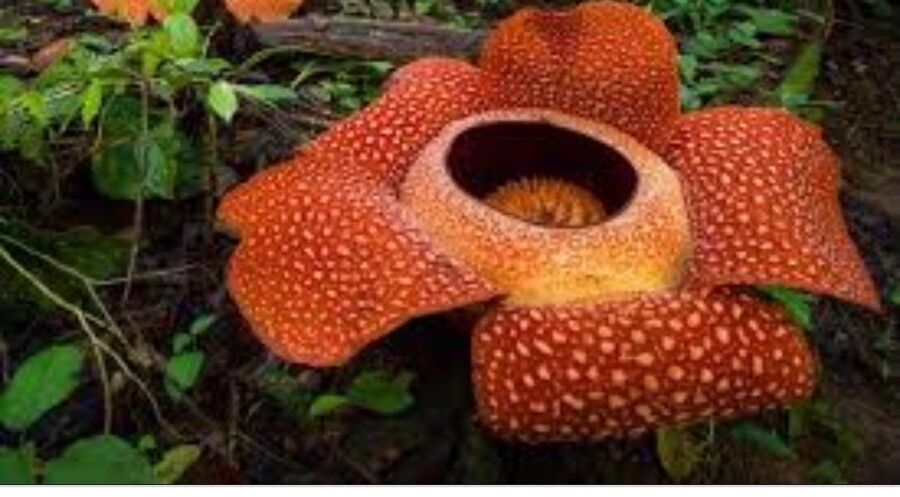
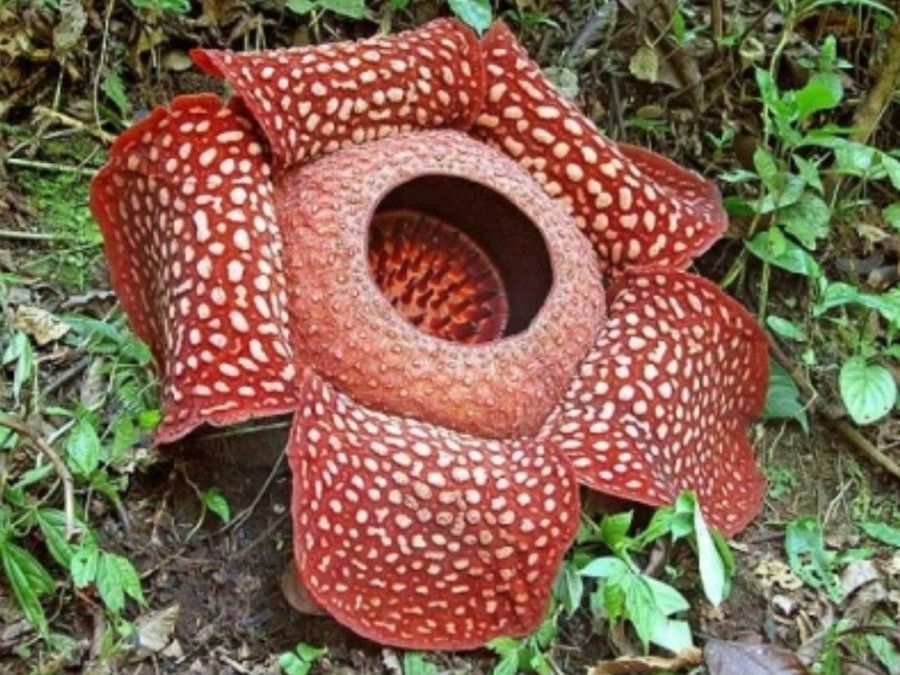
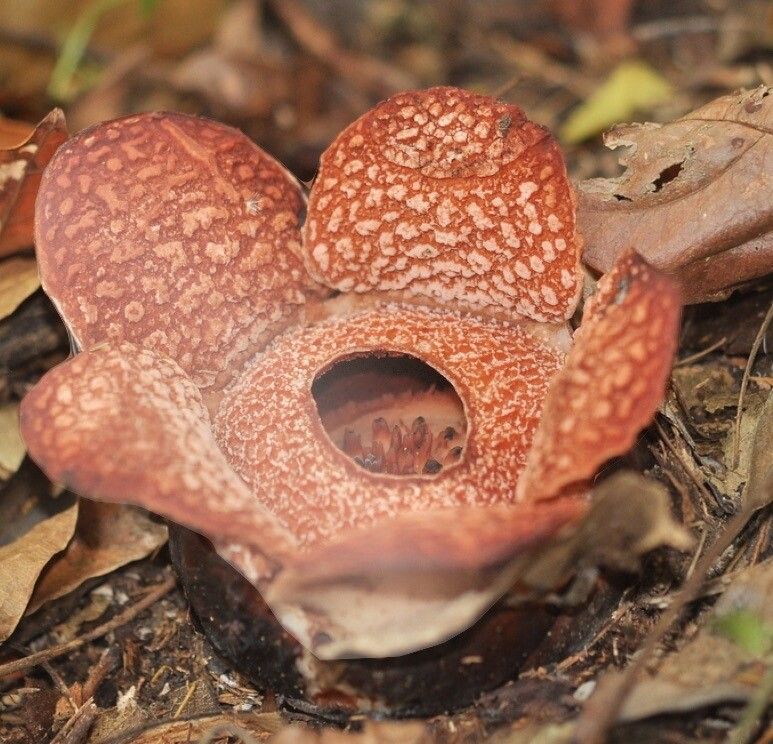
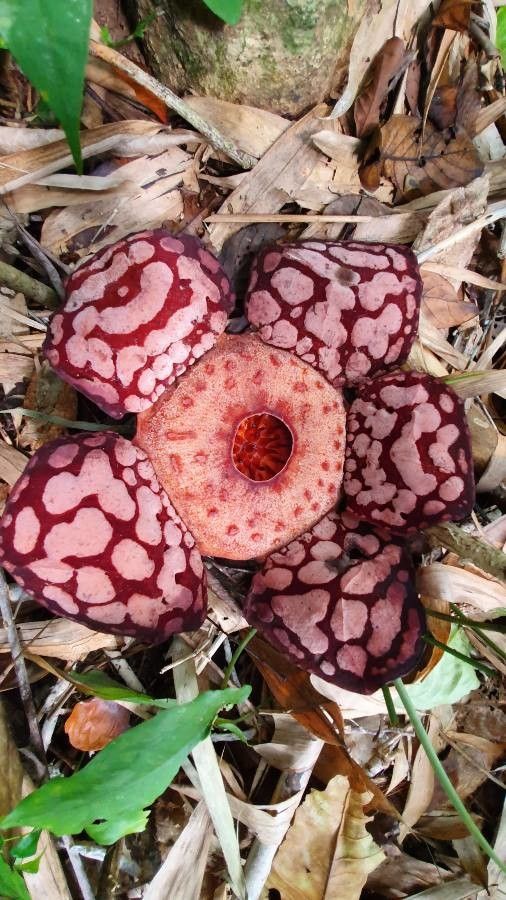
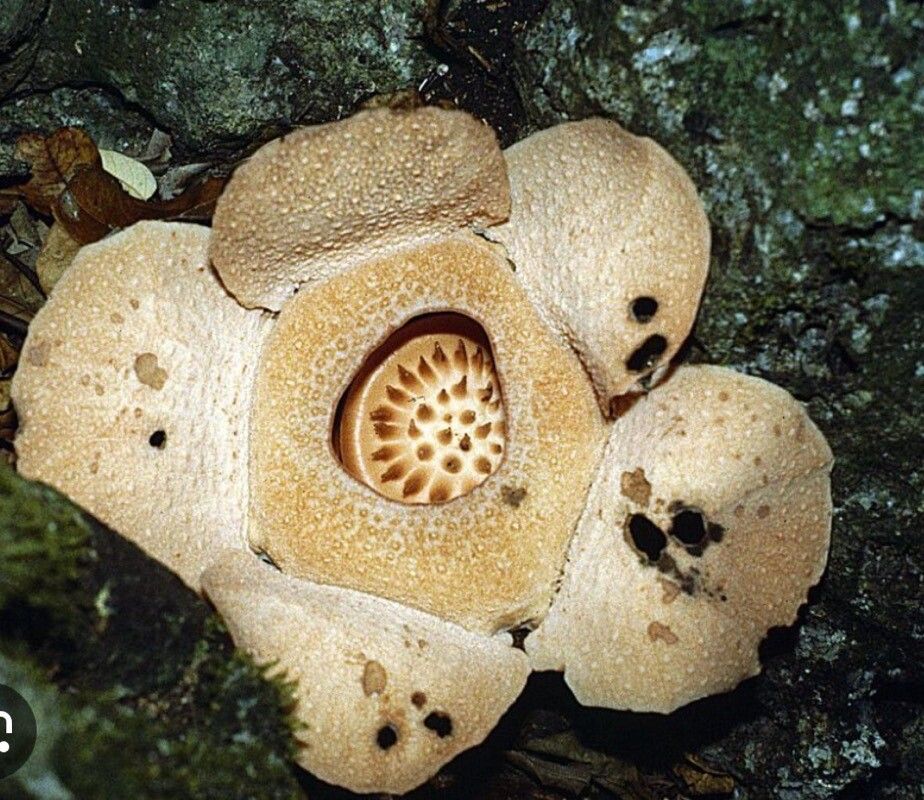
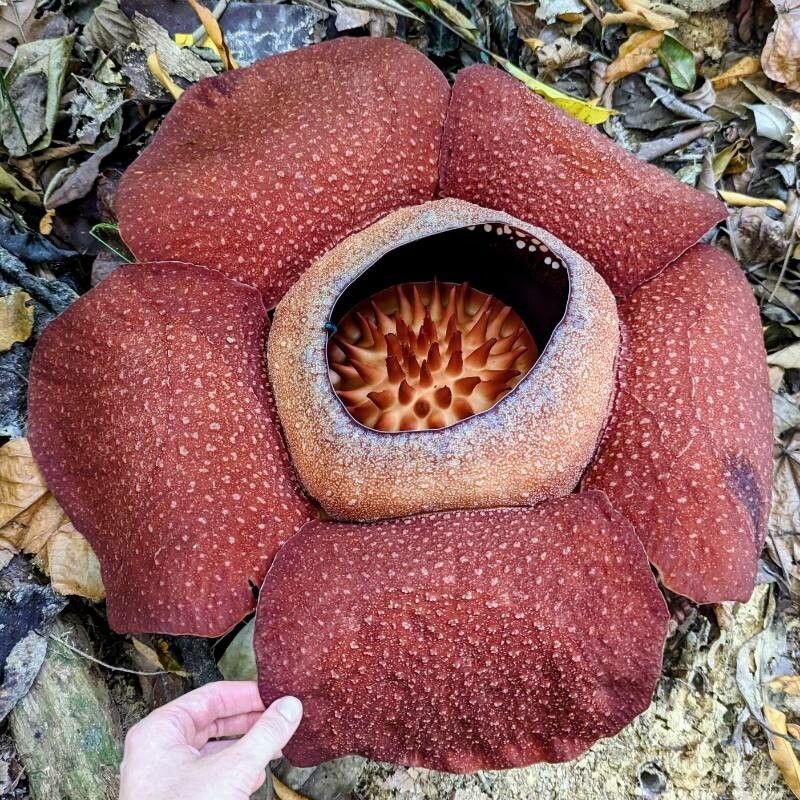
Rafflesia arnoldii, the corpse flower or giant padma, is a species of flowering plant in the parasitic genus Rafflesia. It is noted for producing the largest individual flower on Earth. It has a strong and unpleasant odor of decaying flesh. It is native to the rainforests of Sumatra and Borneo. Although there are some plants with larger flowering organs like the titan arum (Amorphophallus titanum) and talipot palm (Corypha umbraculifera), those are technically clusters of many flowers. Rafflesia arnoldii is one of the three national flowers in Indonesia, the other two being the white jasmine (Jasminum sambac) and moon orchid (Phalaenopsis amabilis). It was officially recognized as a national "rare flower" (Indonesian: puspa langka) in Presidential Decree No. 4 in 1993.
World's largest flower has strong disease resistance and is generally unlikely to suffer from illnesses. Still, it can be vulnerable to pests and diseases present in its environment. Such infections are typically mild. Regarding care, this plant needs a moderate level of upkeep. Regular pruning is necessary to preserve an attractive appearance and support healthy growth. Applying fertilizer can also encourage blooming. World's largest flower is appropriate for anyone who has outdoor space, like a garden or patio, and does not demand extensive gardening experience. It may need more attention when cultivated indoors.
How to keep Rafflesia Arnoldii.
Light
The biggest flower in the world thrives in shady habitats such as forest underbrush or amidst stones, where natural shadows are plentiful. It favors complete shade, but can also withstand partial sunlight.
Temperature
The largest flower in the world is native to tropical areas, where the weather is generally hot and moist. Consequently, it is ideally suited to high heat and humidity levels. It does not favor abrupt changes in temperature and needs a consistent temperature setting, which necessitates maintaining a stable indoor temperature to prevent fluctuations. This flower typically cannot endure cool temperatures and needs warmer conditions for its development. If the ambient temperature falls excessively, the plant might halt its growth or even perish.
Fertilizer
When the blooms of the world's largest flower are fully opened and at maximum display, it becomes necessary to initiate fertilization. Start fertilization periodically, every three to four weeks, depending on the climate. However, once the plant begins to yield fewer fresh flowers, halt the fertilization process as it is pointless to continue fertilizing when the plant isn't able to generate any new blooms.
Pruning
The world's largest flower is known for its impressive blooms and parasitic growth habit. To maintain its health and that of its host plant, aim to prune dead tissue from early to late spring. This will help improve airflow and reduce the risk of disease. Be sure to make clean cuts, which are essential given the unique structure of this remarkable flower.
Botanical profile.
- Plant Type
- Herb
- Life Cycle
- Annual
- Genus
- Rafflesia
- Family
- Rafflesiaceae
- Hardiness Zone
- 13
- Mature Height
- 2.13 m to 3.66 m
- Mature Spread
- 0.91 m to 1.52 m
- Leaf Type
- Deciduous
- Flower Color
- Red, Brown
- Flower Size
- 30.48 cm to 91.44 cm
- Bloom Time
- Mid summer, Late summer
- Harvest Time
- Early fall, Mid fall
- Native Area
- Indonesia
Other names.
Reader questions.
What is the name and botanical name of the world's largest flower?
The world's largest flower is known as Rafflesia arnoldii. Its common name aligns with its botanical name, highlighting its unique identification in the world of botany.