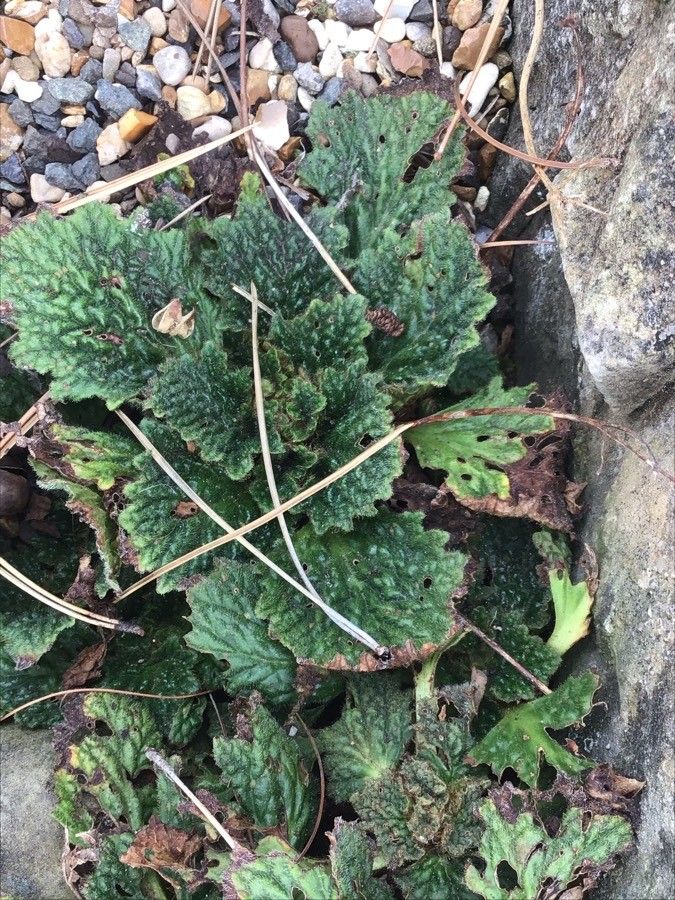
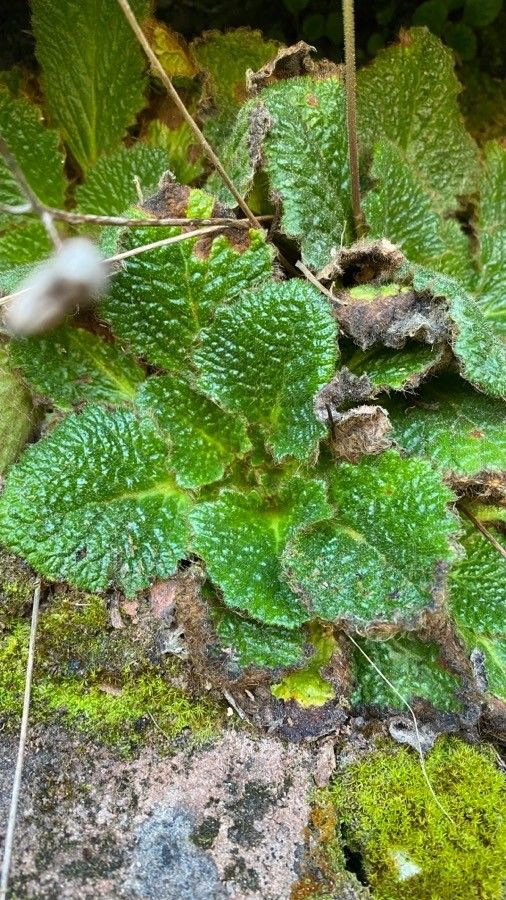
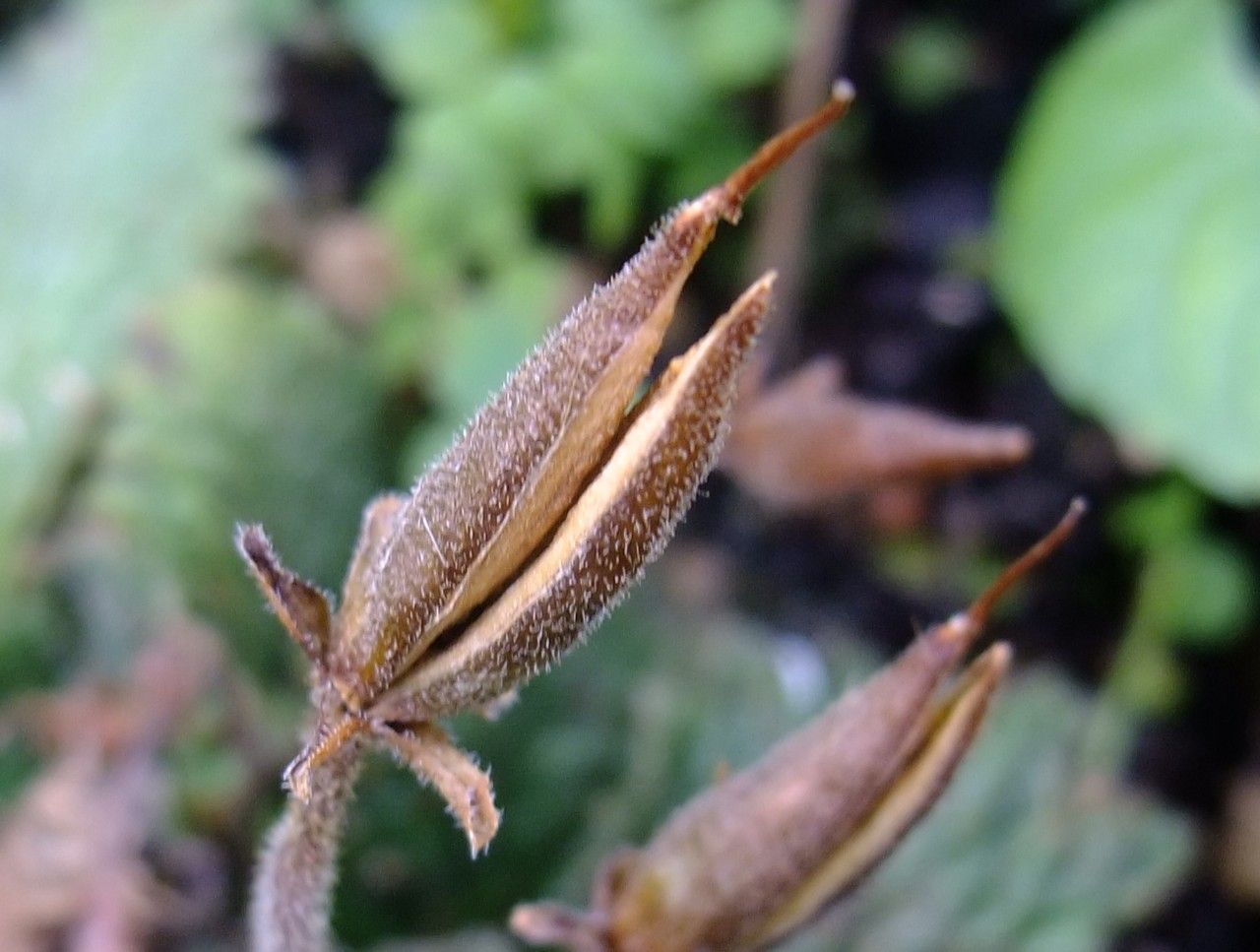
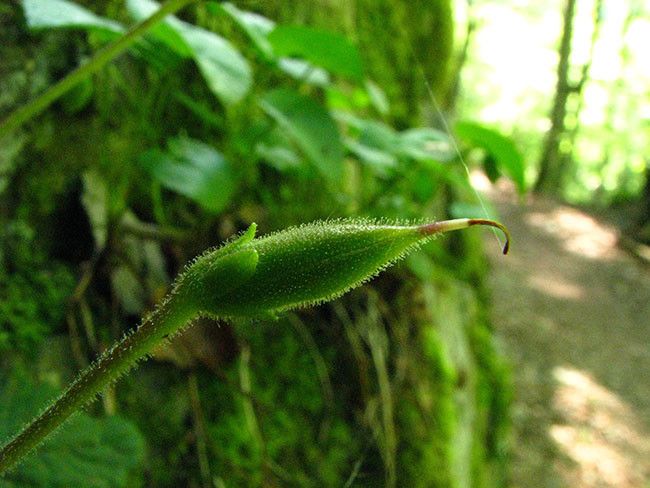
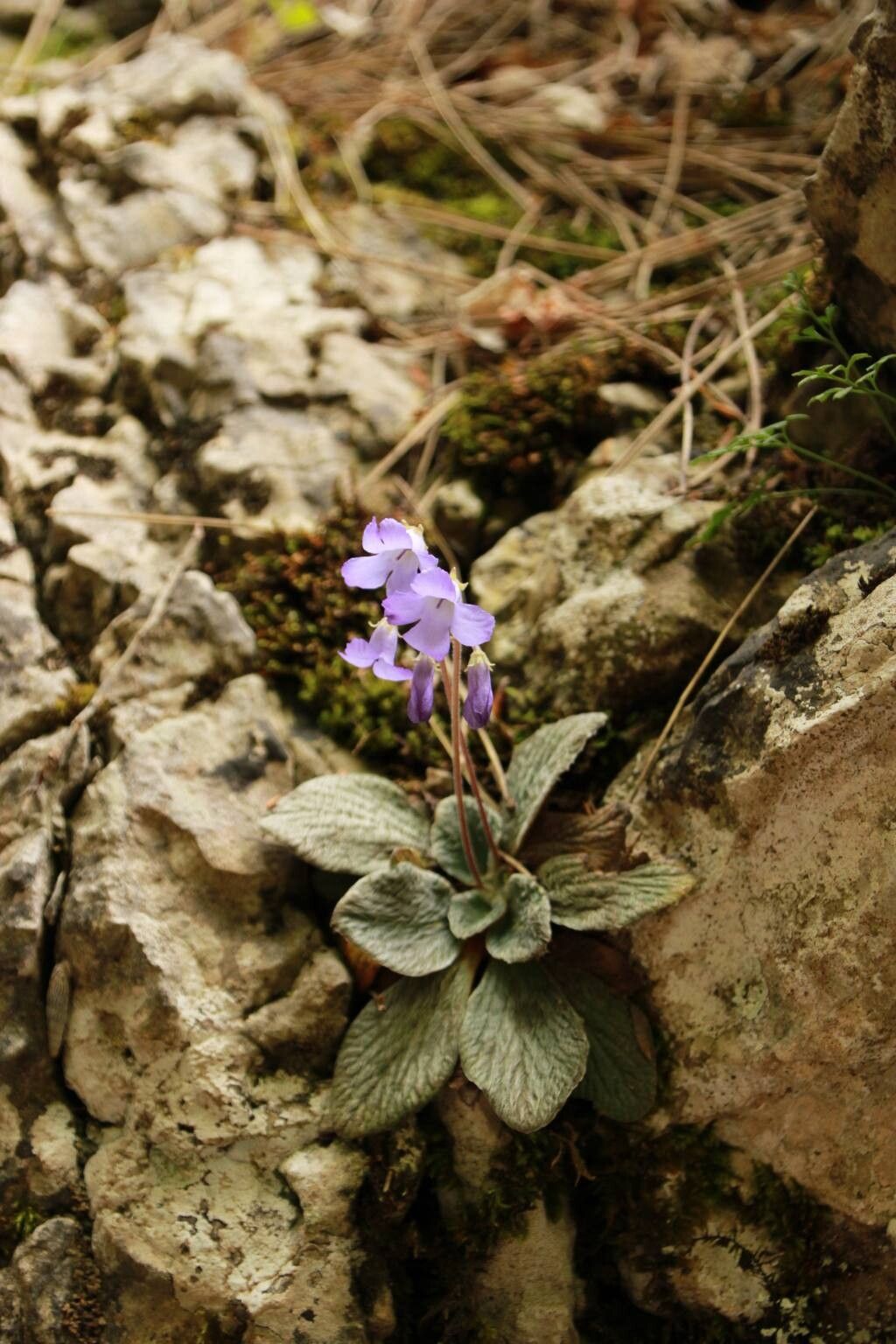
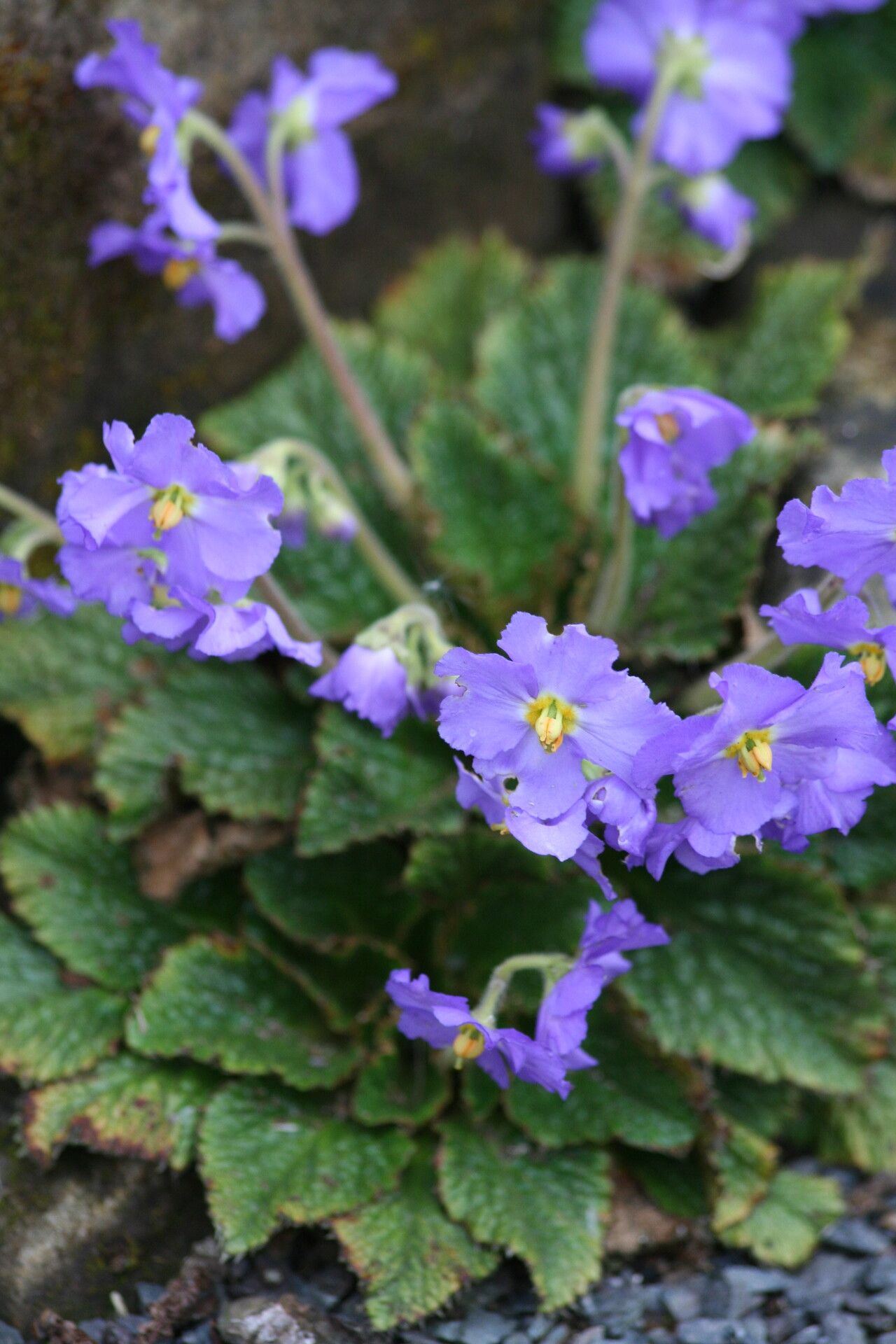
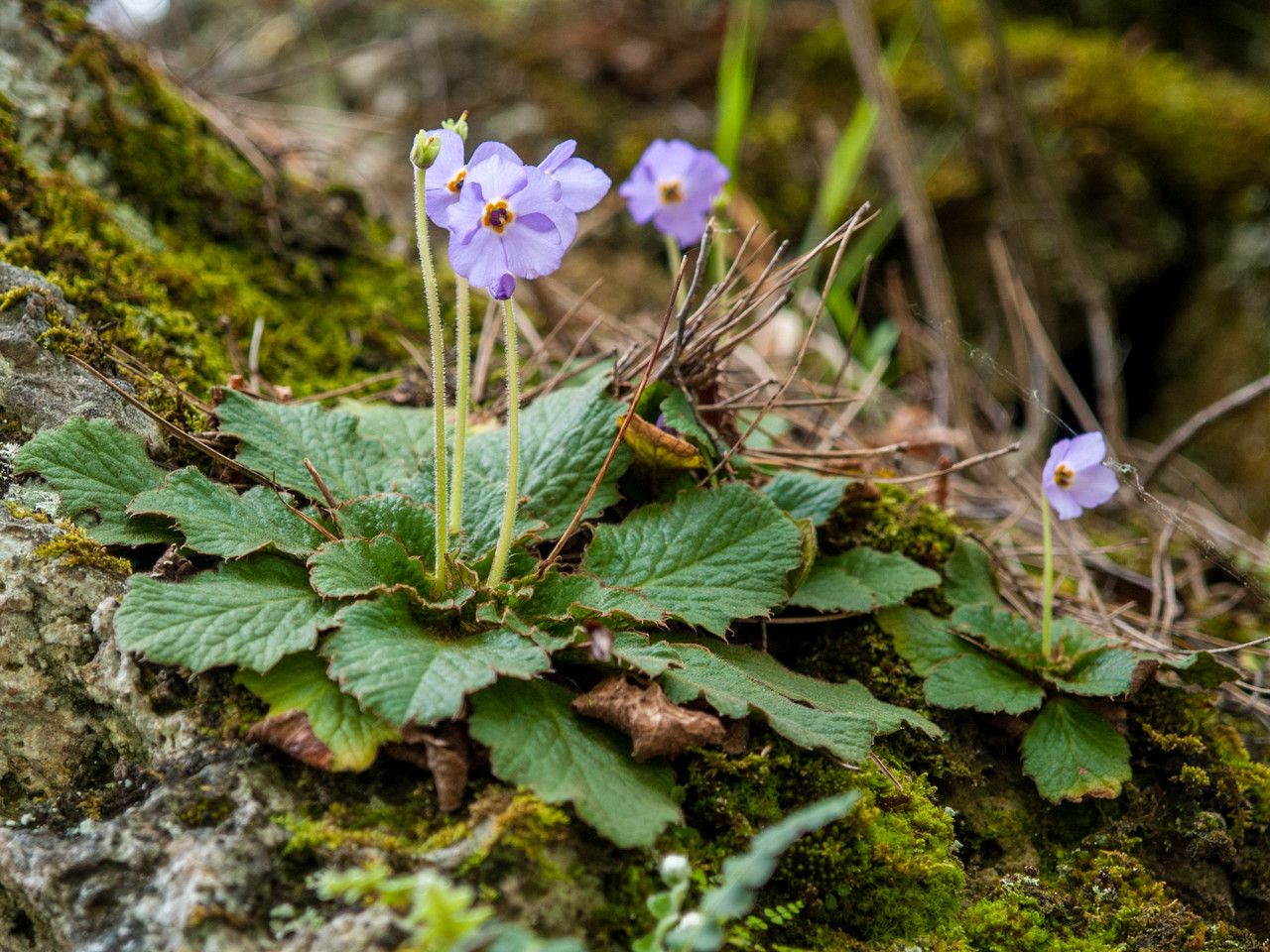
Ramonda myconi, the Pyrenean-violet or rosette mullein, syn. R. pyrenaica, is a species of flowering plant in the family Gesneriaceae, which is a relictual endemite of shady, rocky places in the Pyrenees and north eastern Spain. It is a rosette-forming evergreen perennial growing to 10 cm (4 in) high by 20 cm (8 in) broad, with oval, crinkled leaves. Five-petalled purple flowers with prominent yellow anthers appear on leafless stems in spring.The plant is cultivated, for instance in vertical crevices where its roots are not subject to winter wetness. It has gained the Royal Horticultural Society's Award of Garden Merit.
The Ramonda myconi are a Mediterranean endemic species, meaning that the species is native to that geographic region. This species of flowering plant is isolated to the rocky terrains that border France and Spain. This species also belongs to a group known as resurrection plants. This means they can survive or tolerate severe desiccation or drought.
Rosette mullein is fairly disease-resistant and generally does not suffer from many diseases. However, it can be vulnerable to pests and diseases present in its environment. Such problems are usually mild. For care, this plant needs a moderate level of maintenance. It should be pruned regularly to keep a neat appearance and promote healthy growth. Fertilizing can also encourage more flowering. Rosette mullein is a good choice for anyone with outdoor space, like a garden or patio, and does not require extensive care experience. It may need more attention if grown indoors.
How to keep Ramonda Myconi.
Light
Rosette mullein prefers spots with moderate sunlight and is not tolerant of fluctuating light conditions. In its native environment it does well where light is abundant but not overpowering. Too much or too little light can damage the plant's health and hinder its growth.
Water
The Rosette mullein, native to the rocky outcrops of Europe, thrives with consistent and moderate watering but can tolerate short periods of drought. To maintain optimal soil moisture, it's best to water it weekly. When grown indoors for its ornamental beauty, this plant benefits from increased humidity during its active growth phase to ensure optimal tissue moisture retention.
Temperature
Rosette mullein comes from habitats where temperatures commonly fall between 41 and 90 °F (5 to 32 ℃). It is suited to and prefers these moderate conditions. If the climate becomes notably cooler or warmer, modifications to its care may be necessary.
Fertilizer
For Rosette mullein, the primary time to apply fertilizer is in early spring when the flowers are developing. Using the right fertilizer promotes stronger blooms and helps Rosette mullein produce attractive flowers. Fertilizing in early spring ensures excellent flowers throughout the season and supplies energy for dormant growth periods.
Pruning
Rosette mullein is known for its dense rosette structure and vibrant flowers. To promote healthy growth and improve air circulation, it benefits from light pruning between late winter and early spring. Remove any dead leaves and blooms, but avoid heavy pruning to preserve its shape and crown, ensuring both its health and beauty.
Pot & Repot
Repot rosette mullein every 2-3 years during the spring. Use a slightly larger pot with good drainage. After repotting, keep the soil consistently moist and protect the plant from direct sunlight to help it recover and grow well in its new setting.
Botanical profile.
- Plant Type
- Herb
- Life Cycle
- Perennial
- Genus
- Ramonda
- Family
- Gesneriaceae
- Hardiness Zone
- 5-7
- Mature Height
- 10 cm
- Mature Spread
- 20 cm
- Leaf Color
- Green
- Leaf Type
- Evergreen
- Flower Color
- Lavender, Purple
- Flower Size
- 2.54 cm
- Bloom Time
- Mid spring, Late spring, Early summer
- Planting Time
- Autumn
- Harvest Time
- Mid summer, Late summer, Early fall
- Native Area
- Spain, France
Other names.
Reader questions.
How should I water my Rosette mullein plant?
To properly water the Rosette mullein plant, it is best to use filtered water at room temperature. Tap water may contain harmful particles, so filtering it is important. Additionally, the water should not be cold as the plant is used to warm environments and cold water can be detrimental. Avoid watering from above as it can cause issues with the foliage. Instead, pour the filtered room temperature water directly onto the soil until it is completely soaked. This helps to moisten the roots and allows them to spread and absorb necessary nutrients from the soil.
Why do I need to add fertilizer to my Rosette mullein?
Fertilization is important for the Rosette mullein because it provides key nutrients for the plant's growth above and below ground. While the overall fertilization needs for a Rosette mullein are low, annual fertilization can greatly benefit the plant. It helps keep the plant alive and may even result in better and longer-lasting flowers. To ensure your Rosette mullein looks its best, regular fertilization is recommended.
What are the sunlight requirements for Rosette Mullein?
Rosette mullein requires partial sun, about 3-6 hours of sunlight daily. It's crucial to observe the movement of sunlight through your garden to find spots that offer a balance of light and shade, optimizing conditions for your plants. This plant thrives in areas with moderate sun exposure, typical of its native habitat, where it experiences light that is ample but not intense. An imbalance in light—either too much or too little—can adversely affect the plant's health and growth.
What is the native environment of Rosette mullein?
Rosette mullein, botanically known as Ramonda myconi, thrives in environments where temperatures typically range from 41 to 90 °F (5 to 32 °C). It has adapted to these moderate climates and prefers these temperatures for optimal growth and development.
What should I do if I give my Rosette mullein too much or too little water?
Overwatering is a more common issue than underwatering for Rosette mullein plants. When the plant receives too much water, its stems and leaves may wilt and turn yellow. Over time, this can lead to diseases like root rot, mold, and mildew that can kill the plant. While underwatering is less common because the plant can tolerate drought, it can still happen. When this occurs, the leaves may become brittle and brown. It's important to notice signs of overwatering early to prevent irreversible damage. If you see these signs, reduce your watering immediately and check the soil drainage. If the soil drains poorly, replace it with a loose, well-draining potting mix. If you notice signs of underwatering, simply increase your watering frequency until the signs go away.
When should I fertilize my Rosette mullein for best results?
The best time to fertilize a Rosette mullein is in the late winter to early spring when it is transitioning from dormancy to active growth. Fertilizing at this time promotes healthy growth and gives the plant a great start for the season. While early spring is generally the most beneficial time to fertilize, it is also acceptable to fertilize in the fall. However, it is not recommended to fertilize during the summer or winter seasons.
How should I use artificial lighting for indoor Rosette mullein plants?
Indoor Rosette mullein plants necessitate adequate lighting to grow well, especially when natural sunlight is insufficient, like during winter or in less sunny locations. Artificial lights, such as LED lights customized to provide specific light wavelengths, are recommended. For full sun plants, 30-50W per square foot is adequate; partial sun plants require 20-30W per square foot, and full shade plants need 10-20W per square foot. The light source should be placed 12-36 inches above the plant, mimicking natural sunlight, and it should be on for 8-12 hours daily to emulate natural daylight hours.
Is Rosette mullein cold-tolerant?
Yes, Rosette mullein is highly cold-tolerant and does not require additional frost protection measures during winter. To prepare for the first freeze in autumn, it's recommended to water the plant generously. This ensures the soil remains moist and enters a frozen state to help prevent drought and water scarcity for the plant during winter and early spring.
How frequently should I water my Rosette mullein plant?
If your Rosette mullein plant is in a pot, the most precise way to determine if it needs water is by checking the soil. Stick your finger into the soil and if the first two to three inches feel dry, it's time to water it. If you have your Rosette mullein outdoors in the ground, you can use a similar method to test the soil moisture. When the first few inches of soil have dried out, it's a sign that you should add water. Typically, during spring and early fall, you'll need to water this plant about once a week using this method. However, during extremely hot weather, you might need to water it twice or even more per week. It's important to note that mature and well-established Rosette mullein plants can withstand drought well.
When is it not a good idea to put fertilizer on my Rosette mullein?
To properly fertilize your Rosette mullein, it is recommended to only do so during the late winter and early spring. This plant has low fertilization needs, and a single feeding during these seasons is sufficient. Avoid fertilizing during the rest of the year, as it can easily lead to overfertilization and its complications. However, if you missed fertilizing in spring, you can still feed the plant in the fall. Additionally, it is not necessary to fertilize during winter, as the plant will be in a dormant phase without new growth.
What are the symptoms of inadequate light exposure in Rosette mullein?
Inadequate light can cause various symptoms in Rosette mullein, such as smaller new leaves, leggy or sparse growth, faster leaf drop, slower or no growth, lighter-colored new leaves, chlorosis, sunscald, leaf curling, wilting, and leaf scorching. These signs indicate that the plant is not receiving the right amount of light, which is vital for its health and development.
How should you care for Rosette mullein in extremely low temperatures?
Rosette mullein is extremely cold-tolerant, with an ability to withstand winter temperatures above -25°C. If temperatures drop below this threshold, it may affect the plant's ability to sprout in spring. In such cases, it's advisable to remove any parts of the plant that have failed to sprout as a remedial measure.