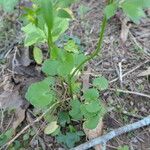
Ranunculus abortivus
Littleleaf buttercup · Small-flower crowfoot · Kidney-Leaf Buttercup · Early Woodbuttercup · Smallflower Buttercup
Description
Source: leafsnapRanunculus abortivus, commonly known as the littleleaf buttercup, is a herbaceous perennial plant that belongs to the Ranunculaceae family. Native to North America, it thrives in various habitats including meadows, woodlands, and wetlands. The plant can reach a height of up to 30 cm and possesses a fibrous root system. Its basal leaves, which have long petioles, are deeply divided into three lobes. In contrast, the stem leaves are smaller and have shorter petioles. The flowers of Ranunculus abortivus bloom from April to June. Each flower features five yellow petals that measure about 1 cm in diameter and grow on long stalks above the foliage. Ranunculus abortivus serves as an important food source for many insects, such as bees and butterflies. However, it can be toxic if ingested by livestock or humans due to its high concentration of protoanemonin. Overall, Ranunculus abortivus is a beautiful wildflower that enhances the color and diversity of natural habitats. It plays a crucial role in supporting local ecosystems through its pollination services.
🌳 Little-leaf buttercup is not widely recognized for direct human uses, yet it serves an important role as an indicator species in ecological studies. The condition of little-leaf buttercup populations can reflect the overall health of an ecosystem, revealing details of habitat conditions such as soil moisture and nutrient levels. This makes little-leaf buttercup a vital plant for conservationists and land managers who aim to protect natural habitats and monitor environmental change.
🎭 Wealth
Care Guide
💧 Water Every 7 days
Little-leaf buttercup flourishes in soil with moderate moisture. It prefers soil that is consistently moist but not waterlogged. To ensure optimal growth, water the plant weekly to maintain adequate hydration. Although it benefits from natural rainfall when grown outdoors, supplemental watering is necessary during dry periods to maintain balanced moisture levels.
How should I water my Little-leaf buttercup plant?
To water the Little-leaf buttercup properly, use filtered water that is at room temperature. Tap water can have harmful particles, so filtered water is preferred. The plant prefers warm temperatures, so avoid using cold water which can shock the system. Instead of overhead watering, apply the filtered room temperature water directly to the soil until it is fully soaked. This helps moisten the roots, allowing them to spread and collect nutrients more effectively.
What should I do if I give too much or too little water to my Little-leaf buttercup plant?
Overwatering is a common issue for the Little-leaf buttercup and can cause wilting and yellowing of the stems and leaves. It can also lead to diseases like root rot, mold, and mildew that can kill the plant. Underwatering is less common but still possible, resulting in brittle and brown leaves. It's important to notice signs of overwatering early to prevent irreversible damage. If overwatering is suspected, reduce watering immediately and check the soil for poor drainage. If the plant is underwatered, simply increase watering until symptoms improve.
How often should I water my Little-leaf buttercup plant?
If your Little-leaf buttercup is in a pot, you can easily tell if it needs water by sticking your finger into the soil. If the top two to three inches of soil are dry, then it's time to water it. If you are growing your Little-leaf buttercup outdoors in the ground, you can use the same method to test the soil. Once the top few inches of soil have dried out, it's time to give it water. Typically, during the spring and early fall, you will need to water this plant about once a week. However, during extremely hot weather, you may need to water it twice a week or even more. It's worth noting that mature, well-established Little-leaf buttercups have the ability to withstand drought.
How much water does my Little-leaf buttercup require?
To ensure your Little-leaf buttercup is adequately watered, don't hold back on the amount of water you give it. Check the first two to three inches of soil, and if it's dry, give the plant a thorough watering. Make sure the water penetrates the soil completely. You'll know you've added enough water when it starts flowing out of the drainage holes at the bottom of the pot. If you don't see excess water draining, it means you haven't watered enough. However, be careful not to let the water accumulate in the soil, as it can harm the plant. On the other hand, if no water drains from the pot, it might indicate poorly draining soil, which is not good for the plant's health. If the plant is outside, one inch of rainfall per week should be enough.
How do I water my Little-leaf buttercup as it grows?
The water needs of the Little-leaf buttercup can vary depending on its growth stages. In the early years or after being transplanted, it requires more water as it focuses on developing new roots for future growth. These roots thrive in moist conditions. As the plant matures, it will require less water. Additionally, during the bloom period, when the flowers are developing, extra moisture is necessary, so watering should be increased at this time.
☀️ Light Partial sun
The little-leaf buttercup favors plentiful diffused light but can tolerate dimly lit locations. Adequate light exposure supports robust growth. Conversely, too much light can damage the plant. In the wild it occupies areas with varying light levels, often where light is partially blocked, which explains its shade tolerance.
What are the sunlight requirements for little-leaf buttercup?
The little-leaf buttercup (Ranunculus abortivus) thrives in conditions ranging from partial sun, receiving about 3-6 hours of sunlight, to full shade, where it gets less than 3 hours of sunlight. It's essential to observe your garden's sunlight patterns to find spots that offer the right balance of light and shade. This plant can adapt to varied light conditions, being naturally found in areas where light is frequently obstructed, making it tolerant to shade.
Can little-leaf buttercup grow under artificial lighting?
Yes, the little-leaf buttercup can grow under artificial lighting, which is especially beneficial when natural sunlight is insufficient, such as during winter or in less sunny spaces. Optimal growth is achieved with adequate lighting, and LED lights are a popular choice as they can be customized to provide specific wavelengths needed by plants. The amount of artificial light required varies by plant type: full sun plants need 30-50W/sq ft, partial sun plants need 20-30W/sq ft, and full shade plants need 10-20W/sq ft. The light source should be placed 12-36 inches above the plant to mimic natural sunlight, and most plants need 8-12 hours of light per day.
What are the symptoms of light deficiency in little-leaf buttercup?
When grown indoors with insufficient light, little-leaf buttercup may exhibit various symptoms indicating light deficiency. These include smaller new leaves, leggy or sparse growth, faster leaf drop, slower or halted growth, lighter-colored new leaves, and symptoms of excessive light exposure such as chlorosis, sunscald, leaf curling, wilting, and leaf scorching. These symptoms highlight the plant's struggle to adapt to inadequate light conditions.
How can I address light deficiency issues in little-leaf buttercup?
To address light deficiency in little-leaf buttercup, gradually shift the plant to sunnier spots to receive 3-6 hours of direct sunlight daily, allowing it to adapt to changing light conditions. For indoor plants that are large or not easily movable, consider using artificial light, keeping a lamp on for at least 8 hours a day or investing in professional plant grow lights for adequate light. When dealing with insufficient sunlight outdoors, it's crucial to move plants gradually to sunnier locations to prevent sunburn. For smaller plants, reduce obstructions by pruning trees or transplant the plant to a sunnier location, ensuring it happens during the plant's dormant period for minimal stress.
🌡️ Temperature 0–32.2°C
The little-leaf buttercup originates from temperate regions and prefers temperatures of 68–95 °F (20–35 °C). Make seasonal adjustments as needed to ensure optimal growth.
What is the native environment of the Little-leaf buttercup and its preferred temperature range?
The Little-leaf buttercup, scientifically known as Ranunculus abortivus, is native to temperate environments. It thrives best within a temperature range of 68 to 95 °F (20 to 35 °C). To ensure optimal growth, it's essential to adjust care across different seasons according to these temperature preferences.
Does the Little-leaf buttercup require special frost protection measures?
The Little-leaf buttercup has strong cold resistance, meaning special frost protection measures are generally not necessary during winter. However, if temperatures are expected to fall below its growth limit, it's important to enact cold protection strategies. This could include covering the plant with soil or straw. Additionally, watering the plant abundantly before the first freeze of autumn to keep the soil moist and help prevent drought and water scarcity during the winter and early spring is recommended.
How does low temperature affect the Little-leaf buttercup, and what are the solutions?
Little-leaf buttercup is cold-tolerant, thriving best when temperatures are maintained above its minimum suitable growth temperature. During winter, it's crucial to keep temperatures above its tolerable growing minimum. If temperatures drop below its growth limit, this might not show immediate changes during winter but can lead to decreased sprouting or even no sprouting in spring. The solution for any parts that have failed to sprout by spring is simply to remove them.
How does high temperature affect the Little-leaf buttercup, and what are the remedies?
During summer, Little-leaf buttercup should be kept below its maximum suitable growth temperature to avoid stress. Exceeding the maximum tolerable growing temperature can cause the leaves to lighten in color, become prone to curling, susceptibility to sunburn, and, in severe cases, cause the entire plant to wilt and dry. The remedy involves trimming away any sunburned and dried-up parts and possibly moving the plant to a shadier location or using a shade cloth to protect it from midday and afternoon sun. Ensuring the soil remains moist through watering in the morning and evening is also crucial.
💨 Humidity
🪴 Soil 5-7
🌱 Fertilizer
A single fertilizer application in spring is generally enough for Little-leaf buttercup, although repeated feedings can boost growth to its fullest. Apply fertilizer approximately every month to every month and a half. Fertilization improves the leaves' appearance and performance, helping maintain uniform color and a healthy texture. It also promotes root development and nutrient uptake, supporting the plant's long-term health.
🪴 Pot & Repot Every 12 months
✂️ Pruning
This low-growing species thrives in moist, shaded areas. In the spring, prune the little-leaf buttercup to remove damaged stems and encourage new growth. Avoid heavy pruning; instead, regular light pruning improves air circulation and reduces the risk of disease. For specific techniques and timing, refer to gardening guides.
🌿 Propagating
🐛 Diseases & pets
☠️ Toxicity
Characteristics
- Plant Type
- Herb
- Life Cycle
- Perennial, Biennial
- Genus
- Ranunculus
- Family
- Ranunculaceae
- Hardiness Zone
- 3-8
- Mature Height
- 30 cm to 91 cm
- Mature Spread
- 34 cm
- Leaf Color
- Green
- Leaf Type
- Evergreen
- Flower Color
- Yellow
- Flower Size
- 2.54 cm
- Bloom Time
- Mid spring, Late spring, Early summer
- Planting Time
- Spring
- Harvest Time
- Late spring, Early summer, Mid summer