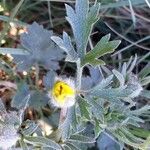
Ranunculus bulbosus
Bulbous buttercup · Bulbous crowfoot · Buttercup · Blister Flower · Gowan
Description
Source: leafsnapRanunculus bulbosus, commonly known as the bulbous buttercup, is a perennial herbaceous plant in the Ranunculaceae family. Native to Europe and western Asia, it has since been introduced to other parts of the world as an ornamental plant. This plant can grow up to 30 cm tall and features a basal rosette of deeply lobed leaves with toothed edges. Its erect, hairy stem is branched, and it produces yellow flowers that bloom from April to June. The flowers, which have five shiny yellow petals, are 1-2 cm in diameter. Ranunculus bulbosus thrives in well-drained soils with full sun or partial shade but can adapt to various soil types, including sandy and clay soils. It is commonly found in meadows, pastures, roadsides, and other disturbed areas. The plant contains toxic compounds such as protoanemonin, which can cause skin irritation if handled improperly. Despite this, it has been used medicinally to treat conditions like rheumatism and gout. In summary, Ranunculus bulbosus is an attractive wildflower renowned for its bright yellow flowers that enhance natural landscapes in springtime. It also has medicinal properties when used correctly under professional guidance.
🌳 Bulbous buttercup has an outstanding, though relatively little-known, role in phytoremediation. Researchers found that it can signal the presence of particular heavy metals in the soil, acting as a natural marker of pollution levels. This finding is significant for environmental monitoring and can support bio-indication studies to evaluate contaminated sites without initial intrusive sampling or detailed chemical analysis.
🎭 Wealth
Care Guide
💧 Water Every 7 days
The bulbous buttercup, native to cooler European regions, thrives in areas with moderate moisture and can tolerate short periods of dryness. For optimal growth, it should be watered weekly, provided that the soil has good drainage. As an herbaceous perennial, the bulbous buttercup benefits from natural rainfall during its growing season, which encourages vibrant flower production.
How should I water my Bulbous buttercup?
To properly water the Bulbous buttercup, it is recommended to use filtered water at room temperature. This is because tap water may contain harmful particles. Additionally, the water should not be cold as the plant prefers warmth. It is important to avoid overhead watering as it can cause issues with the foliage. Instead, gently apply the filtered room temperature water directly to the soil until it is completely soaked. This helps to moisten the roots and support their spread through the soil, allowing the plant to gather necessary nutrients.
What should I do if I give my Bulbous buttercup too much or too little water?
Overwatering is a more common issue than underwatering for the health of your Bulbous buttercup. If the plant receives too much water, its stems and leaves may wilt, turn yellow, and develop diseases like root rot, mold, and mildew. Underwatering is less likely due to the plant's drought tolerance, but when it happens, the leaves become brittle and brown. It's important to recognize signs of overwatering quickly as some diseases may become irreversible. Reduce watering immediately if you notice early signs and consider replacing poorly draining soil with a well-draining potting mix. If your plant shows signs of underwatering, increase watering until the signs disappear.
How often do I need to water my Bulbous buttercup?
If your Bulbous buttercup plant is in a pot, the most precise way to determine if it needs water is to check the soil by plunging your finger into it. If the top two to three inches of soil feel dry, then it's time to water the plant. Similarly, if you are growing your Bulbous buttercup outdoors in the ground, you can also use this method to test the soil. Again, if the top few inches of soil have dried out, it's a signal to add water. In the spring and early fall, you will typically need to water your plant once a week using this method. However, during extremely hot weather, you may need to increase the frequency to watering it twice or even more times per week. Nevertheless, it's important to note that mature and well-established Bulbous buttercup plants have the impressive ability to withstand drought.
How much water does my Bulbous buttercup plant need?
To properly water your Bulbous buttercup, don't be afraid to give it a good amount of water. Make sure the top two to three inches of soil are dry before watering. Completely soak the soil, allowing excess water to drain out of the pot's bottom holes. If you don't see any draining, you may have not watered enough, but be careful not to let water accumulate in the soil, as this can harm the plant. If there is no drainage, it could mean poor soil drainage, which is bad for the plant's health. Finally, if the plant is outside, one inch of rainfall per week will be enough.
How should I water my Bulbous buttercup as it grows?
The water needs of the Bulbous buttercup vary throughout its growth stages. In the first few years or after transplantation, more water is required because the plant focuses on developing new roots to support future growth. These young roots perform best with a bit more moisture. As the plant matures, it requires less water. Additionally, during the bloom period, the flower development process utilizes a significant amount of moisture, so you may need to provide more water at this time.
☀️ Light Full sun
Bulbous buttercup performs best with plenty of light but can also tolerate partial shade. Coming from sunny habitats, it depends on those light conditions for healthy development. Too little light can stunt its growth, yet excessive exposure may also damage the plant.
What are the sunlight requirements for Bulbous Buttercup?
Bulbous Buttercup requires full sun, meaning it should receive more than 6 hours of sunlight daily, but it can also adjust to partial sun conditions, roughly between 3-6 hours of sunlight. It's important to note the movement of sunlight through your garden to ensure plants receive the optimal balance of light and shade. This balance is essential for the plants' happiness and healthy growth.
How does artificial lighting support Bulbous Buttercup growth indoors?
Indoor plants like Bulbous Buttercup require adequate lighting for optimal growth. When natural sunlight is insufficient, artificial lights such as LED can provide the necessary light spectrum. Full sun plants need 30-50W/sq ft, partial sun plants require 20-30W/sq ft, and full shade plants need 10-20W/sq ft of artificial light. The artificial light source should be placed 12-36 inches above the plant, mimicking natural sunlight conditions and duration, with most plants needing 8-12 hours of light per day.
What are the symptoms of insufficient or excessive sunlight in Bulbous Buttercup?
Symptoms of insufficient sunlight include small leaves, leggy or sparse growth, faster leaf drop, slower or no new growth, and lighter-colored or irregularly patterned new leaves. Excessive sunlight can cause chlorosis, sunscald, leaf curling, wilting, and leaf scorching. These symptoms reflect the plant's struggle with inappropriate light levels, highlighting the need for a balanced sunlight exposure.
What steps should be taken if Bulbous Buttercup isn't receiving adequate sunlight?
If Bulbous Buttercup isn't receiving adequate sunlight, for indoor plants, gradually move them to sunnier locations to ensure they receive at least 6 hours of direct sunlight daily, or consider using artificial lighting such as desk lamps or grow lights for at least 8 hours daily. For outdoor plants, it's also recommended to gradually relocate the plants to sunnier areas, avoiding sudden changes to prevent sunburn. Additionally, reducing obstructions like pruning or transplanting during the plant's dormant period can significantly improve light exposure. Note that parts of the plant that have suffered from insufficient sunlight may not recover, but new growth should be healthy with improved light conditions.
🌡️ Temperature 0–32.2°C
The bulbous buttercup is a temperate plant that prefers temperatures between 32℉ (0℃) and 89.6℉ (32℃). It originates from areas with moderate temperatures and is commonly found in meadows and fields with rich soil. In hotter seasons, it may need shade or additional watering to prevent heat stress.
What are the optimal temperature conditions for Bulbous buttercup?
Bulbous buttercup thrives in temperate environments, preferring temperatures between 32°F (0°C) and 89.6°F (32°C). It is native to regions that typically have moderate temperatures and is commonly found in meadows and fields with rich soil. During the hotter seasons, Bulbous buttercup may require additional care such as shade or extra watering to mitigate heat stress. The plant has a strong resistance to cold, meaning special frost protection measures are not generally needed in winter. However, if temperatures are expected to drop below the plant's growth limit temperature, it is important to provide it with protection from the cold by covering it with soil or straw and watering it abundantly before the first freeze in autumn to ensure the soil remains moist and enters a frozen state, which helps prevent drought and water scarcity during the winter and early spring.
How does Bulbous buttercup react to low and high temperatures, and what solutions are recommended?
Bulbous buttercup is quite tolerant of cold and performs best when the temperature remains above its suitable minimum growth temperature. Throughout the winter, it's important to keep the plant above its tolerable minimum growing temperature. Exposure to temperatures below its growth limit may not result in noticeable changes during winter, but could lead to a decrease in sprouting or an absence of sprouting in spring. The recommended solution for any parts that fail to sprout in the spring is to remove them. In contrast, during the summer, it's crucial to keep the plant below its maximum suitable growth temperature. Exceeding the tolerable maximum growing temperature can lead to leaves becoming lighter in color, prone to curling, susceptibility to sunburn, and, in severe cases, wilting and drying out of the entire plant. To address these issues, trim away sunburned and dried parts, move the plant to a shaded location, particularly during midday and afternoon, or use a shade cloth. Ensuring the soil remains moist through morning and evening watering is also beneficial.
💨 Humidity
🪴 Soil 6-7
🌱 Fertilizer
A single fertilizer application in spring is generally enough for Bulbous buttercup, though several feedings can increase growth. Feed once every month to a month and a half. Fertilization improves leaf appearance and function, helping maintain uniform color and a healthy texture. It also encourages root development and nutrient uptake for the plant's long-term health.
🪴 Pot & Repot
✂️ Pruning
The bulbous buttercup benefits from pruning from early to late spring. This involves removing dead stems and thinning the plant to improve air circulation. Careful pruning encourages healthy growth and flowering while controlling its spread, ultimately enhancing the garden's appearance.
🌿 Propagating
🐛 Diseases & pets
☠️ Toxicity
Characteristics
- Plant Type
- Herb
- Life Cycle
- Perennial
- Genus
- Ranunculus
- Family
- Ranunculaceae
- Hardiness Zone
- 3-8
- Mature Height
- 20 cm to 61 cm
- Mature Spread
- 91 cm
- Leaf Color
- Green
- Leaf Type
- Deciduous
- Flower Color
- Gold, Yellow
- Flower Size
- 1.52 cm to 3.05 cm
- Bloom Time
- Late spring, Early summer
- Planting Time
- Spring
- Harvest Time
- Early summer, Mid summer
- Native Area
- Europe and Western Asia