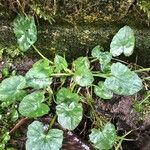
Ranunculus ficaria
Lesser Celandine · Fig buttercup · Figwort · Marsh pilewort · Pilewort
Description
Source: leafsnapFicaria verna (formerly Ranunculus ficaria L.), commonly known as lesser celandine or pilewort, is a low-growing, hairless perennial flowering plant in the buttercup family Ranunculaceae native to Europe and Western Asia. It has fleshy dark green, heart-shaped leaves and distinctive flowers with bright yellow, glossy petals. It is now introduced in North America, where it is known by the common name fig buttercup and considered an invasive species. The plant is poisonous if ingested raw and potentially fatal to grazing animals and livestock such as horses, cattle, and sheep. For these reasons, several US states have banned the plant or listed it as a noxious weed. It prefers bare, damp ground and is considered by horticulturalists in the United Kingdom as a persistent garden weed; nevertheless, many specialist plantsmen, nursery owners and discerning gardeners in the UK and Europe collect selected cultivars of the plant, including bronze-leaved and double-flowered ones. Emerging in late winter with flowers appearing late February through May in the UK, its appearance across the landscape is regarded by many as a harbinger of spring.
Care Guide
💧 Water Every 1 week
It's not necessary to soak the tubers in water prior to planting but if you decide to soak, don't overdo it: an overnight soak will be enough to allow the corms to swell without encouraging mold growth. Water the bulbs well upon planting, then withhold water until growth appears to avoid rot. Once the plants are established, water sparingly throughout their period of growth. When flowers are finished, many gardeners remove the spent plants, as they perennialize poorly in most areas.
☀️ Light Full sun
Lesser celandine typically resides in natural environments like shaded forest undergrowth or rocky terrains. The plant prefers partial sunlight exposure, but is quite adaptable to full sun or complete shade, showing off its robust and adaptable characteristics.
🌡️ Temperature 5–35°C
Lesser celandine possesses the capacity to adjust to varying temperature conditions; however, its dissemination might yet be constrained by diverse combinations of hydration and thermal conditions. This plant flourishes optimally in summer under warm weather conditions with sufficient water supply or watering. Extended durations of cloudy and wet weather, along with extended periods of high temperatures, can amplify the potential risk of lesser celandine's death. During winter season, adequate shielding against chill can enhance the plant's chances of survival.
💨 Humidity
🪴 Soil 5-7
🌱 Fertilizer
The primary time to feed Lesser celandine is in the early stages of spring when the flowers are developing. The correct fertilizer promotes improved flowers and assists Lesser celandine in producing beautiful blooms. By fertilizing in early spring, not only are superb flowers ensured throughout the season, but it also supplies the required energy for its dormant growth stages.
🪴 Pot & Repot
✂️ Pruning
🌿 Propagating
🐛 Diseases & pets
☠️ Toxicity
The other reason to avoid cultivating this wild plant is its toxicity. Like all buttercups, sagebrush buttercup contains a toxin in its raw state that is a skin irritant and also a mild poison if ingested. Grazing animals will tend to eat it because it appears so early in spring, so the sagebrush buttercup is undesirable to have in places where there is grazing livestock.
Characteristics
- Plant Type
- Herb
- Life Cycle
- Perennial
- Genus
- Ranunculus
- Family
- Ranunculaceae
- Hardiness Zone
- 4-9
- Mature Height
- 10 cm to 30 cm
- Mature Spread
- 20 cm
- Leaf Color
- Green
- Leaf Type
- Deciduous
- Flower Color
- Yellow, Gold
- Flower Size
- 2.03 cm to 3.05 cm
- Bloom Time
- Late winter, Early spring, Mid spring
- Planting Time
- Spring, Autumn
- Harvest Time
- Mid spring, Late spring, Early summer
- Native Area
- Turkey, Sweden, Austria, Czech Republic, Slovakia, Cyprus, Poland, Lebanon, Norway, Germany, Portugal, Syria, Italy, Kazakhstan, Spain, Switzerland, Denmark, Iceland, Finland, France, Iran, Ireland, United Kingdom, Romania, Belgium, Netherlands