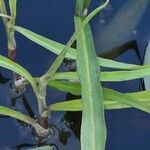
Ranunculus flammula
Lesser Spearwort · Spearwort · Greater Creeping Spearwort · Spearwort Buttercup · Creeping Spearwort
Description
Source: leafsnapRanunculus flammula, commonly known as lesser spearwort, is a perennial herbaceous plant in the buttercup family. Native to Europe and Asia, it thrives in wetlands, marshes, and along the edges of streams and ponds. The plant features slender stems that can reach up to 60 cm in height and small yellow flowers that bloom from June to August. Its leaves are deeply divided into narrow segments with a bright green color. Lesser spearwort is an important food source for many aquatic insects, such as dragonflies and damselflies. In traditional herbal medicine, it has been valued for its anti-inflammatory properties. However, caution is advised as the plant contains toxic compounds that can cause skin irritation or poisoning if ingested in large quantities by humans or animals.
Care Guide
💧 Water Every 7 days
Greater creeping spearwort flourishes in wet environments that have high water needs and prefers humid conditions. For optimal growth, it should be watered twice a week. As an evergreen plant, it retains its leaves throughout the year, which means it consistently requires moisture regardless of the season.
How should I water my Greater creeping spearwort?
To properly water the Greater creeping spearwort, it is best to use filtered water at room temperature. Tap water may contain harmful particles, so it is better to use filtered water. The water should be at room temperature or slightly warmer because the Greater creeping spearwort is accustomed to warm environments and cold water can be stressful for it. Avoid watering the plant from above as it can lead to problems with the foliage. Instead, pour the filtered room temperature water directly onto the soil until it is fully saturated. This helps to moisten the roots and enables them to spread and absorb the necessary nutrients from the soil.
What should I do if I give my Greater creeping spearwort too much or too little water?
Greater creeping spearwort can be negatively affected by both overwatering and underwatering, but overwatering is more common. When this plant receives excessive water, its stems and leaves may wilt and turn yellow. It can also lead to diseases like root rot, mold, and mildew, which can be fatal. On the other hand, underwatering is less common because the plant is drought-tolerant, but it is still possible. In such cases, the leaves become brittle and brown. It is crucial to identify the signs of overwatering early to prevent irreversible damage. If you notice these signs, reduce the watering schedule immediately and consider replacing poorly draining soil with a loose, well-draining potting mix. Conversely, if you observe signs of underwatering, simply increase the watering frequency until the signs improve.
How frequently should I water my Greater creeping spearwort?
If your Greater creeping spearwort plant is in a pot, the most precise way to determine if it needs water is by checking the soil moisture with your finger. If the top two to three inches of soil are dry, it's time to water it. If you have planted your Greater creeping spearwort outdoors in the ground, you can use a similar method to test the soil. Once the top few inches of soil have dried out, it's time to water. In the spring and early fall, following this method will usually require watering the plant about once a week. However, during extremely hot weather, you may need to increase watering to twice a week or more. It's worth noting that mature and well-established Greater creeping spearwort plants have the ability to withstand periods of drought.
How much water does my Greater creeping spearwort plant need?
When watering your Greater creeping spearwort, make sure to give it plenty of water. Wait until the top couple inches of soil are dry before watering, and then give the plant a thorough soaking. The water should be enough to completely saturate the soil and cause excess water to drain out of the pot. If you don't see water draining out, you may not have watered enough. However, be careful not to let the water accumulate in the soil, as this can harm the plant. If you're watering outside, 1 inch of rain per week should be enough.
How do I water my Greater creeping spearwort when it is growing at different stages?
The water needs of the Greater creeping spearwort can vary depending on its growth stages. When the plant is young or has been recently transplanted, it requires more water to support the development of new roots that will aid future growth. As the plant matures, it will require less water. Additionally, during the bloom period, the plant needs more water to support the development of its flowers.
☀️ Light Full sun
The Greater creeping spearwort prefers to be situated in a location where it can enjoy the full day's sunlight. It can also tolerate a position with partial shade, however, it is not preferable. Its natural growing conditions indicate a preference for sunny areas. Nevertheless, too much sunlight may cause stress to the plant, much like inadequate light can restrict its development.
What are the sunlight requirements for Greater Creeping Spearwort?
Greater Creeping Spearwort thrives best in full sun conditions, requiring more than 6 hours of sunlight daily. It can also tolerate partial sun, about 3-6 hours of sunlight, but this is not ideal. Observing your garden's sun exposure throughout the day can help you find the perfect spot that meets these requirements. Excessive or insufficient sun exposure can lead to stress and hinder the plant's growth, so it's important to strike a balance between light and shade.
How can artificial lighting support the growth of indoor Greater Creeping Spearwort?
When natural sunlight is insufficient, especially during winter or in less sunny indoor spaces, artificial lighting can be a vital solution for supporting the growth of Greater Creeping Spearwort. LED lights are recommended due to their ability to be customized to provide specific wavelengths needed by plants. For full sun plants like Greater Creeping Spearwort, 30-50W/sq ft of artificial light is necessary, positioned 12-36 inches above the plant. To mimic natural daylight conditions, provide 8-12 hours of artificial light daily.
What are the symptoms of inadequate lighting for Greater Creeping Spearwort?
Symptoms of inadequate lighting in Greater Creeping Spearwort include smaller new leaves, leggy or sparse growth, faster leaf drop, slower or stopped growth, lighter-colored new leaves, chlorosis (yellowing of the leaves), sunscald, leaf curling, wilting, and leaf scorching. These symptoms can indicate either too little or too much sunlight, reflecting the plant's struggle to maintain healthy growth under poor lighting conditions.
What solutions can improve light conditions for indoor and outdoor Greater Creeping Spearwort plants?
To improve light conditions for Greater Creeping Spearwort, gradually increase sunlight exposure to at least 6 hours daily. Use a south-facing window and keep curtains open for indoor plants. Consider artificial lighting, such as professional grow lights or desk lamps, for at least 8 hours daily for plants that are not easily moved. For outdoor plants, move them to sunnier spots gradually to avoid sunburn. Prune surrounding trees if necessary to reduce obstructions. For ground plants, transplant them during their dormant period to a location with ample sunlight and good drainage. Note that parts of the plant damaged by insufficient light may not recover, but new growth should be healthy with improved light exposure.
🌡️ Temperature 5–32.2°C
The Greater creeping spearwort is native to temperate climate zones. It flourishes best in temperature ranges from 41 to 89.6 °F (5 to 32 ℃). Seasonal temperature changes may be necessary to mimic its original habitat conditions.
What is the ideal temperature range for Greater Creeping Spearwort?
Greater Creeping Spearwort is native to temperate regions and thrives in a temperature range of 41 to 89.6 °F (5 to 32 °C). It requires temperature adjustments throughout the seasons to replicate its natural habitat. The plant possesses strong cold resistance, making special frost protection measures generally unnecessary. However, in conditions where winter temperatures are expected to drop below its cold tolerance limit, providing cold protection with soil or straw covering is advisable. Additionally, watering the plant abundantly before the first autumn freeze is recommended to ensure the soil remains moist, preventing drought and water scarcity during winter and early spring.
How does low temperature affect Greater Creeping Spearwort and what are the solutions?
Greater Creeping Spearwort is cold-tolerant and prefers temperatures above its minimum suitable growth threshold. During winter, it's important to maintain temperatures above its minimum tolerable growth limit. If temperatures fall below its growth limit, there may not be noticeable changes during winter but a decrease in sprouting or even absence of sprouting could occur in spring. The solution for plants that haven't sprouted in spring due to low temperature exposure is to remove any unsprouted parts.
What are the effects of high temperature on Greater Creeping Spearwort and how can they be mitigated?
During the summer, Greater Creeping Spearwort should be maintained below its maximum suitable growth temperature. Exceeding its maximum tolerable growth temperature can result in leaves becoming lighter in color, prone to curling, susceptibility to sunburn, and in severe cases, wilting and drying of the entire plant. To mitigate these effects, trim away sunburned and dried parts. Move the plant to a shaded location or use a shade cloth for protection from midday and afternoon sun. Watering the plant in the morning and evening to maintain soil moisture can also help in reducing high temperature stress.
💨 Humidity
🪴 Soil
🌱 Fertilizer
For optimal growth, greater creeping spearwort needs balanced nutrition. During the growing season, fertilize it every two weeks using a half-strength liquid fertilizer. In the winter, reduce the frequency of feeding. To prevent root burn, always water the plant before fertilizing. Be sure to adjust the fertilizer dosage based on the specific product instructions, as well as the size of the plant and the condition of the soil.
Why do I have to add fertilizer to my Greater creeping spearwort?
The main structure of the Greater creeping spearwort is its leaves. Fertilization is a crucial way to ensure that the leaves both look great and fulfill their function. Proper fertilization will maintain the consistent color and healthy texture of the leaves. Fertilization also benefits the plant's root system by promoting the growth of new roots and maintaining existing ones. This not only keeps the plant healthy now but also enhances its future ability to absorb soil nutrients.
When should I fertilize my Greater creeping spearwort?
To ensure optimal growth of your Greater creeping spearwort, start by growing it outdoors. This perennial plant will begin sending out new growth in early spring, signaled by the emergence of leaves. This is the ideal time to start fertilizing for the year. While a single application of fertilizer may suffice for your Greater creeping spearwort, if you want to maximize its growth, you can fertilize multiple times during the spring and early summer. For this approach, feed your Greater creeping spearwort approximately once every month to a month and a half.
When is the best time to not use fertilizer on my Greater creeping spearwort?
During late fall and winter, your Greater creeping spearwort will go into a dormant phase and stop producing new growth. In this period, it is best to avoid fertilizing your plant. In the spring and summer, if you choose to fertilize multiple times, gradually reduce the amount as summer approaches since the growth rate of your Greater creeping spearwort will also slow down. It is generally not advised to fertilize your plant during extremely hot weather or when the soil is excessively dry as this can cause stress and premature death.
What kind of fertilizer does my Greater creeping spearwort plant need?
Choosing the best fertilizer for a Greater creeping spearwort is actually a simple task. These plants thrive on a general-purpose garden fertilizer that contains equal amounts of nitrogen, phosphorus, and potassium. It's best to use a fertilizer with a ratio of 10-10-10 or something similar for optimal effectiveness. Avoid fertilizers with high nitrogen levels if unsure. Granular fertilizers are mostly recommended for Greater creeping spearwort, especially those that are slow-release and easy to apply to the soil. In addition to this, it can be beneficial to feed the plant with organic soil amendments like compost.
How can I fertilize my Greater creeping spearwort plant?
To ensure the healthy growth of your Greater creeping spearwort, wait until its first leaves emerge in early spring. Then, apply a slow-release fertilizer with a balanced formula to the soil around the plant's base. You can repeat this process later in the season if desired. Remember to apply the fertilizer to the soil, not directly to the plant, and you may need to move some leaves to access the soil. It's also a good idea to water your Greater creeping spearwort before and after fertilization.
🪴 Pot & Repot
✂️ Pruning
To encourage continued blooming, remove the faded flowers of the greater creeping spearwort. When the flowers stop blooming and the leaves start to turn yellow, you can stop watering the plant. For storage: 1. Cut back the top of the plant. 2. Dig out the corms. 3. Treat them with a fungicide. 4. Store them in a dry location. If the plant is hardy, you can leave the corms in the soil but ensure it remains dry. Additionally, for potted plants, keep 3-5 flower buds in reserve.
🌿 Propagating
🐛 Diseases & pets
☠️ Toxicity
Characteristics
- Plant Type
- Herb
- Life Cycle
- Perennial
- Genus
- Ranunculus
- Family
- Ranunculaceae
- Hardiness Zone
- 4-8
- Mature Height
- 3 cm to 25 cm
- Mature Spread
- 30 cm
- Leaf Color
- Green
- Leaf Type
- Deciduous
- Flower Color
- Yellow
- Flower Size
- 2.54 cm
- Bloom Time
- Late spring, Summer, Early fall, Mid fall
- Planting Time
- Spring
- Harvest Time
- Mid summer, Late summer, Fall, Early winter
- Native Area
- India, Austria, Turkey, Sweden, Slovakia, Montenegro, Croatia, Slovenia, Morocco, Belarus, Russia, Germany, Iceland, Estonia, Romania, Latvia, Belgium, Netherlands, Portugal, France, Czech Republic, Bulgaria, Armenia, Poland, Greece, Ukraine, Serbia, Lithuania, Norway, Italy, Kazakhstan, Spain, Switzerland, Denmark, Finland, Ireland, United Kingdom, Hungary, Algeria, Azerbaijan