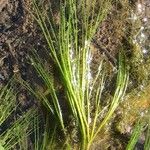
Ranunculus fluitans
River Water-crowfoot · River Crowfoot · Water buttercup · Upes ūdens Baltās mini-Gundegas (LVL)
Description
Source: leafsnapRanunculus fluitans, commonly known as river water crowfoot, is a perennial aquatic plant belonging to the Ranunculaceae family. Native to Europe and Asia, it thrives in slow-moving or still bodies of water such as ponds, lakes, and streams. The plant features long stems that can extend up to 1 meter, with submerged leaves finely divided into thread-like segments. Its floating leaves are round or oval-shaped, waxy in texture, and display a bright green color. The flowers of Ranunculus fluitans are small, about 1 cm in diameter, with five white petals surrounding a yellow center. They bloom from May to August, emerging on long stalks above the water's surface. Ranunculus fluitans plays a crucial role in maintaining healthy aquatic ecosystems. It provides shelter for fish and other aquatic animals while helping to oxygenate the water through photosynthesis. Additionally, it serves as a vital food source for various insects, such as dragonflies. Medicinally, indigenous people have utilized Ranunculus fluitans for treating various ailments, including fever, headaches, and stomach problems, owing to its anti-inflammatory properties. Overall, Ranunculus fluitans is an attractive addition to any pond or aquarium due to its beautiful flowers and ecological benefits, making it an important species of aquatic plant worth conserving.
Care Guide
💧 Water Every 7 days
River water crowfoot thrives in aquatic environments where there is constant moisture, and it usually needs to be watered weekly. It is commonly found in gently flowing streams, where it plays a vital role by oxygenating the water and supporting aquatic life, making it essential to the ecosystem.
How should I water my River water crowfoot plant?
To properly water the River water crowfoot, use filtered water at room temperature or slightly warmer. Tap water may contain harmful particles, so filtered water is preferred. The plant is accustomed to warm conditions, so avoid using cold water to prevent shock. Additionally, do not water overhead to prevent issues with the foliage. Instead, apply the filtered room temperature water directly to the soil until it is completely soaked. This method benefits the plant by providing moisture to the roots and aiding in the spread of nutrients through the soil.
What should I do if I give my River water crowfoot too much or too little water?
Overwatering is a common issue that can harm your River water crowfoot. When this happens, the plant's stems and leaves wilt and turn yellow. Overwatering over a long period can also lead to diseases like root rot, mold, and mildew, which can be fatal. On the other hand, underwatering is less common for this plant as it is tolerant to drought. However, when underwatering occurs, the leaves become brittle and brown. It's important to notice signs of overwatering early, as some diseases may be irreversible if not addressed promptly. If you see these signs, reduce your watering immediately and check the soil drainage. Replace poorly draining soil with a loose, well-draining potting mix. If your plant seems to be receiving too little water, increase watering until the signs improve.
How frequently do I need to water my River water crowfoot?
If your River water crowfoot is planted in a pot, the most precise way to determine if it needs water is to check the soil moisture by sticking your finger into it. If you find that the top two to three inches of soil are dry, it is time to water it. For those who have the River water crowfoot planted in their outdoor garden, you can use a similar method to test the soil moisture. Again, if you find that the first few inches of soil have dried out, it is time to water your plant. Typically, during spring and early fall, using this method will usually lead to watering the plant around once a week. However, during very hot weather, you may need to increase the watering frequency to about twice a week or even more. It is worth noting that mature and well-established River water crowfoot plants have shown a commendable ability to tolerate drought.
How much water does my River water crowfoot plant need?
When watering your River water crowfoot, don't hold back on the amount of water you give. Make sure that the first two to three inches of soil are dry before watering. It's best to water thoroughly, soaking the soil completely. You should add enough water for excess water to flow through the drainage holes at the bottom of the pot. If you don't see excess water draining, it means you haven't watered enough. However, be careful not to let water accumulate in the soil as it can harm the plant. If you notice that water isn't draining well, it could be a sign of poorly draining soil, which is bad for the plant's health. When the plant is outside, 1 inch of rain per week should be sufficient.
How do I water my River water crowfoot as it grows?
The water needs of the River water crowfoot can vary depending on its growth stages. When it is in its early years or recently transplanted, it requires more water. During these stages, the plant focuses on growing new roots, which need extra moisture. However, as the plant matures, it will require less water. Another stage that may require more water is during the bloom period when the plant is developing flowers.
☀️ Light Full sun
River water crowfoot is found in habitats with ample sunlight, such as the shallow margins of ponds and lakes. It prefers full sun but can also tolerate partial sun.
What are the sunlight requirements for River water crowfoot?
River water crowfoot requires full sun, defined as above 6 hours of sunlight daily, but it can also tolerate partial sun conditions, which means about 3-6 hours of sunlight. It's vital to observe the movement of sunlight through your garden to ensure the plants receive the ideal balance of light and shade, contributing to their well-being.
How can artificial lighting be used for River water crowfoot indoors?
When natural sunlight is insufficient for indoor River water crowfoot plants, artificial lighting becomes crucial. LED lights are recommended because they can be tailored to provide specific light wavelengths needed by plants. Full sun plants require 30-50W/sq ft, partial sun plants 20-30W/sq ft, and full shade plants 10-20W/sq ft of artificial light. The lights should be placed 12-36 inches above the plant, simulating natural sunlight conditions, and kept on for 8-12 hours per day depending on the plant species' needs.
What are the symptoms of insufficient light for River water crowfoot?
Symptoms of light deficiency in River water crowfoot include smaller new leaves, leggy or sparse growth, faster leaf drop, slower or no new growth, lighter-colored leaves indicating a lack of chlorophyll, chlorosis leading to yellow leaves, sunscald from intense light exposure, leaf curling as a heat stress response, wilting due to water loss, and leaf scorching marked by brown, dry edges. These signs help diagnose and correct light-related issues.
What solutions are available for River water crowfoot receiving insufficient light?
To combat insufficient light for River water crowfoot, gradually move plants to sunnier locations to achieve at least 6 hours of direct sunlight, or utilize south-facing windows for indoor plants. Consider artificial lighting, keeping lamps on for at least 8 hours. For outdoor plants, adjust their position gradually to avoid sunburn. Removing obstructions and transplanting to sunnier spots can also help. While some damaged parts might not recover, adequate light exposure encourages healthy new growth.
🌡️ Temperature 5–35°C
River water crowfoot can adjust to a wide range of temperature conditions, but its distribution may still be restricted by specific combinations of water and heat. It performs best in warm summer climates with sufficient rainfall or watering. Extended periods of cloudy, rainy weather and prolonged high temperatures can raise the chance of River water crowfoot dying. In winter, adequate protection from the cold can improve the plant's survival rate.
What is the common name of Ranunculus fluitans?
The common name of Ranunculus fluitans is River water crowfoot.
What is the botanical name of River water crowfoot?
The botanical name of River water crowfoot is Ranunculus fluitans.
💨 Humidity
🪴 Soil
🌱 Fertilizer
Before planting river water crowfoot, mix one-third fully decomposed organic fertilizer into the soil. During the blooming period, fertilize with a diluted NPK (nitrogen, phosphorus, potassium) solution. After blooming, apply a fertilizer rich in either potassium or phosphorus. Continue fertilizing until the foliage begins to turn yellow, which indicates that the plant is storing energy in its underground corms for future growth.
🪴 Pot & Repot
✂️ Pruning
River water crowfoot is characterized by its delicate white flowers and thread-like foliage. Pruning is crucial for its healthy growth and should be done from early to late spring. During pruning, trim away dead stems but avoid cutting too heavily to maintain the plant's shape. Regular pruning helps prevent overcrowding, enhances water flow, and supports the vitality of riparian and pond ecosystems.
🌿 Propagating
🐛 Diseases & pets
☠️ Toxicity
Characteristics
- Plant Type
- Herb
- Life Cycle
- Perennial
- Genus
- Ranunculus
- Family
- Ranunculaceae
- Hardiness Zone
- 5-9
- Mature Height
- 6.1 m
- Mature Spread
- 49 cm to 91 cm
- Leaf Color
- Dark Green
- Leaf Type
- Evergreen
- Flower Color
- White
- Flower Size
- 2.03 cm to 3.05 cm
- Bloom Time
- Late spring, Summer
- Planting Time
- Spring, Summer
- Harvest Time
- Mid summer, Late summer, Early fall, Mid fall
- Native Area
- Austria, Czech Republic, Slovakia, Montenegro, Poland, Croatia, Slovenia, Ukraine, Serbia, Hungary, Germany, Italy, Switzerland, Bosnia and Herzegovina, France, United Kingdom, Romania, Belgium, Netherlands