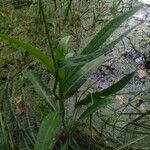
Ranunculus lingua
Greater spearwort · Great spearwort
Description
Source: leafsnapRanunculus lingua, the greater spearwort, great spearwort, tongue-leaved crowfoot, or water buttercup, is a plant species in the family Ranunculaceae native to temperate areas of Europe, Siberia and through to the western Himalayas. It is a semiaquatic plant that prefers to grow in about 40 cm (16 in) of water in a variety of wetland habitats. A cultivar (or perhaps a traditional variety) called 'Grandiflorus', the large-flowered greater spearwort, has 6 cm flowers and is favored by gardeners.
Care Guide
💧 Water
Greater spearwort, which originates from wetland environments, thrives in consistently moist soil and high humidity. It prefers damp conditions but can tolerate short dry periods. To maintain its health, it requires weekly watering. Planting it near water bodies can help regulate its hydration, as its rhizomatous roots adapt well to local rainfall patterns.
How should I water my Greater spearwort in the most effective way?
To properly water the Greater spearwort, it's best to use filtered water at room temperature. Tap water may have harmful particles, so filtered water is preferred. The plant prefers warm temperatures, so avoid using cold water which can be a shock to its system. Additionally, overhead watering should be avoided as it can cause problems with the foliage. Instead, water the plant by applying filtered room temperature water directly to the soil until it is fully soaked. This helps to moisturize the roots and facilitate their spread in the soil, enabling them to absorb necessary nutrients.
What do I need to do if I give too much or too little water to my Greater spearwort plant?
Overwatering is a more common issue than underwatering for the health of your Greater spearwort. When this plant receives too much water, its stems and leaves may wilt and turn yellow. Overwatering for a long time can cause diseases like root rot, mold, and mildew, which can kill the plant. Underwatering is less common because the plant can tolerate drought, but it can still happen. When underwatering occurs, the leaves become brittle and brown. It's important to notice signs of overwatering early to prevent irreversible damage. If you see early signs, reduce watering immediately and check the soil's drainage. If the soil doesn't drain well, replace it with a loose, well-draining potting mix. If you notice signs of underwatering, simply water more regularly until the signs go away.
How frequently should I water my Greater spearwort?
To determine if your Greater spearwort plant needs water, check the soil. If it's in a pot, stick your finger into the soil and water it if the top two to three inches are dry. For outdoor plants, do the same test, watering when the top few inches of soil have dried out. In spring and early fall, you may need to water about once a week. In hot weather, increase watering to twice a week or more. However, mature Greater spearwort plants are quite drought-resistant.
How much water does my Greater spearwort plant need?
To properly water your Greater spearwort, don't hold back on the amount of water you give. Make sure the top few inches of soil are dry, then water generously so that the soil becomes completely soaked. You'll know you've added enough water when you see it draining out of the pot's drainage holes. If you don't see any excess water, you may have underwatered your plant. However, be careful not to allow the water to accumulate in the soil, as this can harm the plant. On the other hand, if water doesn't drain out of the pot, it could mean that the soil doesn't drain well, which is bad for the plant's health. For outdoor plants, about 1 inch of rain per week should be enough.
How should I water my Greater spearwort as it grows?
The water needs of the Greater spearwort can vary depending on its growth stages. In the first few years of its life or after being transplanted to a new location, it requires more water. This is because it is focused on developing new roots to support future growth, which need extra moisture. As the plant matures, it will require less water. Additionally, during the bloom period, the Greater spearwort may need more water due to the energy used for flower development.
☀️ Light Full sun
The greater spearwort grows exceptionally well in areas that get abundant sunlight throughout the day. Insufficient light can negatively affect its development, resulting in stunted growth or a failure to flower. Conversely, excessive light does not necessarily damage it, reflecting its original habitat where sunlight is plentiful.
What are the sunlight requirements for Greater spearwort?
Greater spearwort requires above 6 hours of sunlight daily to thrive properly. It's essential to watch how sunlight moves through your garden and choose spots that balance light and shade ideally. The plant flourishes remarkably well in locations where it can bask in the sun's rays throughout the day. However, a lack of sunlight could lead to stunted growth or failure to flower, though excessive sunlight does not typically harm it. This mimics its natural habitat, where sunlight is abundant.
How does artificial lighting benefit indoor plants, and what are some tips for using it?
Indoor plants require adequate lighting for optimal growth, especially when natural sunlight is insufficient, like during winter or in less sunny spaces. Artificial lights, such as LED lights, are recommended because they can be customized to provide specific wavelengths your plants need. Full sun plants need 30-50W/sq ft, partial sun 20-30W/sq ft, and full shade plants 10-20W/sq ft of artificial light. The artificial light source should be placed 12-36 inches above the plant, mimicking natural sunlight, and most plants necessitate 8-12 hours of light per day.
What are the symptoms of inadequate lighting for Greater spearwort?
Symptoms of inadequate lighting in Greater spearwort include smaller new leaves, leggy or sparse growth, faster leaf drop, slower or no new growth, lighter-colored new leaves, chlorosis, sunscald, leaf curling, wilting, and leaf scorching. These symptoms arise from the plant trying to adapt to low light conditions by conserving resources, which affects its growth and overall health negatively.
What are some solutions for providing adequate light to Greater spearwort?
To ensure Greater spearwort receives adequate light, gradually move plants to sunnier locations until they get at least 6 hours of direct sunlight daily. For indoor plants, use a south-facing window or consider artificial lighting, such as desk lamps or professional grow lights, for at least 8 hours daily. Outdoors, acclimate your plants to sunlight gradually to prevent sunburn. Reducing obstructions by pruning or transplanting to sunnier spots can also help. Note that parts of the plant affected by previous light deficiencies may not recover, but new growth should be healthy with improved light conditions.
🌡️ Temperature 5–35°C
Greater spearwort can tolerate a wide range of temperatures, but its distribution may still be constrained by specific combinations of moisture and heat. It does best in warm summer conditions with adequate rainfall or irrigation. Extended periods of cloudy, rainy weather or prolonged high temperatures can increase the likelihood of Greater spearwort dying. In winter, appropriate protection from cold can enhance the plant's chances of survival.
💨 Humidity
🪴 Soil
🌱 Fertilizer
🪴 Pot & Repot
✂️ Pruning
The greater spearwort displays bright yellow flowers and lance-shaped leaves. To promote growth and improve air circulation, it's best to prune the plant from early to late spring. Be sure to remove any dead stems and spent flowers to prolong blooming and prevent self-seeding. Always use clean, sharp tools for pruning to minimize the risk of disease.
🌿 Propagating
🐛 Diseases & pets
☠️ Toxicity
Characteristics
- Plant Type
- Herb
- Life Cycle
- Perennial
- Genus
- Ranunculus
- Family
- Ranunculaceae
- Hardiness Zone
- 4-9
- Mature Height
- 0.49 m to 1.22 m
- Mature Spread
- 2.13 m
- Leaf Color
- Blue, Green
- Leaf Type
- Deciduous
- Flower Color
- Yellow
- Flower Size
- 2.54 cm to 5.08 cm
- Bloom Time
- Summer, Early fall
- Planting Time
- Spring, Summer, Autumn
- Harvest Time
- Late summer, Fall
- Native Area
- Turkey, Sweden, India, Austria, Slovakia, Montenegro, Slovenia, Croatia, Belarus, Russia, Germany, Estonia, Romania, Latvia, Belgium, Netherlands, France, Czech Republic, Bulgaria, Armenia, Poland, Greece, Ukraine, Serbia, China, Lithuania, Norway, Kyrgyzstan, Kazakhstan, Italy, Spain, Switzerland, Denmark, Mongolia, Finland, Iran, Albania, Ireland, United Kingdom, Hungary