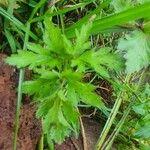
Ranunculus multifidus
African buttercup · Wild Buttercup
Description
Source: leafsnapRanunculus multifidus, commonly known as the multi-fingered buttercup, is a perennial herbaceous plant in the Ranunculaceae family. Native to Europe and Asia, it thrives in meadows, pastures, and open woodlands. The plant can grow up to 30 cm in height and features deeply divided leaves, each lobed into narrow segments. Its bright yellow flowers, characterized by five petals and a central cluster of yellow stamens, bloom from late spring to early summer. Ranunculus multifidus prefers moist soil but can tolerate dry conditions. It's an excellent choice for rock gardens or naturalized areas, where it can spread freely through self-seeding. Traditionally, the plant has been used for its anti-inflammatory properties in medicinal practices. However, it is important to note that all parts of the plant are toxic if ingested by humans or animals. Overall, Ranunculus multifidus is a beautiful addition to any garden, offering bright yellow flowers and unique foliage.
Care Guide
💧 Water Every 7 days
Originating from regions with seasonal rainfall, the African buttercup prefers consistent moisture but can tolerate short dry spells. It should be watered weekly. When grown outdoors, the African buttercup thrives in environments that mimic the natural water cycle of its native climate.
☀️ Light Full sun
White water crowfoot prefers to grow in locations that receive abundant daytime sunlight. However, it can also persist in areas where sun exposure is intermittent. Excessive light may cause stunted growth, while too little can result in poor foliage. Native to aquatic habitats, it has a moderate tolerance to sun.
What are the sun requirements for an African buttercup?
The African buttercup, or Ranunculus multifidus, thrives in different sunlight conditions depending on specific needs. For full sun exposure, it requires above 6 hours of sunlight per day, which is ideal for its growth and blooming. If you're considering partial sun, about 3-6 hours of sunlight will suffice. It's important to observe the sunlight's movement through your garden to identify spots that offer a harmonious balance of light and shade, ensuring the plant's well-being and happiness.
What is the warning to consider when planting an African buttercup regarding sunlight exposure?
When planting an African buttercup, it's crucial to consider how sunlight interacts with your garden space. Different areas may receive varying amounts of light throughout the day. The included warning emphasizes the importance of observing these patterns to select locations that ensure a balanced exposure to light and shade. This attention to the plant's light requirements is key to fostering a healthy and vibrant African buttercup.
What is the botanical name of the African buttercup?
The botanical name of the African buttercup is Ranunculus multifidus. Knowing the botanical name is helpful for researching specific care instructions and understanding more about the plant's characteristics and requirements.
🌡️ Temperature 5–32.2°C
White water crowfoot performs best at temperatures between 68 and 95 °F (20 to 35 ℃). Originating from mild environments, the plant prefers the cooler portion of that range. To support optimal growth across seasons, keep temperatures toward the lower end during colder seasons and gradually increase them as the seasons warm.
What is the native climate for the African buttercup?
The African buttercup, also known by its botanical name Ranunculus multifidus, thrives in climates that experience temperatures ranging from 32°F to 100.4°F (0°C to 38°C). It is native to environments that offer a temperate climate, showing a significant preference towards cooler conditions. For optimal growth, it is important to maintain a steady temperature within this range throughout the different seasons.
💨 Humidity
🪴 Soil
🌱 Fertilizer
For African buttercups, it's important to use a balanced fertilizer designed for flowering plants. Apply the fertilizer every two weeks during the spring and summer, and once a month during the fall and winter. Be sure to follow the label instructions carefully to avoid over-fertilization. Adjust your fertilizing routine according to the seasons to promote optimal growth and nutrient absorption. After applying fertilizer, water the plants thoroughly to prevent root burn.
🪴 Pot & Repot
✂️ Pruning
Pruning African buttercups from early to late spring encourages healthy growth and maintains their shape. Remove dead stems and spent flowers to boost blooming and vigor. Be sure to clean your tools to prevent the spread of disease. Regular pruning not only helps manage plant growth in gardens but also extends the flowering period.
🌿 Propagating
🐛 Diseases & pets
☠️ Toxicity
Characteristics
- Plant Type
- Herb
- Life Cycle
- Perennial, Annual, Biennial
- Genus
- Ranunculus
- Family
- Ranunculaceae
- Hardiness Zone
- 4-8
- Mature Height
- 10 cm to 49 cm
- Mature Spread
- 2.13 m
- Leaf Color
- Green
- Leaf Type
- Evergreen
- Flower Color
- White
- Flower Size
- 0.76 cm to 1.52 cm
- Bloom Time
- Mid spring, Late spring, Summer, Early fall
- Planting Time
- Spring, Summer
- Harvest Time
- Summer, Fall
- Native Area
- Sweden, Austria, Mexico, Slovakia, Montenegro, Slovenia, Morocco, Croatia, Belarus, Russia, Germany, Estonia, Ethiopia, Romania, Latvia, Belgium, Netherlands, France, Tunisia, Czech Republic, Peru, Bulgaria, Poland, Greece, Ukraine, Serbia, China, Lithuania, Norway, Afghanistan, Italy, Kazakhstan, Spain, Switzerland, Denmark, Mongolia, Finland, Ireland, United Kingdom, Hungary, Algeria