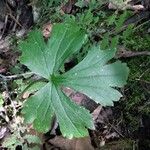
Ranunculus recurvatus
Blisterwort · Hooked Buttercup · Hooked Crowfoot · Little-leaved Buttercup · Rough Buttercup
Description
Source: leafsnapRanunculus recurvatus, the blisterwort or hooked crowfoot, is a plant species of the genus Ranunculus in the family Ranunculaceae native to eastern North America. It is an early-flowering plant of moist deciduous woods from central Quebec south to Florida. This herbaceous perennial plant is about 1-2' tall, consisting of some basal leaves, branched stems with alternate leaves, and flowers. The basal leaves are up to 5" long and 5" across; they have long hairy petioles. Each basal leaf is palmately cleft into 3-5 lobes; these lobes are often divided again into smaller lobes. The alternate leaves are similar to the basal leaves, except they become smaller as they ascend the stems and their petioles are shorter. The upper leaves are more slender and divided into fewer lobes. The margins of the leaves are crenate or dentate. The upper surface of each leaf is medium to dark green and glabrous. The stems are light green, terete, and covered with long hairs; they are erect to ascending, rather than sprawling across the ground.
🎭 Wealth
Care Guide
💧 Water
Blisterwort flourishes in moist environments and needs consistent watering, as it is not drought-tolerant. To mimic its natural conditions, it should be watered weekly. Although typically grown outdoors, blisterwort benefits from seasonal rains that complement its watering requirements, aligning with the natural fluctuations in moisture during the growing season.
How should I water my Blisterwort plant?
When watering the Blisterwort, make sure to use filtered water at room temperature or slightly warmer. Tap water can harm the plant due to particles it may contain. The Blisterwort is accustomed to a warm environment, so cold water can be stressful for it. Avoid overhead watering to prevent issues with the foliage. Instead, carefully pour filtered room temperature water onto the soil until it is completely soaked. This helps the roots stay moist and spread through the soil to collect necessary nutrients.
What should I do if I give my Blisterwort plant too much water or too little water?
It's more common for the health of your Blisterwort to be negatively affected by overwatering rather than underwatering. Overwatering can cause wilting and yellowing of the stems and leaves, and can also lead to serious diseases like root rot, mold, and mildew which can be fatal to the plant. On the other hand, underwatering is less likely to occur because Blisterwort has good drought tolerance. However, if underwatering does happen, you may notice brittle and brown leaves. It's important to be aware of the signs of overwatering and take action promptly. Some diseases caused by overwatering, such as root rot, may be irreversible if not addressed quickly. If you observe early signs of overwatering, reduce your watering schedule and consider using a well-draining potting mix if the soil is not draining properly. Conversely, if you notice signs of underwatering, simply increase your watering frequency until the signs improve.
How much water does my Blisterwort need?
If your plant is in a pot, the best way to know if it needs water is to check the soil moisture by putting your finger in the soil. If the top two to three inches of soil feel dry, it's time to water it. If you have the Blisterwort planted outdoors in the ground, you can use the same method to test the soil. Once you find that the top few inches of soil have dried out, it's time to add water. Typically, during spring and early fall, watering once a week using this method is sufficient. However, during hot weather, you may need to increase watering to twice or more per week. Nevertheless, mature and well-established Blisterwort plants can withstand drought conditions well.
How much water does my Blisterwort plant need?
To properly water your Blisterwort, don't hold back on the amount of water you give. Wait until the first two to three inches of soil are dry, and then give it a good, deep watering. Make sure to supply enough water to saturate the soil completely. You'll know you've added enough when excess water flows out through the drainage holes at the bottom of the pot. If you don't see any excess water draining out, you may have not given enough water. However, be cautious of letting water accumulate inside the soil, as it can harm the plant. On the other hand, if water is not draining through the pot, it may indicate poor soil drainage, which is not good for the plant's health. If the plant is outside, it generally needs about 1 inch of rain per week.
How should I water my Blisterwort as it grows?
The water needs of the Blisterwort can vary depending on its growth stages. In the first few years of its life or when the plant has been recently transplanted, more water should be provided. During these stages, the Blisterwort focuses its energy on developing new roots to support future growth. These roots require slightly more moisture than during later, more mature phases. As the plant ages, it will require less water overall. Additionally, during the bloom period, the Blisterwort will need more water due to the significant amount of moisture used for flower development.
☀️ Light Partial sun
Blisterwort thrives with abundant sunlight, a characteristic carried over from its ancestral habitat. Too little light can hinder its growth, while excessive light is generally not a problem because the plant can tolerate it. Consistent, strong light at every stage of its life cycle is optimal.
What are the sunlight requirements for Blisterwort?
Blisterwort requires full sun, which means it needs above 6 hours of sunlight daily. It's important to watch how sunlight moves through your garden and choose spots that offer a balance of light and shade. Blisterwort flourishes in ample sunlight, a characteristic inherited from its ancestral habitat. There's no concern for excessive light, as the plant can withstand it. For optimal growth at all life stages, consistent substantial light exposure is recommended.
How can artificial lighting be used for indoor Blisterwort plants?
For indoor Blisterwort plants, artificial lighting is crucial for optimal growth, especially when natural sunlight is insufficient. LED lights are a popular choice as they can be customized to provide specific wavelengths needed by plants. The lighting requirements vary: full sun plants need 30-50W/sq ft, partial sun plants 20-30W/sq ft, and full shade plants 10-20W/sq ft. The artificial light source should be placed 12-36 inches above the plant to mimic natural sunlight, and most plants require 8-12 hours of light per day.
What are symptoms of light deficiency in Blisterwort?
Symptoms of light deficiency in Blisterwort include small leaves, leggy or sparse growth, faster leaf drop, slower or no new growth, lighter-colored new leaves, chlorosis, sunscald, leaf curling, wilting, and leaf scorching. These symptoms indicate that the plant is not receiving sufficient sunlight, affecting its growth and overall health.
What solutions can improve light exposure for Blisterwort?
To improve light exposure for Blisterwort, gradually move plants to sunnier locations, aiming for at least 6 hours of direct sunlight daily. Consider using artificial light sources like desk or ceiling lamps, or invest in professional plant grow lights for ample light. For outdoor plants, avoid sudden changes in light intensity to prevent sunburn. Minimize obstructions by pruning trees or branches that block sunlight and consider transplanting smaller plants to sunnier locations with good drainage during their dormant period.
🌡️ Temperature 0–35°C
Blisterwort is native to regions where temperatures run from 32 to 95℉ (0 to 35℃). It performs best within that temperature range. If kept outside those limits, seasonal temperature adjustments may be required.
What are the ideal temperature conditions for growing Blisterwort?
Blisterwort, also known as Ranunculus recurvatus, is indigenous to regions that experience temperatures ranging from 32 to 95°F (0 to 35°C). It thrives best within this thermal sphere, indicating a preference for moderate climates. Although Blisterwort possesses strong cold resistance, allowing it to withstand cooler conditions without special frost protection measures, attention should be given during winters. If temperatures are anticipated to drop below the plant's cold tolerance threshold, it is crucial to provide additional cold protection through means such as covering the plant with soil or straw. To prepare for winter, it is advisable to water the plant abundantly before the first freeze of autumn, ensuring the soil retains moisture throughout the cold season. This preparation helps prevent drought and supports the plant's health during winter and the early spring months.
How does low temperature affect Blisterwort, and what are the solutions?
Blisterwort exhibits remarkable cold tolerance, thriving best when temperatures are maintained above its minimum growth threshold and kept above its minimum tolerable winter temperature. However, if the temperature falls below the plant's growth limit, there may not be immediate visible effects during winter. Nonetheless, there could be a significant impact on the plant's ability to sprout, potentially leading to decreased sprouting or absence thereof during the spring. The recommended solution for plants that fail to sprout in spring due to low temperature exposure is to remove the non-sprouting parts, thereby facilitating healthier growth in the remaining sections of the plant.
How does high temperature affect Blisterwort, and what measures should be taken?
During the summer months, it is important to ensure that Blisterwort's exposure to high temperatures is minimized, keeping it below its maximum suitable growth temperature. Exceeding the tolerable high temperature range can lead to several stress signs in the plant, such as leaves becoming lighter in color, curling, susceptibility to sunburn, and in extreme cases, the entire plant wilting and drying out. To mitigate these issues, it is advisable to trim away the sunburned and dried parts of the plant. Moving the plant to a location that provides shade, especially during the midday and afternoon sun, or using a shade cloth, can offer necessary protection. Additionally, watering the plant during the cooler morning and evening hours helps in maintaining the soil's moisture levels, further supporting the plant's health under high temperature conditions.
💨 Humidity
🪴 Soil 6-7
🌱 Fertilizer
One fertilizer treatment in spring is typically enough for Blisterwort, although repeated feedings can boost growth to its fullest. Feed about once a month to every month and a half. Fertilizing improves the leaves' appearance and function, encouraging uniform color and a healthy texture. It also promotes root development and nutrient uptake for the plant's long-term health.
🪴 Pot & Repot
✂️ Pruning
Blisterwort is known for its hooked fruits and yellow flowers. To care for this plant, prune it from early to late spring. Start by removing dead stems and trimming any leggy branches to improve airflow and shape the plant. Be careful not to over-prune, as maintaining its natural form enhances flowering and helps prevent disease. This approach will ensure you have a vibrant and healthy plant.
🌿 Propagating
🐛 Diseases & pets
☠️ Toxicity
Characteristics
- Plant Type
- Herb
- Life Cycle
- Perennial
- Genus
- Ranunculus
- Family
- Ranunculaceae
- Hardiness Zone
- 3-9
- Mature Height
- 30 cm to 61 cm
- Mature Spread
- 20 cm to 30 cm
- Leaf Color
- Green, Dark Green
- Leaf Type
- Deciduous
- Flower Color
- Yellow
- Flower Size
- 0.76 cm to 1.27 cm
- Bloom Time
- Mid spring, Late spring, Early summer
- Planting Time
- Autumn, Winter, Spring
- Harvest Time
- Early summer, Mid summer
- Native Area
- Russia, Cuba, Jamaica