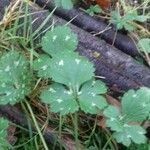
Ranunculus repens
Creeping buttercup · Creeping crowfoot · Buttercup
Description
Source: leafsnapRanunculus repens, Commonly Known as Creeping Buttercup Ranunculus repens, commonly known as creeping buttercup, is a perennial herbaceous plant belonging to the Ranunculaceae family. Native to Europe and Asia, it has been introduced and naturalized in various regions around the world. This plant has a creeping habit characterized by long stolons that root at nodes, forming dense mats of vegetation. The leaves of Ranunculus repens are trifoliate with toothed leaflets, arranged alternately along the stem. Its bright yellow flowers, which possess five petals and numerous stamens, bloom from late spring to early summer on long stalks that rise above the foliage. Creeping buttercup thrives in moist soils but is adaptable to a wide range of soil types, including clay, loam, sand, and gravelly soils. It can grow in full sun or partial shade, making it suitable for various habitats such as meadows, pastures, and wetlands. Although it is often appreciated as an ornamental plant for its vibrant yellow flowers and lush foliage in controlled settings like gardens or lawns, creeping buttercup can become invasive in natural ecosystems. When introduced into such environments, it can outcompete native vegetation, leading to ecological imbalances. The plant contains toxic compounds such as protoanemonin, which can cause skin irritation upon contact. This toxicity leads some people to classify it as a weed rather than an ornamental species. Despite its mixed reputation, Ranunculus repens plays a significant role in traditional medicine. Its extracts, known for their anti-inflammatory properties, have been used to treat various ailments, including rheumatism and wound healing, and these benefits have been scientifically validated through research studies.
🌳 The plant with bright yellow flowers, creeping buttercup, often seen carpeting fields, has an obscure but interesting use. Historically, creeping buttercup was a source of a yellow dye used in arts and crafts long before synthetic colors existed. This makes creeping buttercup a treasure among plants, providing a natural boon for creativity.
🎭 Orderliness, modesty, immaturity, unfaithfulness
Care Guide
💧 Water Every 7 days
Creeping buttercup flourishes in moist environments and thrives best with consistent soil moisture, needing to be watered once a week. While it can tolerate some drought, it performs optimally with steady hydration. Ideal for outdoor cultivation, the growth and flowering of creeping buttercup are closely tied to the availability of water, making effective irrigation essential during the growing season.
How should I water my Creeping buttercup throughout the year?
During the hottest months of the year, the Creeping buttercup requires the most water. You may need to water the plant more than once a week in the height of summer, depending on how quickly the soil dries out. In contrast, during the winter, the plant goes into a dormant phase and needs significantly less water. In fact, you may not need to water it at all during this time. However, if you choose to water it, it should be done no more than once a month. Excessive watering during the winter can increase the chances of the Creeping buttercup getting a disease.
What's the difference between watering my Creeping buttercup inside and outside?
Growing the Creeping buttercup indoors is most common for gardeners outside of temperate and tropical regions. It's important to consider that soil in a container can dry out faster than ground soil. Additionally, drying elements like air conditioning units may cause the Creeping buttercup to need more frequent watering compared to if it were planted outside. In such cases, outdoor plants may not require much watering, especially if they receive regular rainfall. On the other hand, indoor plants will need to be watered more often since they can't rely on rainwater soaking the soil.
☀️ Light Full sun
The health of creeping buttercup depends on abundant sunlight, similar to the conditions in its native habitats. While it performs best with continuous sun exposure, it can tolerate relatively limited light. However, insufficient light can hinder vigorous growth, causing stunted development and reduced vitality.
What are the sunlight requirements for creeping buttercup?
Creeping buttercup flourishes in full sun, requiring more than 6 hours of sunlight daily, but it can also tolerate partial sun, about 3-6 hours of sunlight. The well-being of creeping buttercup is closely connected to a generous amount of sunlight exposure, akin to its native habitats. While it thrives best in continuous exposure to sunrays, it can endure under relatively limited sunlight. However, insufficient sunlight may lead to stunted growth and reduced vitality. It's important to watch how sunlight moves through your garden to ensure plants receive the ideal balance of light and shade.
How can artificial lighting support the growth of creeping buttercup indoors?
Indoor creeping buttercup plants require adequate lighting for optimal growth, especially when natural sunlight is insufficient. Artificial lights, such as LEDs that can be customized to provide specific wavelengths, are vital for promoting faster, healthier growth. Full sun plants need 30-50W/sq ft of artificial light, partial sun plants need 20-30W/sq ft, and full shade plants need 10-20W/sq ft. The light source should be placed 12-36 inches above the plant to mimic natural sunlight, and plants most often need 8-12 hours of light per day.
What are the symptoms of incorrect sunlight exposure for creeping buttercup?
Incorrect sunlight exposure can manifest in various symptoms for creeping buttercup, including smaller new leaves, leggy or sparse growth, premature leaf drop, and a halt in new leaf production, indicating insufficient light. Overexposure symptoms include chlorosis, sunscald, leaf curling, wilting, and leaf scorching. These indicate the plant is either receiving too much sunlight or not enough, impacting its health and ability to photosynthesize effectively.
How do you adjust light conditions for creeping buttercup to ensure optimal growth?
For indoor plants, gradually increase sunlight exposure or use artificial lighting to ensure at least 6 hours of sunlight daily. Utilize south-facing windows and keep lamps on for at least 8 hours a day or consider professional grow lights. Outdoors, move plants to sunnier locations gradually to avoid sunburn. Reduce obstructions that block sunlight, like pruning obstructive tree branches. For ground-planted creeping buttercup, transplanting during the dormant period to a sunnier location with good drainage may also be beneficial. Note that parts of the plant that have suffered from insufficient light might not recover, but new growth will be healthy with proper light exposure.
🌡️ Temperature 0–32.2°C
The creeping buttercup is native to temperate regions. It prefers temperatures ranging from 32 to 90 ℉ (0 to 32 ℃) and can tolerate both hot and cold extremes. During hotter periods, maintain consistent soil moisture for best growth. In colder periods, protection from frost is recommended.
What are the essential growing conditions for a Creeping Buttercup?
The Creeping Buttercup (Ranunculus repens) is naturally adapted to temperate climates and flourishes in temperatures between 32 to 90°F (0 to 32°C). It's well-suited to withstand both hot and cold extremes, managing well in hotter seasons by maintaining consistent soil moisture, and in colder seasons, it exhibits strong cold resistance, generally negating the need for special frost protection measures. Despite this, in winters where temperatures are expected to drop below the plant's growth limit, it is advisable to safeguard it against the cold by covering it with soil or straw. Moreover, watering the plant abundantly before the first freeze of autumn to keep the soil moist can prevent drought stress and water scarcity during winter and early spring.
How does low temperature affect Creeping Buttercup, and what are the solutions?
Creeping Buttercup has a notable tolerance to low temperatures and is optimal when the temperature remains above its minimum suitable growth threshold. However, during winter, it is crucial that the temperature does not fall below its minimum tolerable growth limit. If temperatures drop below this critical limit, while immediate effects may not be apparent during the winter, there could be a noticeable decrease in sprouting or an absence of sprouting come spring. In response to such scenarios, the advisable solution is to remove any parts of the plant that have failed to sprout as spring arrives.
How does high temperature affect Creeping Buttercup, and what are the solutions?
During the summer months, it's essential to ensure the Creeping Buttercup is not exposed to temperatures beyond its maximum suitable growth threshold. Exceeding this temperature can lead to a series of stress symptoms including leaves turning lighter in color, curling, susceptibility to sunburn, and in severe cases, wilting or dryness of the entire plant. To mitigate these effects, trimming away sunburned and dried parts, relocating the plant to a shaded area or employing a shade cloth for protection against midday and afternoon sun, and watering the plant in the morning and evening to retain soil moisture, are all effective strategies.
💨 Humidity
🪴 Soil 6-6
🌱 Fertilizer
Usually one application of fertilizer in spring is enough for Creeping buttercup, though several feedings can boost growth. Apply every month to month-and-a-half. Fertilizing improves leaf appearance and function, encouraging uniform color and a healthy texture. It also promotes root growth and nutrient uptake for the plant's long-term health.
🪴 Pot & Repot Every 12 months
✂️ Pruning
To encourage more blooms, remove the spent flowers from the creeping buttercup. When the flowering phase ends and the leaves turn yellow, stop watering. For winter storage, trim the tops, dig up the corms, apply a fungicide, and store them in a cool, dry place. Hardy corms can remain in the dry soil without disturbance.
🌿 Propagating
🐛 Diseases & pets
☠️ Toxicity
Characteristics
- Plant Type
- Herb
- Life Cycle
- Perennial
- Genus
- Ranunculus
- Family
- Ranunculaceae
- Hardiness Zone
- 3-8
- Mature Height
- 10 cm to 61 cm
- Mature Spread
- 91 cm
- Leaf Color
- Green
- Leaf Type
- Deciduous, Evergreen
- Flower Color
- Yellow
- Flower Size
- 1.52 cm to 3.05 cm
- Bloom Time
- Late spring, Early summer, Mid summer
- Planting Time
- Autumn, Winter
- Harvest Time
- Early summer, Mid summer
- Native Area
- Turkey, Sweden, Austria, Slovakia, Montenegro, Slovenia, Morocco, Croatia, Belarus, Russia, Iraq, Germany, Iceland, Estonia, Koppen, Romania, Latvia, Belgium, Portugal, Netherlands, France, Tajikistan, Czech Republic, Bulgaria, Armenia, Poland, Greece, Ukraine, Serbia, China, Lithuania, Norway, Kyrgyzstan, Kazakhstan, Italy, Spain, Switzerland, Denmark, Japan, Mongolia, Finland, Iran, Albania, Ireland, United Kingdom, Hungary, Algeria, Azerbaijan