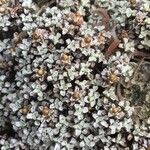
Raoulia australis
Common mat daisy · Golden scabweed · Scabweed
Description
Source: leafsnapRaoulia australis, commonly known as the New Zealand Alpine Daisy, is a low-growing perennial native to New Zealand. This plant belongs to the Asteraceae family and typically thrives in alpine and subalpine regions. Raoulia australis features small, round leaves that are densely packed together, forming a cushion-like structure. The leaves are covered with fine hairs, which help protect the plant from harsh alpine conditions, such as wind and frost. During the summer months, Raoulia australis produces small, yellow flowers that bloom on short stems above the foliage. These flowers are pollinated by insects, including bees. Due to its low-growing habit and ability to tolerate harsh conditions, Raoulia australis is commonly used in rock gardens or as ground cover. It prefers well-drained soil with full sun exposure but can also tolerate partial shade. Overall, Raoulia australis is an attractive plant with unique foliage and bright yellow flowers. It adds interest to any garden or landscape design while being resilient enough to withstand the challenging growing conditions typical of New Zealand's mountainous regions.
Care Guide
💧 Water Every 7 days
The New Zealand scab plant is well-suited to dry environments and shows remarkable drought tolerance. Although native to New Zealand, it only needs water once a week to prevent over-saturation. During periods of heavy rain, its growth naturally slows down, allowing the plant to conserve its resources.
☀️ Light Full sun
The New Zealand scab plant grows best when it receives plentiful light throughout the day, though it can also tolerate only partial light. Too much or too little light can affect its healthy growth. Originating from areas with abundant light, this plant has adapted to a range of light levels at different stages of its growth.
What are the sunlight requirements for the New Zealand scab plant?
The New Zealand scab plant, botanically known as Raoulia australis, requires full sun, meaning it thrives in locations that receive more than 6 hours of sunlight daily. However, it can also tolerate partial sun conditions, with about 3-6 hours of sunlight. It's important to watch how sunlight moves through your garden to ensure you're picking the perfect spots that provide a balance of light and shade, ensuring the plants' happiness.
How does the New Zealand scab plant react to different light conditions?
Originating from regions with generous light coverage, the New Zealand scab plant is well-adapted to a wide range of light conditions, thriving in abundant light but also tolerating partial exposure. Both excess and insufficient light can affect its healthy growth. In less sunny spaces or during winter, when natural light is insufficient, artificial lighting can provide a vital solution. LED lights are a popular choice for indoor plant lighting, with full sun plants requiring 30-50W/sq ft, partial sun plants needing 20-30W/sq ft, and full shade plants needing 10-20W/sq ft of artificial light.
What are some common symptoms of incorrect lighting for the New Zealand scab plant?
When the New Zealand scab plant does not receive adequate lighting, several symptoms may appear. These include smaller new leaves, leggy or sparse growth, faster leaf drop, slower or no new growth, lighter-colored new leaves, chlorosis (leaves turning yellow due to a lack of chlorophyll), sunscald, leaf curling as a defense against excessive sunlight, wilting from increased water loss, and leaf scorching. Proper light management is crucial for the health of this plant.
What solutions can help improve the growth of the New Zealand scab plant in suboptimal lighting conditions?
For indoor plants, gradually moving the plant to a sunnier location each week until it receives at least 6 hours of direct sunlight daily is recommended. Using a south-facing window or artificial light like a desk or ceiling lamp for at least 8 hours daily can also contribute to its growth. For outdoor plants, it's important to adjust their location gradually to avoid sunburn. Removing obstructions such as pruning trees or relocating the plant to a sunnier spot with ample sunlight and good drainage can significantly improve light exposure. Regardless of the intervention, it's vital to approach changes in the plant's environment gradually to ensure its health and well-being.
🌡️ Temperature 15–35°C
What is the New Zealand scab plant?
The New Zealand scab plant, known botanically as Raoulia australis, is a unique plant species from New Zealand. Unfortunately, the provided information does not include descriptions of its essentials or symptoms, nor any additional details about the plant.
💨 Humidity
🪴 Soil 6-7
🌱 Fertilizer
Usually one fertilizer application in spring is enough for the New Zealand scab plant, but additional feedings can enhance growth. Apply fertilizer every month to every month and a half. Fertilization improves the leaves' appearance and function, helping maintain even color and a healthy texture. It also promotes root development and better nutrient uptake for long-term plant health.
🪴 Pot & Repot 2-3 years
Repot the New Zealand scab plant every 2 to 3 years in the spring, using a shallow and wide container. After repotting, place the plant in a location with bright, indirect light and be careful not to overwater it. With proper care, you can enjoy its unique silvery foliage and cushion-like appearance without needing to invest too much time in maintenance.
✂️ Pruning
The New Zealand scab plant features dense, woolly, silver-grey foliage. To promote healthy growth and maintain its shape, prune it from early to late spring. Regular trimming helps prevent legginess, ensuring a compact form and enhancing its ornamental appeal.
🌿 Propagating
🐛 Diseases & pets
☠️ Toxicity
Characteristics
- Plant Type
- Herb
- Life Cycle
- Perennial
- Genus
- Raoulia
- Family
- Asteraceae
- Hardiness Zone
- 7-9
- Mature Height
- 1 cm
- Mature Spread
- 30 cm
- Leaf Color
- Silver, Gray
- Leaf Type
- Semi-evergreen
- Flower Color
- White
- Flower Size
- 0.51 cm
- Bloom Time
- Winter
- Planting Time
- Autumn, Winter, Spring
- Harvest Time
- Late winter, Early spring, Mid spring
- Native Area
- New Zealand