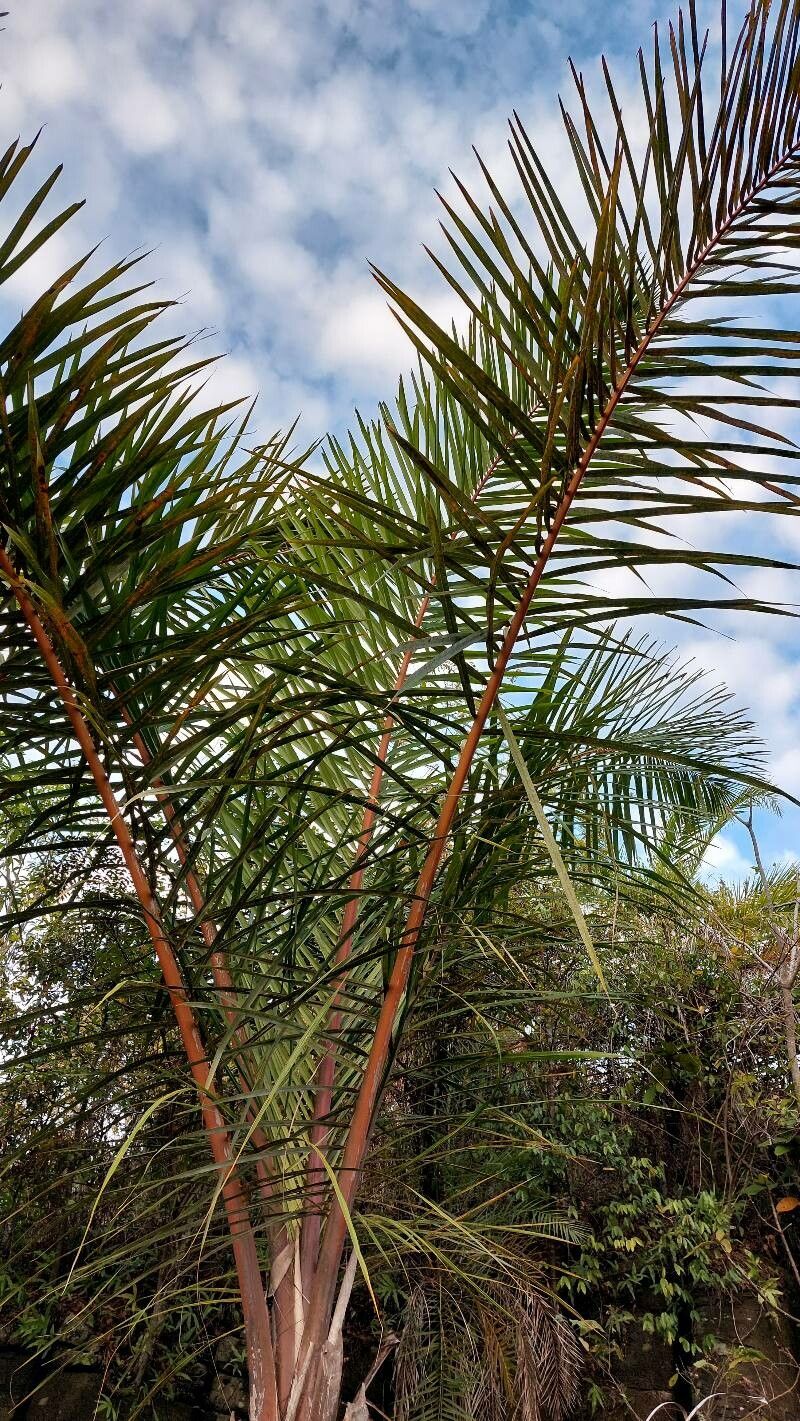
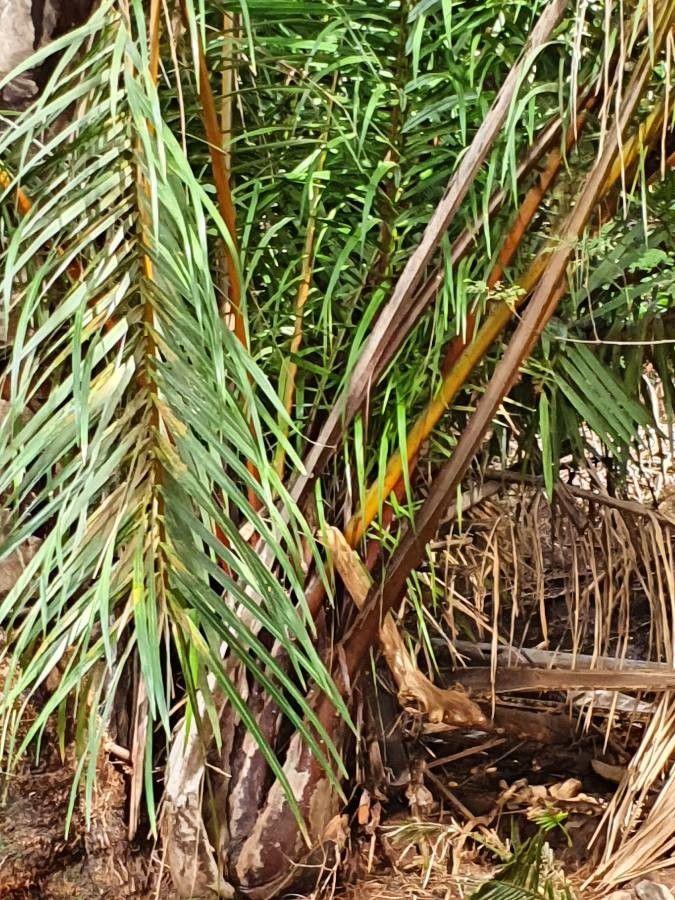
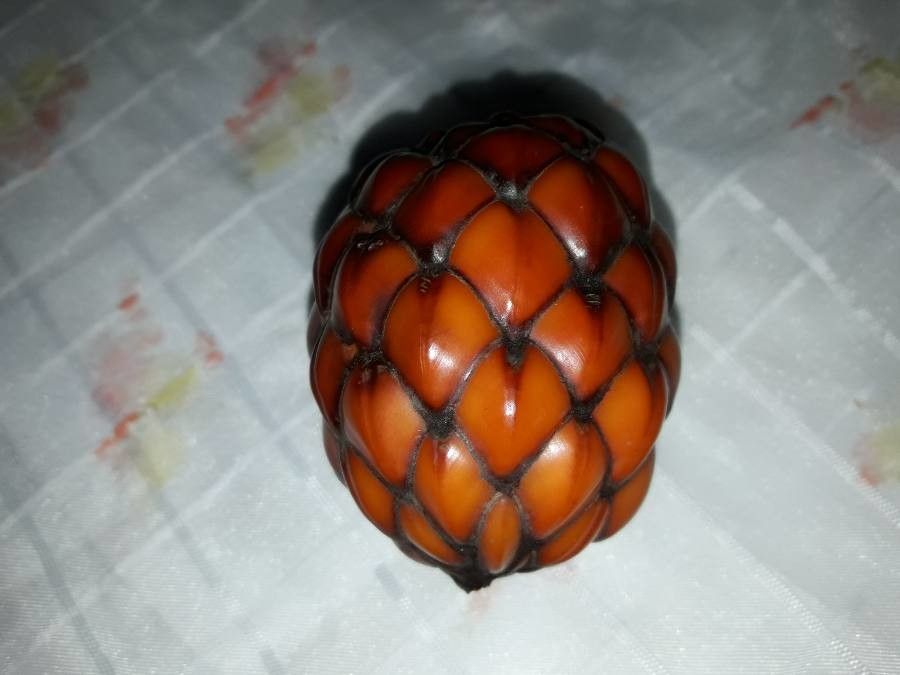
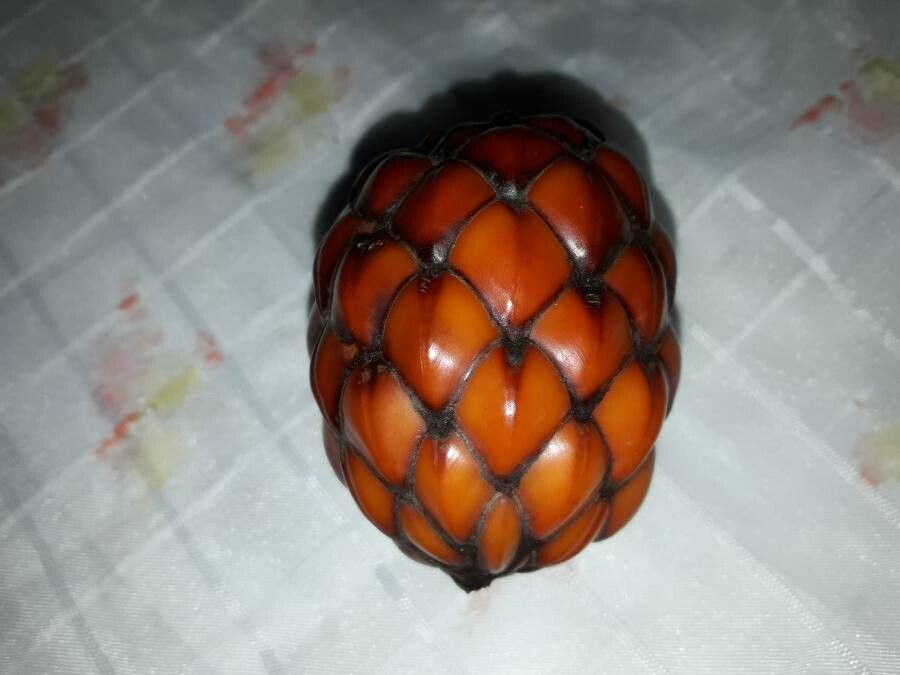
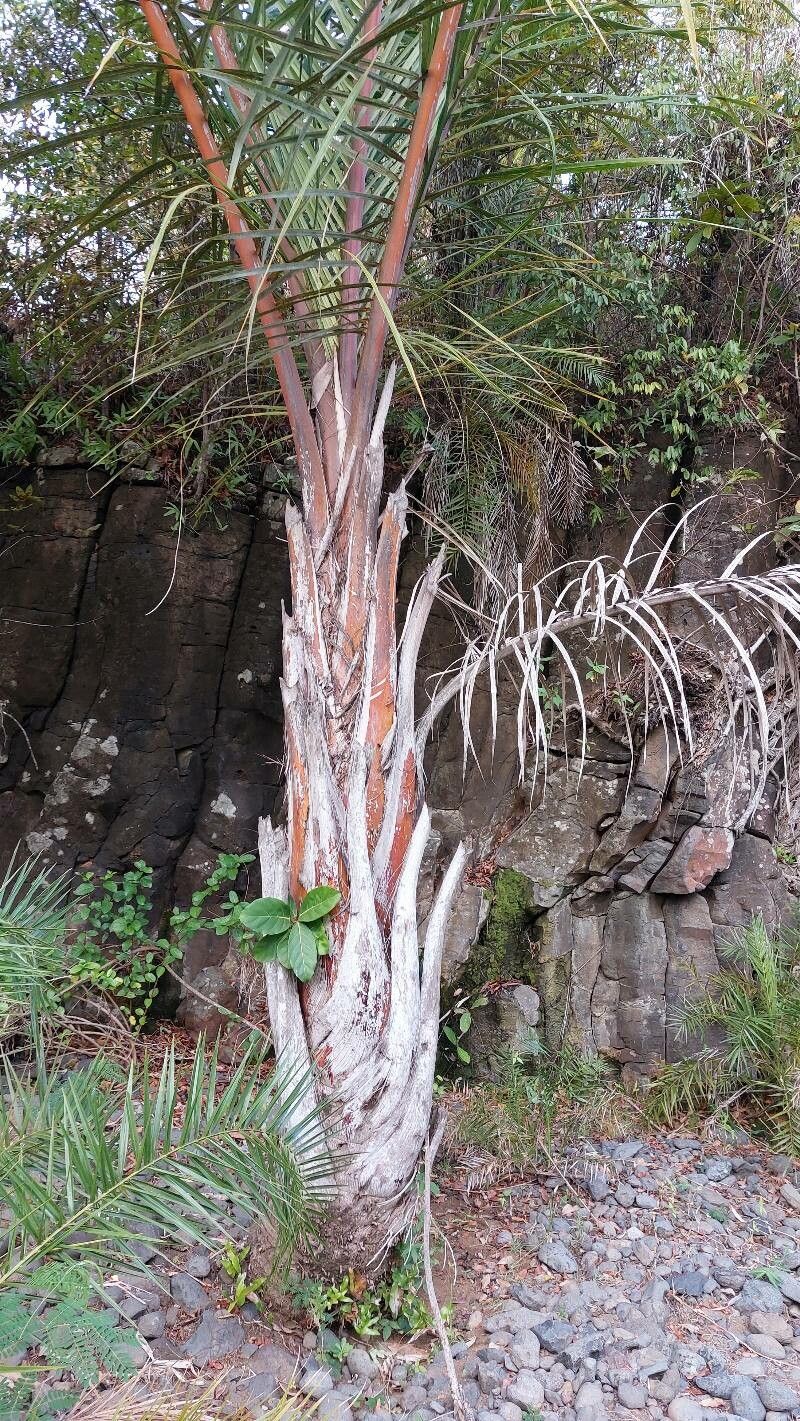
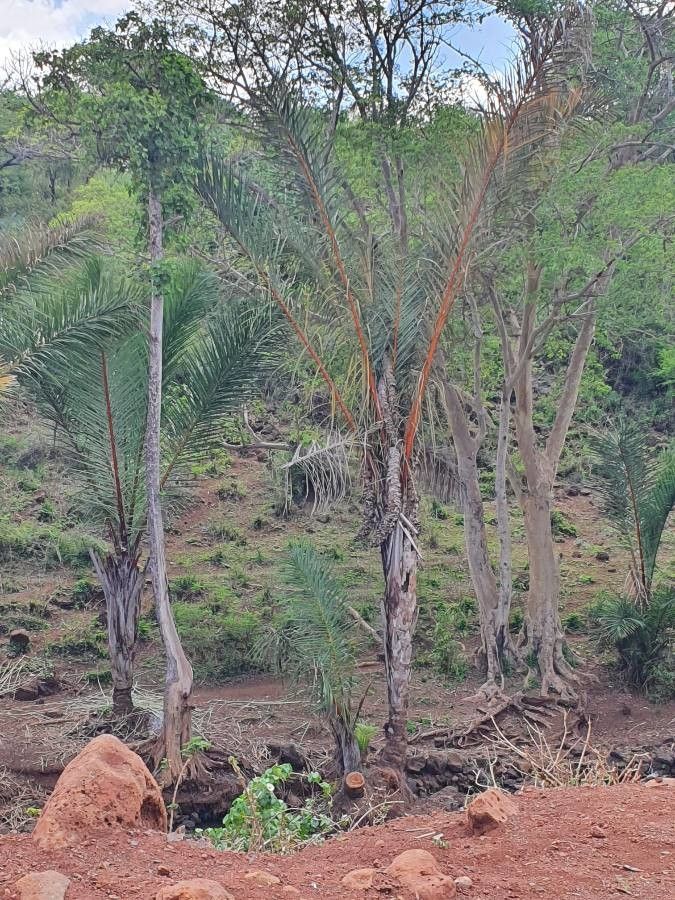
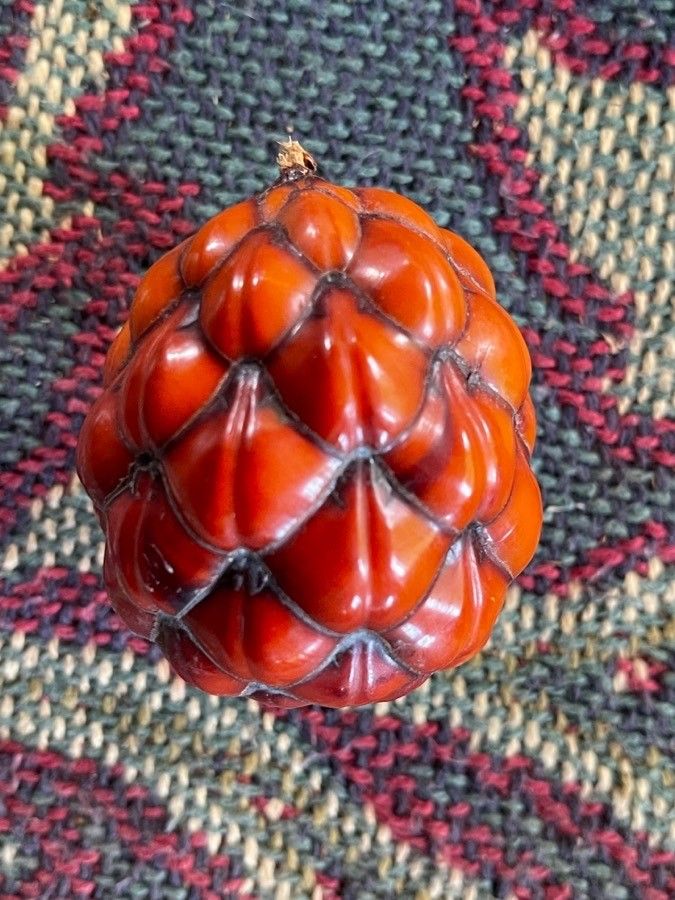
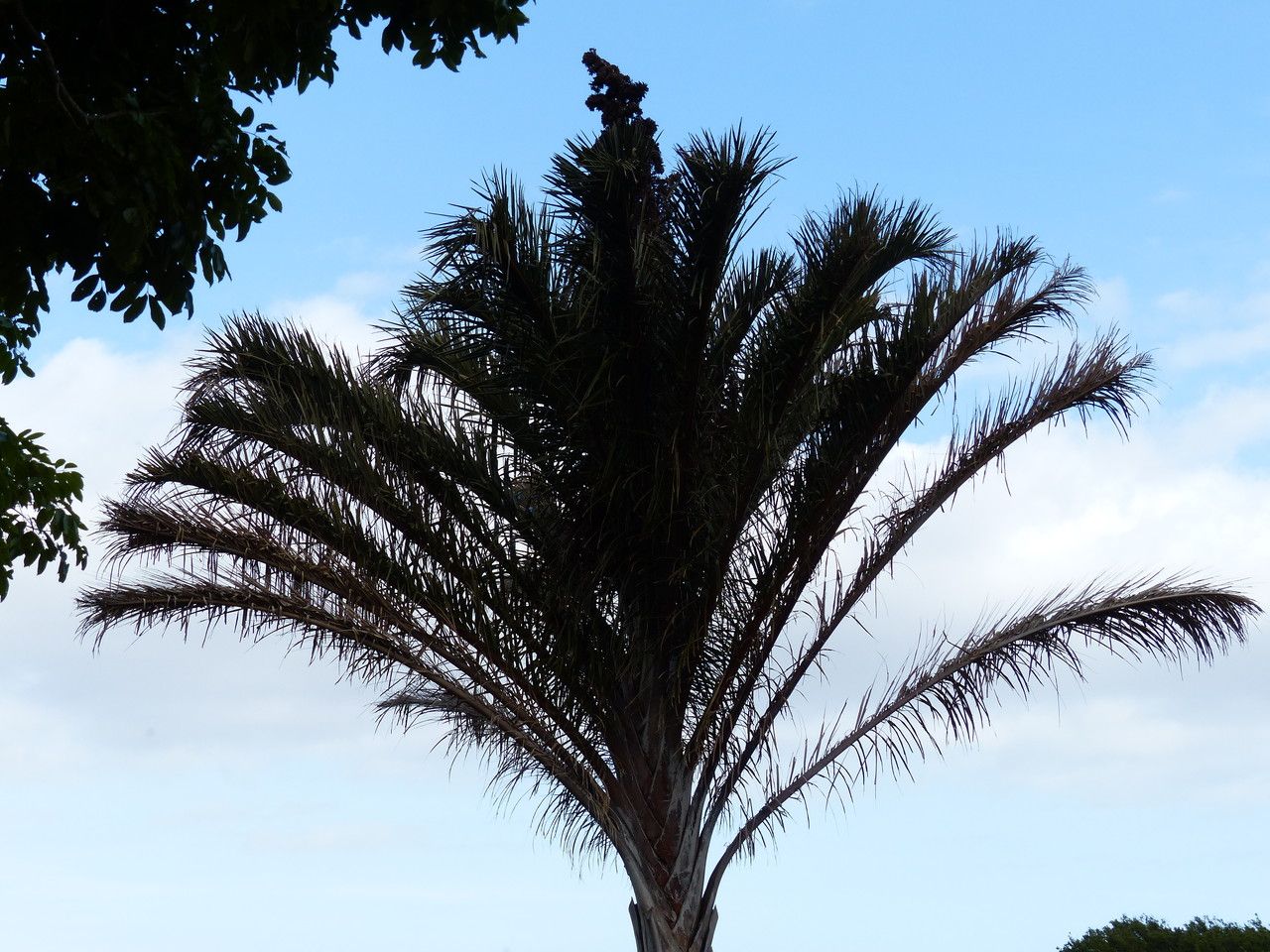
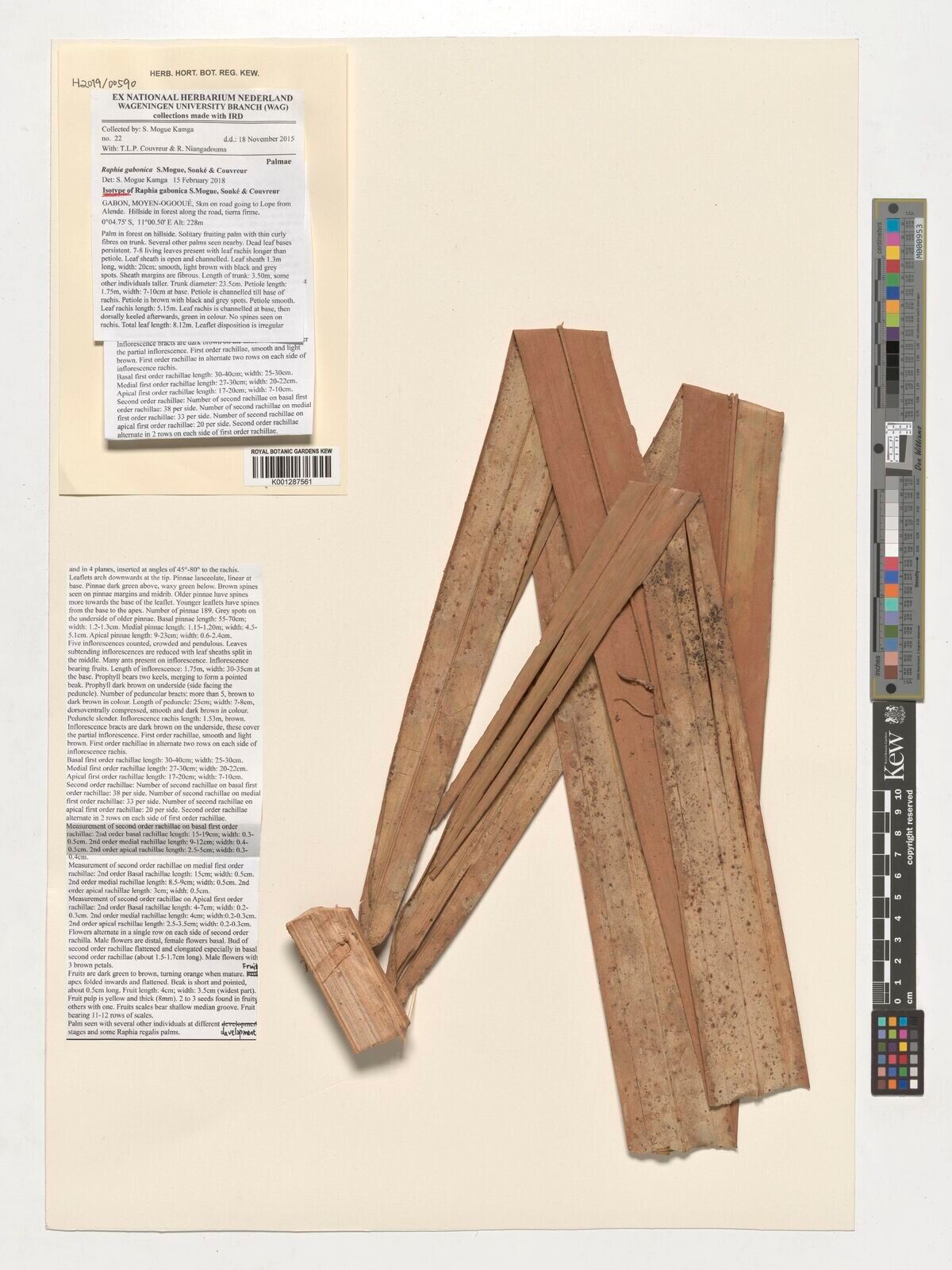
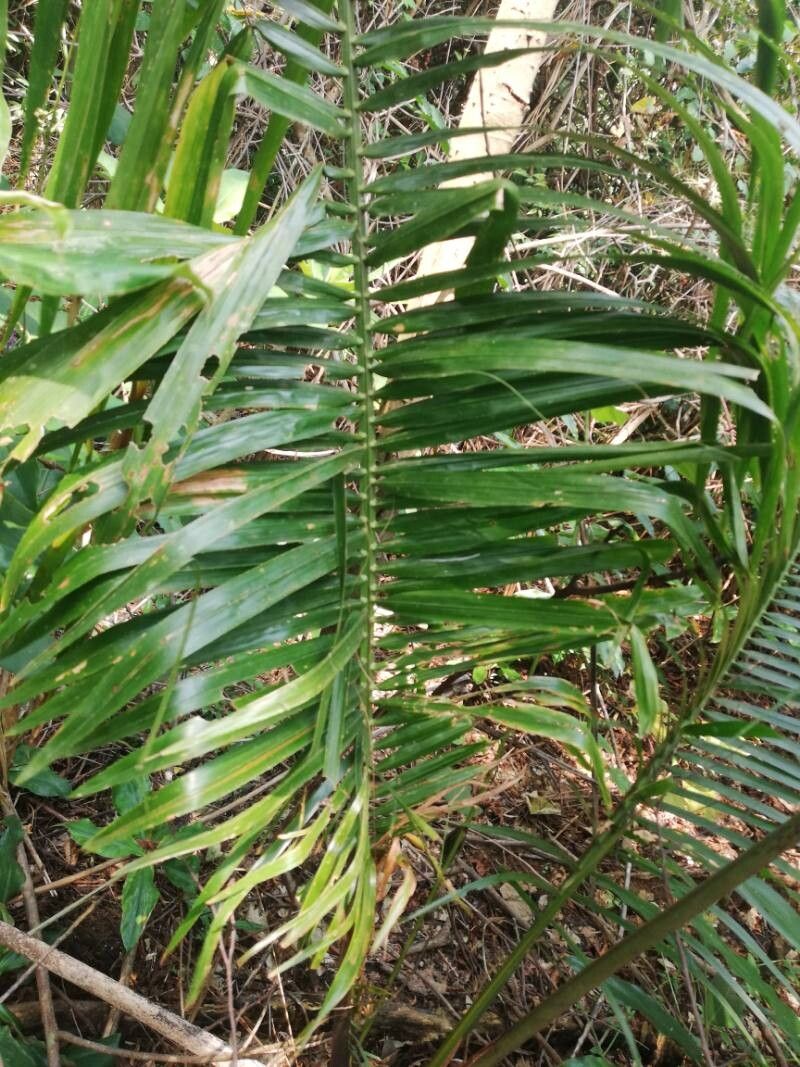
Raphia farinifera is a tropical African palm tree occurring in lowland riparian and swamp forest, also around human habitations and cultivated locations, on stream banks and other moist situations at altitudes of 50–1000 m. Found in Angola, Benin, Burkina, Cameroon, Gambia, Ghana, Guinea, Ivory Coast, Kenya, Madagascar, Malawi, Mauritius, Mozambique, Nigeria, Réunion, Senegal, Seychelles, Sierra Leone, Tanzania, Togo, Uganda, Zambia and Zimbabwe, and naturalised in Madagascar. Its generic epithet is derived from raphis = 'needle', probably in reference to the 4 mm long yellowish spines on the margins and main veins of the leaflets. The specific name refers to a type of starchy flour obtained from the trunk pith – farina = 'starch', fera = 'bearing'. It is one of 26 species currently recognised, all native to Africa and Madagascar, with one species, R. taedigera found in Central and South America. Their fronds – botanically a single leaf – are among the longest in the plant kingdom, those of R. regalis reaching a length of 25 m.The trunk of this species is up to 10 m tall and about 1 m in diameter – the topmost fronds reach up a further 10 m – and sheathed in persistent leaf bases. Trees occur singly or, because of suckering, in dense clumps. The pendant inflorescences are massive and some 3 m in length, bearing unisexual flowers – male flowers at the distal end, female flowers at proximal – with first order branches of 13–32 rachillae very close-packed in almost one plane (see illustration). Raphia spp. are monocarpic or hapaxanthic, flowering and fruiting only once, followed by death. Raphia farinifera flowers when the tree is some 20–25 years old, and it takes a further 5–6 years from flowering to ripe fruit, all fruits ripening together. The fruit is oblong to ovoid, 5–10 cm in length, with imbricate, glossy, golden-brown scales.
Raffia palm is well resistant to disease and generally not prone to illnesses. In terms of care, this plant is relatively low-maintenance. When grown outdoors it requires minimal watering, and larger plants usually do not need pruning. Smaller plants, however, should be pruned after they have bloomed. Raffia palm is suitable for anyone with an outdoor space, such as a garden or deck, and does not require much care experience.
How to keep Raphia Farinifera.
Light
The raffia palm is native to habitats like forest understories and rocky areas, where it commonly grows in natural shade. It prefers partial sun but can tolerate full sun or full shade, reflecting its versatility and hardiness.
Water
The raffia palm does best in environments with high humidity and moist soil. For optimal health, it should be watered twice a week. Although it prefers consistent moisture, it can handle short periods of dryness. Usually cultivated outdoors, the raffia palm benefits from natural rainfall, particularly during its active growth cycles.
Temperature
Raffia palm comes from tropical areas, where the climate is generally warm and humid. As a result, it is well-suited to high temperatures and moisture. It is sensitive to sudden temperature shifts and prefers a steady thermal environment, so avoiding indoor temperature fluctuations is important. It normally cannot tolerate cold and needs relatively warm conditions to grow; if temperatures fall too low, the plant may stop growing or even die.
Fertilizer
Fertilize your Raffia palm in early spring to support healthy growth. Routine fertilization boosts overall health, producing vigorous growth, increased tolerance of harsh conditions, and enhanced resistance to pests and diseases. Keep to a specific fertilization schedule for your Raffia palm to maintain foliage that is vibrant, richly colored, and lush.
Pruning
The raffia palm is characterized by its long, feather-like leaves. To promote healthy new growth, it's beneficial to prune the plant in early spring to remove any dead fronds. This practice not only enhances light and air circulation but also reduces the risk of disease. It's important to use clean tools during pruning to prevent infections. Additionally, be cautious not to cut too close to the trunk to avoid causing damage.
Botanical profile.
- Plant Type
- Palm
- Life Cycle
- Perennial
- Genus
- Raphia
- Family
- Arecaceae
- Hardiness Zone
- 10-12
- Mature Height
- 14.94 m to 24.99 m
- Mature Spread
- 10.06 m to 14.94 m
- Leaf Color
- Dark Green
- Leaf Type
- Evergreen
- Flower Size
- 2.03 cm to 3.05 cm
- Bloom Time
- Late spring, Summer
- Planting Time
- Spring
- Harvest Time
- Late summer, Fall
- Native Area
- Malawi, Angola, Zambia, Madagascar, Nigeria, Guinea-Bissau, Kenya, Uganda, Tanzania, Zimbabwe, Sierra Leone, Cameroon, Mozambique, Senegal, Ghana, Côte d'Ivoire, Gambia, Congo
Other names.