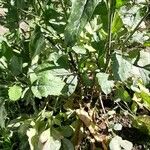
Rapistrum rugosum
شلغم وش · Bastard Cabbage · Ball-turnip · Common giant mustard · Rapistrum-weed
Description
Source: leafsnapRapistrum rugosum is a species of flowering plant in the mustard family known by the common names annual bastardcabbage, common giant mustard or turnipweed. It is native to Eurasia and parts of Africa, and it is present throughout the world as an introduced species and a common weed. It is an invasive species in many areas. It is an annual herb producing an erect stem reaching up to about a meter tall. The leaves are variable in shape and size and the proximal blades are generally cut into lobes or divided into leaflets. The herbage is coated in rough hairs. The inflorescence is a raceme of flowers with dark-veined yellow petals that are each under a centimeter long. The fruit is a knoblike spherical ribbed silique borne on a long pedicel with a widened area where it joins the fruit.
🌳 Although frequently seen as an invasive weed, annual bastard-cabbage fulfils a distinct role in ecosystems. It supplies forage for wildlife, particularly because it grows quickly and is common in disturbed soils. Since it is edible and nutritious, it can act as an emergency food source for animals that forage. Additionally, it shows promise for phytoremediation — using plants to clean contaminated soils — offering possibilities for both ecological and practical use, although research on this specific application for annual bastard-cabbage is still developing.
🎭 Fortune
Care Guide
💧 Water Every 7 days
Annual bastard-cabbage flourishes in mild Mediterranean climates with well-drained soil. It prefers consistent moisture and needs weekly watering. Usually grown outdoors, it benefits from natural rainfall during its active growing season, which supports vigorous flowering.
How should I water my Annual bastard-cabbage plant?
To water Annual bastard-cabbage, you have a few options. You can use a garden hose with a spray nozzle, a watering can, or any other common watering tool. It's not too particular about how it gets water, so rainwater, tap water, or filtered water will all work. However, it's best to avoid watering it from overhead because this can damage the leaves and flowers, and potentially cause diseases. Instead, setting up a drip irrigation system is often the most effective method. This system applies water evenly and directly to the soil. If you have a container-grown Annual bastard-cabbage, the watering method is similar, but you'll use different tools. Instead of a hose or watering can, you can use a cup, watering can, or simply pour water from the tap directly onto the soil.
What should I do if I give my Annual bastard-cabbage too much or too little water?
To remedy underwatering in your Annual bastard-cabbage, simply start watering it consistently when you notice it's lacking moisture. Overwatering, on the other hand, can be more serious if not addressed early. Excess water can cause diseases that lead to the plant's decline and death. To prevent this, choose a growing location that receives ample sunlight to dry the soil and has good drainage to avoid waterlogged soil. If you have overwatered your potted Annual bastard-cabbage, consider transferring it to a new pot with better soil drainage and more drainage holes. Ensure the new pot has loose soil and efficient drainage when repotting.
How often should I water my Annual bastard-cabbage? → How often do I need to water my Annual bastard-cabbage plant?
To ensure the healthy growth of annual bastard-cabbage, it is important to water it regularly throughout the growing season. In spring, watering once a week should be sufficient. However, as the season progresses and temperatures rise, you may need to increase the watering frequency to about two to three times per week. It is important not to exceed this rate as it can be harmful to the plant. Regardless of the watering schedule, the soil should be kept relatively moist but not overly wet. If you are growing annual bastard-cabbage in a pot, the watering needs are slightly different. The soil in pots tends to heat up and dry out faster than ground soil, so you should increase the watering frequency compared to plants in the ground. Generally, watering container-grown annual bastard-cabbage a few times per week should be sufficient, whereas once a week is enough for plants in the ground.
How much water does my Annual bastard-cabbage plant need?
Determining the appropriate amount of water for your Annual bastard-cabbage can be approached in a few different ways. Some gardeners prefer to gauge the soil's moisture level by feeling it, and recommend watering until the top six inches of soil feel moist. Alternatively, you can follow a specific measurement guideline. Generally, giving your Annual bastard-cabbage about two gallons of water per week is sufficient, depending on weather conditions and how quickly the soil dries out. However, it's important to consider the specific needs of your plant as following strict guidelines might result in overwatering. When growing Annual bastard-cabbage in a container, a different method is necessary. Typically, you should water enough to moisten all layers of dry soil, which can be determined by sticking your finger into the soil and feeling for moisture. Additionally, you can also water until you notice a slight trickle of excess water coming out of the drainage holes in your pot.
How do I know if I'm giving enough water to my Annual bastard-cabbage?
Avoiding overwatering is a bit tricky when it comes to Annual bastard-cabbage. These plants have deep roots that need regular watering, but they are also prone to root rot and browning if overwatered. Underwatering is less of a concern as these plants can survive without much watering for a while, but if left too dry, they will wilt and develop dry leaves.
☀️ Light Full sun
Annual bastard-cabbage grows best when it receives a generous amount of sunlight each day, though it can maintain growth with only moderate light. In its native habitats it often occurs in sun-drenched locations. Insufficient sunlight can slow the plant’s progress, while an excess may cause mild stress.
What are the sunlight requirements for Annual bastard-cabbage?
Annual bastard-cabbage requires a generous amount of sunlight daily to thrive efficiently, ideally flourishing in sun-drenched areas native to its growth. It can grow under full sun, which is above 6 hours of sunlight per day, or partial sun, about 3-6 hours of sunlight. However, insufficient sunlight can hinder the plant's growth, while too much direct sunlight may cause mild distress. To ensure your plants receive the right amount of sunlight, observe how sunlight moves through your garden and choose spots that offer a balance of light and shade.
Can I use artificial lighting for Annual bastard-cabbage?
Yes, artificial lighting can be an essential solution for indoor Annual bastard-cabbage plants, especially when natural sunlight is insufficient. LED lights are recommended because they can be customized to provide specific wavelengths needed by your plants. For full sun plants, 30-50W/sq ft of artificial light is needed; for partial sun plants, 20-30W/sq ft; and for full shade plants, 10-20W/sq ft. The light source should be placed 12-36 inches above the plant for 8-12 hours per day to mimic natural daylight hours, ensuring healthier and faster plant growth.
What are the signs of poor lighting conditions in Annual bastard-cabbage?
When Annual bastard-cabbage is subjected to inadequate lighting, it may exhibit several signs, including smaller new leaves, leggy or sparse growth, faster leaf drop, stalled new growth, and lighter-colored leaves. These symptoms indicate a light deficiency that can affect the plant’s health and development. Chlorosis, where leaves turn yellow due to the breakdown of chlorophyll, sunscald, leaf curling, wilting from overexposure to sunlight, and leaf scorching are also common problems related to incorrect light exposure.
How can I address lighting issues for my Annual bastard-cabbage?
To combat lighting issues for Annual bastard-cabbage, gradually increase light exposure. For indoor plants, move them weekly to sunnier spots until they receive at least 6 hours of direct sunlight, using a south-facing window for maximum exposure. Consider artificial light sources to supplement light for large or immovable plants, keeping them on for at least 8 hours daily. For outdoor plants, adapt them to sunlight by moving to sunnier locations gradually to avoid sunburn. If physical obstructions shade your plants, such as trees, pruning may allow more sunlight through. For small, easily movable plants, transplanting during their dormant period into a sunnier location can also promote healthier growth.
🌡️ Temperature 5–25°C
Annual bastard-cabbage originates in areas where temperatures range from 68 to 95 °F (20 to 35 °C). It achieves optimal growth within that range. Temperature adjustments may be necessary during colder months.
What is the optimal temperature range for the growth of annual bastard-cabbage (Rapistrum rugosum)?
The optimal temperature range for the growth of annual bastard-cabbage, also known by its botanical name Rapistrum rugosum, is between 68 and 95 °F (20 to 35 °C). Growth of the plant can be expected to be optimal within this temperature range. If the environment gets cooler, adjustments might be needed during the colder months to maintain suitable conditions for the plant's growth.
Does annual bastard-cabbage require frost protection measures during winter?
Annual bastard-cabbage is highly cold-tolerant and does not require additional frost protection measures during the winter. However, it is recommended to water the plant generously before the first freeze of autumn to keep the soil moist. This preparation helps the soil enter a frozen state, which prevents drought and water scarcity for the plant during the winter and early spring months.
What should be done if the winter temperature drops below -25°C for annual bastard-cabbage?
If the winter temperature drops below -25°C for the annual bastard-cabbage, there may not be noticeable changes during the winter. However, this could lead to a decrease in sprouting or even no sprouting at all in the spring. The recommended solution in such a scenario is to remove any parts of the plant that have failed to sprout in the spring.
How should annual bastard-cabbage be cared for if the temperature exceeds 35°C?
Annual bastard-cabbage is not tolerant of high temperatures. When temperatures exceed 35°C, the plant's growth will halt, and it will become more susceptible to rot. To care for the plant under such conditions, trim away any sunburned and dried-up parts. Move the plant to a location that provides shade during the midday and afternoon sun, or use a shade cloth to create necessary shade. Additionally, ensure the plant is watered in the morning and evening to keep the soil moist and support the plant's health.
💨 Humidity
🪴 Soil 6-7
🌱 Fertilizer
Annual bastard-cabbage responds well to regular, dilute fertilizer applications to encourage healthy leaf development. Apply fertilizer to Annual bastard-cabbage roughly once a month during the summer. Nitrogen is important for foliage, so providing nitrogen-rich sources helps Annual bastard-cabbage prosper.
🪴 Pot & Repot
✂️ Pruning
🌿 Propagating
🐛 Diseases & pets
☠️ Toxicity
Characteristics
- Plant Type
- Herb
- Life Cycle
- Annual
- Genus
- Rapistrum
- Family
- Brassicaceae
- Hardiness Zone
- 5
- Mature Height
- 0.3 m to 1.52 m
- Mature Spread
- 30 cm to 61 cm
- Leaf Color
- Green, Red
- Leaf Type
- Deciduous
- Flower Color
- Yellow
- Flower Size
- 1.02 cm to 2.03 cm
- Bloom Time
- Mid spring, Late spring, Early summer
- Planting Time
- Autumn, Winter
- Harvest Time
- Early summer, Mid summer