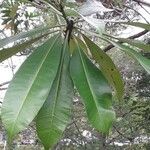
Rauvolfia caffra
Quininetree · African-quinine
Description
Source: leafsnapRauvolfia caffra, a species of flowering plant in the Apocynaceae family, is native to southern Africa. Commonly known as the Quinine tree or Quinine-bark tree, it is renowned for its medicinal properties. The plant can grow up to 10 meters tall and features a straight trunk with smooth, grey bark. Its leaves are glossy, dark green, leathery, and oval-shaped. The plant produces small white or pink flowers that bloom from spring through summer. These flowers are followed by small red berries containing seeds, which can be used for propagation. For centuries, traditional healers in Africa have utilized Rauvolfia caffra as a treatment for various ailments, including fever, malaria, hypertension, and anxiety disorders. This is attributed to its alkaloid content, which includes reserpine, an antihypertensive agent. The bark of the Quinine tree contains quinidine, an antiarrhythmic agent used in modern medicine. It also contains other alkaloids, such as ajmalicine, which have been found to have antihypertensive properties. Overall, Rauvolfia caffra is an important medicinal plant with potential therapeutic benefits that warrant further scientific research.
Care Guide
💧 Water Every 7 days
The quinine tree flourishes in areas with moderate rainfall and can adapt to varying water conditions. When grown outdoors, it is essential to water the tree every 2-3 weeks. For optimal growth, plant it in well-draining soil to prevent waterlogging and promote healthy development.
☀️ Light Full sun
The quinine tree is native to open areas like sunny fields and the margins of forests that offer abundant light. It flourishes under full sunlight but can also withstand partial sunlight, demonstrating a good adaptation to diverse light conditions.
What are the sunlight requirements for Quinine trees?
Quinine trees thrive in environments that provide ample light such as sunny meadows and forest edges. They prosper in full sun conditions, receiving more than 6 hours of sunlight daily, but can also adapt well to partial sun, with about 3-6 hours of sunlight. It's essential to monitor how sunlight moves through your garden to ensure that plants receive a suitable balance of light and shade, guaranteeing their well-being.
How can artificial lighting be used for Quinine trees?
Indoor Quinine trees require adequate lighting to grow optimally, especially when natural sunlight is insufficient. Artificial lights, like LEDs, can be customized to provide specific wavelengths necessary for your plants, promoting healthier growth. For full sun plants, 30-50W/sq ft of light is recommended, partial sun plants need 20-30W/sq ft, and full shade plants require 10-20W/sq ft. The light source should be placed 12-36 inches above the plant, mimicking natural sunlight for 8-12 hours per day.
What are the symptoms of insufficient light in Quinine trees?
Quinine trees exhibit several symptoms when exposed to low light, including smaller new leaves, leggy or sparse growth, faster leaf drop, and halted or slower new growth. Pale or irregularly colored new leaves can indicate a lack of chlorophyll and essential nutrients. Conditions such as chlorosis, sunscald, leaf curling, wilting, and leaf scorching also suggest that a Quinine tree may be suffering from inappropriate light exposure, negatively impacting its health and growth.
How can I address light-related issues with my indoor Quinine tree?
To optimize growth for an indoor Quinine tree suffering from light deficiency, gradually move the plant to a location where it can receive at least 6 hours of sunlight daily, preferably near a south-facing window. If the plant is large or difficult to move, consider using artificial light sources, keeping them on for at least 8 hours each day or investing in professional plant grow lights. It's essential to transition plants to sunnier spots progressively to avoid shock and ensure healthy new growth.
What solutions are available for outdoor Quinine trees with insufficient sunlight?
For outdoor Quinine trees lacking sunlight, gradually transitioning them to sunnier locations can help them adapt without the risk of sunburn. This involves moving the plants to spots with more sunlight each week. It's important to handle this process gently to prevent damage from sudden changes in light exposure. However, parts of the plant already affected by inadequate light may not recover, but new growth will be healthier following the adjustment.
🌡️ Temperature 20–37.8°C
The Quinine tree is native to the tropics, with its warm and moist climate. Consequently, it is finely attuned to higher temperatures and elevated humidity levels. It isn't fond of abrupt changes in temperature and performs best in constant temperature conditions. Therefore, it's vital to prevent it from exposure to varying temperatures within the home. It typically cannot endure freezing conditions and grows best in warmer environments. Should the surrounding temperatures fall excessively, the tree may halt its growth or possibly perish.
💨 Humidity high (>60%)
This plant needs special care because it loves high humidity levels of 60-80% or more. The best way to achieve this is by placing a humidifier near the plant. Daily misting is also essential! Make sure the room has good ventilation.
🪴 Soil 5-7
🌱 Fertilizer Every 30 days
Fertilizing a Quinine tree is most effective in the early spring, when it's just coming out of dormancy. This helps to stimulate both the general growth as well as the development of flowers. By adding fertilizer, the leaves, stems, and branches are fortified, and the flowers grow larger, brighter, and last for a longer period. It also facilitates the movement of nutrients from the roots to the flowers and fortifies the plant's resilience against disease while enhancing its overall health.
🪴 Pot & Repot
✂️ Pruning
To maintain the shape and promote healthy growth of a quinine tree, it is essential to prune it from early to late winter. During pruning, remove any dead or crowded branches, but avoid heavy pruning because the tree regrows slowly. Be sure to use sterilized tools to prevent infections. For guidance on techniques and optimal pruning heights, consult horticultural guides.
🌿 Propagating
🐛 Diseases & pets
☠️ Toxicity
Characteristics
- Plant Type
- Tree
- Life Cycle
- Perennial
- Genus
- Rauvolfia
- Family
- Apocynaceae
- Hardiness Zone
- 10-12
- Mature Height
- 39.93 m
- Mature Spread
- 3.05 m to 11.89 m
- Leaf Color
- Dark Green
- Leaf Type
- Evergreen
- Flower Color
- White
- Flower Size
- 0.51 cm
- Bloom Time
- Summer, Early fall, Mid fall
- Planting Time
- Spring, Summer, Autumn
- Harvest Time
- Fall, Early winter, Mid winter
- Native Area
- Malawi, Angola, South Africa, Zambia, Sudan, Nigeria, Congo, Guinea, Gabon, Kenya, Uganda, Tanzania, Zimbabwe, Benin, Chad, Equatorial Guinea, Cameroon, Mozambique, Togo, Eswatini, Congo (DRC), Central African Republic