Rhabdadenia biflora
Mangrovevine
Description
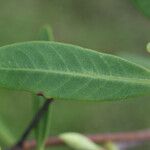
Source: leafsnapRhabdadenia biflora, commonly known as the Double-flowered Rhabdadenia, is a tropical evergreen vine in the family Apocynaceae. It is native to Central and South America, specifically in countries like Brazil, Colombia, Ecuador, Peru, and Venezuela. This plant features glossy green leaves arranged in opposite pairs along its stem. Its fragrant, double flowers are white or cream-colored with a yellow center and bloom in clusters from late spring to early fall. Rhabdadenia biflora thrives in well-drained soil and prefers partial shade or filtered sunlight. It can be cultivated as a climbing vine on trellises or arbors, or trained into a shrub-like form with regular pruning. Notably, the plant possesses medicinal properties and is used by indigenous people to treat ailments such as fever, coughs, and respiratory infections. In summary, Rhabdadenia biflora is an attractive ornamental plant with beautiful double flowers that enhance any garden setting. Additionally, it offers medicinal benefits for those who use it in traditional healing practices.
Care Guide
💧 Water Every 7 days
☀️ Light Full sun
Mangrovevine comes from open habitats, like sunlit meadows and forest edges, that offer plenty of light. It does best in Full Sun but will also tolerate Partial Sun, adapting well to different sunlight conditions.
🌡️ Temperature 20–37.8°C
Mangrovevine comes from tropical areas, where the climate is generally warm and humid. Consequently, it is adapted to high temperatures and humidity. It does not tolerate sudden temperature changes and prefers a steady thermal environment, so avoiding temperature fluctuations indoors is important. It typically cannot withstand cold and requires warmer conditions to grow. If the surrounding temperature becomes too low, the plant may stop growing or even die.
💨 Humidity
🪴 Soil 6-8
🌱 Fertilizer
Fertilizing is essential for Mangrovevine care. Consistent feeding during the growing season preserves the energy required for its showy leaves and encourages overall growth. Skipping fertilization can cause unhealthy foliage, reduced ornamental value, and stunted or weak growth that is likely to break.
🪴 Pot & Repot
✂️ Pruning
Mangrovevine is a hardy climbing vine with glossy leaves and tubular flowers. To maintain its shape, encourage blooms, and improve air circulation, prune it in early spring. Remove any dead stems and thin out dense areas to prevent tangling and promote strong growth throughout the season.
🌿 Propagating
🐛 Diseases & pets
☠️ Toxicity
Characteristics
- Plant Type
- Vine
- Life Cycle
- Perennial
- Genus
- Rhabdadenia
- Family
- Apocynaceae
- Hardiness Zone
- 10-12
- Mature Height
- 2.13 m to 3.96 m
- Mature Spread
- 0.91 m to 2.13 m
- Leaf Color
- Forest Green
- Leaf Type
- Evergreen
- Flower Color
- White, Pink
- Flower Size
- 3.05 cm to 5.08 cm
- Bloom Time
- All year round
- Planting Time
- Spring, Summer, Autumn
- Harvest Time
- All year round
- Native Area
- Colombia, Bahamas, Belize, Cuba, Honduras, Mexico, Guatemala, Venezuela, Guyana, Nicaragua, Ecuador, Costa Rica, Panama, Jamaica