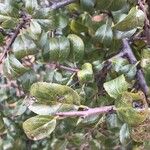
Rhamnus saxatilis
Ράμνος ο βραχόφιλος (EL) (GR) · Rock buckthorn · Persian-berry buckthorn · Avignon berry · Persian berry
Description
Source: leafsnapRhamnus saxatilis, commonly known as rock buckthorn, is a deciduous shrub in the Rhamnaceae family. Native to Europe and western Asia, this plant can grow up to 2 meters tall. It has a dense, bushy habit with small green leaves that turn yellow in autumn. The flowers are small and greenish-yellow, blooming from May to June. The fruit of Rhamnus saxatilis is a black, berry-like drupe containing one or two seeds. It ripens from August to September, providing food for birds. This shrub prefers well-drained soils and thrives in full sun or partial shade. It can tolerate drought conditions but does not fare well in waterlogged soils. Rhamnus saxatilis has been used medicinally due to compounds like anthraquinones, which have laxative properties. However, it should be used with caution because of its potential toxicity. In landscaping, Rhamnus saxatilis is valued for its attractive foliage and ornamental berries, especially during autumn. Overall, Rhamnus saxatilis offers ecological benefits by providing food for birds and adds ornamental value in landscaping with its appealing autumn foliage.
Care Guide
💧 Water Every 7 days
Adapted to arid environments, rock buckthorn requires very little moisture and thrives with infrequent watering. It should be watered every 2 to 3 weeks for optimal growth. This plant excels in outdoor settings by storing water in its tissues, making it an ideal choice for xeriscaping in various climate zones.
How should I water my Rock buckthorn in the best way?
To promote excellent root development, consider using a garden hose at the base of the plant. Avoid spraying the leaves directly, and keep in mind that outdoor plants in direct sunlight may require more watering. For moistening the roots, bubblers or soaker hoses can be used. When adding or removing plants, using soaker hoses to cover the entire garden or bed can help push the roots deep. Make sure to drain any excess water and wait for the soil to dry before watering again. Watering at ground level is recommended to prevent diseases. On sunny days, it may be beneficial to spray the entire bush with water. Whether the plant is potted or in-ground, it is important to remember that Rock buckthorn prefers deep watering rather than light sprinkling.
What should I do if I give Rock buckthorn too much or too little water?
Rock buckthorn plants that are overwatered can show signs such as yellowing and wilting leaves, as well as a dull and unhealthy appearance. Mushy stems may also be present. Adjusting your watering schedule is recommended when these signs appear. However, wilting can also be a symptom of under watering. Under these circumstances, the leaves may become crispy and dry. To determine the appropriate course of action, check the soil moisture level. If the soil is dry and simply watering is not enough, give the plant a thorough watering. While this will allow the Rock buckthorn to recover, it may still exhibit dryness and yellow leaves due to root damage for a few days. Once the plant returns to normal, the yellowing of leaves will cease. Indoors, always monitor the moisture levels of the pot holding the Rock buckthorn. Avoid overwatering and be on the lookout for black spots, indicating excess moisture. If such spots appear, allow the soil to dry out by refraining from watering for a few days. Overwatering can lead to root rot, so if you observe discolored and slimy roots, consider transferring the plant to a different pot. Preventing root rot is crucial, so avoid excessively soggy soil. When planting Rock buckthorn outdoors, ensure the soil is adequately moist. If the soil feels too dry when checked with your fingers, it may indicate underwatering. In such cases, water the plant sufficiently to facilitate recovery.
How frequently should I water my Rock buckthorn plant?
The Rock buckthorn prefers deep and infrequent watering. When planted in pots, it is especially important to soak them in a gallon of water each time, as the water storage in flower pots is limited and the soil dries out faster. In cold regions, watering is required every 3 to 5 days. It is best to water early in the morning when the soil is dry, whether the plant is located outdoors or indoors. You can also check the soil inside the pot to determine if watering is needed. If the top 2-3 inches of soil is dry, it is time for a full watering. On hot days, it may be necessary to check the moisture daily, as the heat can quickly dry out the soil in the pot. If you have a garden, irrigation of the soil is necessary. In hot climates, watering once a week is recommended. Only water when you notice that about 2 to 3 inches of soil has become too dry, both indoors and outdoors. Keep in mind the amount of rainfall and avoid adding water to prevent root rot. Rock buckthorn typically grows during spring and fall. When planted outdoors, adding mulch about 3 to 4 inches deep can help conserve water. In sandy soil, more frequent watering is needed due to its faster drainage. However, clay soil requires less frequent watering, usually every 2-3 days without causing root rot. To keep track of watering, mark the date on the calendar and observe the leaves for drooping, as this can indicate the need for watering.
How much water should I give my Rock buckthorn plant?
The watering needs for the Rock buckthorn plant can vary depending on whether it is potted or planted outdoors. For potted plants, it is recommended to water them deeply until you see water dripping out of the bottom of the pot. Then, allow the soil to dry before watering again. You can use a water calculator or moisture meter to determine the appropriate amount of water to give your plant each week. During the flowering period, it is important to provide plenty of water, but allow the moisture to evaporate to prevent root rot. If the Rock buckthorn is planted outdoors with sufficient rainfall, it may not require additional watering. However, when the plant is young or newly planted, it is recommended to ensure it receives 1-2 inches of rain per week. As the Rock buckthorn matures, it can rely solely on rainfall for its water needs. Only in extremely hot weather or during extended periods of no rainfall (2-3 weeks) should you consider giving the plant a thorough watering during the cooler part of the day to prevent heat damage. Additional watering may be necessary during prolonged dry spells.
Should I water my Rock buckthorn more often or less often depending on the season or climate?
The Rock buckthorn thrives outdoors and typically relies on rain for watering, except during persistently dry weather. During the spring and fall growing seasons, it is important to keep the soil moist but not saturated, allowing for alternating dry and moist conditions. In the hot summer months, water can evaporate quickly, so additional watering may be necessary if there is a lack of rainfall. However, the Rock buckthorn requires less water during the winter when it enters dormancy. For this period, a well-draining soil mixture, such as terracotta, can speed up water evaporation. Once the Rock buckthorn begins to leaf out in spring, it can rely on fall and winter rains to sustain itself throughout dormancy. Cultivating and encouraging growth and blooming can be done in warmer temperatures following the winter. Good drainage is crucial at all times, particularly during winter and when the plant is in a pot with limited root growth. Regular deep watering of the entire root system, avoiding shallow sprinkling that only reaches the leaves, is recommended once or twice a week, depending on the weather. Ensuring that the Rock buckthorn does not dry out completely, even in fall or winter when it is dormant, is important for its survival. It is crucial to avoid over-watering and allowing the plant to sit in water for too long, as this can lead to root damage and death. Additionally, applying mulch can help reduce stress, conserve water, and promote healthy blooms.
☀️ Light Full sun
Rock buckthorn comes from open habitats, like sunlit meadows and the edges of forests, which offer plenty of light. It does best in Full Sun but can also tolerate Partial Sun, adapting well to different light levels.
🌡️ Temperature 5–32.2°C
Rock buckthorn is very adaptable to a wide range of climates, from blistering summers to frigid winters. However, it does have an optimal temperature range for growth. If temperatures become too high, the plant is susceptible to heat and humidity stress, which can cause it to die. In areas where temperatures approach the lower limit of its cold tolerance, insulating the plant is important to protect it.
💨 Humidity
🪴 Soil 6-8
🌱 Fertilizer
Fertilize your Rock buckthorn in early spring to encourage healthy growth. Regular feeding improves overall health, producing vigorous growth, better tolerance of harsh conditions, and greater resistance to diseases and pests. Keep to a specific fertilization schedule to maintain foliage that is vibrant, deeply colored, and lush in appearance.
🪴 Pot & Repot
✂️ Pruning
The rock buckthorn is characterized by its small, leathery leaves and dense growth. To keep the plant healthy, it's important to prune it carefully. In early spring, remove any dead branches and thin out overcrowded areas to improve air circulation. This will encourage a healthy structure, as well as promote flowering and fruiting. Always use clean, sharp tools for the best results.
🌿 Propagating
🐛 Diseases & pets
☠️ Toxicity
Characteristics
- Plant Type
- Shrub
- Life Cycle
- Perennial
- Genus
- Rhamnus
- Family
- Rhamnaceae
- Hardiness Zone
- 4-8
- Mature Height
- 0.49 m to 1.52 m
- Mature Spread
- 0.91 m to 2.13 m
- Leaf Color
- Green, Olive Drab
- Leaf Type
- Deciduous
- Flower Color
- Yellow
- Flower Size
- 0.25 cm to 0.51 cm
- Bloom Time
- Mid spring, Late spring
- Planting Time
- Spring, Summer
- Harvest Time
- Late summer, Early fall, Mid fall