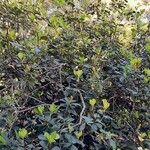
Rhaphiolepis indica
Indian-hawthorn · India-hawthorn · Snow maiden · Raphiolepis apple blossom · בן עוזרר הודי
Description
Source: leafsnapRhaphiolepis indica, commonly known as Indian hawthorn, is a small evergreen shrub native to southern China and Southeast Asia. Belonging to the Rosaceae family, this plant can grow up to 6 feet tall and wide. It features glossy, dark green leaves that are oval-shaped with serrated edges. In the spring, Rhaphiolepis indica produces clusters of fragrant pink or white flowers, which attract bees and butterflies. These flowers are followed by small blue-black berries in the summer. Although these berries are edible, they are not commonly consumed. Indian hawthorn is a popular ornamental plant due to its attractive foliage, colorful flowers, and adaptability to a wide range of growing conditions. It can flourish in either full sun or partial shade and prefers well-draining soil. During its growing season, the plant requires moderate watering, but it should be watered sparingly during the winter months when it becomes dormant. Pruning should be done after flowering to maintain its shape. In traditional Chinese medicine, Rhaphiolepis indica has been used to treat various ailments such as coughs, fever, and inflammation of the throat and lungs, owing to its anti-inflammatory properties. Overall, Rhaphiolepis indica is an attractive shrub that adds beauty when planted as an ornamental plant. Additionally, its medicinal properties extend its usefulness beyond mere aesthetics.
🌳 Although primarily recognized for its decorative use in landscaping around the world, indian hawthorn has notable, lesser-known applications. It produces an aromatic essential oil usable in aromatherapy, which is a departure from its conventional uses. Furthermore, its flowers are rich in nectar that attracts bees, indicating an overlooked role in apiculture.
🎭 Safety, optimism
Care Guide
💧 Water Every 7 days
Indian hawthorn, a plant native to subtropical regions, is moderately drought-tolerant. It thrives in well-drained soil with balanced moisture. Water the plant every 1-2 weeks, ensuring the soil dries slightly between waterings. During its active growth period, consistent moisture is essential to maintain glossy foliage and encourage flowering.
When Should I Water My Indian Hawthorn?
Timely watering of Indian Hawthorn is vital for its health, impacting its ability to photosynthesize, absorb nutrients, and grow while preventing diseases or pests. You should water your Indian Hawthorn when the top 1-2 inches of soil feel dry to the touch. To test, simply dig your finger or a stick into the soil at this depth. Additionally, signs such as wilting or drooping leaves, leaf discoloration, or the pot feeling significantly lighter can indicate it's time to water. However, be cautious of overwatering, as it can lead to root rot and other diseases, while underwatering can make the plant dry out, hindering its growth and making it more susceptible to pests.
How Should I Water My Indian Hawthorn?
Indian Hawthorn's watering needs are moderate, aiming for soil that is slightly moist but not waterlogged or bone dry. Surface watering is the preferred method, directing water to the base of the plant to avoid fungal diseases on the leaves. A moisture meter can help remove guesswork by measuring soil moisture accurately. Additionally, focusing water on the soil around the plant's base and avoiding waterlogging or moistening the foliage is crucial. Indian Hawthorn thrives in well-draining soil and benefits from periodic deep watering to encourage root growth, rather than frequent shallow watering. Adjustments should be made during various weather conditions to maintain ideal soil moisture.
How Much Water Does Indian Hawthorn Really Need?
Indian Hawthorn, native to India and China, requires a moderate amount of water to flourish. The optimal watering amount heavily depends on factors such as pot size, root depth, and the plant's size, with 1 to 2 inches of water per session being ideal. A well-hydrated Indian Hawthorn will display healthy, glossy, and vibrant leaves without signs of wilting or drying. Be mindful of overwatering and underwatering, as both can lead to serious health issues for the plant, such as root rot or stunted growth. Utilizing well-draining soil and adjusting watering schedules based on environmental conditions are essential practices for maintaining the plant's health.
What Kind of Water is Best for Indian Hawthorn?
Indian Hawthorn thrives best when watered with rainwater, though distilled or filtered water is also beneficial. Tap water can be used if allowed to sit for at least 24 hours before use to let chlorine evaporate. The plant is sensitive to chlorine and can be adversely affected if the water contains high levels of it. It's less sensitive to fluoride, but it's still advisable to avoid high fluoride content in the water. Hard water, high in calcium or magnesium, might not be ideal due to its potential to alter soil pH. The use of room temperature water is recommended to prevent shock from extreme temperatures.
How Do Indian Hawthorn's Watering Needs Change with the Seasons?
Indian Hawthorn's watering needs vary with the seasons. In spring, as the plant exits dormancy and initiates growth, it requires moderate watering to support this phase. Avoid over-watering to prevent root rot. During the hot summer months, ensure the soil remains consistently moist without becoming soggy, watering preferably in the early morning or late evenings. In autumn, reduce the frequency gradually in preparation for dormancy, watering only when the soil appears dry. In winter, reduce watering significantly to prevent root diseases, ensuring the soil is dry before watering again. Always consider the plant's dormancy and active growth phases when adjusting your watering routine.
☀️ Light Full sun
Indian hawthorn performs best with abundant light, though it can tolerate locations where sunlight is not constant. In its native range it grows in full sun. Too little light can hurt its growth and flowering, while too much exposure can cause sunscald.
What are the sunlight requirements for Indian Hawthorn?
Indian Hawthorn requires generous light exposure to thrive, ideally flourishing under full sunlight for optimal growth and bloom. It can tolerate some shade, although too little light may hinder growth and bloom, while too much can cause sunscald. Full sun is defined as areas receiving more than 6 hours of direct sunlight per day, while partial sun refers to about 3-6 hours of sunlight. Observing how sunlight moves through your garden will help you choose the best spots for planting, ensuring a healthy balance of light and shade.
How should I use artificial lighting for Indian Hawthorn?
When natural sunlight is insufficient for your Indian Hawthorn, particularly during winter or in less sunny spaces, artificial lighting can be an excellent solution. For optimal growth under artificial lights, it's crucial to select the right type of light, such as LED lights, which can be customized to provide specific wavelengths necessary for your plant. Full sun plants require 30-50W per square foot, partial sun plants need 20-30W per square foot, and full shade plants need 10-20W per square foot. The light source should be placed 12-36 inches above the plant to mimic natural sunlight, and the lighting duration should match the natural daylight hours, typically 8-12 hours per day, depending on the plant species.
What are the symptoms of light deficiency in Indian Hawthorn?
Symptoms of light deficiency in Indian Hawthorn include smaller new leaves compared to mature ones, leggy or sparse growth, faster leaf drop, and slower or no new growth, indicating a survival mode due to insufficient light. Leaves may also develop lighter colors or become pale, signifying a lack of chlorophyll and essential nutrients. Conditions like chlorosis, sunscald, leaf curling, wilting, and leaf scorching occur either due to too little or too much sunlight, affecting the plant's ability to photosynthesize and overall health.
What solutions can I apply to address sunlight problems for Indian Hawthorn?
To address sunlight problems with Indian Hawthorn, consider gradually moving your plants to a location with at least 6 hours of direct sunlight daily. This can be achieved by placing them near a south-facing window or using artificial lighting for indoor plants or those not easily movable – keeping lamps on for at least 8 hours per day. For plants outdoors, avoid sudden changes in light exposure to prevent sunburn. If obstructions like trees block sunlight, prune them to improve light access. For smaller plants, consider transplanting during their dormant period, usually late winter or early spring, to a spot with ample sunlight and good drainage. Note that parts of the plant affected by insufficient light may not recover, but new growth should be healthy after increasing light exposure.
🌡️ Temperature 15–35°C
The native growth habitat of indian hawthorn covers areas where temperatures range from 15 to 35 ℃ (59 to 95 ℉), indicating it favors moderate to warm conditions. In cooler conditions, indian hawthorn may adjust by slowing growth, while in hotter conditions it may require more frequent watering and shading for protection.
What is the native growth environment of Indian Hawthorn?
Indian Hawthorn thrives in regions with temperatures ranging from 15 to 35°C (59 to 95°F), indicating a preference for moderate to warm climates. This plant has a degree of cold tolerance and can survive without special care as long as temperatures stay above its minimum tolerable level. For cooler environments, growth may slow down, and in higher temperatures, Indian Hawthorn could require more frequent watering and shading measures to stay healthy.
How should Indian Hawthorn be cared for in low temperatures?
Indian Hawthorn has a moderate tolerance to low temperatures and performs best when conditions are above a certain temperature threshold. During winter, it is crucial to ensure that the temperature does not fall below its minimum tolerable growth temperature. If temperatures are expected to drop below this threshold, protective measures such as wrapping the plant in plastic film, fabric, or other insulating materials should be taken to guard against the cold. Trimming off frost-damaged parts and establishing a wind barrier using non-woven fabric or cloth can help the plant recover and protect it from cold winds in the future.
How should Indian Hawthorn be cared for in high temperatures?
In the summer, it is important to keep Indian Hawthorn below its maximum tolerable growth temperature. Exceeding this temperature can result in symptoms such as lighter leaf color, dry and withered leaf tips, curled leaves, and increased susceptibility to sunburn. To mitigate these issues, sunburned and dried parts of the plant should be trimmed away. Moving the plant to a shaded area during the peak sun hours of the midday and afternoon, or utilizing a shade cloth, can help. Additionally, maintaining soil moisture by watering in the early morning or evening is beneficial.
💨 Humidity normal (40-60%)
This plant will thrive in moderate humidity, which is probably the level in your home. However, misting it a few times a week can be very beneficial. Make sure the room has good ventilation.
🪴 Soil 5-6
🌱 Fertilizer
Timing is essential for fertilizing Indian hawthorn. Begin fertilizing in early spring and repeat monthly through early summer. Fertilizer encourages lovely blooms and supplies energy during both dormant and active growth periods.
Why should I use fertilizer on my Indian hawthorn plant?
To maximize the blooming of your Indian hawthorn, it is important to fertilize it for several reasons. Firstly, using fertilizer will enhance the production of beautiful blooms. For optimal results, it is recommended to fertilize your Indian hawthorn in early spring, as this is the best time to ensure abundant flowers. Additionally, fertilizing provides your Indian hawthorn with ample energy, which can be stored in the ground during its dormant growth phases. By supplying extra nutrients during fall planting or late spring, your Indian hawthorn will be able to store more energy to utilize once active growth resumes.
When should I fertilize my Indian hawthorn to get the best results?
To effectively fertilize Indian hawthorn, timing is key. Avoid applying fertilizer too early when the plant is still dormant, as it will not be effective and will be washed away by rainwater, leading to waste and pollution. Instead, begin fertilizing in early spring and continue monthly applications until early summer.
When is the best time to not fertilize my Indian hawthorn?
Here are some tips for fertilizing Indian hawthorn to promote healthy growth: 1. Avoid using a fertilizer with excessive nitrogen, as this can result in more leaves but fewer blooms. Opt for a fertilizer with a lower nitrogen content compared to other nutrients. 2. Refrain from fertilizing Indian hawthorn after early autumn, as this can cause excessive growth right before winter. Additionally, avoid fertilizing during hot and dry periods, as dry soil does not effectively deliver nutrients and the increased growth stimulated by the fertilizer may require more water that might not be available. 3. It is advisable to apply fertilizer earlier in the season when temperatures are cooler. 4. Keep in mind that Indian hawthorn can absorb fertilizer that has been applied to nearby plants or lawns, so be cautious to avoid unintentionally giving the tree/shrub a double-dose of fertilizer.
What kind of fertilizer does my Indian hawthorn plant need?
To optimize the growth of an Indian hawthorn plant, a fertilizer with a balanced combination of the three main plant nutrients is necessary, with slightly higher levels of phosphorus. Alternatively, gardeners can enhance the plant's soil by incorporating organic materials like compost, worm castings, and manure. Experienced gardeners may choose to supplement with water-soluble fertilizers rich in phosphorus when flower buds emerge, resulting in improved flower development, size, and duration. Fertilizers for Indian hawthorn can be found in various forms, but liquid or powdered fertilizers tend to be the most effective. Regardless of the form, it is crucial to dilute the fertilizer and apply it while watering the Indian hawthorn.
How can I give nutrients to my Indian hawthorn?
To properly fertilize your Indian hawthorn, follow these steps. First, make sure to carefully read and follow the instructions on the specific fertilizer you are using. It is crucial not to over-fertilize, so determining the correct amount is important. Use the age of the tree or the diameter of the trunk as a guideline. Typically, you can estimate using one-tenth of a pound of fertilizer per year or per inch of trunk, with a maximum of one pound. When applying granular or organic fertilizers like blood meal, sprinkle the substance from the base of the tree all the way to the drip line. Avoid letting the fertilizer come into contact with the trunk. Over time, the granules will break down and filter into the soil, where the tree's roots can absorb them. After fertilizing, spread a one-inch layer of compost around the base of the tree and water it thoroughly.
🪴 Pot & Repot 2-3 years
When repotting Indian hawthorn, select a container 1-2 inches (2.5–5.1 cm) larger with good drainage. Use a well-draining potting mix. Repot in spring or fall, making sure the root ball sits slightly below the pot's rim. Water thoroughly after repotting and place it in a warm spot with indirect sunlight.
✂️ Pruning
Indian hawthorn is a hardy, evergreen shrub that is ideal for hedges due to its dense foliage and beautiful blooms. To encourage healthy growth, prune it in late spring after it has finished flowering. Be sure to remove any dead wood and thin out overcrowded branches to improve airflow. Using clean tools will help ensure precise cuts, which can enhance bloom production and reduce the risk of disease.
🌿 Propagating
🐛 Diseases & pets
☠️ Toxicity
Hawthorn berries are not physically poisonous, although they can cause harm in some situations. The seeds of Hawthorn berries contain a cyanide-bonded sugar molecule called amygdalin. In the small intestine, this converts to hydrogen cyanide, which can be fatal.
Characteristics
- Plant Type
- Shrub
- Life Cycle
- Perennial
- Genus
- Rhaphiolepis
- Family
- Rosaceae
- Hardiness Zone
- 8-10
- Mature Height
- 3.96 m
- Mature Spread
- 0.91 m to 1.83 m
- Leaf Color
- Green, Silver, Purple, Brown
- Leaf Type
- Evergreen
- Flower Color
- White, Pink
- Flower Size
- 1.02 cm to 1.27 cm
- Bloom Time
- Mid spring, Late spring, Early summer
- Planting Time
- Spring, Autumn
- Harvest Time
- Early summer, Mid summer
- Native Area
- Cambodia, Vietnam, Japan, Laos, South Korea, Thailand, China