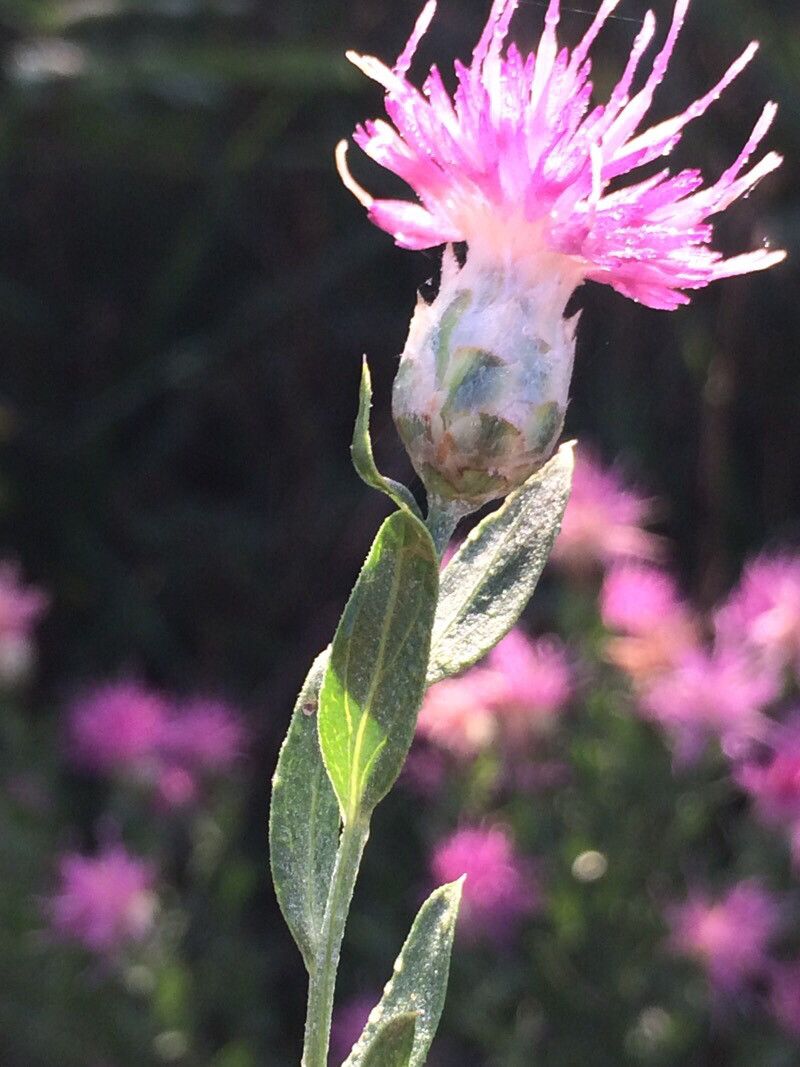
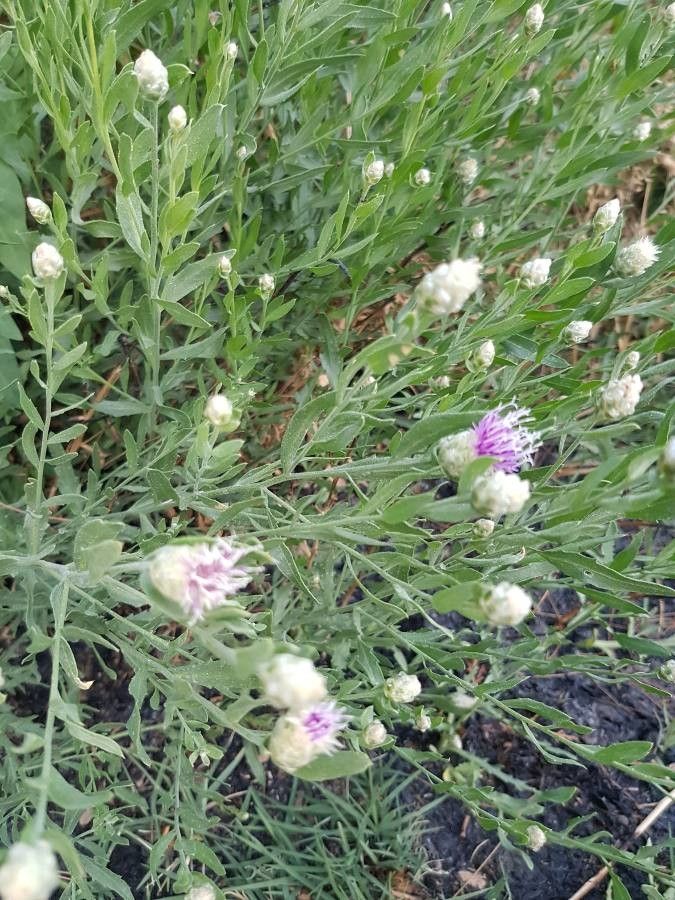
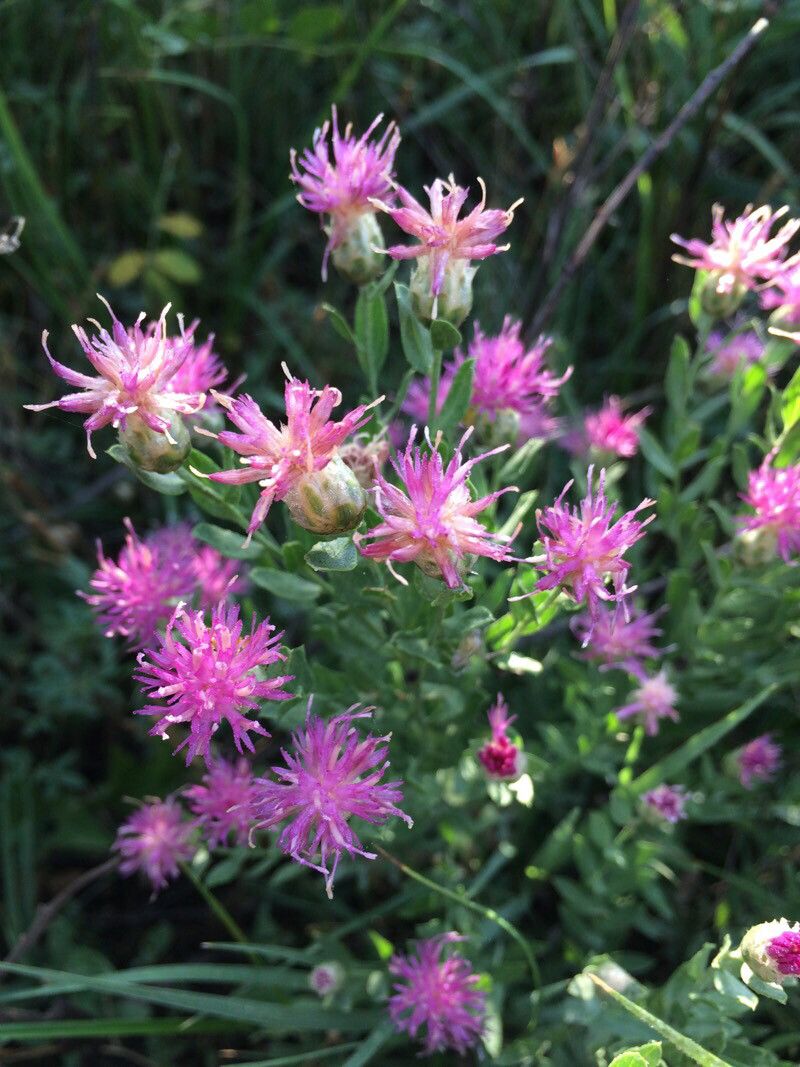
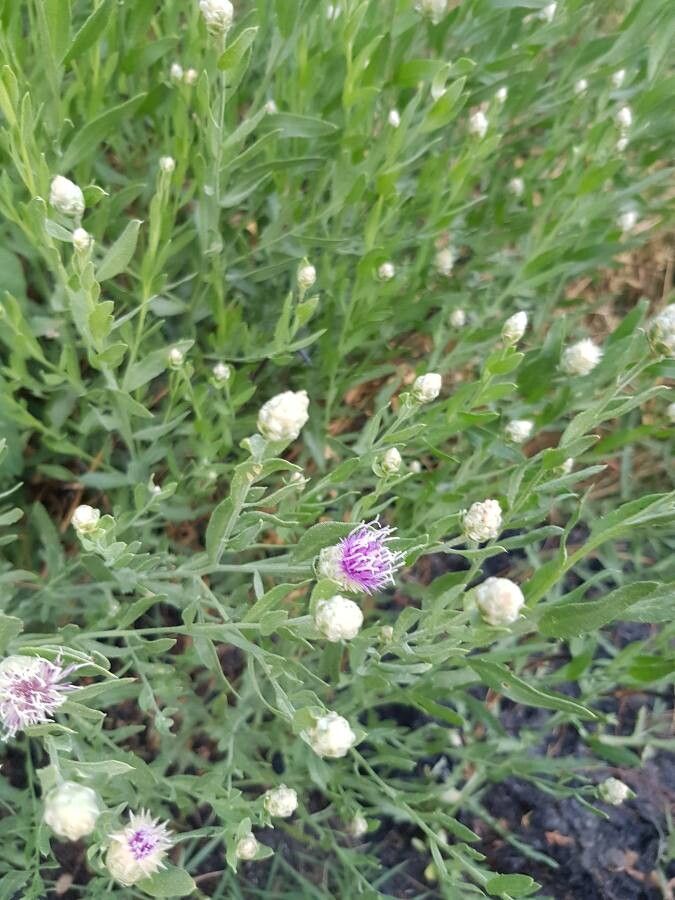
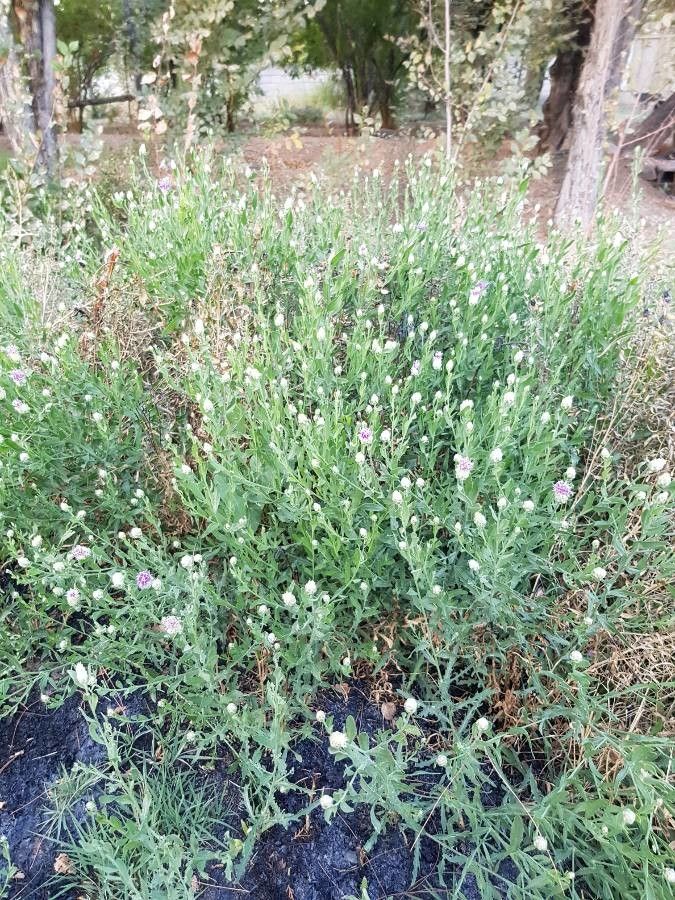
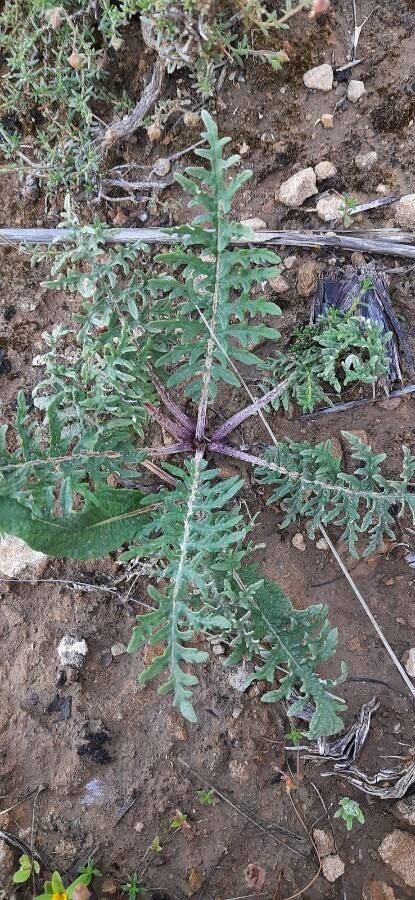
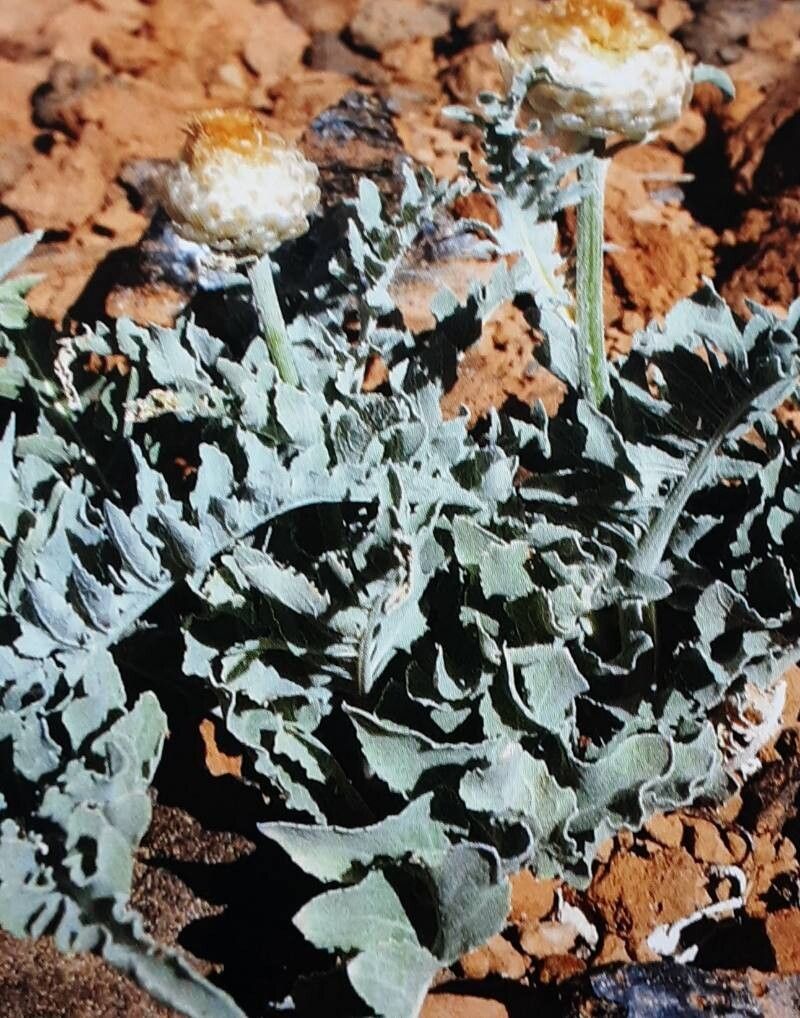
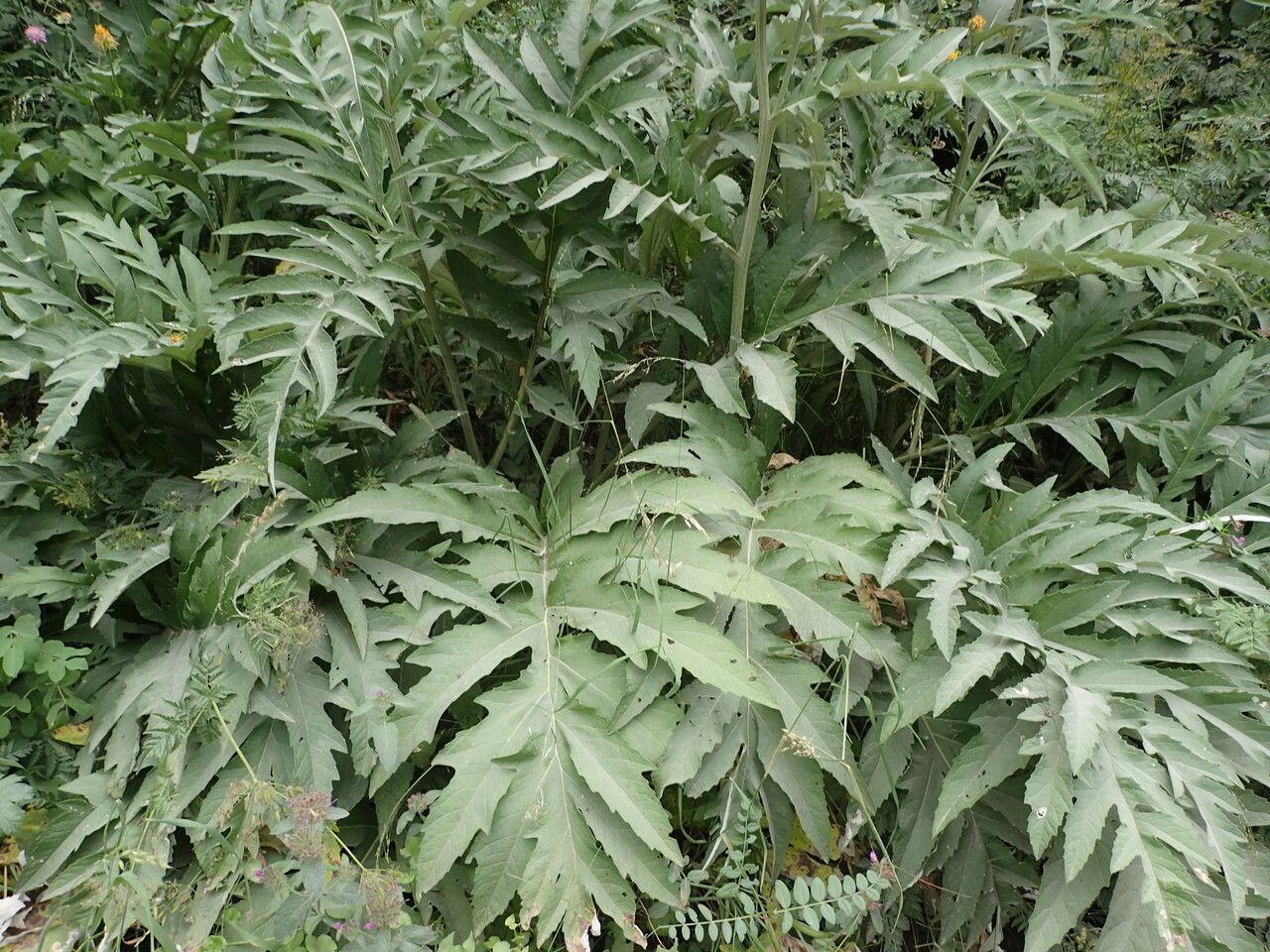
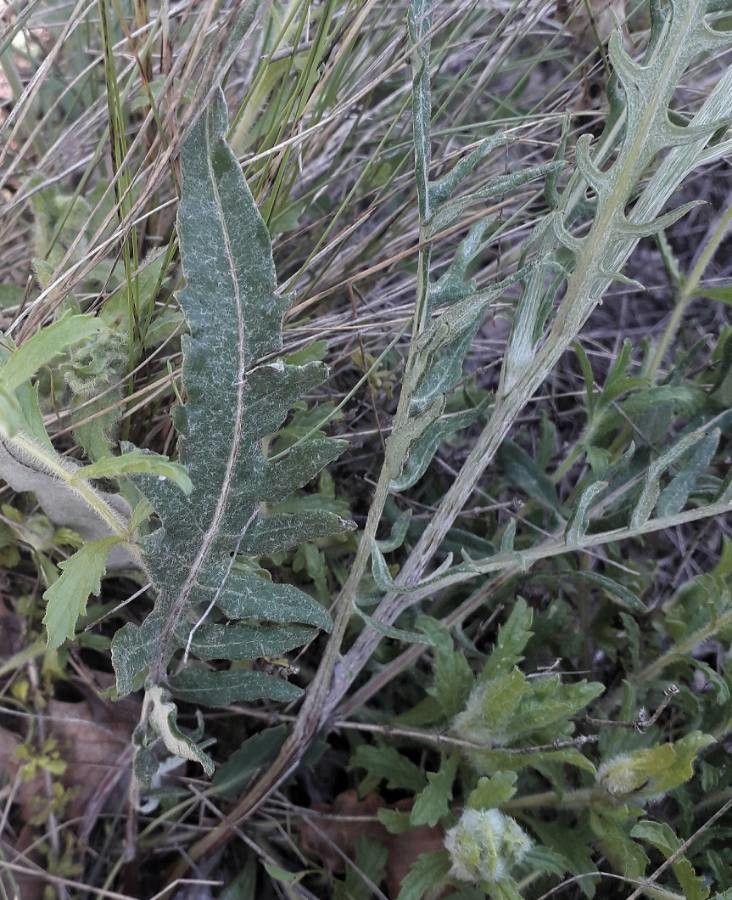
Rhaponticum repens, synonym Acroptilon repens, with the common name Russian knapweed, is a bushy rhizomatous perennial, up to 80 cm tall. Stems and leaves are finely arachnoid-tomentose becoming glabrous and green with age. The rosette leaves are oblanceolate, pinnately lobed to entire, 2–3 cm wide by 3–8 cm long. The lower cauline leaves are smaller, pinnately lobed; the upper leaves become much reduced, sessile, serrate to entire. The heads are numerous terminating the branches. Flowers are pink to purplish, the marginal ones not enlarged. The outer and middle involucral bracts are broad, striate, smooth with broadly rounded tips; the inner bracts are narrower with hairy tips. Pappus present with bristles 6–11 mm long. Fruit is a whitish, slightly ridged achene. Russian knapweed is a deep-rooted long-lived perennial. Some stands have been in existence for 75 years. It forms dense colonies in cultivated fields, orchards, pastures, and roadsides. A native to Eurasia, Russian knapweed was introduced into North America in the late 19th century. Absent only from southeastern U.S., it has become widespread in other regions, especially in the western United States.Nigropallidal encephalomalacia also called Chewing disease, a movement disorder similar to Parkinson's disease, is caused in horses ingesting Russian knapweed for prolonged periods. A sesquiterpene lactone, Repin, in the plant is likely responsible for this toxicity.
Russian knapweed is fairly disease-resistant and generally not prone to illnesses. However, it can be vulnerable to pests and diseases present in its surroundings. Such infections are usually mild. In terms of care, the plant requires moderate maintenance. It should be pruned regularly to maintain an attractive appearance and healthy growth. Fertilizing can also help encourage flowering. Russian knapweed is suitable for anyone with outdoor space, such as a garden or patio, and does not require much care experience. It may need more attention when grown indoors.
How to keep Rhaponticum Repens.
Light
Russian knapweed is a perennial herbaceous plant that favors sunny, open habitats and commonly establishes in meadows and grasslands. It prefers full sun but can also tolerate partial sun.
Water
Originating from arid regions, Russian knapweed is highly drought-tolerant and thrives with weekly watering. It grows best in well-draining soil to prevent waterlogging. Typically cultivated outdoors, Russian knapweed benefits from conditions that replicate the hydration patterns of its native habitat.
Temperature
Russian knapweed can acclimate to a broad span of temperatures, but its range may still be restricted by specific combinations of moisture and heat. It performs best in warm summer conditions with sufficient rainfall or irrigation. Extended stretches of cloudy, rainy weather or sustained high temperatures can raise the probability of Russian knapweed dying. In winter, shielding the plant from cold can boost its survival chances.
Fertilizer
Generally, one fertilizer application in spring is enough for Russian knapweed, though repeated feedings can maximize growth. Apply fertilizer every month to six weeks. Fertilizing improves the leaves’ appearance and function, maintaining even color and a healthy texture. It also encourages root development and nutrient uptake, supporting the plant’s long-term health.
Pruning
Russian knapweed is an invasive, thistle-like plant that requires careful pruning in the spring to manage its growth. To promote healthy development and improve air circulation, remove any dead stems. Make sure to use clean tools to prevent the spread of disease. For specific best practices, consult local horticultural resources.
Botanical profile.
- Plant Type
- Herb
- Life Cycle
- Perennial
- Genus
- Rhaponticum
- Family
- Compositae
- Hardiness Zone
- 3-9
- Mature Height
- 0.3 m to 1.07 m
- Mature Spread
- 30 cm to 61 cm
- Leaf Color
- Green, Blue
- Leaf Type
- Deciduous
- Flower Color
- Pink
- Flower Size
- 2.54 cm
- Bloom Time
- Summer
- Planting Time
- Spring, Summer
- Harvest Time
- Late summer, Early fall, Mid fall
- Native Area
- Uzbekistan, Tajikistan, Italy, Kyrgyzstan, Slovakia, France, Poland, United Kingdom, Belgium, Ukraine, Belarus, Turkmenistan, China
Other names.
Reader questions.
What are the sunlight requirements for Russian knapweed?
Russian knapweed thrives in full sun, which means it requires more than 6 hours of sunlight daily. It can also tolerate partial sun conditions, where it receives about 3-6 hours of sunlight. It's important to observe how sunlight moves through your garden to ensure your Russian knapweed gets the optimal balance of light and shade for healthy growth.
How can artificial lighting support Russian knapweed indoors?
When natural sunlight is insufficient, especially during winter or in less sunny spaces, artificial lighting becomes crucial for Russian knapweed's growth. LED lights are preferred due to their ability to provide specific wavelengths needed by plants. Full sun plants require 30-50W/sq ft, while partial sun plants need 20-30W/sq ft of artificial light. The light source should be placed 12-36 inches above the plant, mimicking natural sunlight for 8-12 hours per day to promote healthier growth.
What are the symptoms of inadequate lighting for Russian knapweed?
Inadequate lighting can lead to several issues for Russian knapweed, including smaller new leaves, leggy or sparse growth, faster leaf drop, delayed or stopped growth, and lighter-colored or chlorotic leaves. Excessive sunlight might cause symptoms like sunscald, leaf curling, wilting, leaf scorching, and a general reduction in the plant's health and photosynthetic capacity.
How can I address lighting issues for Russian knapweed?
To optimize growth for Russian knapweed, gradually introduce it to more sunlight until it receives at least 6 hours daily, using a south-facing window for indoors. Consider using artificial lighting, such as desk or professional plant grow lights, for at least 8 hours a day if it's not feasible to move the plant. Outdoors, adjust the plant's location gradually to prevent shock. Additionally, minimize obstructions to sunlight by pruning trees or relocating the plant to a sunnier spot with good drainage, especially for small, manageable plants.