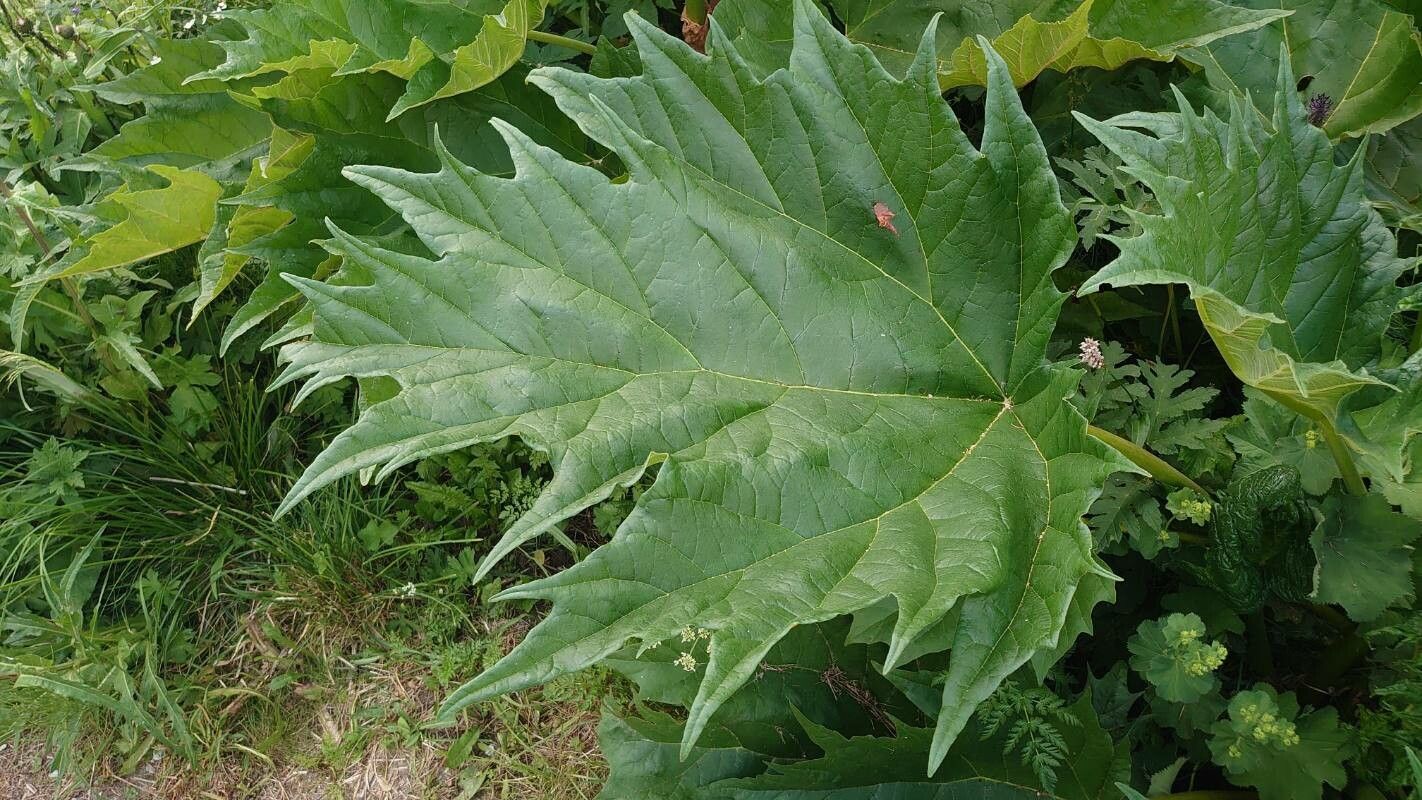
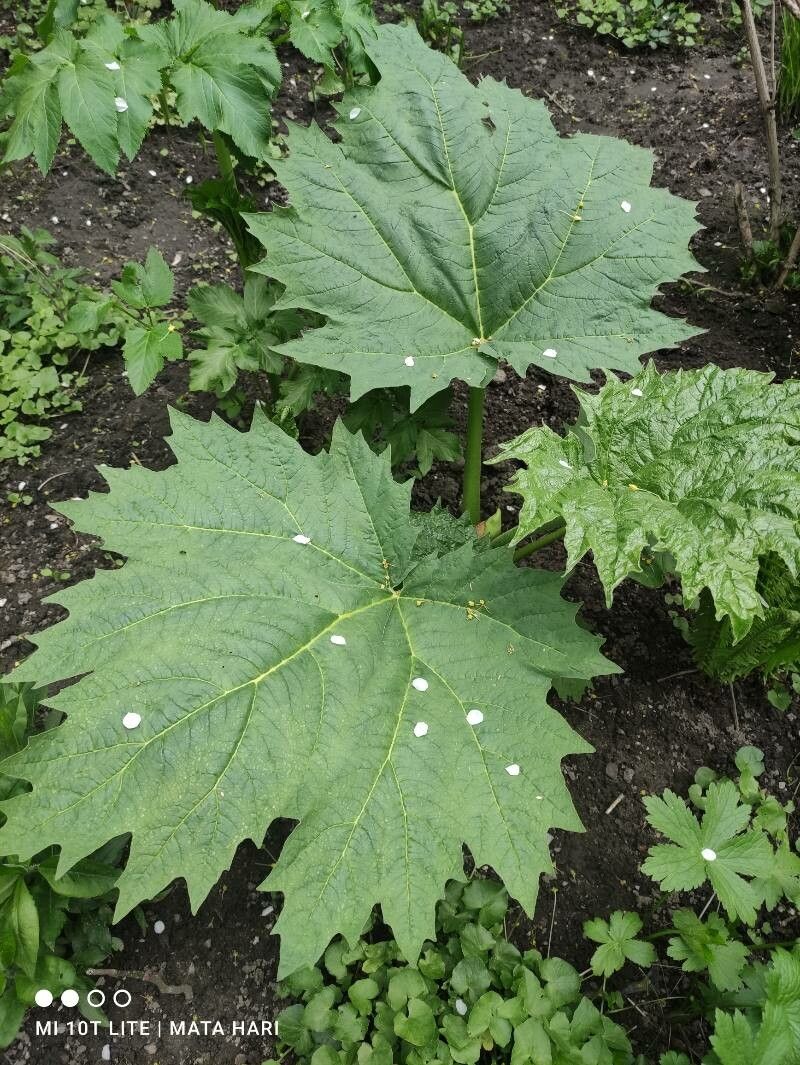
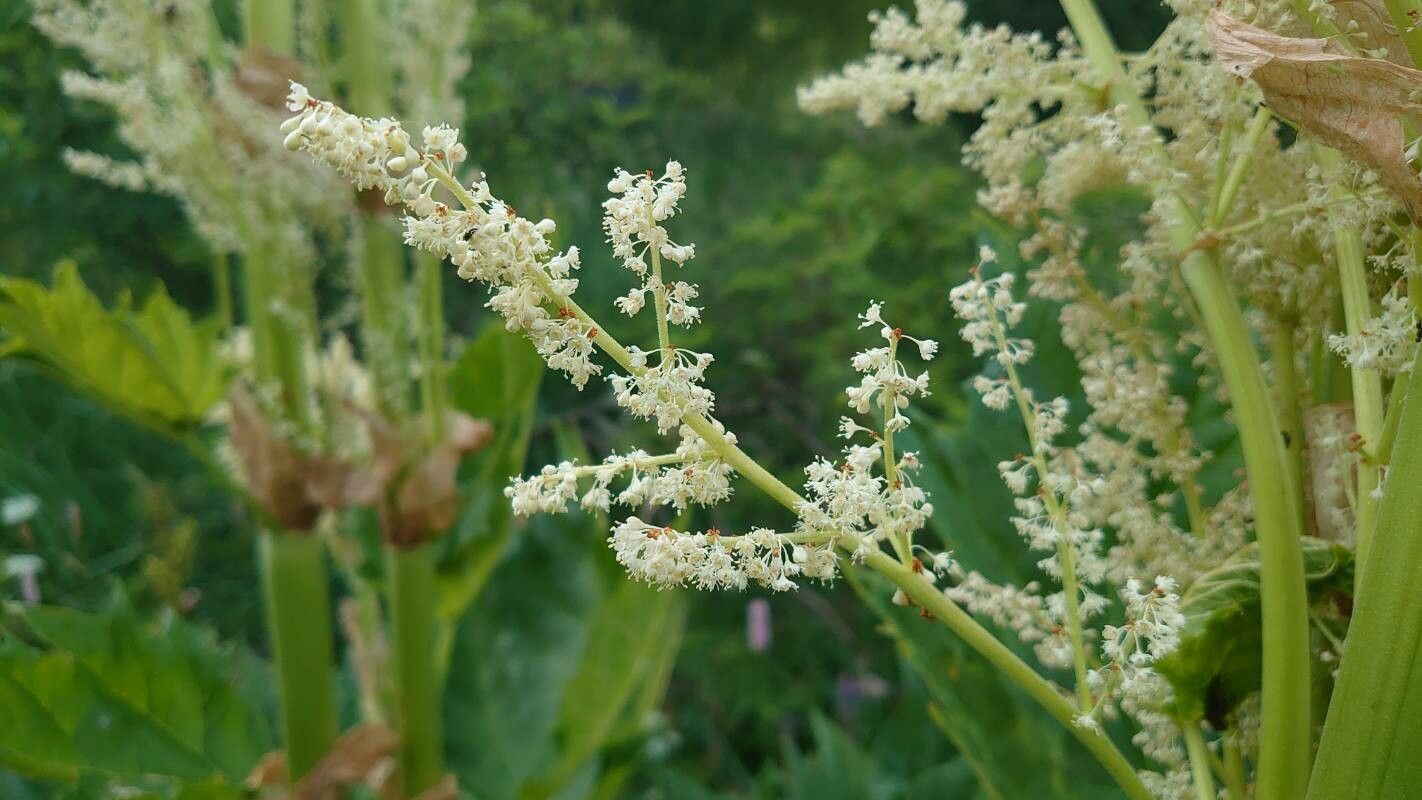
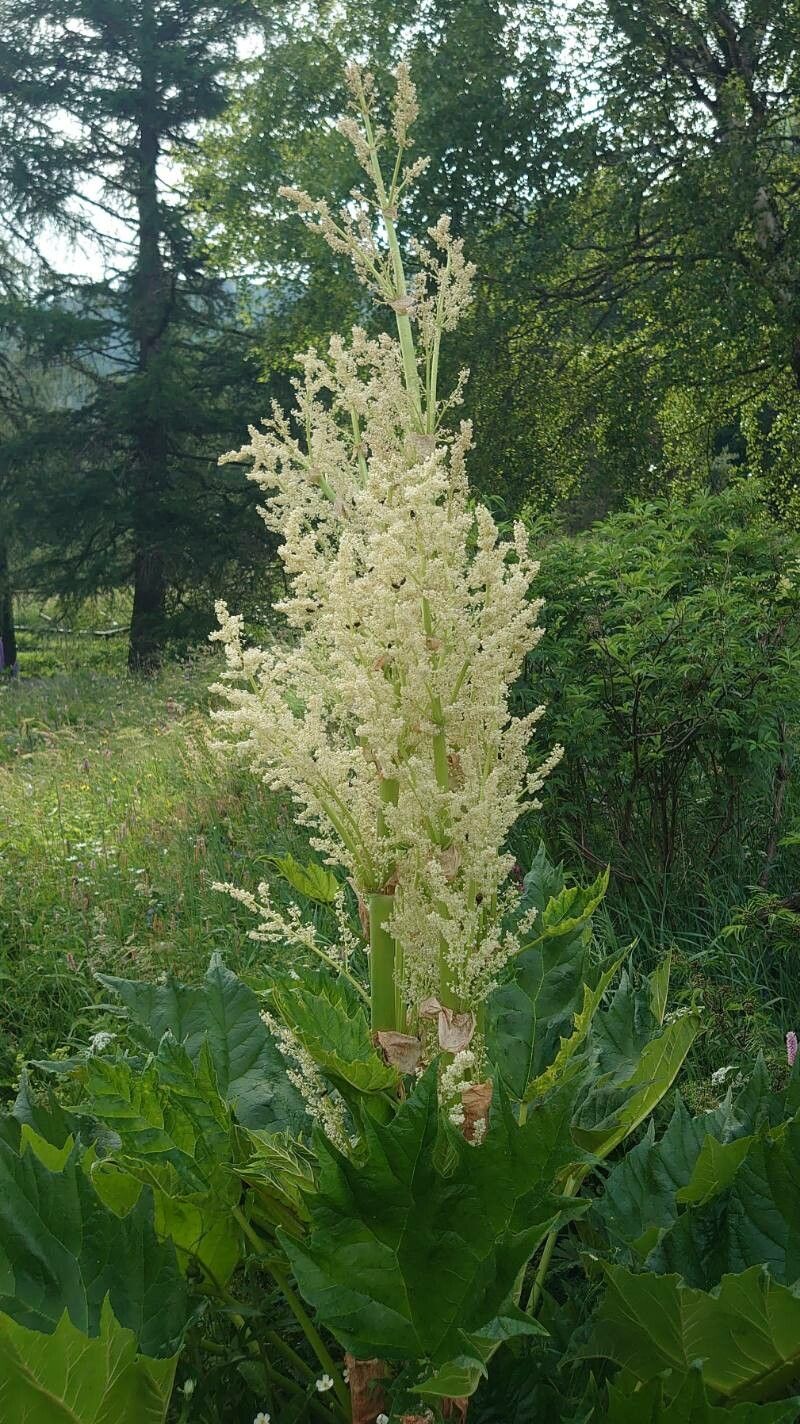
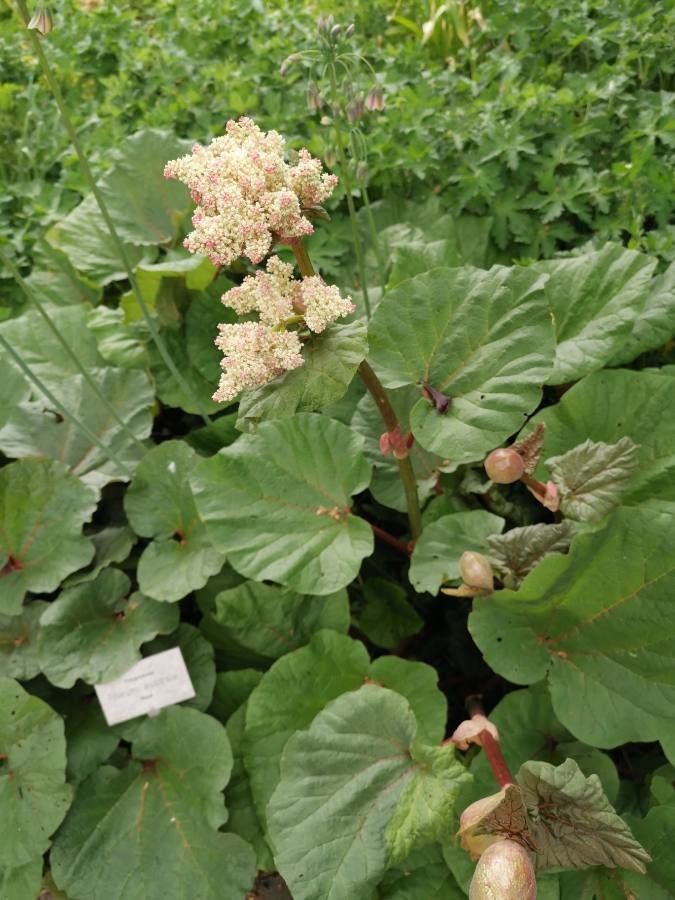
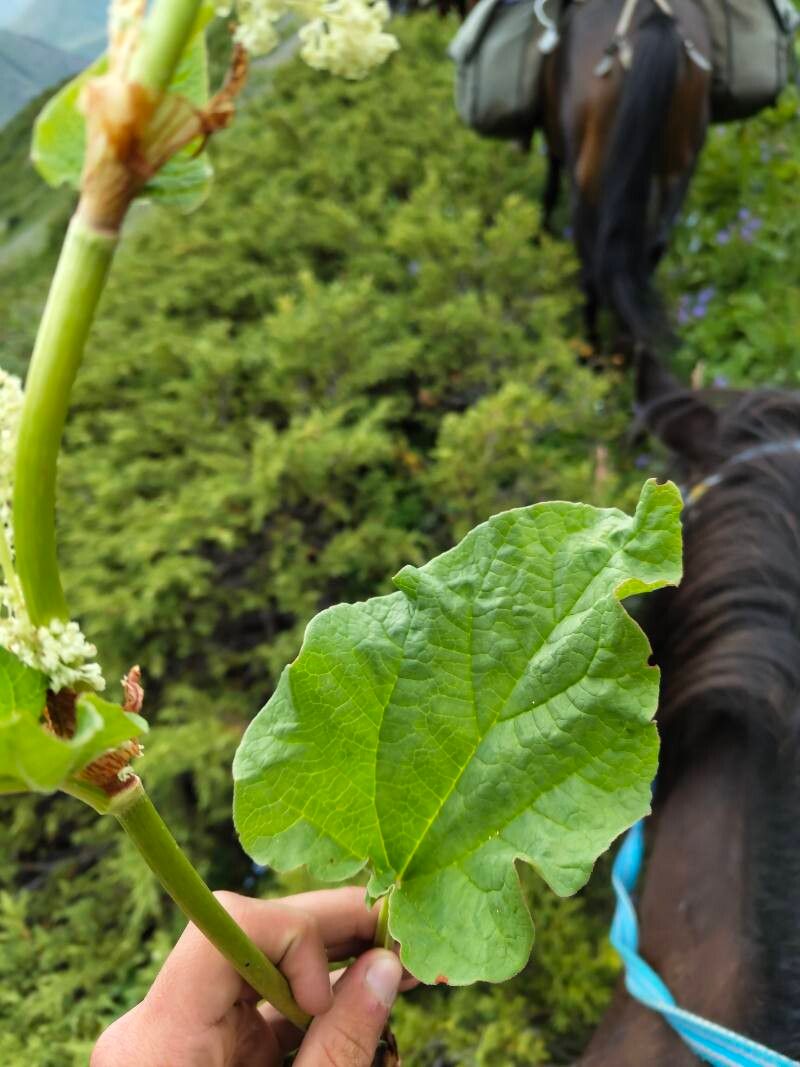
Rheum palmatum, commonly known as Chinese rhubarb or Turkey rhubarb, is a perennial herbaceous plant in the Polygonaceae family. Native to China and Tibet, this plant has been widely cultivated around the world for its medicinal properties.
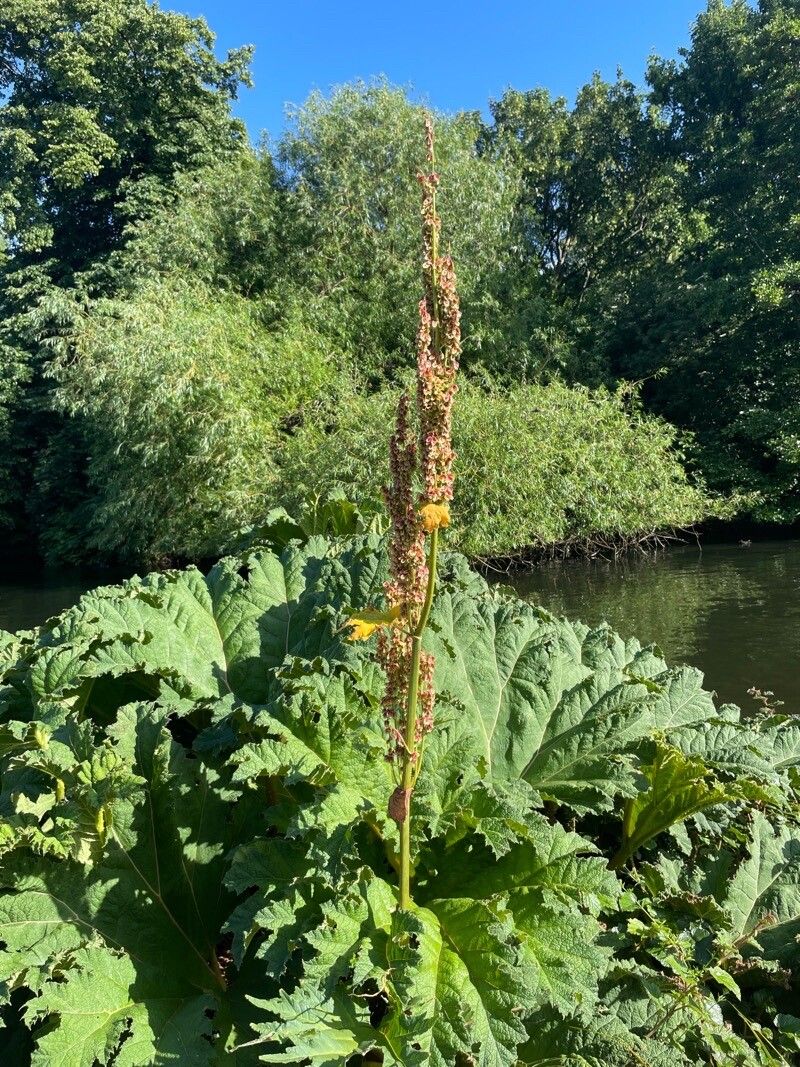
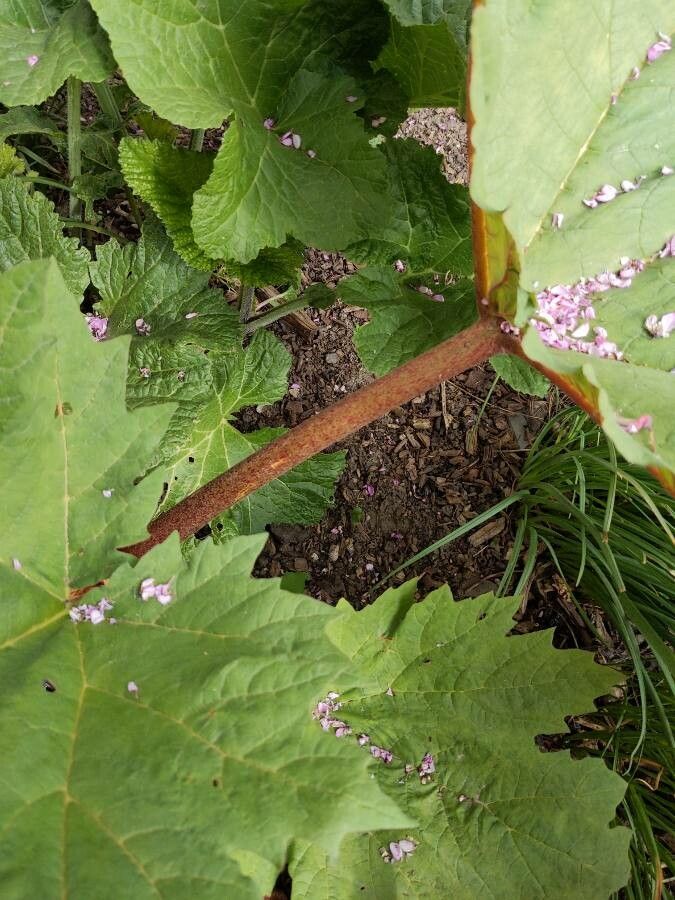
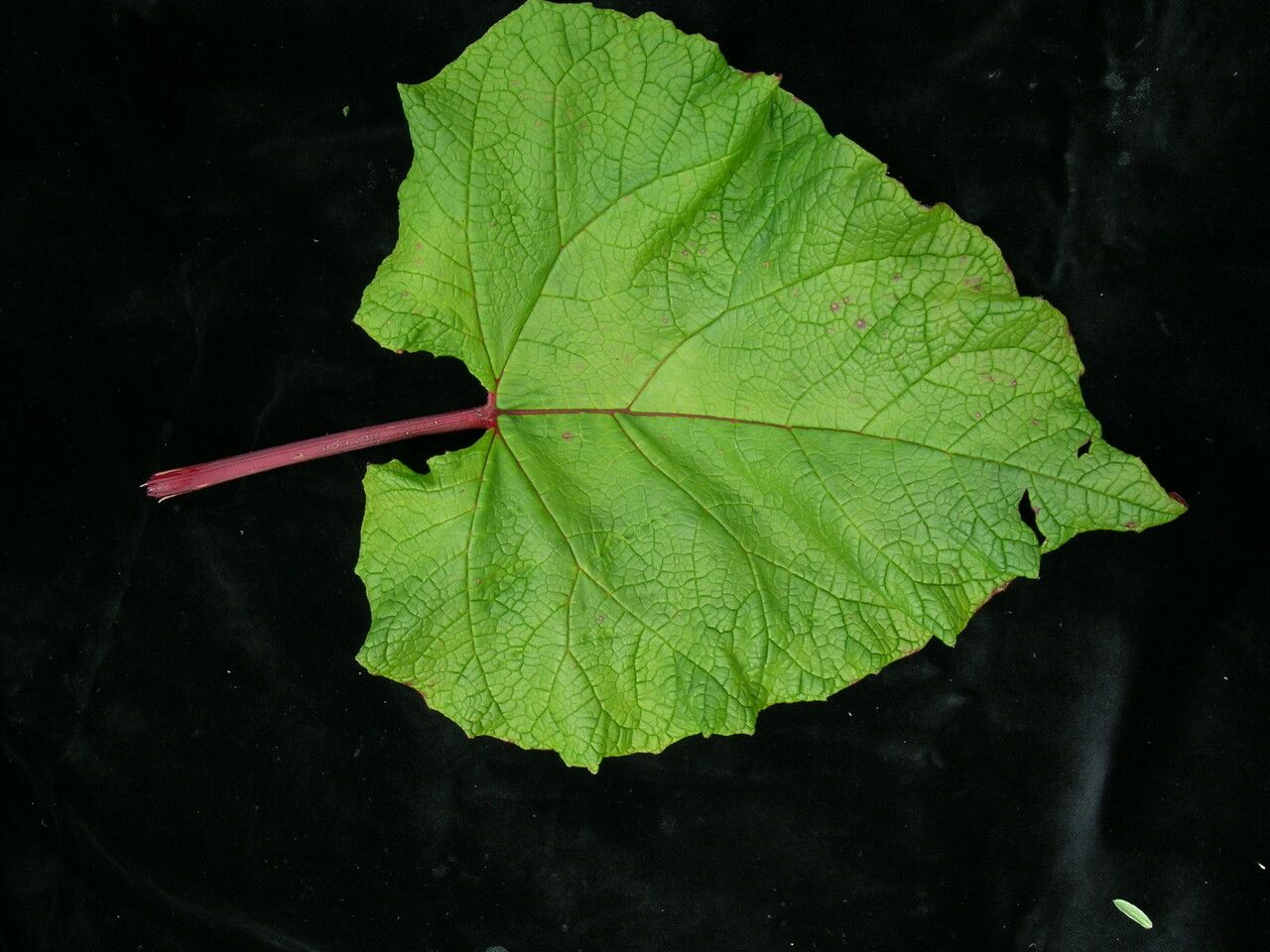
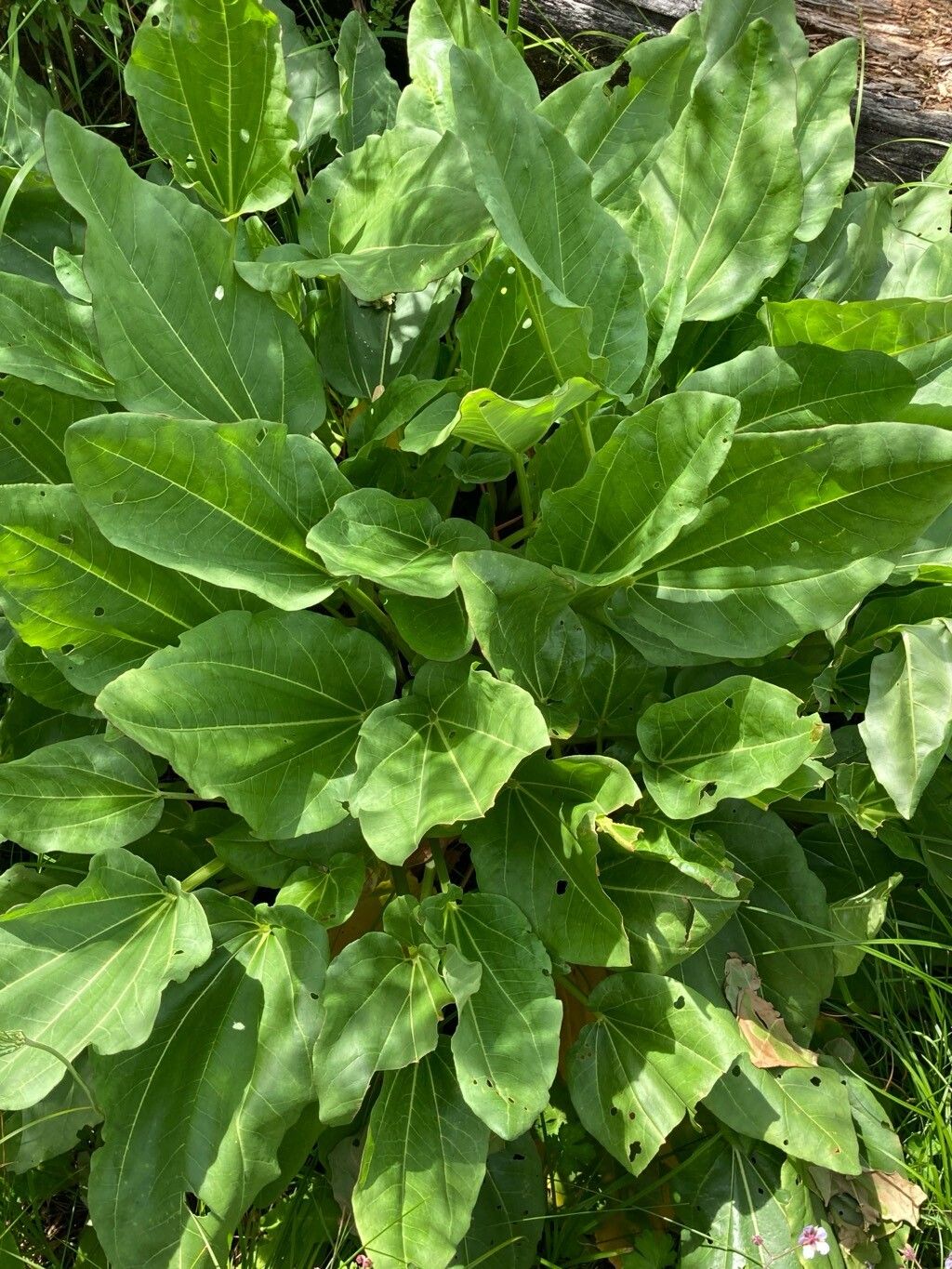
The plant features large leaves, which can grow up to 60 cm in diameter and are deeply lobed with a rough texture. Its thick, fleshy stems can reach up to 2 meters in height and exhibit a reddish-brown coloration.
For centuries, the roots of Rheum palmatum have been used in traditional Chinese medicine as a laxative and digestive aid. These roots contain anthraquinones, compounds that stimulate bowel movements by increasing intestinal contractions.
Beyond its medicinal uses, Rheum palmatum is also popular as an ornamental plant, thanks to its large leaves and attractive flowers that bloom from June through August.
However, it is important to note that consuming the roots of Rheum palmatum should be done under medical supervision. Improper or excessive intake can lead to side effects such as diarrhea or dehydration.
Chinese rhubarb is fairly resistant to disease and typically does not easily contract illnesses. Nevertheless, it can be affected by pests and diseases present in its environment. Such infections are generally mild. Regarding maintenance, this plant needs a moderate level of care. It should be pruned on a regular basis to preserve its appearance and support healthy growth. Applying fertilizer can also encourage blooming. Chinese rhubarb is appropriate for anyone who has an outdoor area, like a garden or a patio, and it does not demand extensive gardening experience. When cultivated indoors, it may need more attentive care.
How to keep Rheum Palmatum.
Light
Chinese rhubarb grows best in locations with ample sunlight, though it can also tolerate areas with partly filtered light. Its native environment had abundant sun, which encouraged its vigorous growth. Excessive direct light can burn it, while too little light may impede its development.
Water
Chinese rhubarb, native to the mountainous regions of western China, thrives in well-draining soil with consistent moisture. Regular watering, about once a week, is beneficial for its growth. As an herbaceous perennial, it grows vigorously during the rainy season, especially when cultivated outdoors, where it can best replicate the conditions of its natural habitat.
Temperature
Chinese rhubarb is native to cooler areas and grows best at temperatures of 50 to 95°F (10 to 35°C). Although it is hardy, temperatures that are too low or too high can impede its growth. For best development, regulate winter and summer temperatures so they remain within this preferred range.
Fertilizer
The best time to fertilize a Chinese rhubarb is in early spring, as it wakes from dormancy and starts active growth. Fertilization supplies essential nutrients needed for healthy development. Although Chinese rhubarb has fairly low fertilizer requirements, feeding it once a year can improve its survival and encourage better, longer-lasting flowers.
Pruning
To help Chinese rhubarb thrive, it's important to prune it properly from early to late spring. Focus on removing dead stems and cutting back flower stalks. This not only boosts growth but also controls the plant's size and reduces the risk of disease. Always use clean, sharp tools to minimize stress and maintain the plant's health.
Botanical profile.
- Plant Type
- Herb
- Life Cycle
- Perennial
- Genus
- Rheum
- Family
- Polygonaceae
- Hardiness Zone
- 6-9
- Mature Height
- 2.44 m
- Mature Spread
- 3.05 m
- Leaf Color
- Green, Red, Purple
- Leaf Type
- Deciduous
- Flower Color
- White, Pink
- Flower Size
- 60.96 cm
- Bloom Time
- Late spring, Early summer
- Planting Time
- Spring, Summer, Autumn
- Harvest Time
- Mid summer, Late summer
- Native Area
- Vietnam, China
Other names.
Reader questions.
How should I water my Chinese rhubarb?
To properly care for Chinese rhubarb, it is recommended to use filtered water at room temperature. This is because tap water may contain harmful particles for the plant's health. Chinese rhubarb prefers warmer water to mimic its natural environment and avoid shocking its system with cold water. Additionally, it is advisable to avoid overhead watering to prevent issues with the foliage. Instead, it is best to apply filtered room temperature water directly to the soil until it is thoroughly soaked. This method benefits the plant by keeping the roots moist and aiding in their nutrient absorption and spread throughout the soil.
Why is it important to fertilize my Chinese rhubarb?
Fertilization is crucial for the Chinese rhubarb because it provides essential nutrients for both above and below ground growth. Despite having relatively low fertilization requirements, regular fertilization can greatly benefit the plant. Although a Chinese rhubarb can survive without fertilization, annual fertilization can enhance its survival and promote longer-lasting, better-quality flowers. Therefore, those wanting their Chinese rhubarb to thrive should make it a point to fertilize it annually.
What are the sunlight requirements for Chinese rhubarb?
Chinese rhubarb thrives best in areas that receive generous sunlight, preferring full sun conditions of above 6 hours of sunlight daily. However, it can also tolerate partial sun, receiving about 3-6 hours of sunlight. The natural habitat of Chinese rhubarb had abundant sunshine which promoted its robust growth, but care should be taken as too much radiant light can scorch the plant, while insufficient light may impede its development. Observing how sunlight moves through your garden and choosing spots that offer a balance of light and shade can ensure the plants remain happy and healthy.
What is the ideal temperature range for growing Chinese rhubarb?
Chinese rhubarb thrives in cooler environments, with an ideal temperature range between 50 to 95°F (10 to 35°C). Though the plant exhibits strong cold resistance, it benefits from temperature regulation during extreme winter and summer conditions to ensure optimal growth. In winter, temperatures should be kept above -15°C but protection is needed if they are expected to drop below -25°C. During summer, keeping the environment below 35°C is advisable to prevent heat stress.
What should I do if I give my Chinese rhubarb too much water or too little water?
Overwatering is a common problem for Chinese rhubarb and can cause wilting, yellowing leaves, and diseases like root rot, mold, and mildew. Underwatering is less common, but can lead to brittle, brown leaves. It's important to notice signs of overwatering early and reduce watering. If the soil drains poorly, replace it with a well-draining mix. If underwatering is an issue, water more regularly until signs improve.
When should I put fertilizer on my Chinese rhubarb?
The ideal time to fertilize a Chinese rhubarb is in late winter to early spring. This is when the plant is transitioning from dormancy to active growth, so fertilizing at this time promotes healthy growth. It is also possible to fertilize the rhubarb in the fall, but it is not recommended to do so in summer or winter.
How can artificial lighting be used for Chinese rhubarb?
In scenarios where natural sunlight is insufficient for Chinese rhubarb, especially during winter or in less sunny spaces, artificial lighting can provide a crucial alternative to promote optimal growth. For indoor plants, using the right type of artificial light is key, with LED lights being a popular choice due to their ability to be customized to the specific wavelengths needed by the plants. The amount of artificial light required varies based on the plant's sunlight needs: 30-50 watts per square foot for full sun plants, 20-30 watts for partial sun plants, and 10-20 watts for full shade plants. The light source should be placed 12-36 inches above the plant to mimic natural sunlight and should be on for 8-12 hours per day to replicate the length of natural daylight hours.
What are the symptoms of temperature stress in Chinese rhubarb and how can they be managed?
Temperature stress in Chinese rhubarb can present in various ways. For low temperature stress, symptoms may not be immediately noticeable in winter, but if temperatures fall below -25°C, there could be a decrease in sprouting or even no sprouting in spring. Managing this involves removing parts that failed to sprout. For high temperature stress, symptoms include lighter colored leaves, curling, susceptibility to sunburn, and in severe cases, wilting and dryness of the entire plant if temperatures exceed 38°C. To mitigate high temperature stress, trim sunburned and dried parts, move the plant to a shaded area or use a shade cloth to protect it from midday and afternoon sun, and water the plant in the morning and evening to maintain soil moisture.
How frequently do I need to water my Chinese rhubarb?
If your Chinese rhubarb is potted, the best way to know when it needs watering is by checking the soil with your finger. If the top few inches of soil are dry, it's time to water. If your Chinese rhubarb is growing outside in the ground, you can use the same method. When the top layer of soil is dry, it's time to water. Typically, you'll need to water once a week in spring and early fall. In extremely hot weather, you may need to water twice or more per week. However, mature Chinese rhubarb plants can withstand drought well.
When should I not add fertilizer to my Chinese rhubarb?
To properly care for your Chinese rhubarb, it's important to know when to fertilize. Late winter and early spring are the only suitable times for fertilization, as this plant requires minimal feeding. Overfertilizing during spring, summer, and fall can cause complications, so it's best to avoid it. The only exception is if you didn't fertilize in spring, in which case you can feed the plant in fall. Fertilizing during winter is not recommended, as the plant is in a dormant growth phase and doesn't require new growth.
What are common symptoms of inadequate lighting in Chinese rhubarb?
Chinese rhubarb displays several symptoms when exposed to inadequate lighting, including smaller new leaves compared to older ones, leggy or sparse growth, faster leaf drop, slower or halted new growth, and lighter-colored or irregularly patterned new leaves due to insufficient sunlight. Excessive sunlight exposure can lead to chlorosis, sunscald, leaf curling, wilting, and leaf scorching. Each of these symptoms indicates either a deficiency or excess of sunlight, affecting the plant's ability to photosynthesize and overall health.
How should Chinese rhubarb be prepared for cold winters?
To prepare Chinese rhubarb for cold winters, especially if the temperature is expected to drop below -25°C, it is crucial to provide cold protection by covering the plant with insulating materials such as soil or straw. Additionally, watering the plant abundantly before the first freeze in autumn is recommended. This ensures that the soil remains moist as it enters a frozen state, which helps prevent drought and water scarcity for the plant during the winter and early spring months.