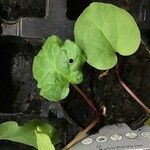
Rheum rhabarbarum
Rhubarb · Garden Rhubarb · Pieplant · Wine-plant · Vegetable rhubarb
Description
Source: leafsnapRheum rhabarbarum, commonly known as rhubarb, is a perennial plant from the family Polygonaceae. Native to Asia, rhubarb has been cultivated for its edible stalks for centuries. The plant boasts large, triangular leaves that can grow up to 2 feet long. These leaves are green with a reddish tint on the underside. The stalks are thick, fleshy, and have a tart flavor, often used in cooking for pies, jams, sauces, and savory dishes. Rhubarb thrives in well-drained soil with full sun exposure. It can be propagated by dividing its root system or by planting seeds in early spring or fall. Beyond its culinary applications, rhubarb has medicinal properties due to the presence of anthraquinones like emodin and rhein, which have laxative effects. However, it should only be consumed under medical supervision due to potential side effects. Overall, Rheum rhabarbarum is a fascinating plant with both culinary and medicinal uses, making it an important part of traditional medicine practices around the world today.
🌳 Rhubarb's versatility goes beyond its culinary uses. Little known is that rhubarb roots have been used as strong natural dyes, producing a vibrant and distinctive color in fabric production. In agriculture, the leaves — because they contain toxic levels of oxalic acid — repel pests, serving as an effective natural insecticide. This application is an eco-friendly pest-control method with a history in traditional rural garden use.
🎭 Security, Loyalty
Care Guide
💧 Water Every 7 days
Rhubarb grows best in cool, mountainous areas where consistent moisture is available. Although it can withstand brief periods of dryness, regular watering—about once a week—is essential. When grown outdoors, rhubarb benefits from natural rainfall during its active growing season. As a herbaceous perennial, rhubarb thrives and becomes more robust when provided with optimal conditions.
How should I water my Rhubarb plant?
The Rhubarb plant has specific requirements for water. Not only does it need the right amount of water, but the way you water it is also important. If you use the wrong technique, you may end up damaging your tomatoes. The best way to water Rhubarb is by applying water directly to the soil in a slow and gentle manner. Avoid pouring all the water at once or using overhead watering. While watering slowly, make sure to water deeply enough so that all the soil where your Rhubarb grows remains adequately moist.
What should I do if I give my Rhubarb too much water or not enough water?
If you notice that you have given your Rhubarb too much water and are worried about it getting sick, take action right away. The most effective solution for an overwatered Rhubarb is to remove it from its current spot. After taking it out of the ground, let the roots dry out a bit before planting it in a new spot. Make sure the new spot has well-draining soil. If you have your Rhubarb in a pot, you might also want to transfer it to a pot with more or bigger drainage holes. If you have underwatered your plant, simply water it more frequently.
How much should I water my Rhubarb?
Rhubarb needs a lot of water during the growing season. To meet this high water requirement, you should water it frequently from spring to summer. In the early part of the season, water it once or twice a week. As the season progresses, increase the frequency of watering, potentially watering it twice a day or more during hot summer weather. After the major growth phases, you can reduce watering to about once a week until the end of the growing season.
How much water does my Rhubarb plant need?
Rhubarb plants are very popular and many gardeners, both professional and amateur, have successfully grown them. Because of this, we have a good understanding of how to care for these plants, including knowing how much water they need. On average, a Rhubarb plant should receive about 1 - 1.5 inches of water per week, which should be evenly distributed during your weekly watering. As the weather gets warmer, you may need to increase the amount of water, but in most cases, two inches per week is a good amount to aim for.
How do I know if I'm giving enough water to my Rhubarb?
Both underwatering and overwatering can be problematic for your Rhubarb, and they can produce similar symptoms. For instance, both of these issues can cause foliage discoloration and wilting. When your Rhubarb is underwatered, you will notice its leaves curling and drooping at the beginning, and a cluster of leaves may become less vigorous. Underwatering also leads to stunted growth and overall poor development, which is particularly detrimental since this plant and its flowers require ample water. On the other hand, overwatering increases the likelihood of diseases, such as rot, and may result in unpleasant odors emanating from the soil. The symptoms of underwatering appear more quickly than those of overwatering. Additionally, you can identify overwatering by observing the soil conditions; if you see excessive standing water or waterlogged soils, overwatering is the likely cause.
☀️ Light Full sun
Rhubarb performs best in an environment with plenty of sunlight, which greatly benefits its growth and overall health. However, it can still grow in conditions with less light. Different growth stages do not significantly change its light requirements. In its native habitat, it experienced abundant sun exposure. Too much or too little light can potentially disrupt its healthy growth.
What are the sunlight requirements for Rhubarb?
Rhubarb requires full sun, defined as above 6 hours of sunlight daily, for optimal growth and health. However, it can also tolerate partial sun, which means about 3-6 hours of sunlight. Observing how sunlight moves through your garden is crucial to find the perfect spots that provide a balance of light and shade, ensuring the plants' happiness. Rhubarb thrives best in environments abundant in sun, which mirrors its original ecosystem. Both excessive and insufficient light can disrupt its healthy growth.
Can Rhubarb grow indoors and how should artificial lighting be used?
Yes, Rhubarb can grow indoors with adequate lighting. When natural sunlight is scarce, especially in winter or less sunny spaces, artificial lights are essential for promoting growth. LEDs are recommended as they can be tailored to provide specific light wavelengths needed by the plants. For full sun plants, 30-50W/sq ft is needed; partial sun plants require 20-30W/sq ft, while full shade plants need 10-20W/sq ft. The light source should be placed 12-36 inches above the plant and turned on for 8-12 hours per day to mimic natural daylight hours. This setup helps in achieving faster, healthier growth.
What are the symptoms of insufficient or excessive light in Rhubarb?
Symptoms of insufficient light include small new leaves, leggy or sparse growth, faster leaf drop, slower or no new growth, and lighter-colored new leaves, indicating a light deficiency that might go unnoticed indoors. Excessive sunlight can cause chlorosis (leaves turning yellow due to chlorophyll breakdown), sunscald (damage from intense sunlight exposure), leaf curling as a defense mechanism, wilting from water loss, and leaf scorching, characterized by brown, dry, and crispy leaf edges. Both conditions negatively affect Rhubarb's ability to photosynthesize and its overall health.
What are the solutions for Rhubarb struggling with light issues?
For indoor Rhubarb struggling with light issues, you should gradually move it to a sunnier location, aiming for at least 6 hours of direct sunlight daily. Using a south-facing window or artificial lights for at least 8 hours daily can also help. Outdoors, adjust the plant's location gradually to avoid sunburn and allow for adaptation to brighter conditions. For Rhubarb directly in the ground, minimize obstructions like overhanging branches and consider transplanting to sunnier areas during the plant's dormant period for optimal growth. Note that parts of the plant damaged by previous light conditions might not recover, but new growth should be healthy with adjusted light exposure.
🌡️ Temperature 5–32.2°C
Rhubarb is native to regions with temperatures between 32 and 77 °F (0 to 25 ℃). It grows best in these cooler climates. Measures such as laying down mulch may be required to provide thermal insulation during severe winters or in excessively hot summers.
What is the ideal climate for growing Rhubarb?
Rhubarb is indigenous to environments where temperatures range from 32 to 77 °F (0 to 25 °C), thriving best in cooler climates. The plant prefers relatively warm temperatures, benefiting from conditions maintained above the freezing point during winter cultivation to avoid freezing damage. When temperatures approach -5°C (25°F) during winter, it is advisable to bring Rhubarb indoors or provide protection using a temporary greenhouse or wrapping the plant in materials such as plastic film or fabric for insulation against harsh winter cold or excessive summer heat.
How should you respond to Rhubarb exposed to low temperatures?
Rhubarb has moderate tolerance to low temperatures and grows optimally between the suitable growth minimum and maximum temperatures. To protect against low-temperature damage, it's important to keep Rhubarb above the tolerable growing temperature minimum during winter. If temperatures fall below the growth limit, the leaves may darken and exhibit signs of frost damage, including water-soaked necrosis, wilting, and eventually turning brown. The solution involves trimming away the frost-damaged parts and moving the plant to a warm environment or setting up a makeshift greenhouse. It's beneficial to place the plant near a south-facing window for sunlight or use supplemental lighting if natural light is insufficient.
What steps should be taken if Rhubarb is affected by high temperatures?
During the summer, it's crucial to keep Rhubarb below the suitable growth temperature maximum to prevent stress due to high temperatures. If the plant's environment exceeds the tolerable growing temperature maximum, its growth may slow, leaves may lighten in color, and it may become susceptible to sunburn. In such cases, trim away the sunburned and dried parts and move the plant to a shaded location, especially away from the harsh afternoon sun. Additionally, watering the plant in the morning and evening helps maintain soil moisture and supports plant health under high temperature conditions.
💨 Humidity normal (40-60%)
This plant will thrive in moderate humidity, which is probably the level in your home. However, misting it a few times a week can be very beneficial. Make sure the room has good ventilation.
🪴 Soil 6-7
🌱 Fertilizer
To maximize the yield and flavor of rhubarb, provide adequate nitrogen throughout the entire growth period, including before planting and up to harvest. Plants that are well watered and properly fertilized produce plentiful, healthy leaves and reduce bitterness. Enrich the soil with organic matter such as compost or manure prior to planting, preferably 2 to 8 weeks beforehand.
Why should I put fertilizer on my Rhubarb?
Rhubarb, being grown for its edible leaves, has specific nutrient requirements. While all plants need essential nutrients to grow properly, Rhubarb relies heavily on nitrogen for the development of its foliage. However, it can be challenging for Rhubarb to obtain enough nitrogen from the soil alone. To ensure a satisfying harvest, many gardeners choose to supplement Rhubarb with additional nitrogen through feeding.
When should I put fertilizer on my Rhubarb?
To ensure your Rhubarb plants thrive, consider applying fertilizer at key points throughout the growing season. First, when preparing the soil for planting, mix in nutrient-rich organic material like compost or manure at least 2 to 8 weeks beforehand. Repeat this process when you actually plant the seedlings. Once the seedlings have emerged and reached a height of about 2 inches, you can apply another round of fertilizer. From there, you can regularly feed your Rhubarb with either organic matter or a commercial fertilizer until harvest time, generally on a fertilizing schedule of every two to three weeks. Additionally, to maintain a continuous supply of nutrients, it's advisable to layer compost or manure around the plant.
When is the best time to not give fertilizer to my Rhubarb?
To achieve lush foliage, it is recommended to use nitrogen-rich fertilizers. However, be cautious when applying it near other vegetable plants as they may prioritize leaf growth over producing fruit. This can result in an abundance of leaves but limited vegetables. When fertilizing Rhubarb, avoid getting any fertilizer on the leaves as it can cause them to burn. It is best to apply it a few inches away from the plant's base. If your Rhubarb is experiencing issues such as disease, pests, or drought, hold off on fertilizing until those problems are resolved. Fertilizer can benefit healthy plants, but it can harm ones in poor condition.
What kind of fertilizer should I use for my Rhubarb?
Choosing the best type of fertilizer for Rhubarb depends on various factors such as the type of plant, environmental conditions, and soil composition. However, since Rhubarb requires a lot of nitrogen, using high-nitrogen fertilizers is generally a safe choice. At the start of the growing season, the best option for improving the soil is to use manure or compost. For the rest of the season, you can use either dry or liquid fertilizers. During the seedling stage, it is advisable to feed lightly, gradually increasing the amount as the plant matures. While organic fertilizers are preferred by many due to their superior taste, both organic and chemical fertilizers will work. Some popular organic options high in nitrogen include fish emulsion, soil meal, compost tea, alfalfa meal, blood meal, and chicken manure. When using chemical fertilizers, it's important to check the NPK number, which indicates the proportion of nitrogen, phosphorus, and potassium. For a high-nitrogen option, choose a fertilizer with a high first number like 13-2-5 or even one that only contains nitrogen like 16-0-0.
How can I give my Rhubarb plant the necessary nutrients it needs to grow?
To fertilize your Rhubarb, there are different approaches depending on the type of fertilizer. If you want to amend the soil, dig at least 6 inches deep and mix your amendment material with the soil at a ratio of 2 parts soil to 1 part amendment. Make sure to thoroughly mix them together. Granular or powder fertilizers should be spread around the base of the plant, following the recommended amount provided by the retailer. It's a good idea to mix this material into the top layer of soil to prevent it from washing or blowing away. Apply the fertilizer about 2 to 3 inches away from the plant to avoid fertilizer burn. After adding a dry fertilizer, always water thoroughly. For water soluble chemical fertilizers, you can dissolve them in water and use the diluted mixture to water your plants. However, this method is only suitable if you water your Rhubarb from a container, not through irrigation or other methods.
🪴 Pot & Repot Every 12 months
✂️ Pruning
Rhubarb is a hardy perennial plant known for its large, edible stalks. To promote healthy growth and improve air circulation, prune the plant in early spring by removing any dead or damaged stalks. To encourage the production of leaves and stalks, cut back any flower stalks as well. Always use clean, sharp tools while pruning to prevent the spread of disease.
🌿 Propagating
🐛 Diseases & pets
☠️ Toxicity
Characteristics
- Plant Type
- Herb
- Life Cycle
- Perennial
- Genus
- Rheum
- Family
- Polygonaceae
- Hardiness Zone
- 3
- Mature Height
- 91 cm
- Mature Spread
- 2.13 m
- Leaf Color
- Green, Red
- Leaf Type
- Deciduous
- Flower Color
- White, Cream
- Flower Size
- 0.20 cm to 0.25 cm
- Bloom Time
- Late spring, Early summer
- Planting Time
- Spring
- Harvest Time
- Early summer, Mid summer
- Native Area
- Russia, Mongolia, China