Rhexia mariana
Dull meadow-pitcher · Pale meadow-beauty · Maryland meadow-beauty · Maryland meadowbeauty
Description
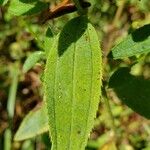
Source: leafsnapRhexia mariana is a species of flowering plant in the Melastomataceae family known by the common names pale meadow beauty or Maryland meadowbeauty. It is native to the eastern and lower midwestern United States.This species is a colonial perennial herb producing stems up to 2.5 feet tall. The oppositely arranged leaves have elongated, toothed blades. The flower is 1 or 2 inches wide. It is pink, purple, or white with yellow or orange anthers. The fruit is a red urn-shaped capsule containing brownish seeds. This species is used in landscaping and sometimes as a roadside planting.
🌳 Pale Meadow Beauty might not be commonly noted for its practical uses, yet it serves an important role for pollinators, especially bees. The nectar from pale Meadow Beauty's bright flowers is a key food source for honeybees, which then make honey enjoyed by people. The interaction between pale Meadow Beauty and bees not only helps pollinate the plant itself but can also aid the ecosystem by supporting the honey industry and preserving biodiversity.
Care Guide
💧 Water
The Pale Meadow Beauty thrives in moist environments, preferring consistent moisture levels to support its lush growth. This plant requires weekly watering to maintain its health, balancing its ability to tolerate drought with its need for humidity. As an herbaceous perennial, it grows best in uniformly moist soil, particularly during its active growing season when water availability is crucial.
How should I water my Pale Meadow Beauty plant?
To ensure the health of the Pale Meadow Beauty plant, it is best to use filtered water at room temperature for watering. Tap water may have harmful particles, so filtered water is preferred. This plant is accustomed to warm environments, so using cold water can be a shock. Avoid overhead watering to prevent complications with the foliage. Instead, apply filtered room temperature water directly to the soil until it is completely soaked. This will benefit the plant by moisturizing the roots and assisting them in spreading through the soil to collect necessary nutrients.
What should I do if I give my Pale Meadow Beauty plant too much or too little water?
Pale Meadow Beauty can be adversely affected by both overwatering and underwatering, but overwatering is a more common issue. Excessive watering can cause wilting and yellowing of stems and leaves, as well as diseases like root rot, mold, and mildew, which can be fatal to the plant. Underwatering is less likely to occur since this plant can tolerate dry conditions fairly well. However, when it does happen, the leaves of the Pale Meadow Beauty may become dry and brown. To care for your Pale Meadow Beauty effectively, it is important to promptly recognize the signs of overwatering. Some diseases caused by overwatering, such as root rot, may be irreversible if not addressed quickly. If early signs of overwatering are evident, reduce watering immediately and consider replacing poorly draining soil with a loose, well-draining potting mix. Conversely, if signs of underwatering appear, increase your watering frequency until the symptoms subside.
How frequently should I water my Pale Meadow Beauty?
If your Pale Meadow Beauty plant is in a pot, the most precise way to determine if it needs water is to check the soil by sticking your finger in it. If the top two to three inches of soil are dry, then it is time to water it. If you have your Pale Meadow Beauty planted outdoors in the ground, the same method applies. Once again, if the top few inches of soil have dried out, it's time to give it some water. Usually, during the spring and early fall, you will need to water this plant about once a week using this method. However, during extremely hot weather, you may have to increase your watering frequency to about two or more times per week. On the bright side, mature and well-established Pale Meadow Beauty plants have a remarkable ability to withstand drought.
How much water does my Pale Meadow Beauty plant require?
When it's time to water your Pale Meadow Beauty, don't be afraid to give it a generous amount of water. Make sure the top two to three inches of soil are dry before watering. It's best to thoroughly soak the soil, allowing excess water to flow through the drainage holes at the bottom of the pot. If you don't see any water draining, you may not have watered enough. However, avoid allowing water to accumulate in the soil, as this can harm the plant. Poorly draining soil can also be detrimental to the plant's health, so make sure to avoid it. If the plant is outside, one inch of rain per week should be sufficient.
How do I water my Pale Meadow Beauty plant when it is growing at different stages?
The water needs of the Pale Meadow Beauty can vary depending on its growth stages. In the first few years or after transplanting, it requires more water because it is focused on growing new roots to support future growth. These new roots perform better with slightly higher moisture levels. As the plant matures, it will require less water. Additionally, during the bloom period, the plant may need more water due to the significant amount of moisture used in flower development.
☀️ Light Full sun
Pale Meadow Beauty does best when exposed to abundant sunlight. Although it can tolerate a little shade, its growth and overall health may decline. Its ancestors lived in sun-rich habitats, which explains its preference. Excessive shade or excessive sunlight can both harm the plant—shade can suppress growth, while too much sun can cause wilting.
What are the sunlight requirements for Pale Meadow Beauty?
Pale Meadow Beauty requires a considerable amount of sunlight to thrive. It is best suited for environments that provide full sun, defined as over 6 hours of sunlight daily, but it can also manage in partial sun, receiving about 3-6 hours of sunlight. The plant's growth and overall health can suffer in too much shade or direct sunlight. It's crucial to observe the movement of sunlight through your garden to ensure that plants are placed in spots that offer the right balance of light and shade, making them happy and healthy.
How does artificial lighting support plant growth when natural sunlight is insufficient?
When natural sunlight is insufficient, particularly during winter or in areas that receive less sunlight, artificial lighting becomes crucial for plant health. Adequate lighting is essential for indoor plants, promoting faster, healthier growth. Selecting the right type of artificial light, such as LED lights, is important because they can be tailored to provide specific light wavelengths needed by your plants. For full sun plants, 30-50W/sq ft of artificial light is recommended, 20-30W/sq ft for partial sun plants, and 10-20W/sq ft for full shade plants. The artificial light source should be placed 12-36 inches above the plant to mimic natural sunlight and should be on for 8-12 hours a day to simulate the duration of natural daylight hours.
What are common symptoms of light deficiency in Pale Meadow Beauty?
When Pale Meadow Beauty does not receive adequate light, several symptoms may manifest. These include smaller new leaves, leggy or sparse growth, increased leaf drop, slower or halted new growth, paler new leaves, chlorosis (yellowing leaves due to breaking down of chlorophyll), sunscald, leaf curling, wilting, and leaf scorching. These symptoms indicate that the plant is not getting enough light, which affects its growth, health, and ability to photosynthesize effectively.
What solutions can help improve light conditions for Pale Meadow Beauty?
To improve light conditions for Pale Meadow Beauty, consider several solutions based on the plant's location. Indoors, gradually move plants to sunnier spots to ensure they receive at least 6 hours of direct sunlight daily, using south-facing windows and keeping curtains open. Artificial light, such as desk or ceiling lamps on for at least 8 hours daily or professional plant grow lights, can provide additional light. Outdoors, move plants to sunnier locations week by week to avoid sunburn, adjusting gradually to increased light. Minimize obstructions by pruning or relocating plants to areas with ample sunlight and good drainage, especially during the plant's dormant period. It's important to note that while affected parts of the plant may not recover, new growth should be healthy with improved light exposure.
🌡️ Temperature 10–35°C
Pale Meadow Beauty is native to habitats that experience temperatures from 50 to 95 °F (10 to 35 °C). It does best within that temperature span. When adjusting temperatures seasonally, ensure they do not fall below 50 °F (10 °C).
What is the best temperature range for Pale Meadow Beauty?
Pale Meadow Beauty thrives in a temperature range of 50 to 95 °F (10 to 35 °C). It is important to ensure seasonal temperature adjustments do not let the environment drop below 50 °F (10 °C). The plant possesses strong cold resistance, meaning special frost protection measures are typically unnecessary. However, in winters where temperatures are expected to plummet below -25°C, it is crucial to provide cold protection by covering the plant with soil or straw. An abundant watering before the first freeze in autumn, to maintain moist soil, can help prevent drought and water scarcity during winter and early spring.
What should I do if the temperature falls below the ideal range for Pale Meadow Beauty?
Pale Meadow Beauty is cold-tolerant and fares best when temperatures stay above 10°C. However, if winter temperatures drop below -15°C and especially under -25°C, the plant may not show immediate signs of stress, yet there could be a noticeable decrease in sprouting or even a complete lack of sprouting in the spring. In such cases, it's recommended to remove any parts of the plant that have failed to sprout in the spring.
How should I care for Pale Meadow Beauty in high temperatures?
During summer months, it is important to ensure that the temperature does not exceed 35°C for the Pale Meadow Beauty. If the temperature rises above 38°C, the plant’s leaves may lighten in color, become prone to curling, suffer sunburn, or the plant may even wilt and dry completely in severe cases. To mitigate damage from high temperatures, trim away sunburned and dried-up parts of the plant. Relocate the plant to a shaded area away from the midday and afternoon sun or use a shade cloth to protect it. Also, water the plant in the morning and evening to keep the soil moist.
💨 Humidity
🪴 Soil 5-6
🌱 Fertilizer
The best time to fertilize a Pale Meadow Beauty is in early spring, as it comes out of dormancy and begins active growth. Fertilizing supplies essential nutrients for healthy development. Although Pale Meadow Beauty has relatively low fertilizer requirements, an annual application can improve its survival and encourage better, longer-lasting flowers.
🪴 Pot & Repot
✂️ Pruning
The pale Meadow Beauty is a plant known for its delicate pink flowers and its preference for moist, sandy conditions. To encourage healthy growth, it is best to prune the plant from early to late spring. During this time, remove any dead stems to improve air circulation and thin out crowded areas to allow more light to reach the plant. Timely pruning not only enhances flowering but also promotes the plant's overall health.
🌿 Propagating
🐛 Diseases & pets
☠️ Toxicity
Characteristics
- Plant Type
- Herb
- Life Cycle
- Perennial
- Genus
- Rhexia
- Family
- Melastomataceae
- Hardiness Zone
- 6-9
- Mature Height
- 30 cm to 91 cm
- Mature Spread
- 61 cm
- Leaf Color
- Green
- Leaf Type
- Deciduous
- Flower Color
- Pink
- Flower Size
- 2.54 cm to 7.62 cm
- Bloom Time
- Early summer, Mid summer
- Planting Time
- Spring, Autumn
- Harvest Time
- Mid summer