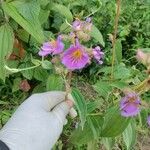
Rhexia virginica
Common Meadowbeauty · Handsome Harry · Virginia Meadow Beauty · Virginia Meadowbeauty · Common Meadow Beauty
Description
Source: leafsnapRhexia virginica, the handsome Harry or Virginia meadow-beauty, is a species of flowering plant in the family Melastomataceae. It is native to much of eastern North America, and is often found in moist, often acidic soils in open areas.This species is a perennial herb that is easily identified by its distinctly angled stems. It produces purple-pink flowers in the summer that use buzz pollination for reproduction.
Care Guide
💧 Water
Handsome Harry thrives in damp meadows, flourishing best with consistent moisture. While it can tolerate moderate drought, it is important to water it weekly to ensure adequate hydration. When growing Handsome Harry outdoors, consider local rainfall patterns to maintain the appropriate soil moisture that this perennial requires.
How should I water my Handsome Harry?
To properly water the Handsome Harry plant, it is recommended to use filtered water at room temperature. Tap water should be avoided as it may contain harmful particles. The plant prefers warm water as it is adapted to a warm environment and cold water can be a shock. It is important not to water the plant from above, as it can cause issues with the leaves. Instead, water the soil directly until it is thoroughly soaked. This helps to moisten the roots and promote their growth and nutrient absorption.
What should I do if I give Handsome Harry too much or too little water?
Maintaining the health of your Handsome harrry plant requires avoiding both overwatering and underwatering. Overwatering is a more common issue and can cause wilting, yellowing leaves, as well as diseases like root rot, mold, and mildew, which can be fatal. Although underwatering is less common due to the plant's drought tolerance, it can still occur and result in brittle, brown leaves. It is important to detect signs of overwatering early to prevent irreversible damage. If you notice these signs, reduce your watering schedule and consider replacing the poorly draining soil with a loose, well-draining potting mix. Conversely, if you notice signs of underwatering, simply increase your watering frequency until the signs improve.
How often should I give water to my Handsome Harry plant?
If your Handsome Harry plant is in a pot, the most precise way to determine if it needs water is by checking the soil. Simply stick your finger into the soil and if the top two to three inches are dry, it's time to water. If you have your Handsome Harry plant in the ground outdoors, you can use a similar method to test the soil. Again, if the first few inches of soil are dry, it's time to water. Typically, during spring and early fall, you'll need to water this plant about once a week using this method. However, during extremely hot weather, you may need to water it twice or more per week. It's worth noting that mature, well-established Handsome Harry plants can handle drought and show impressive endurance.
How much water does my handsome harry require?
When watering your Handsome Harry plant, do not be shy about the amount of water you give. Wait until the first two to three inches of soil are dry, then give the plant a thorough watering so that the soil is completely soaked. Make sure to give enough water so that excess water flows out of the drainage holes at the bottom of the pot. If you don't see any excess water draining, it means you haven't given enough water. However, be careful not to let water accumulate in the soil, as this can harm the plant. On the other hand, if water doesn't drain from the pot, it could mean that the soil doesn't drain well, which is not good for the plant's health. If the plant is outside, it will need about 1 inch of rain per week.
How do I water my plant, Handsome Harry, when it's growing at different stages?
The water requirements of Handsome Harry can vary depending on its growth stages. During the first few years of its life or after transplanting to a new location, it will need more water than usual. This is because during these stages, Handsome Harry focuses on sprouting new roots to support future growth. These young roots require extra moisture to perform their best. As Handsome Harry matures, its water needs will decrease. However, another growth stage that requires more water is the blooming period. Flower development utilizes a significant amount of moisture, so it's important to provide Handsome Harry with extra water during this time.
☀️ Light Full sun
Handsome harrry flourishes with abundant sun exposure, improving its health and growth. Its original habitat meets this preference by providing ample light throughout the day. However, it can also tolerate conditions with lower light intensity. Both excessive light and a lack of light can interrupt its normal growth and may cause the plant to become stressed.
What are the sunlight requirements for Handsome Harry?
Handsome Harry thrives in environments that provide an abundance of sun exposure, vital for its health and growth. The plant prefers full sun conditions, which means it requires above 6 hours of sunlight daily. However, it can also tolerate partial sun, receiving about 3-6 hours of sunlight. It's essential to monitor the plant's exposure to sunlight carefully; both overexposure and insufficient light can disrupt its growth, leading to stress.
How does artificial lighting affect the growth of indoor plants like Handsome Harry?
Indoor plants, including Handsome Harry, require adequate lighting to grow optimally, particularly when natural sunlight is insufficient. Artificial lights are a crucial solution, promoting faster and healthier growth. LED lights are recommended due to their ability to provide specific wavelengths needed by plants. For full sun plants, 30-50W/sq ft of artificial light is needed, partial sun plants need 20-30W/sq ft, and full shade plants require 10-20W/sq ft. The light source should be placed 12-36 inches above the plant, and the duration should mimic natural daylight hours, usually between 8-12 hours per day.
What are the symptoms of inadequate lighting in Handsome Harry?
When Handsome Harry is exposed to inadequate lighting, several symptoms may manifest, including the growth of smaller new leaves, leggy or sparse growth, and faster leaf drop. This is because the plant enters a survival mode, leading to a halt in leaf production and delayed or stopped growth. Other symptoms such as lighter-colored new leaves, chlorosis (yellowing leaves due to lack of chlorophyll), sunscald, leaf curling, wilting, and leaf scorching can also occur, affecting the plant's health negatively.
How can you address insufficient or excessive light exposure for Handsome Harry?
To mitigate insufficient or excessive light exposure for Handsome Harry, consider gradually moving the plant to a location with more suitable lighting, such as a sunnier spot for indoor plants or reducing obstructions for outdoor plants. Artificial lighting can be used indoors for additional light. If the plant is outdoors, gradual adaptation to light intensity changes is crucial to prevent sunburn. It's also advised to prune overshadowing branches in the plant's environment to increase sunlight exposure. For smaller plants that can be transplanted, do so during their dormant period to a location with ample sunlight and good drainage. Note that areas of the plant affected by low light may not recover, but new growth will be healthy after adjusting light exposure.
🌡️ Temperature 0–35°C
Handsome harrry is a plant native to areas with relatively cool temperatures, preferring a range from 32 to 95 °F (0 to 35 ℃). It tolerates seasonal temperature changes but may require protection in extreme conditions.
What is the ideal temperature range for Handsome harrry?
Handsome harrry, or Rhexia virginica, thrives in cooler environments with temperatures ranging ideally between 32°F (0°C) and 95°F (35°C). It is adaptable to different seasonal temperature shifts but may require protective measures in extreme conditions to maintain its health.
Does Handsome harrry need frost protection in winter?
Handsome harrry has a strong resistance to cold and usually does not require special frost protection measures even in winter. However, if temperatures are expected to plummet below -35°C, it's important to safeguard the plant using materials such as soil or straw to provide insulation against the cold. Additionally, watering the plant abundantly before the first freeze of autumn to keep the soil moist can help the plant through winter and early spring by preventing drought and water scarcity.
How should you care for Handsome harrry in extremely low temperatures?
In extremely low temperatures, specifically when temperatures drop below -35°C, Handsome harrry remains cold-tolerant but may experience reduced or no sprouting in the following spring. In such cases, the recommended care is to remove any parts of the plant that have failed to sprout during spring to promote new growth and maintain the plant's health.
What are the signs of Handsome harrry being affected by high temperatures?
When exposed to high temperatures, especially above 35°C, Handsome harrry may exhibit signs of stress such as leaves becoming lighter in color, prone to curling, susceptibility to sunburn, and in severe cases, wilting and drying up of the entire plant. These symptoms indicate that the plant is struggling with the heat and requires appropriate remedial actions.
How can you protect Handsome harrry from high temperature stress?
To protect Handsome harrry from stress due to high temperatures, it's advisable to trim away any sunburned and dried-up parts to prevent further damage. Relocating the plant to an area with shade during the midday and afternoon sun or using a shade cloth can offer protection. Additionally, watering the plant during the cooler times of morning and evening helps keep the soil adequately moist, providing relief from the heat.
💨 Humidity
🪴 Soil 6-6
🌱 Fertilizer
The best time to fertilize a Handsome harrry is in early spring, when it is coming out of dormancy and beginning active growth. Fertilization supplies essential nutrients for healthy development. Although Handsome harrry has fairly low fertilizer requirements, applying fertilizer annually can improve its survival and encourage better, longer-lasting blooms.
Why do I need to put fertilizer on my Handsome Harry?
Proper fertilization is essential for the health and appearance of the Handsome harrry. The leaves of this plant play a significant role in its overall structure, and fertilizing it effectively ensures that the leaves maintain a consistent color and healthy texture. Fertilization also benefits the plant below the surface, by promoting the growth of new roots and sustaining the existing root system. This not only keeps the plant healthy presently but also enhances its ability to absorb soil nutrients in the long run.
When should I fertilize my Handsome Harry?
If you choose to grow your Handsome Harry outdoors every year, you'll notice new growth in early spring. This is when you should begin fertilizing for the year. Generally, a single application of fertilizer is sufficient for a healthy Handsome Harry. However, if you want to maximize its growth, you can fertilize multiple times throughout spring and early summer. In this case, you can feed your Handsome Harry approximately once every month to a month and a half.
When is the best time to not apply fertilizer to Handsome Harry?
During the late fall and winter, your Handsome Harry will go into a dormant phase, meaning it won't grow new leaves. Avoid fertilizing at this time. In spring and summer, if you choose to fertilize, start decreasing the amount as summer approaches because the plant's growth rate slows down. It's not recommended to fertilize your Handsome Harry when it's extremely hot or the soil is overly dry, as this can harm the plant and cause it to die earlier.
What kind of fertilizer does my Handsome Harry need?
Choosing the best fertilizer for a Handsome Harry is actually quite simple. These plants thrive on a general-purpose garden fertilizer containing equal amounts of nitrogen, phosphorus, and potassium. Fertilizers with a ratio of 10-10-10 or something similar work well. It's important to avoid fertilizers with high nitrogen content if you're unsure. Granular fertilizers are recommended for Handsome Harry, especially those that are slow-release and easy to apply to the soil. Additionally, using an organic soil amendment like compost can be beneficial for feeding Handsome Harry.
How can I make my Handsome Harry plant grow better?
To ensure optimal growth for your Handsome Harry plant, it is recommended to wait until its first leaves emerge in early spring before applying a granular slow-release fertilizer. This fertilizer should have a balanced formula and should be applied to the soil surrounding the base of the plant. If desired, this process can be repeated later in the season. When reapplying fertilizer, make sure to apply it to the soil at the base of the plant rather than directly onto the plant itself. Sometimes, you may need to move some leaves aside to access the soil above the roots. Additionally, it is advisable to water the plant before and after fertilizing.
🪴 Pot & Repot
✂️ Pruning
Pruning is essential for Handsome Harry to maintain vibrant flowers and overall health. The best time to prune is from early to late spring. Focus on removing dead or damaged stems, improving airflow, and shaping the plant for fullness. Using sanitized tools is crucial to prevent infections, enhance blooming, and reduce the risk of diseases.
🌿 Propagating
🐛 Diseases & pets
☠️ Toxicity
Characteristics
- Plant Type
- Herb
- Life Cycle
- Perennial
- Genus
- Rhexia
- Family
- Melastomataceae
- Hardiness Zone
- 3-9
- Mature Height
- 61 cm
- Mature Spread
- 61 cm
- Leaf Color
- Green
- Leaf Type
- Deciduous
- Flower Color
- Purple, Pink, White, Red, Lavender
- Flower Size
- 2.54 cm to 7.62 cm
- Bloom Time
- Summer
- Planting Time
- Spring, Summer, Autumn
- Harvest Time
- Late summer, Early fall, Mid fall