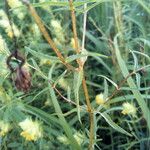
Rhinanthus alectorolophus
European yellow rattle · European yellowrattle · Greater yellow-rattle · Yellow rattle · Clocotici
Description
Source: leafsnapRhinanthus alectorolophus, commonly known as yellow rattle or hay rattle, is a flowering plant belonging to the Orobanchaceae family. This species is native to Europe and western Asia, thriving in habitats such as meadows, grasslands, and open woodlands. The plant can grow up to 60 cm tall and features yellow flowers that bloom from May to August. Its leaves are narrow, toothed, and have a distinctive triangular shape at their base. Yellow rattle is an essential species in grassland ecosystems due to its semi-parasitic nature. It taps into the roots of grasses to obtain nutrients, thereby reducing competition and allowing a greater variety of wildflowers to flourish by weakening the dominant grasses. The seeds of Rhinanthus alectorolophus are encased in inflated calyces, which produce a rattling sound when shaken—hence the common name "yellow rattle." Remarkably, these seeds can remain viable for up to 10 years, making the plant an effective colonizer of disturbed habitats such as abandoned fields or roadside verges. In conclusion, Rhinanthus alectorolophus plays a crucial role in promoting biodiversity within ecosystems. By fostering wildflower growth and reducing competition from dominant grasses, it helps maintain a balanced and diverse plant community.
🌳 Greater yellow rattle is more than just another wildflower; it has an interesting role in ecological monitoring because it is sensitive to certain soil conditions, making it an indicator species for soil nutrient levels. Additionally, it plays a distinctive part in boosting biodiversity: its ability to parasitize the roots of grasses can reduce the dominance of a single grass species, allowing a variety of other plants to thrive and supporting diverse ecosystems.
Care Guide
💧 Water Every 7 days
The greater yellow rattle originates from moist meadows and prefers environments with consistent moisture, though it can tolerate short dry periods. To ensure optimal growth, it should be watered weekly. This herbaceous plant thrives outdoors and benefits from natural rainfall during its active growing season when its water needs increase.
How should I water my Greater yellow rattle plant?
To water Greater yellow rattle, you have a few options for the tools you can use: a garden hose with a spray nozzle, a watering can, or any other common watering tool. Greater yellow rattle is not particularly particular about the type of water it receives - rainwater, tap water, or filtered water all work fine. However, it's generally recommended to avoid watering this plant from overhead, as it can damage the leaves and flowers and potentially cause disease. A drip irrigation system is often the best method for watering Greater yellow rattle, as it delivers water evenly and directly to the soil. If you have a container-grown Greater yellow rattle, you can use a cup, watering can, or tap to water the plant by applying water directly to the soil.
What should I do if I give my Greater yellow rattle too much or too little water?
If you notice that your Greater yellow rattle is lacking moisture, the solution is simple: water it more regularly. Overwatering is a more serious issue that can lead to diseases and the plant's decline or death. To prevent these problems, choose a growing location with plenty of sunlight to dry the soil and good drainage to avoid waterlogged soil. If your Greater yellow rattle is potted and you have overwatered it, consider changing to a new pot with proper drainage and loose soil.
How much should I water my Greater yellow rattle?
Greater yellow rattle requires regular watering throughout the growing season. In spring, water it once a week. As the season progresses and it gets warmer, increase watering to two to three times per week. However, be cautious not to exceed this rate as it can harm the plant. Regardless of watering frequency, ensure that the soil remains moist but not wet. If you are growing Greater yellow rattle in a pot, increase watering frequency as the soil in pots can dry out faster. Generally, water container-grown plants a few times per week compared to once per week for in-ground plants.
How much water does my Greater yellow rattle plant need?
Determining how much water to give to your Greater yellow rattle can be done in a few different ways. Some gardeners choose to go by the feel of the soil, making sure the first six inches are moist before watering. Alternatively, you can use a set measurement, such as two gallons per week, depending on the heat and dryness of the soil. However, following strict guidelines like this can lead to overwatering if your plant needs less. When growing in a container, you'll need to adjust the method. Make sure all layers of soil are moistened by testing with your finger or allowing a slight trickle of excess water to exit the drainage holes.
How do I know if I'm watering my Greater yellow rattle plant enough?
Avoiding overwatering your Greater yellow rattle can be challenging due to their deep roots that need weekly watering. However, these plants are highly prone to root rot and browning if they are overwatered. Underwatering is less of a concern as these plants can survive without additional watering for a period of time. But if they go too long without water, they will begin to wilt and their leaves may become dry.
☀️ Light Full sun
Greater yellow rattle occurs in bright, open habitats and flourishes in full sun. It can tolerate partial sun but favors direct sunlight for the best growth. This plant, which may be annual or biennial, is known for its sun-loving nature.
What are the sunlight requirements for Greater Yellow Rattle?
Greater Yellow Rattle thrives in full sun, requiring above 6 hours of sunlight daily for optimal growth. It can also tolerate partial sun, needing about 3-6 hours of sunlight. However, for the best health and flowering, ensure it gets plenty of sunlight. Observing how sunlight moves through your garden can help you choose the best spots with the ideal balance of light and shade.
How do I ensure my indoor Greater Yellow Rattle receives enough light?
For indoor Greater Yellow Rattle, it's crucial to provide adequate lighting for growth, especially when natural sunlight is insufficient. Artificial lighting, such as LED lights, can be an effective solution. These lights should provide 30-50W/sq ft for full sun plants, 20-30W/sq ft for partial sun plants, and be placed 12-36 inches above the plant. Artificial light should mimic natural daylight hours, typically 8-12 hours per day, to ensure healthy growth.
What are the symptoms of insufficient light for Greater Yellow Rattle?
Symptoms of insufficient light in Greater Yellow Rattle include small or lighter-colored new leaves, leggy or sparse growth, faster leaf drop, delayed or halted new growth, and symptoms of overexposure like chlorosis, sunscald, leaf curling, wilting, and leaf scorching. These indicate the plant isn't receiving the adequate light it needs to thrive, whether grown indoors with inadequate lighting or outdoors in too shady an area.
How should I respond if my Greater Yellow Rattle is not getting enough light?
To address light deficiency in Greater Yellow Rattle, gradually move plants to a sunnier location. For indoor plants, use a south-facing window or artificial lighting for at least 6 hours of direct sunlight daily. For outdoor plants or ground situations, reduce sunlight obstructions or transplant small plants during their dormant period to sunnier spots. Note that while parts of the plant already affected may not recover, new growth should be healthy with increased light exposure.
🌡️ Temperature 5–35°C
Greater yellow rattle can tolerate a wide range of temperatures, but its distribution may still be restricted by various combinations of water and heat conditions. It does best in warm summer climates with sufficient rainfall or watering. Long stretches of cloudy, rainy weather, as well as extended high temperatures, can raise the risk of Greater yellow rattle dying. In winter, providing protection from cold can increase the plant's chances of survival.
What is the Greater Yellow Rattle?
The Greater Yellow Rattle, also known by its botanical name Rhinanthus alectorolophus, is a plant species. Unfortunately, there is no additional provided information on its characteristics, habitat, or its significance within the ecosystem.
💨 Humidity normal (40-60%)
This plant will thrive in moderate humidity, which is probably the level in your home. However, misting it a few times a week can be very beneficial. Make sure the room has good ventilation.
🪴 Soil 6-7
🌱 Fertilizer
After the majority of Greater yellow rattle's blooms have opened to full size, resume fertilizing. When the blooms are at peak production, apply fertilizer every three to four weeks, weather permitting. Then, once Greater yellow rattle begins to produce fewer new blooms, stop fertilizing; there is no need to feed the plant when it can no longer produce additional blooms.
🪴 Pot & Repot
✂️ Pruning
To promote healthy growth and improve its appearance, prune the greater yellow rattle from early to late spring by removing any dead or diseased stems. Pruning before the seeds form helps prevent unwanted spreading, as the greater yellow rattle is semi-parasitic. Regular maintenance encourages a strong flowering cycle and supports the overall health of the plant.
🌿 Propagating
🐛 Diseases & pets
☠️ Toxicity
Characteristics
- Plant Type
- Herb
- Life Cycle
- Annual
- Genus
- Rhinanthus
- Family
- Orobanchaceae
- Hardiness Zone
- 3-8
- Mature Height
- 15 cm to 76 cm
- Mature Spread
- 15 cm to 30 cm
- Leaf Color
- Green
- Leaf Type
- Semi-evergreen
- Flower Color
- Yellow
- Flower Size
- 1.78 cm to 2.29 cm
- Bloom Time
- Late spring, Early summer, Mid summer
- Planting Time
- Spring, Summer, Autumn
- Harvest Time
- Mid summer