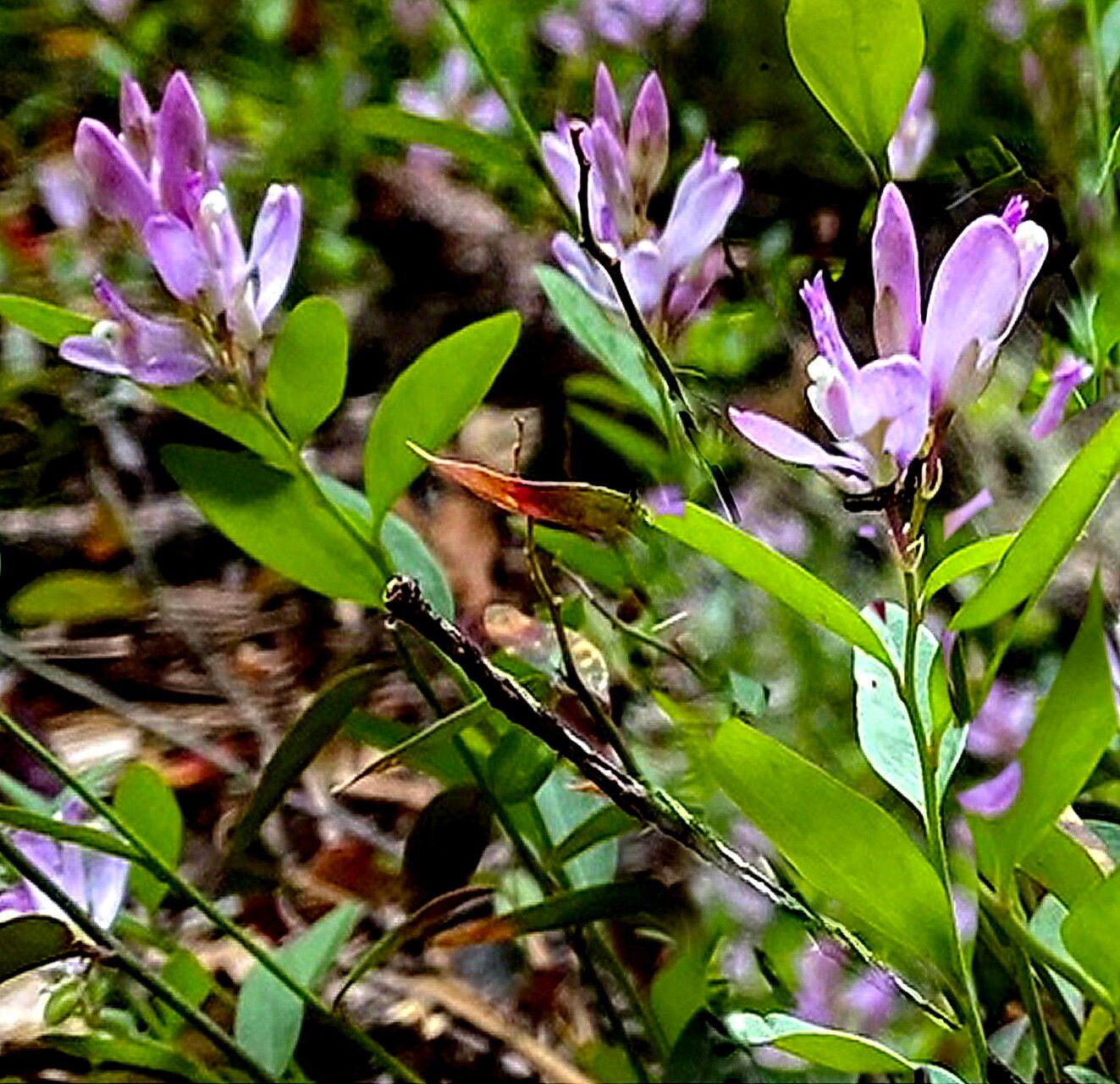
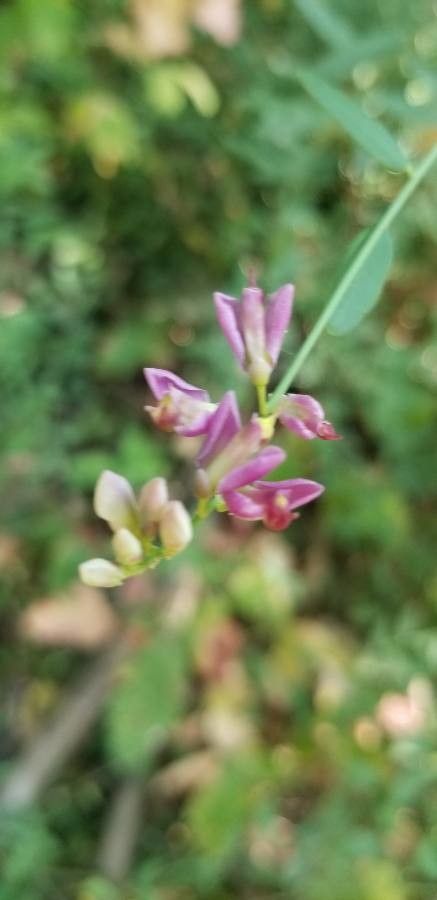
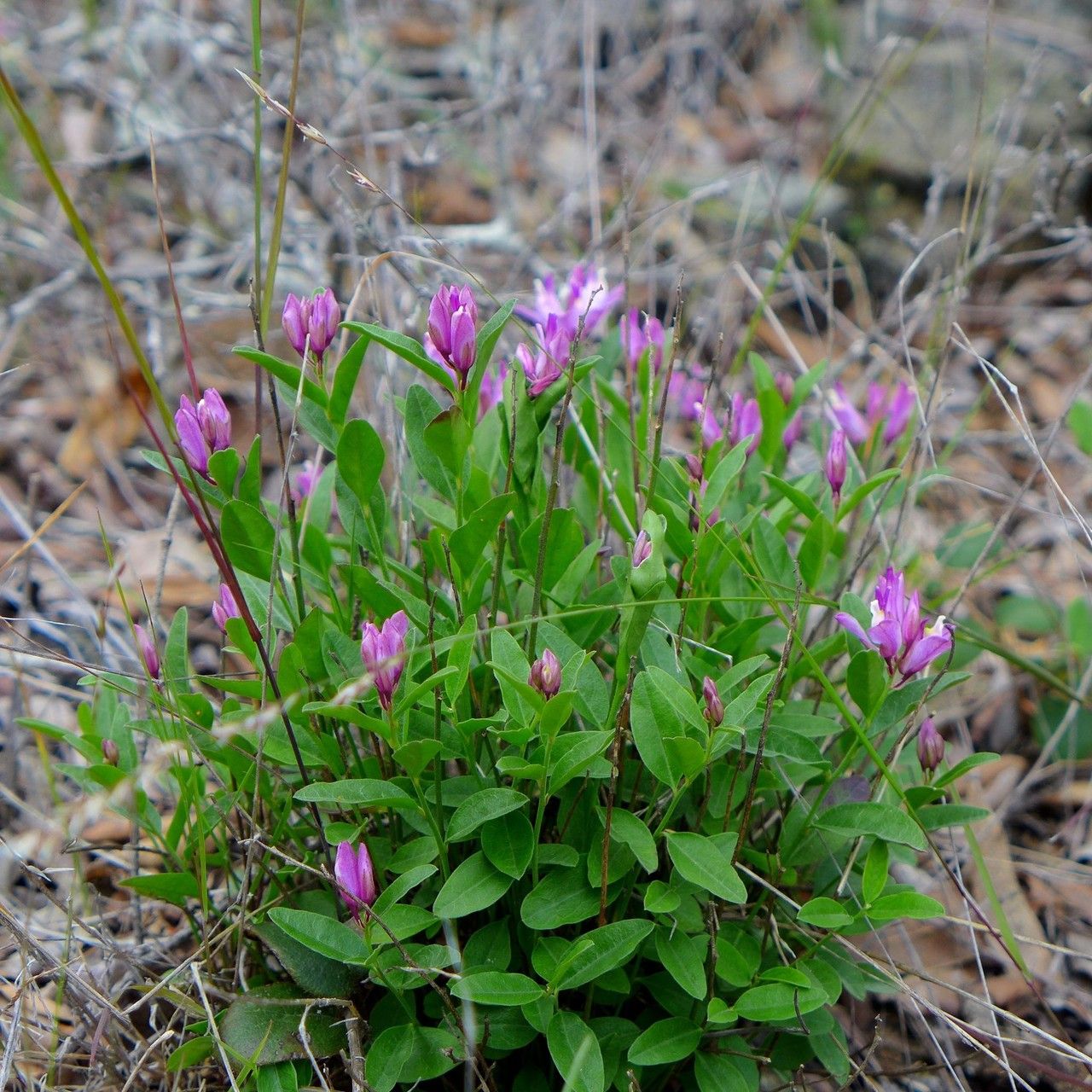
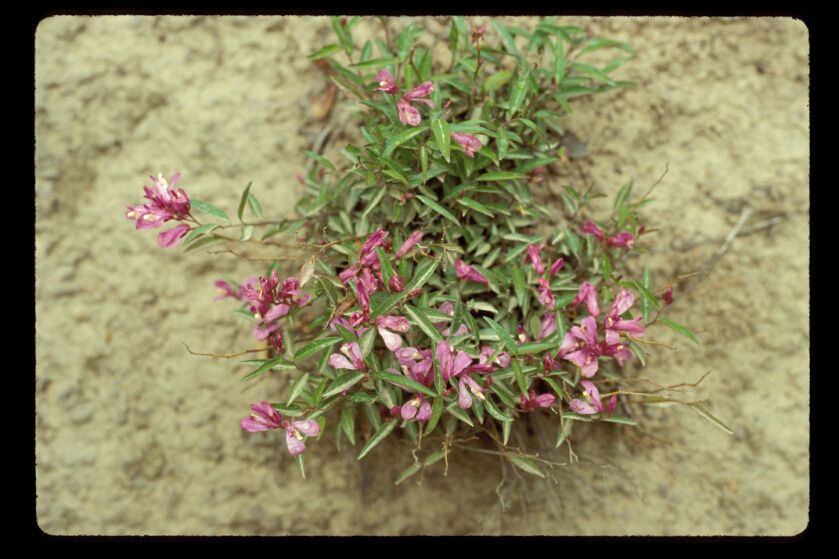
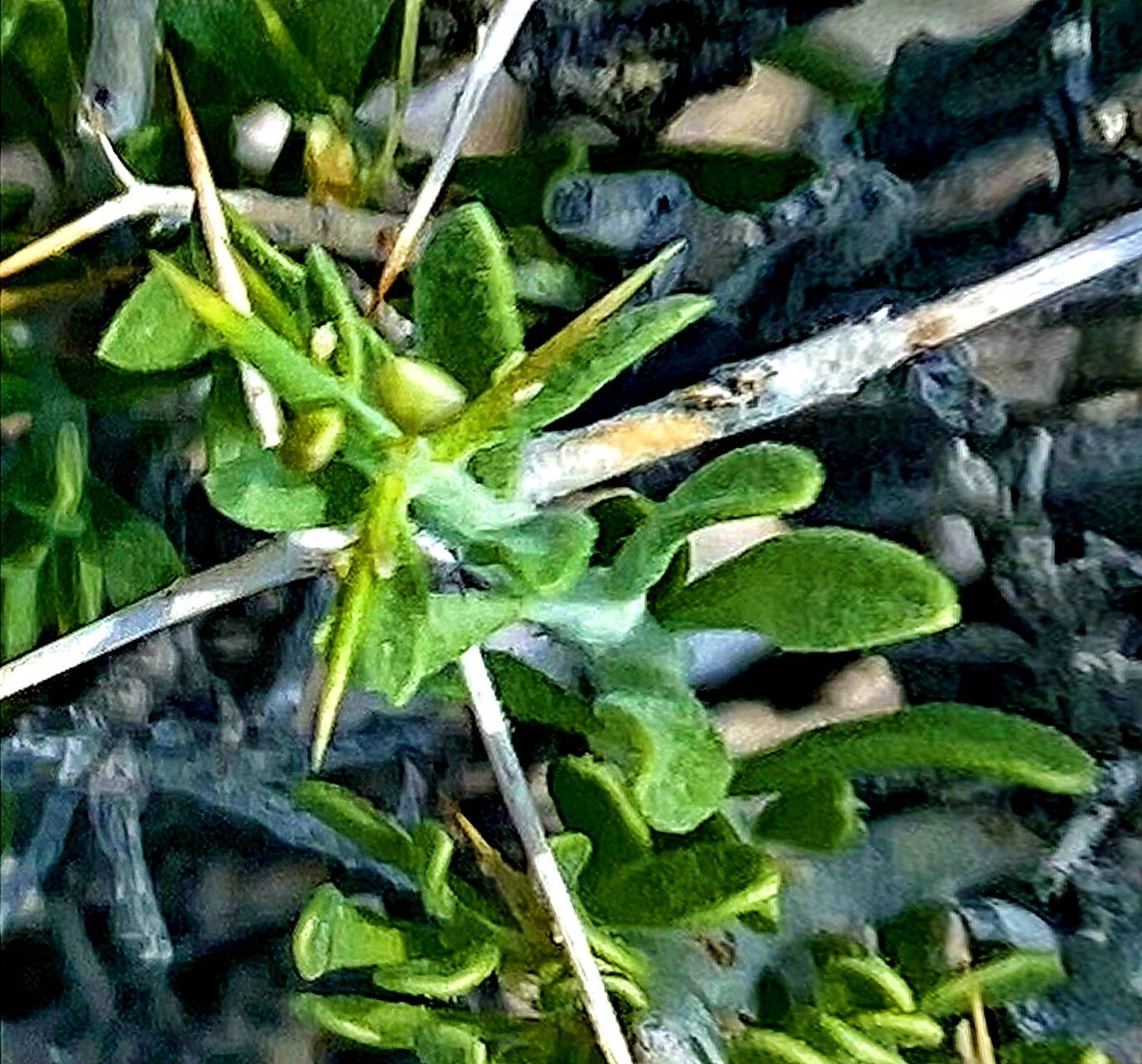
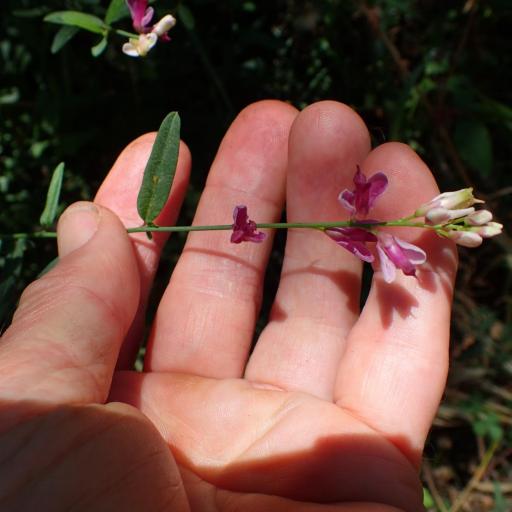
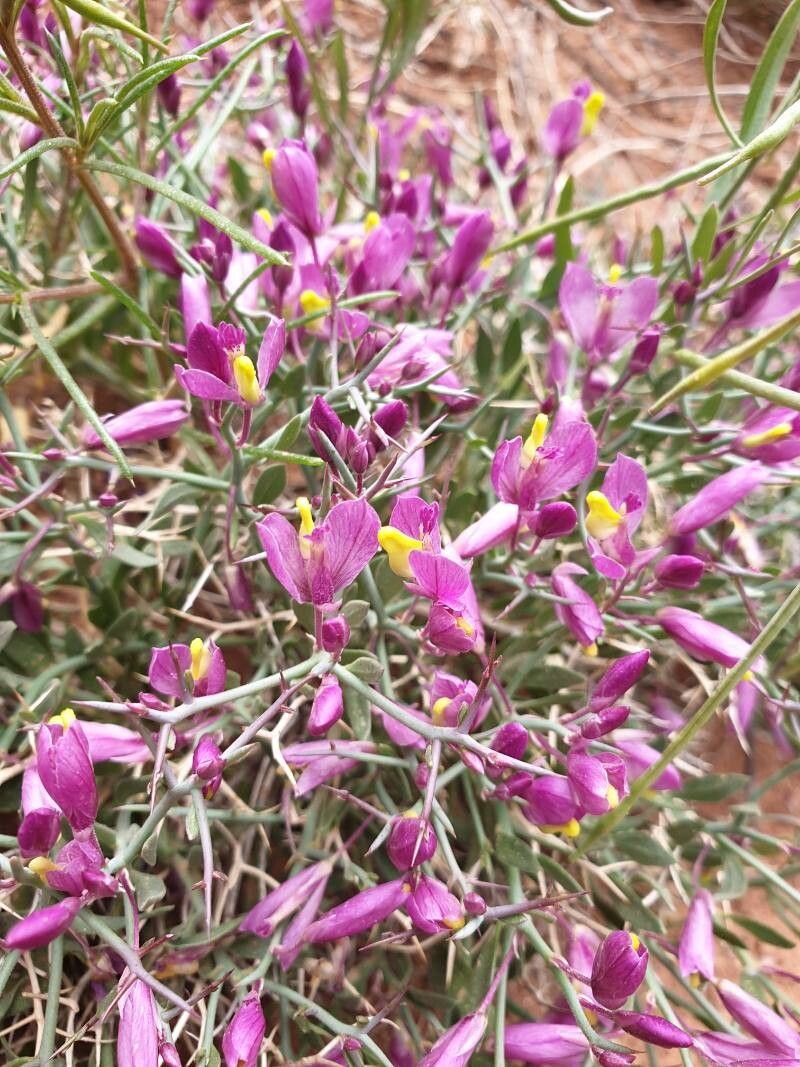
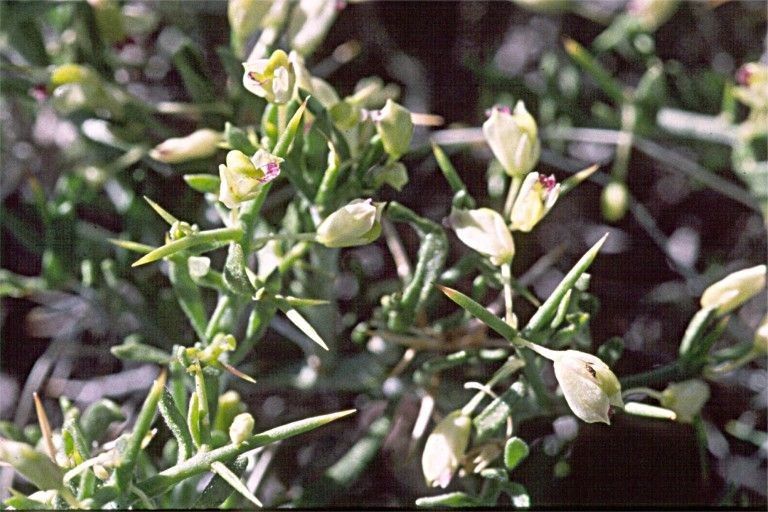
Rhinotropis californica, synonym Polygala californica, is a species of flowering plant in the milkwort family known by the common name California milkwort. It is native to southwestern Oregon and northern and central California, where it grows in the coastal mountain ranges in local habitat types such as chaparral and forest. It is a perennial herb producing spreading stems, generally decumbent in form, up to about 35 centimeters in maximum length, lined with narrow oval leaves each a few centimeter long. The upper inflorescences produce several open flowers, and there may be some closed, cleistogamous flowers lower on the plant. The open flowers have pink or white winglike lateral sepals with hairy edges. The petals are similar in color, the central one tipped with a white or yellow beak. The fruit is a flattened green capsule up to a centimeter long containing hairy seeds.
California milkwort has strong resistance to disease and typically does not contract illnesses easily. Nonetheless, it can be affected by pests and diseases found in its vicinity. Such infections are generally mild. Regarding care, the plant needs a moderate level of maintenance. It should be pruned on a regular basis to preserve a neat appearance and support healthy growth. Fertilizing can also encourage flowering. California milkwort is appropriate for anyone with an outdoor area, like a garden or patio, and does not demand extensive care experience. It may need more attentive care if kept indoors.
How to keep Rhinotropis Californica.
Light
California milkwort occurs naturally in habitats such as forest understories and rocky areas, where it experiences natural shade. It prefers partial sun but can tolerate full sun or full shade, demonstrating its versatile and hardy nature.
Water
California milkwort thrives in environments with consistent moisture, so it needs weekly watering to mimic its native habitat. While it can withstand short periods of dryness, it requires steady hydration for continuous growth throughout the year. This plant is best suited for outdoor cultivation in landscapes that replicate the moisture levels of its natural environment.
Temperature
California milkwort can tolerate a wide range of temperatures, though different combinations of moisture and heat can still limit where it occurs. It does best in warm summer conditions with sufficient rainfall or supplemental watering. Long periods of cloudy, rainy weather, as well as extended high temperatures, increase the risk of California milkwort dying. In winter, adequate protection from cold improves the plant's chances of survival.
Fertilizer
One fertilizer application in spring is generally enough for California milkwort, though repeated feedings can enhance growth. Apply fertilizer roughly every month to six weeks. Fertilization improves the leaves' appearance and function, helping maintain even color and a healthy texture. It also promotes root development and nutrient uptake for the plant's long-term health.
Pruning
California milkwort is known for its vibrant flowers and dense foliage. To support healthy growth and improve air circulation, prune the plant from early to late spring. Start by removing any dead branches, then thin out crowded areas to allow for better airflow. Regular trimming encourages bushier growth and more abundant flowering. Be sure to consult reliable sources for specific care techniques.
Botanical profile.
- Plant Type
- Herb
- Life Cycle
- Perennial
- Genus
- Rhinotropis
- Family
- Polygalaceae
- Hardiness Zone
- 7-10
- Mature Height
- 5 cm to 30 cm
- Mature Spread
- 30 cm to 49 cm
- Leaf Color
- Green
- Leaf Type
- Semi-evergreen
- Flower Color
- Purple, Lavender
- Flower Size
- 1.02 cm to 1.52 cm
- Bloom Time
- Spring
- Planting Time
- Spring, Summer, Autumn
- Harvest Time
- Summer