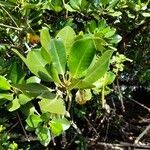
Rhizophora mucronata
Loop-root mangrove · Red mangrove · Mangrove · True Mangrove · Asiatic Mangrove
Description
Source: leafsnapRhizophora mucronata (loop-root mangrove, red mangrove or Asiatic mangrove) is a species of mangrove found on coasts and river banks in East Africa and the Indo-Pacific region.
Care Guide
💧 Water
The Asiatic mangrove flourishes in the brackish waters of mangrove ecosystems. It is well adapted to high humidity and varying levels of flooding. While it needs to be watered weekly, it can also tolerate waterlogged soils and occasional dry periods. Its submerged roots help stabilize shorelines and provide important habitat for marine life.
☀️ Light Full sun
Oriental mangrove comes from open habitats, such as sunny meadows and forest edges, which provide abundant light. It does best in Full Sun but can also tolerate Partial Sun, adjusting well to various sunlight conditions.
What are the sunlight requirements for Asiatic mangrove (Rhizophora mucronata)?
Asiatic mangrove, botanically known as Rhizophora mucronata, thrives best under conditions that either provide full sun or partial sun. Full sun exposure means the plant should receive above 6 hours of sunlight daily, while partial sun refers to about 3-6 hours of sunlight each day. It's vital to observe the movement of sunlight through your garden carefully. Selecting the right spots that offer a harmonious balance of light and shade will ensure your plants' growth and happiness.
🌡️ Temperature 20–37.8°C
Oriental mangrove comes from tropical areas, where the weather is usually warm and humid. Consequently, it is well suited to high temperatures and humidity. It does not tolerate sudden temperature shifts and prefers a constant temperature, so avoiding indoor temperature variations is important. It typically cannot withstand cold and needs warmer conditions to develop. If the ambient temperature falls too far, the plant may stop growing or even perish.
💨 Humidity
🪴 Soil 6-7
🌱 Fertilizer
The best time to fertilize an Oriental mangrove is in early spring, as it comes out of dormancy. This encourages overall growth and flower development. Fertilization improves the foliage, stems, and branches, while promoting large, vivid, and long-lasting flowers. It helps move nutrients from the roots to the flowers and enhances the plant's health and resistance to disease.
🪴 Pot & Repot
✂️ Pruning
The Asiatic mangrove is known for its dense canopies and stilt-like roots. To maintain the health and shape of the tree and encourage new growth, prune dead branches in late winter. Be sure to use sterilized tools to prevent infections. For more detailed guidance, consult reliable horticultural sources.
🌿 Propagating
🐛 Diseases & pets
☠️ Toxicity
Characteristics
- Plant Type
- Tree, Shrub
- Life Cycle
- Perennial
- Genus
- Rhizophora
- Family
- Rhizophoraceae
- Hardiness Zone
- 10-12
- Mature Height
- 7.01 m to 35.05 m
- Mature Spread
- 4.88 m to 10.06 m
- Leaf Color
- Dark Green
- Leaf Type
- Evergreen
- Flower Color
- Red
- Flower Size
- 3.05 cm to 5.08 cm
- Bloom Time
- All year round
- Planting Time
- Spring, Summer
- Harvest Time
- All year round
- Native Area
- Sri Lanka, Somalia, India, Malaysia, South Africa, Philippines, Madagascar, Bangladesh, Fiji, Kenya, Tanzania, Brunei, China, Indonesia, Cambodia, Vietnam, Mozambique, Japan, Singapore, Ethiopia, Thailand