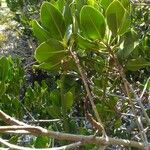
Rhizophora stylosa
Red mangrove · Stilt-root mangrove · Small stilted mangrove · Long-style stilt mangrove · Spotted mangrove
Description
Source: leafsnapRhizophora stylosa, the spotted mangrove, red mangrove, small stilted mangrove or stilt-root mangrove, is a tree in the family Rhizophoraceae. The specific epithet stylosa is from the Latin meaning "stylus form", referring to the flower.
Care Guide
💧 Water
The red mangrove thrives in coastal environments by absorbing water from both sea and brackish sources. It is highly adaptable, tolerating both drought and high humidity, and generally requires watering only every 2 to 3 weeks. As an evergreen plant, the red mangrove maintains its lush greenery year-round by efficiently managing its water reserves.
☀️ Light Full sun
The red mangrove requires steady, strong sunlight to grow well. Native to open, unshaded habitats, it endures intense light throughout the day. Too little light can hinder its growth, while too much light is unlikely to be harmful.
What are the sunlight requirements for Red Mangrove?
Red Mangrove thrives in conditions where it receives continuous, strong exposure to sunlight, necessitating more than 6 hours of sun daily to grow well. Originating from environments with unobstructed rays, it exhibits a high tolerance towards intense light throughout the day. It's essential to monitor the movement of sunlight through your garden to ensure plants are placed in locations that offer the right balance of light and shade. Insufficient sunlight can inhibit the plant's growth, but fortunately, Red Mangrove is least likely to be damaged by overexposure to sunlight.
Can artificial lighting be used for Red Mangrove, and if so, how?
Yes, artificial lighting can be vital for the growth of indoor Red Mangroves, especially when natural sunlight is insufficient. Particularly useful in winter or less sunny locations, artificial lights promote faster, healthier growth by providing adequate lighting. LED lights are preferred for their ability to supply specific wavelengths needed by the plants. For full sun plants like the Red Mangrove, 30-50W/sq ft is recommended, with the light source placed 12-36 inches above the plant. To mimic natural daylight conditions, most plants require 8-12 hours of light per day.
What symptoms indicate insufficient sunlight for Red Mangrove?
Red Mangrove may show several symptoms when light conditions are not optimal, including smaller new leaves, leggy or sparse growth, faster leaf drop, slower or halted growth, lighter-colored or irregularly patterned new leaves, and conditions like chlorosis, sunscald, leaf curling, wilting, and leaf scorching. These symptoms reflect the plant's struggle with inadequate light, ranging from physical changes in appearance to serious health issues affecting its ability to photosynthesize and maintain hydration.
What solutions are available to address insufficient sunlight for Red Mangrove?
To address insufficient sunlight for Red Mangrove, gradual relocation to sunnier spots is recommended, ensuring at least 6 hours of direct sunlight daily. For indoor plants, utilizing south-facing windows or considering artificial lighting such as desk, ceiling lamps, or professional grow lights for at least 8 hours daily can be beneficial. Outdoors, adapting plants to increased sunlight gradually prevents sunburn. Additionally, reducing obstructions by pruning and transplanting to locations with ample sunlight during dormant periods can significantly enhance light exposure for healthier growth.
🌡️ Temperature 20–37.8°C
Red mangrove comes from tropical areas, where the climate is generally warm and humid. Consequently, it is well suited to high heat and moisture. It does not tolerate sudden temperature shifts and prefers a steady thermal environment, so avoiding temperature fluctuations indoors is important. It typically cannot endure cold and needs warmer conditions for growth. If the surrounding temperature falls too low, the plant may stop growing or even die.
💨 Humidity
🪴 Soil 6-7
🌱 Fertilizer
Fertilization is essential for the care of the Red mangrove. Regular feeding during the active growing season helps preserve the energy required for its showy foliage and supports overall growth. Failing to fertilize can lead to unhealthy leaves, reduced ornamental value, and stunted or weak growth that is more likely to break.
🪴 Pot & Repot
✂️ Pruning
Red mangroves are well-suited to saline environments and have distinctive aerial roots. To keep them healthy, it's best to prune these plants from early to late winter. Focus on removing dead branches and areas of excessive growth to minimize stress. Proper pruning encourages denser growth, and it's important to avoid making too many cuts. This approach helps maintain the plant's resilience and supports optimal recovery and vigor.
🌿 Propagating
🐛 Diseases & pets
☠️ Toxicity
Characteristics
- Plant Type
- Tree
- Life Cycle
- Perennial
- Genus
- Rhizophora
- Family
- Rhizophoraceae
- Hardiness Zone
- 10-12
- Mature Height
- 14.94 m
- Mature Spread
- 3.05 m to 6.1 m
- Leaf Color
- Dark Green, Forest Green
- Leaf Type
- Evergreen
- Flower Color
- White
- Flower Size
- 1.02 cm to 2.03 cm
- Bloom Time
- All year round
- Planting Time
- Spring, Summer
- Harvest Time
- All year round
- Native Area
- Malaysia, Indonesia, Cambodia, Vietnam, Philippines, Singapore, Fiji, China