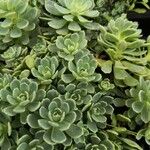
Rhodiola pachyclados
Gray Stonecrop
Description
Source: wikipedia (CC BY-SA)Rhodiola pachyclados, the gray stonecrop, is a species of succulent flowering plant in the family Crassulaceae. It is an evergreen, succulent plant native to Pakistan and Afghanistan, but widely cultivated as an ornamental plant. It was formerly included in the genus Sedum.
Care Guide
💧 Water
Gray stonecrop flourishes in rocky, mountainous areas with low rainfall, demonstrating exceptional drought tolerance. It needs watering every two weeks, storing moisture in its leaves. For best growth, it prefers well-draining soil to prevent root rot, making it an ideal choice for outdoor cultivation.
☀️ Light Full sun
The gray stonecrop prefers substantial light exposure and does well without moderate light. Native to environments with abundant light, their growth and health are optimized under those conditions. Insufficient light can stunt growth, while excessive light may cause foliage scorching.
What are the sunlight requirements for Gray stonecrop?
Gray stonecrop requires above 6 hours of sunlight daily to thrive. It's essential to observe how sunlight moves through your garden to choose spots that provide a perfect balance of light and shade, ensuring the plants' happiness. Originating from habitats with abundant light, Gray stonecrop's growth and health are optimized under substantial light exposure. Insufficient light can stunt growth, while excess light may cause foliage scorching.
How can artificial lighting benefit Gray stonecrop indoors?
Indoor plants, including Gray stonecrop, require adequate lighting for optimal growth, especially when natural sunlight is insufficient, such as in winter or less sunny spaces. Artificial lights, such as LED lights, offer a vital solution. They can be customized to provide specific wavelengths of light that plants need. For full sun plants, 30-50W/sq ft of artificial light is needed; partial sun plants require 20-30W/sq ft, and full shade plants need 10-20W/sq ft. The light source should be placed 12-36 inches above the plant and turned on for 8-12 hours per day to mimic natural sunlight.
What symptoms indicate insufficient or excessive light in Gray stonecrop?
Symptoms of insufficient light include small new leaves, leggy or sparse growth, faster leaf drop, slower or no new growth, and lighter-colored new leaves. Symptoms of excessive light are chlorosis (leaves turning yellow), sunscald (damage from intense sunlight), leaf curling, wilting, and leaf scorching. These indications help assess whether Gray stonecrop is receiving optimal light levels for its health and growth.
What are some solutions for addressing light issues with Gray stonecrop?
To ensure optimal growth for Gray stonecrop, gradually increase sunlight exposure to at least 6 hours daily, utilizing a south-facing window for maximum natural light. For indoor plants that are large or not easily movable, consider using artificial light, keeping a lamp on for at least 8 hours daily or investing in professional plant grow lights. Outdoors, avoid sudden changes in light intensity to prevent sunburn by gradually moving plants to sunnier locations. Minimize obstructions by pruning trees if necessary and consider transplanting smaller plants during their dormant period to locations with ample sunlight and good drainage. Note that parts of the plant affected by insufficient sunlight may not recover, but new growth should be healthy with increased light exposure.
🌡️ Temperature 5–35°C
Gray stonecrop is a plant that does well in a range of climates with temperatures from 41 to 95 °F (5 to 35 °C). Its native habitat experiences those temperatures, indicating its inherent adaptability. During seasonal changes, gradual shifts in temperature help maintain its optimal health.
What are the ideal growing conditions for Gray stonecrop?
Gray stonecrop thrives in a wide range of climates, preferring temperatures between 41°F (5°C) and 95°F (35°C). This range illustrates the plant's adaptability to different environments, emphasizing the importance of gradual temperature changes to maintain its health. It loves heat but enters a dormant state in winter. To ensure its survival during colder months, particularly when temperatures drop below -25°C, it's advisable to move the plant indoors and place it near a south-facing window to maximize sunlight exposure. In cases where natural light is insufficient, supplemental lighting can be introduced. During colder periods, especially when temperatures fall below 5°C, it is crucial to reduce or halt watering to prevent root rot. For outdoor plants, cease watering during cold snaps, and consider using a temporary greenhouse or wrapping the plant with insulating materials.
How does Gray stonecrop react to low temperatures?
Gray stonecrop prefers warmer climates and struggles in cold temperatures, requiring conditions above 5°C for optimal growth. During the winter, the temperature should ideally remain above -25°C to prevent the plant from weakening, wilting, or succumbing to root rot. Despite its resilience, temperatures dropping below -30°C can severely affect the plant, leading to gradual withering. If frost damage occurs, it's crucial to trim the frostbitten areas, check for and remove any rotted roots, and then propagate from healthy cuttings if required. The plant should be moved to a warmer indoor spot, preferably near a south-facing window, to ensure sufficient sunlight. Supplemental lighting may be used if natural light is not adequate.
How should Gray stonecrop be cared for in high temperatures?
During the hotter summer months, Gray stonecrop should be kept in conditions below 35°C to prevent growth stalling, dehydration, wilting, and susceptibility to sunburn. If temperatures rise above 38°C, immediate action is needed to mitigate damage. Remove any sunburned or decayed sections of the plant, and protect it from direct afternoon sunlight until it shows signs of recovery and resumes growth. In instances of root rot, watering should be stopped until the plant develops new roots. Taking these steps will help ensure the plant's health and vitality during periods of extreme heat.
💨 Humidity
🪴 Soil 6-7
🌱 Fertilizer
Gray stonecrop only needs light applications of fertilizer once or twice a year during the growing season. Do not fertilize in winter or in summer while it is dormant. Cut back on fertilizer for repotted plants and wait a couple of months after repotting before feeding. Fertilizing promotes healthy growth and encourages blooms.
🪴 Pot & Repot Every 2 years
Repot gray stonecrop every two years in the spring, using a wide and shallow container to accommodate its mat-forming growth habit. Use well-draining soil and water moderately after repotting. Although this plant is stress-tolerant and easy to care for, it's important to avoid over-watering to ensure optimal recovery and growth.
✂️ Pruning
To keep the gray stonecrop in good shape, prune it in the spring and autumn. Use a knife or scissors to remove any dense or excessive branches. For propagation, cut stems with 5-6 leaves and apply sulfur powder to the cut wound. Allow the wound to heal before planting. Before planting, slightly moisten the soil.
🌿 Propagating
🐛 Diseases & pets
☠️ Toxicity
Characteristics
- Plant Type
- Herb
- Life Cycle
- Perennial
- Genus
- Rhodiola
- Family
- Crassulaceae
- Hardiness Zone
- 4-9
- Mature Height
- 30 cm
- Mature Spread
- 46 cm
- Leaf Color
- Green, Blue, Gray
- Leaf Type
- Evergreen
- Flower Color
- Pink, White
- Flower Size
- 0.51 cm to 1.02 cm
- Bloom Time
- Early summer, Mid summer
- Planting Time
- Spring, Summer, Autumn
- Harvest Time
- Late summer, Early fall