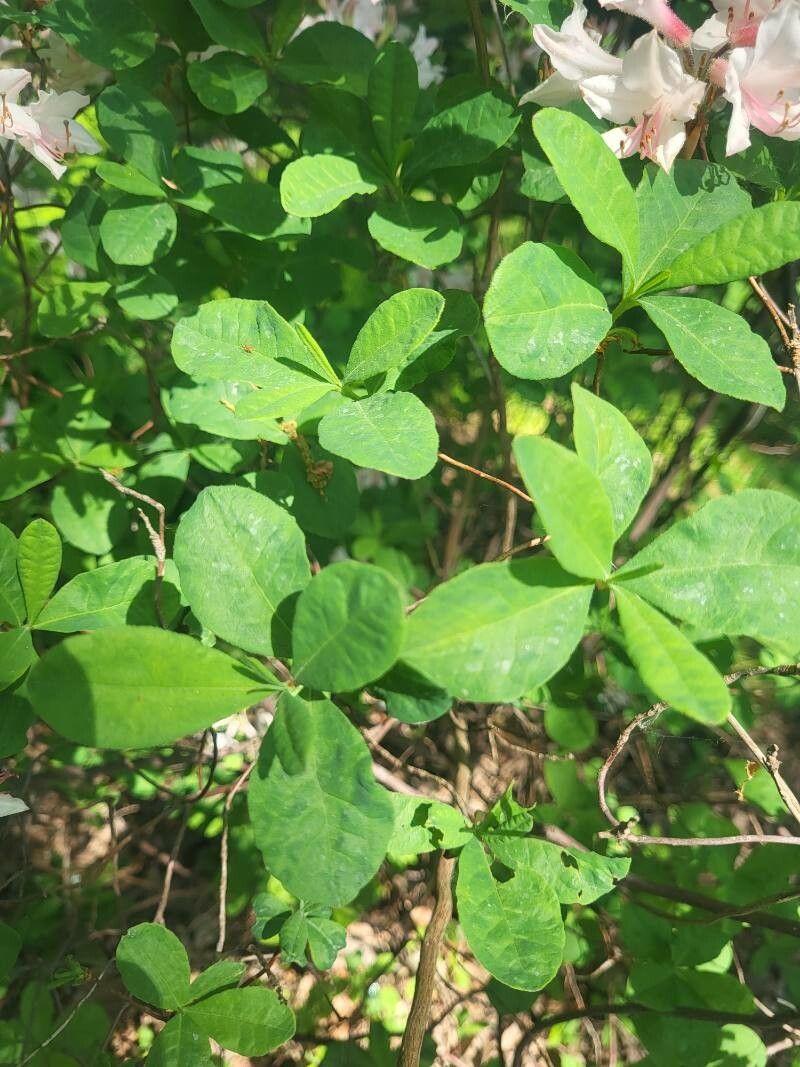
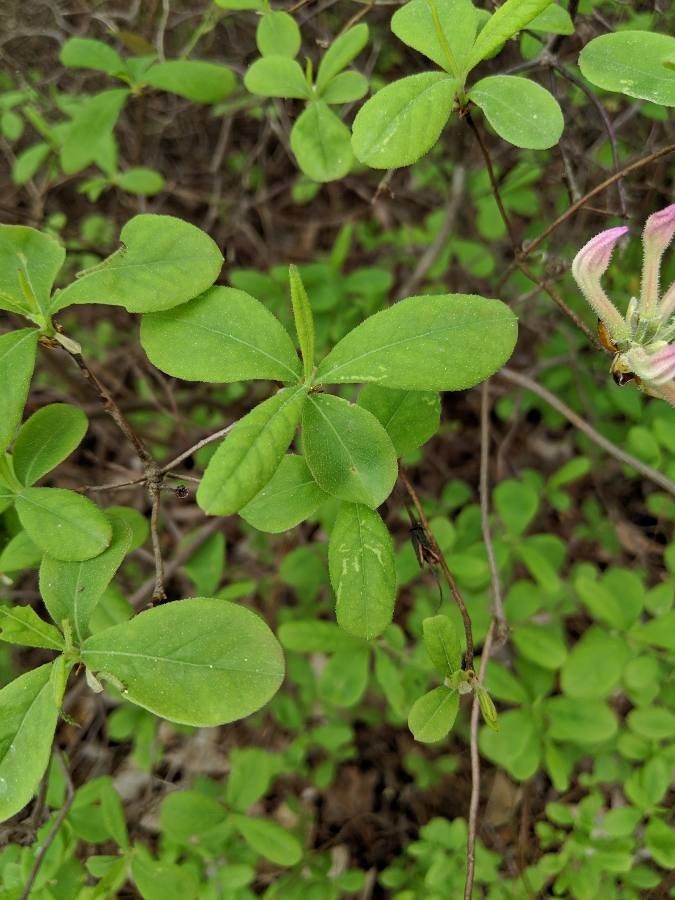
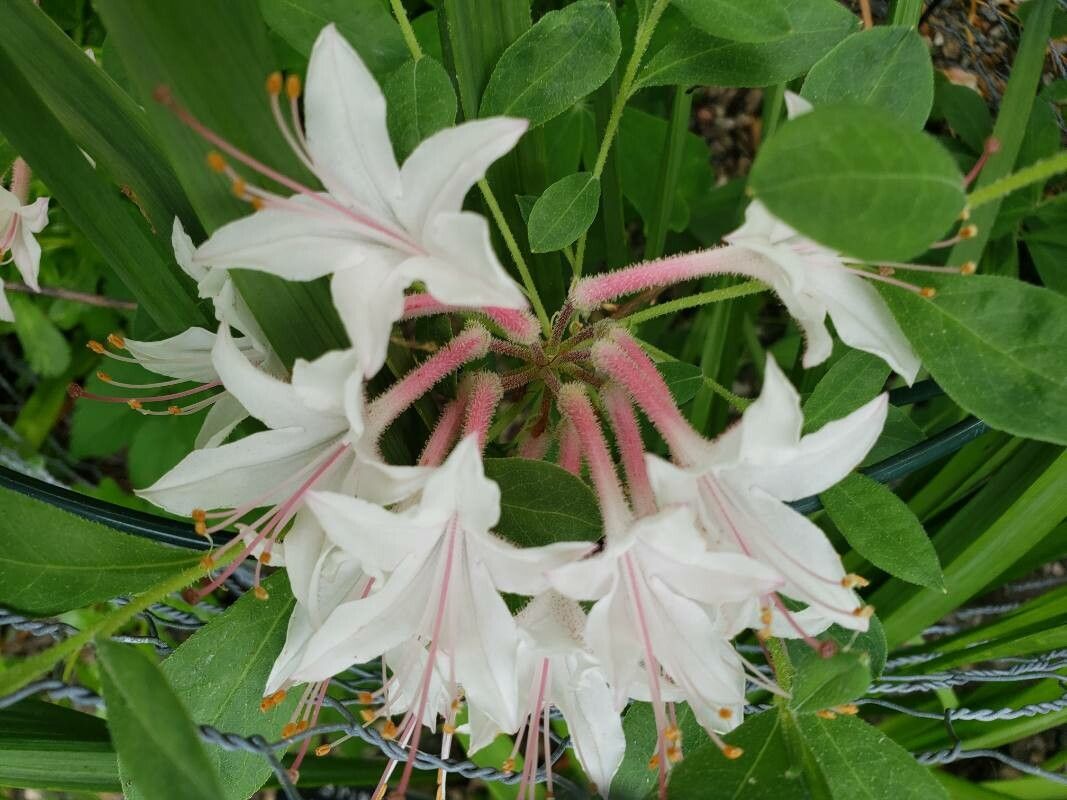
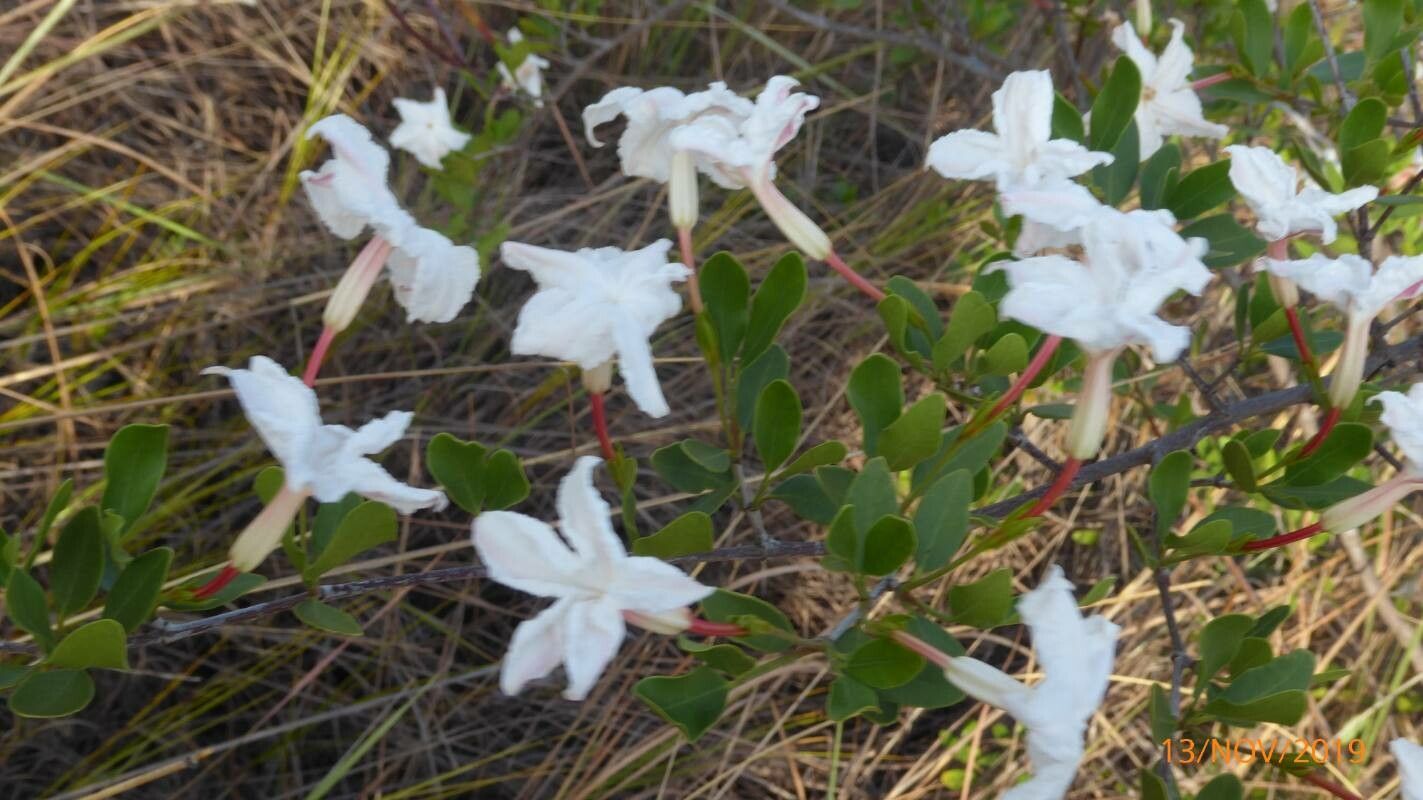
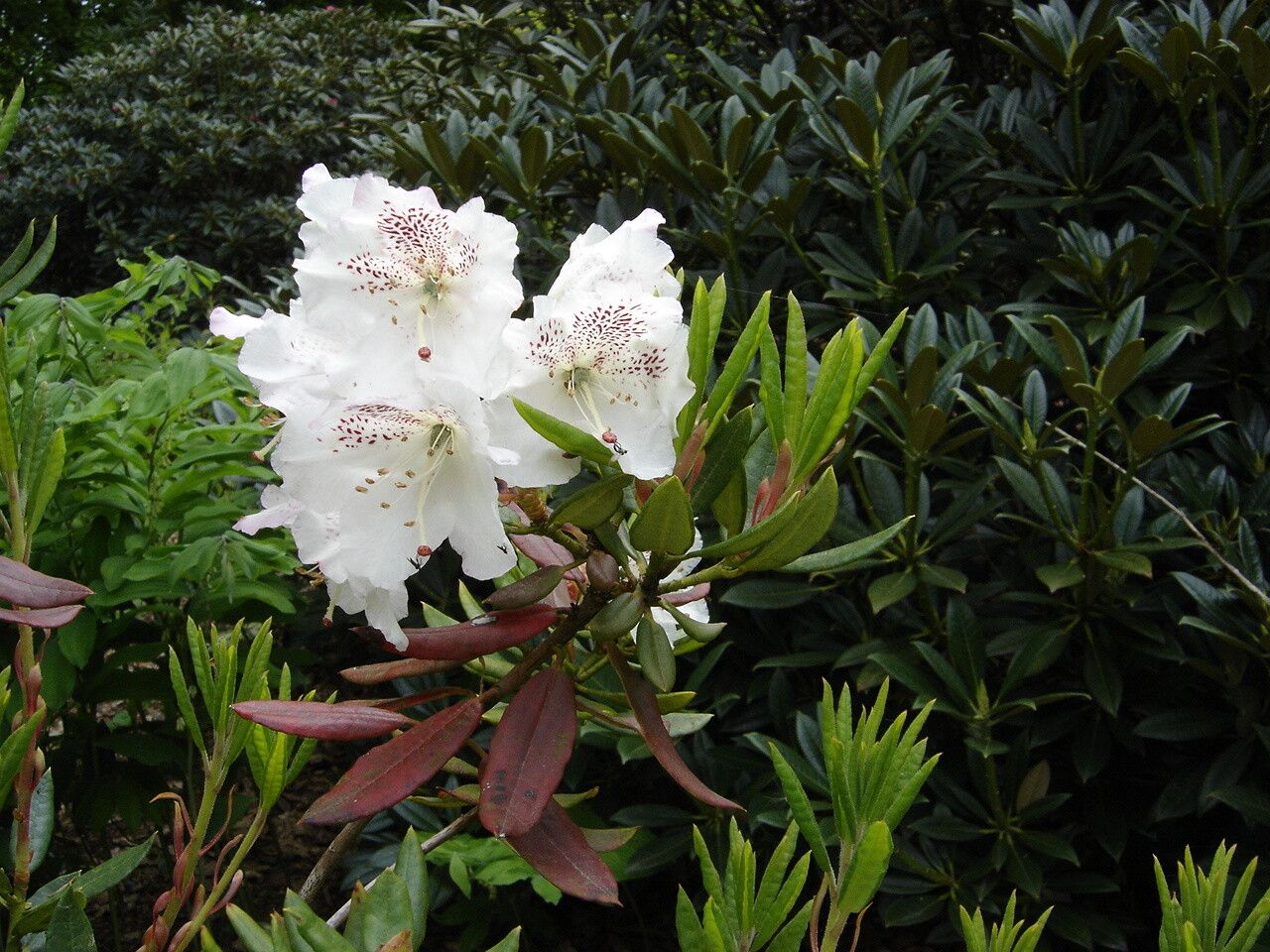
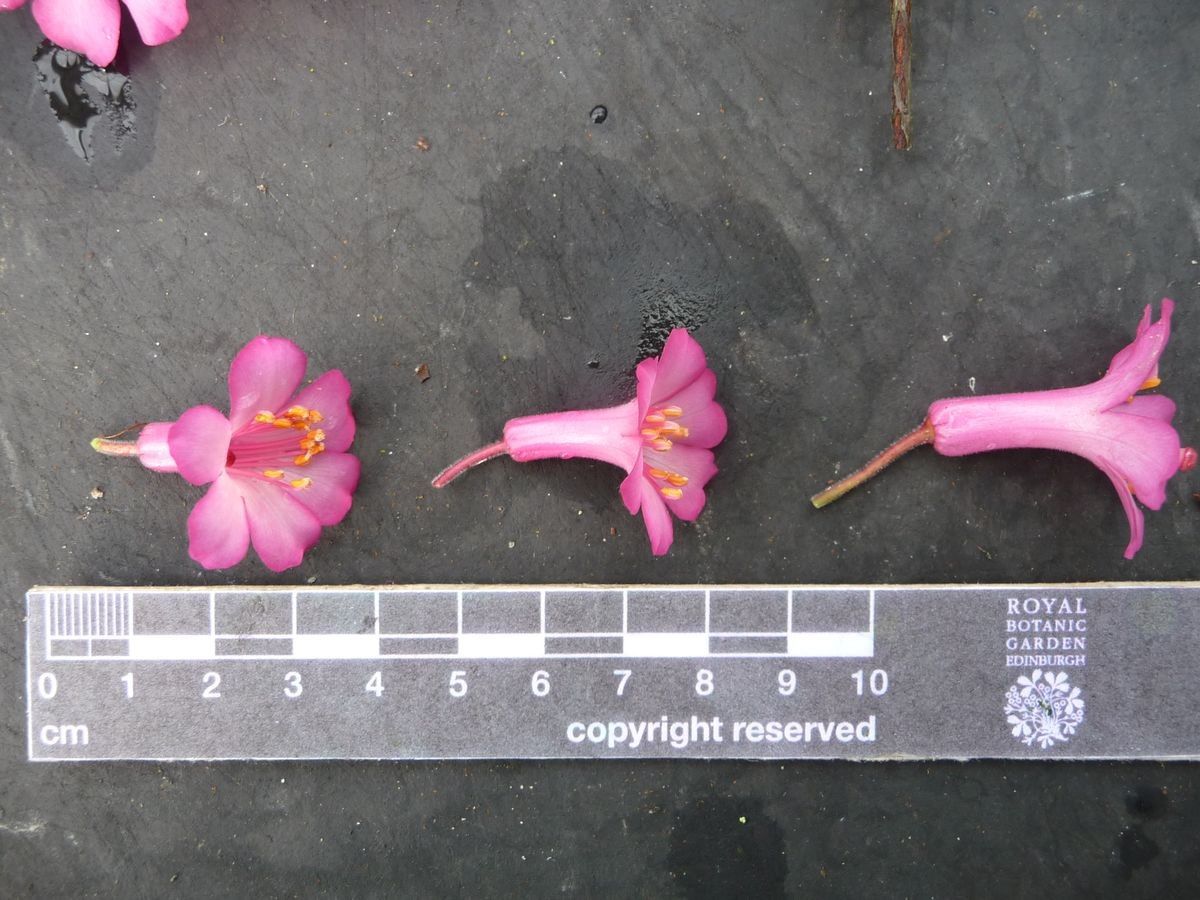
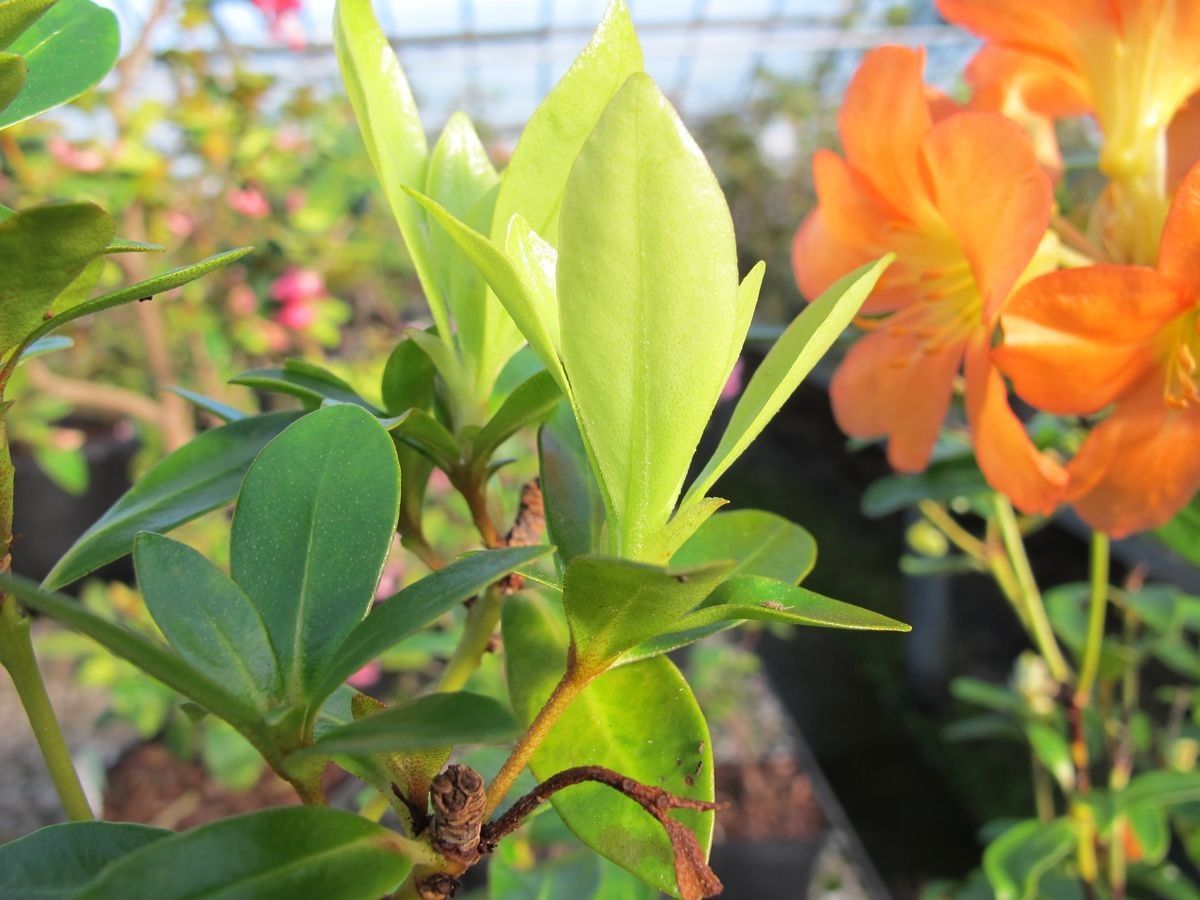
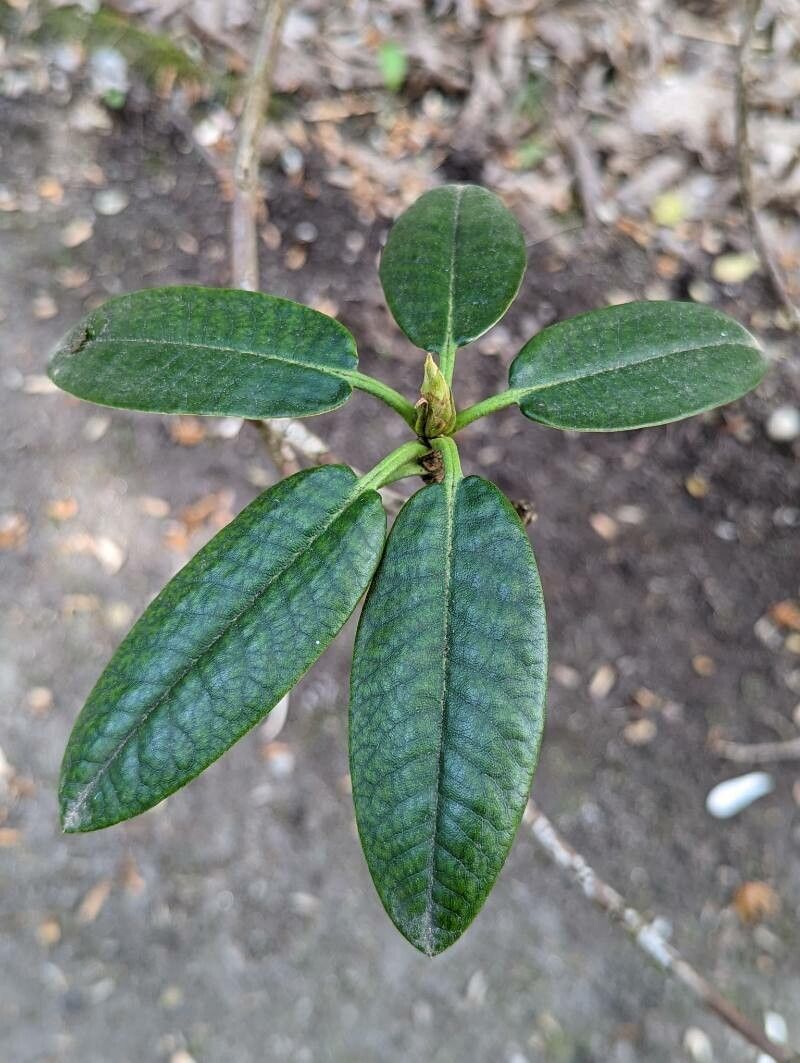
Rhododendron atlanticum, the dwarf azalea or coastal azalea, is a species of Rhododendron native to coastal areas of the eastern United States, from New Jersey south to Georgia. It is a deciduous shrub 50–150 cm (20–59 in) tall, forming a thick understory in forests, spreading by underground stolons. The leaves are 3–5 cm long and 1–2 cm broad, bluish green, and hairless or with scattered glandular hairs. The fragrant flowers are 3–4 cm long, usually white to pink, sometimes with a flush of yellow; they are produced in trusses of 4-10 together. It is a very tough subject, responding to overgrazing or forest fires by throwing up new shoots the following year.
The dwarf azalea has good resistance to disease and is generally not prone to illness. In terms of care, this plant is relatively low-maintenance. When grown outdoors it needs minimal watering, and larger plants typically do not require pruning. Smaller plants, however, should be pruned after they have finished blooming. The dwarf azalea is suitable for anyone with outdoor space, such as a garden or deck, and does not demand extensive gardening experience.
How to keep Rhododendron Atlanticum.
Light
Dwarf azalea is native to habitats like forest understories and rocky sites, where it grows in natural shade. It prefers partial sun but can adjust to full sun or full shade, demonstrating its versatile and hardy nature.
Water
The dwarf azalea originates from moist, acidic woodland soils and thrives with consistent moisture, though it shouldn't be waterlogged. Ideally, water it once every 1-2 weeks, increasing the frequency during the growing seasons of spring and summer. Being an evergreen, it adjusts its water requirements according to seasonal changes.
Temperature
Dwarf azalea is highly adaptable to a variety of climates, from very hot summers to cold winters. Nevertheless, it has a preferred temperature range for healthy growth. If temperatures rise too far, the plant can experience heat and humidity stress that may kill it. In areas where temperatures near the lower limit of its cold tolerance, providing insulation to protect the plant is important.
Fertilizer
Timing is essential for fertilizing Dwarf azalea. Begin fertilizing in early spring and continue once a month until early summer. Fertilizer encourages attractive blooms and provides energy during both dormant periods and active growth.
Pruning
The dwarf azalea is a compact shrub cherished for its fragrant blooms and appealing foliage. To keep it healthy and encourage flowering, lightly prune it in early spring. Remove any dead branches and thin out crowded areas to enhance air circulation. Avoid heavy pruning to prevent stress on the plant.
Botanical profile.
- Plant Type
- Shrub
- Life Cycle
- Perennial
- Genus
- Rhododendron
- Family
- Ericaceae
- Hardiness Zone
- 5-8
- Mature Height
- 0.91 m to 1.83 m
- Mature Spread
- 0.91 m to 1.83 m
- Leaf Color
- Green, Blue
- Leaf Type
- Deciduous
- Flower Color
- White, Pink
- Flower Size
- 2.54 cm to 7.62 cm
- Bloom Time
- Early spring, Mid spring
- Planting Time
- Spring, Summer, Autumn
- Harvest Time
- Summer
Other names.
Reader questions.
What are the sunlight requirements for Dwarf azalea?
Dwarf azalea thrives in environments mimicking its natural forest understories or rocky areas habitat, which typically experience natural shade. It prefers partial sun, requiring about 3-6 hours of sunlight daily. However, it can also tolerate full shade, where sunlight is minimal, making it a versatile plant. Additionally, it's crucial to watch how sunlight moves through your garden, selecting locations that offer a balance of light and shade, which ensures the plants' health and happiness.
How can I provide adequate lighting for Dwarf azalea indoors?
For indoor Dwarf azaleas, especially during less sunny seasons or in spaces with insufficient natural sunlight, artificial lighting is essential for optimal growth. LED lights are recommended because they can be tailored to deliver specific wavelengths needed by plants. The required artificial light intensity varies: Full sun plants need 30-50W/sq ft, partial sun plants 20-30W/sq ft, and full shade plants 10-20W/sq ft. The artificial light source should be placed 12-36 inches above the plant, mimicking natural sunlight conditions. Most plants thrive with 8-12 hours of light per day, adjusting for the length of natural daylight hours specific to the plant species.
What symptoms indicate insufficient light for Dwarf azalea, and how can they be addressed?
Insufficient light can cause several symptoms in Dwarf azalea, including smaller new leaves, leggy or sparse growth, faster leaf drop, slower or no new growth, lighter-colored or chlorotic leaves, sunscald, leaf curling, wilting, and leaf scorching. Addressing these symptoms requires optimizing light exposure. Gradually acclimate plants to sunnier spots for 3-6 hours of direct sunlight daily or use artificial lights for indoor plants, ensuring they're on for at least 8 hours per day. For outdoor plants, move them gradually to sunnier locations to prevent sunburn. If obstructions like trees block sunlight, consider pruning them. For smaller plants, transplanting during their dormant period to a location with ample sunlight and good drainage might be necessary. It's important to note that parts of the plant affected by insufficient sunlight might not recover, but new growth can be healthy with improved light exposure.