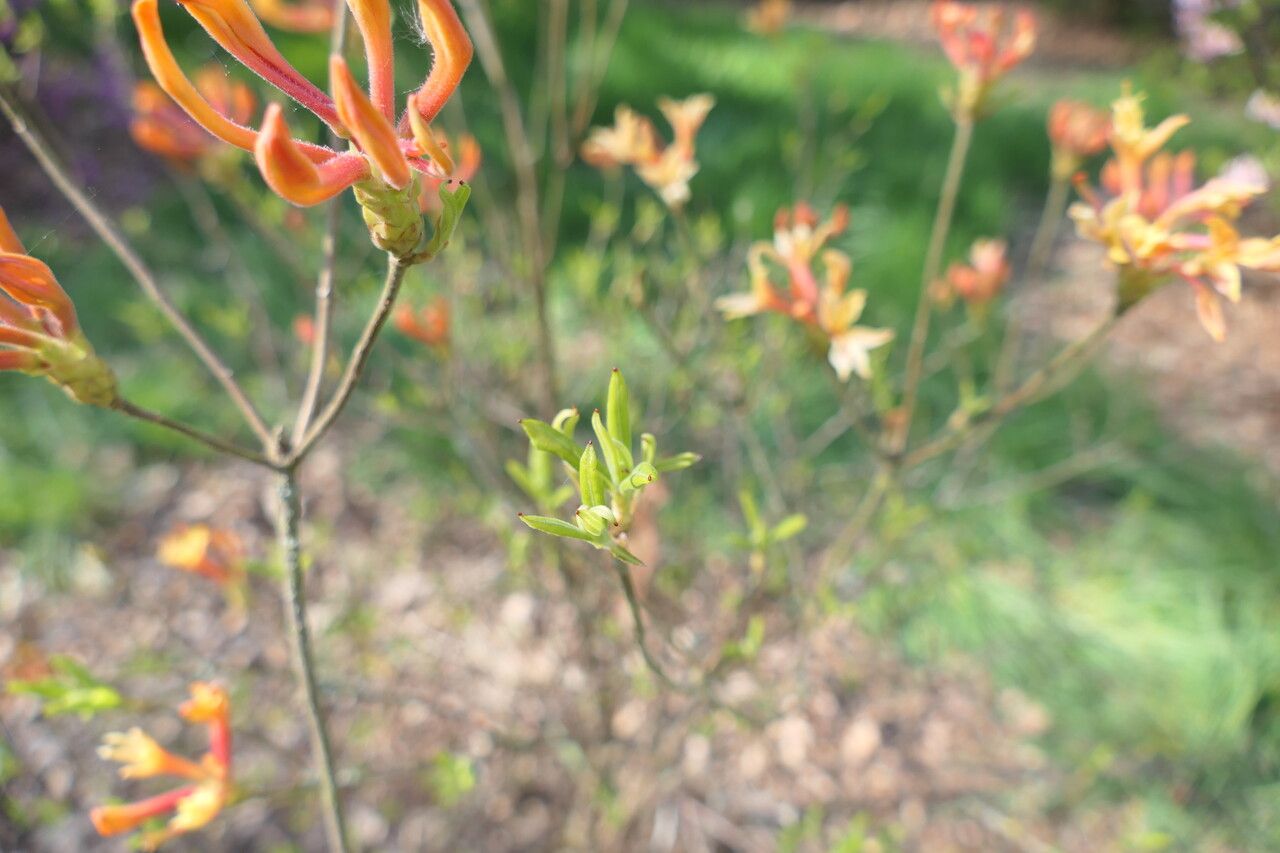
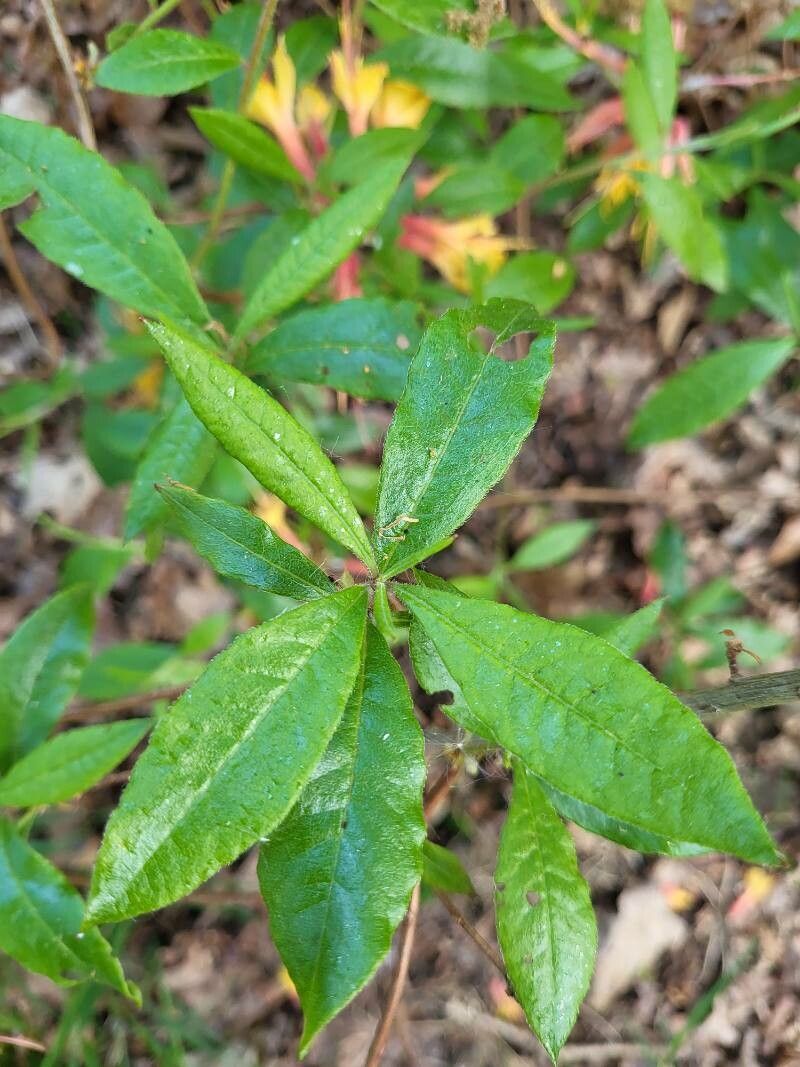
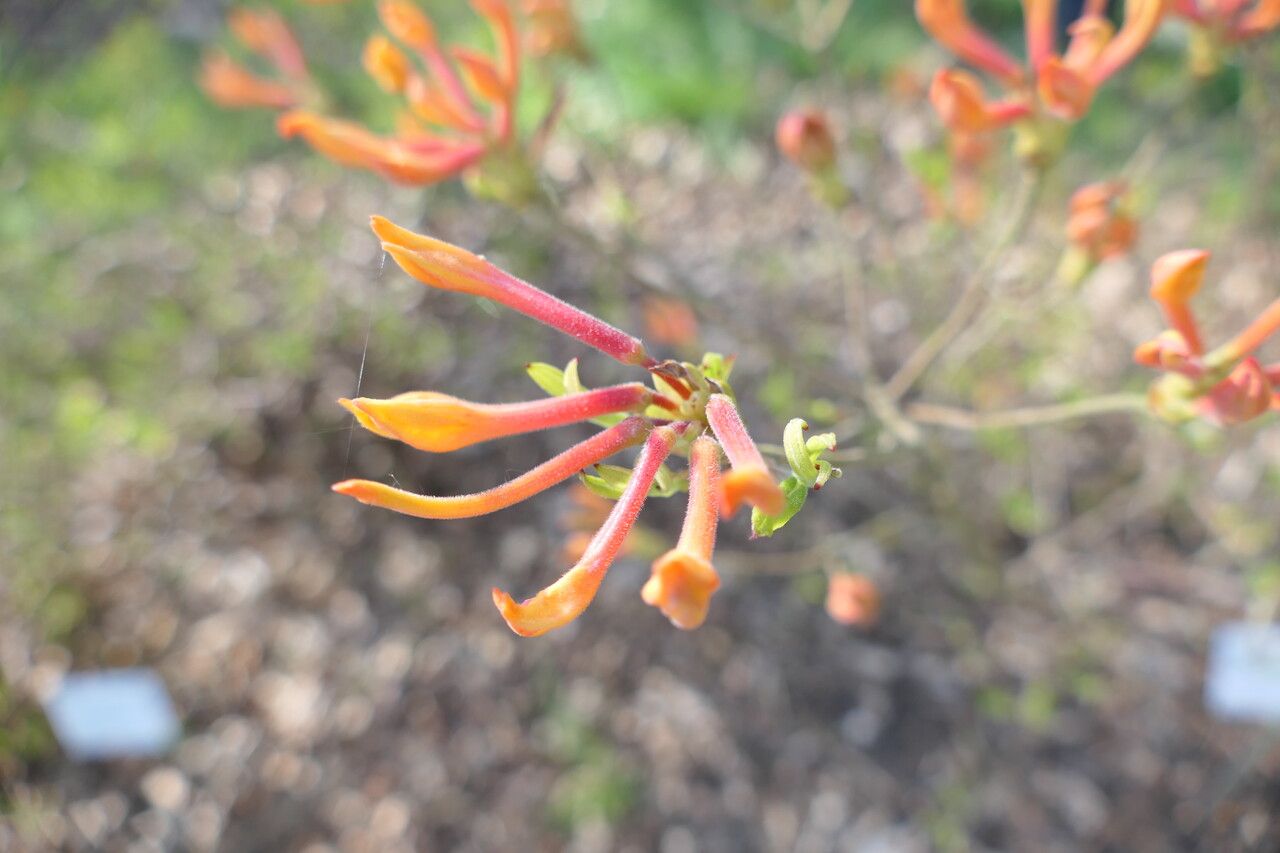
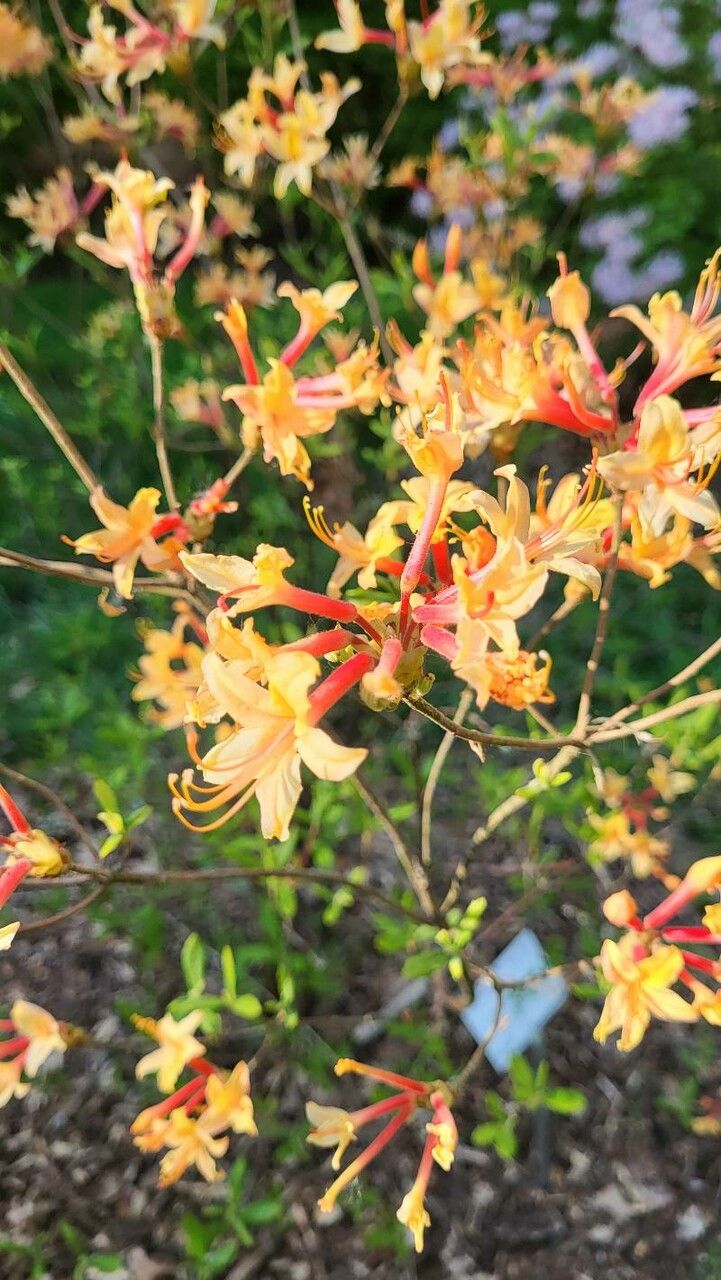
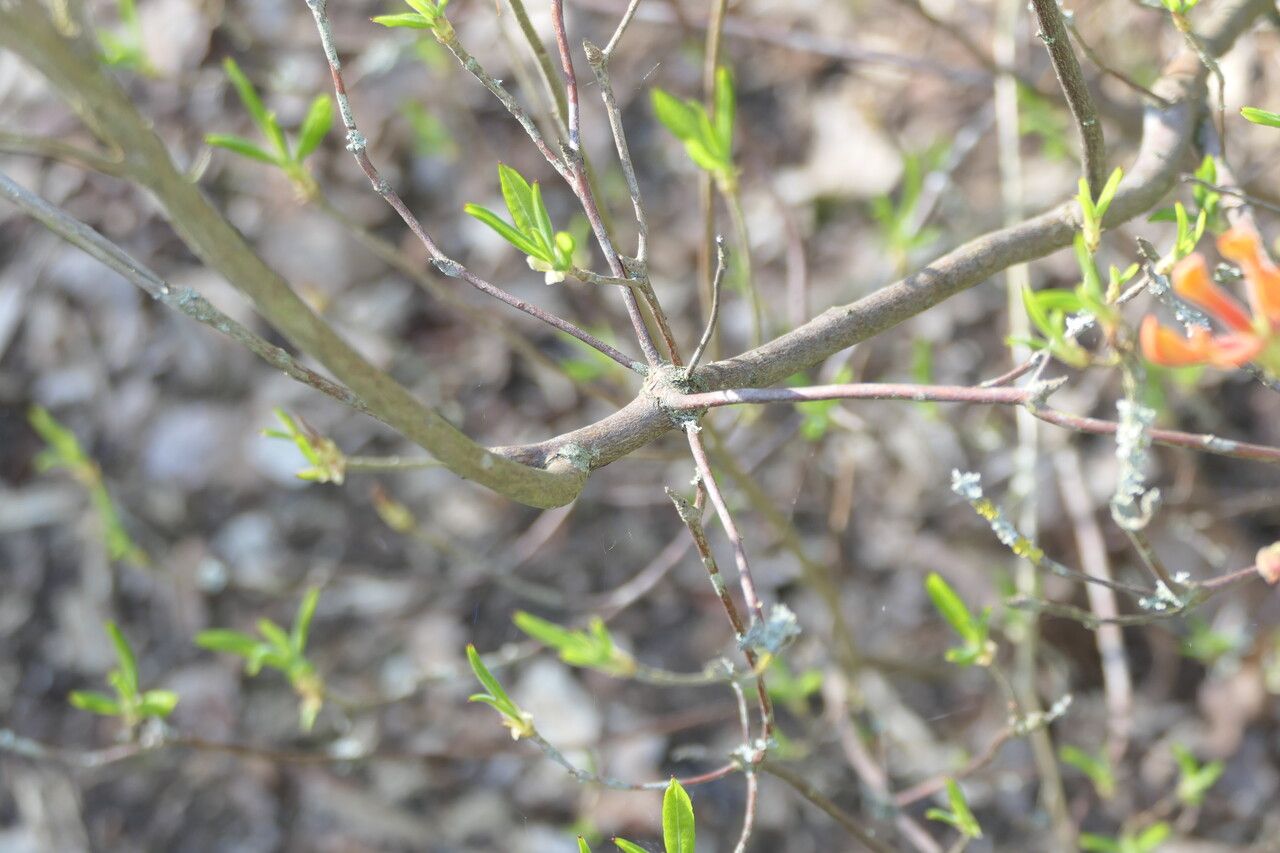
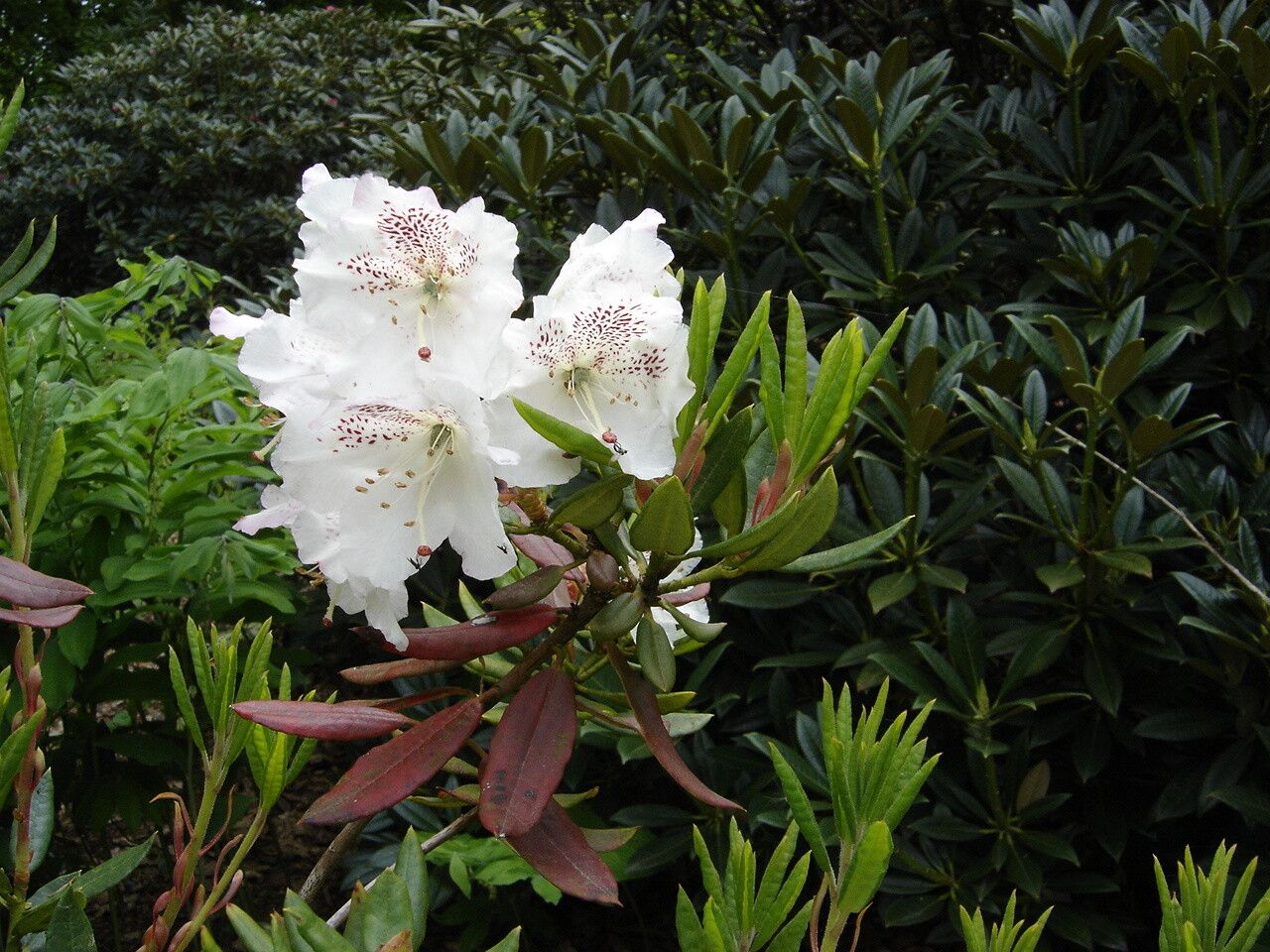
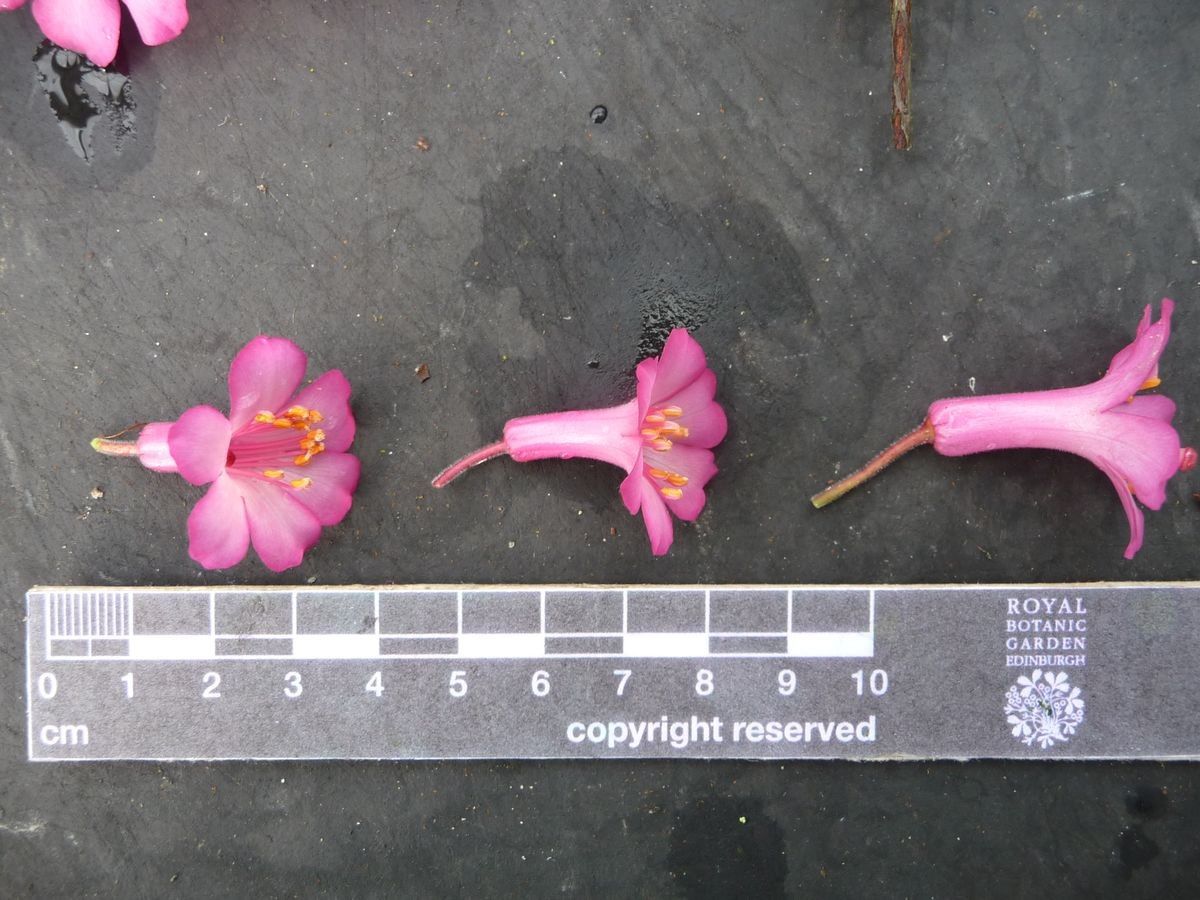
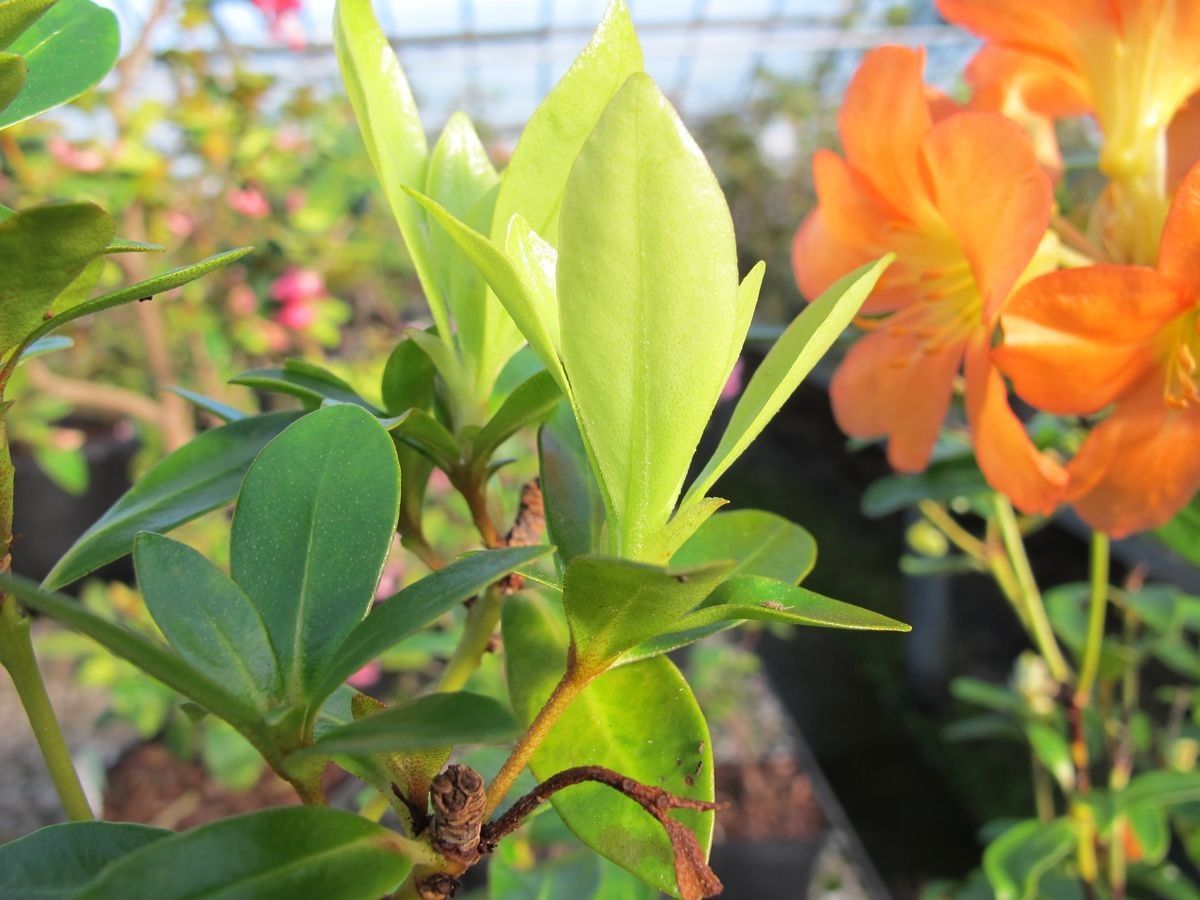
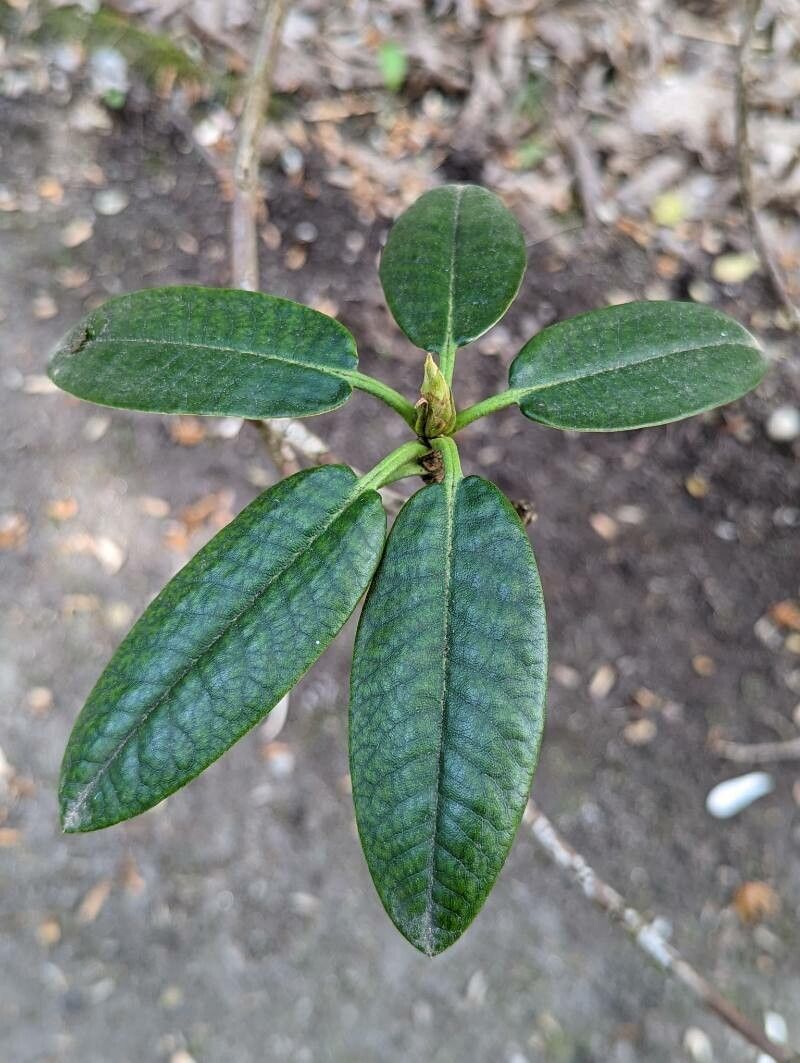
Rhododendron austrinum is a species of flowering plant in the heath family known by the common names Florida flame azalea, honeysuckle azalea, Southern yellow azalea, and orange azalea. It is native to the southern United States, where it can be found in Alabama, Florida, Georgia, and Mississippi. It is also a common ornamental plant.This species is a shrub growing up to 10 feet tall and 8 wide. It has deciduous oval leaves 2 to 4 inches long. It blooms profusely in large yellow or orange flowers which have a pleasant scent. The stamens protrude up to 2 inches from the flower's mouth. The funnel-shaped flowers are borne in clusters of up to fifteen. The flowers come in before the new spring leaves emerge.The plant is a common garden species because of its showy, fragrant flowers in shades of yellow or cream to nearly red. They attract hummingbirds and butterflies.In the wild, the plant is a regional endemic occurring in and around the Florida Panhandle. It occupies moist and wet acidic substrates in ravines and other areas. It is threatened by the destruction of its habitat during conversion of the land to agriculture, silviculture, and other uses.
Orange azalea is disease-resistant and generally not prone to illnesses. Care-wise, this plant is fairly low-maintenance. When grown outdoors it needs only minimal watering, and larger specimens typically do not require pruning. Smaller plants, however, should be pruned after they finish blooming. Orange azalea is suitable for anyone with outdoor space, such as a garden or deck, and does not demand extensive care experience.
How to keep Rhododendron Austrinum.
Light
Orange azalea is native to habitats like forest understories and rocky areas, where it experiences natural shade. It prefers partial sun but can tolerate full sun or full shade, showing its versatile, hardy character.
Water
The orange azalea flourishes in moderate moisture conditions and should be watered every 1-2 weeks. An evergreen plant, it keeps its leaves throughout the year and requires steady hydration, even during non-growing seasons. It is important to note that this plant is neither drought-tolerant nor suited for excessively humid environments.
Temperature
Orange azalea shows strong tolerance to heat and can handle wide temperature swings. In hot conditions, care should be taken with watering and providing sufficient shade to avoid sunburn. Conversely, orange azalea is fairly sensitive to low temperatures. While it can endure some mild cold, very cold conditions may cause frost damage.
Fertilizer
Timing is essential for fertilizing Orange azalea. Start in early spring and apply fertilizer monthly until early summer. Fertilizer encourages beautiful blooms and supplies energy during both dormant and active growth periods.
Pruning
Orange azalea is known for its vibrant orange blooms. To maintain its health and appearance, it's important to prune the plant correctly. This involves removing any dead branches and thinning out crowded areas. Pruning should be done in early spring to encourage strong blooms and prevent disease. Be sure to use clean, sharp tools, and consider light annual trimming to help maintain the plant's shape.
Botanical profile.
- Plant Type
- Shrub
- Life Cycle
- Perennial
- Genus
- Rhododendron
- Family
- Ericaceae
- Hardiness Zone
- 6-9
- Mature Height
- 2.44 m to 3.05 m
- Mature Spread
- 2.44 m to 3.05 m
- Leaf Color
- Forest Green, Dark Green
- Leaf Type
- Deciduous
- Flower Color
- Yellow, Orange
- Flower Size
- 3.05 cm to 5.08 cm
- Bloom Time
- Early spring, Mid spring
- Planting Time
- Spring, Summer
- Harvest Time
- Summer
Other names.