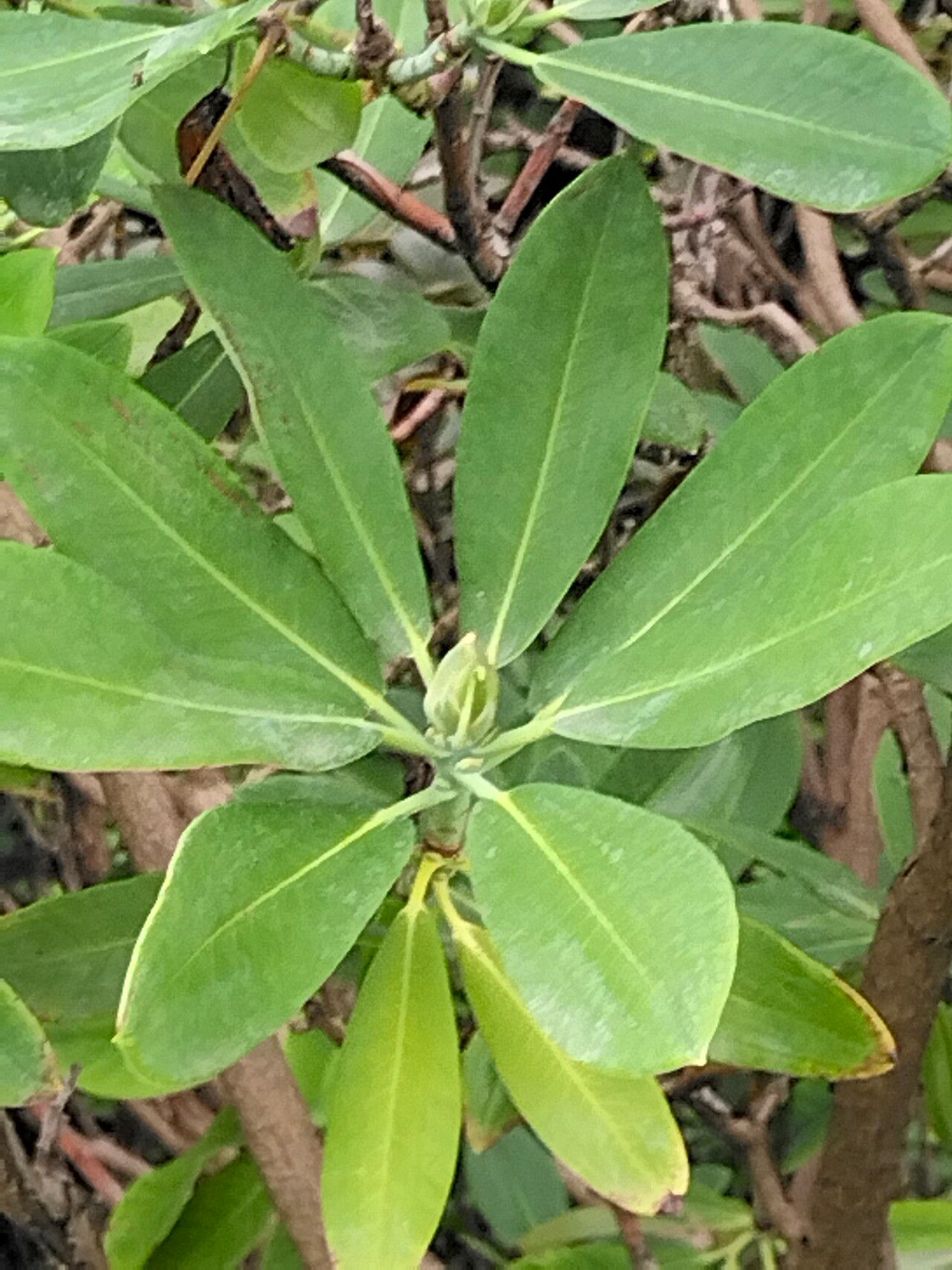
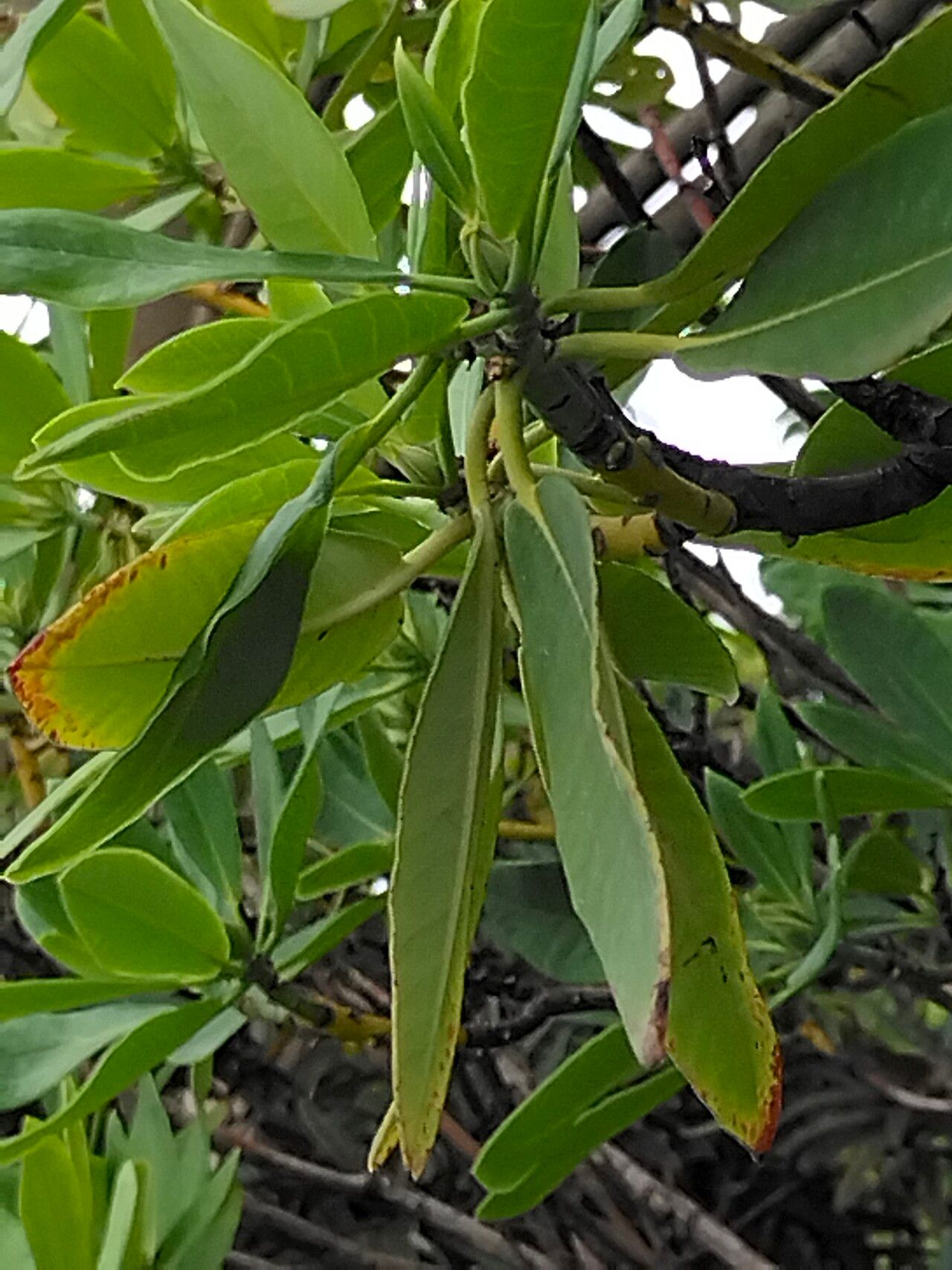
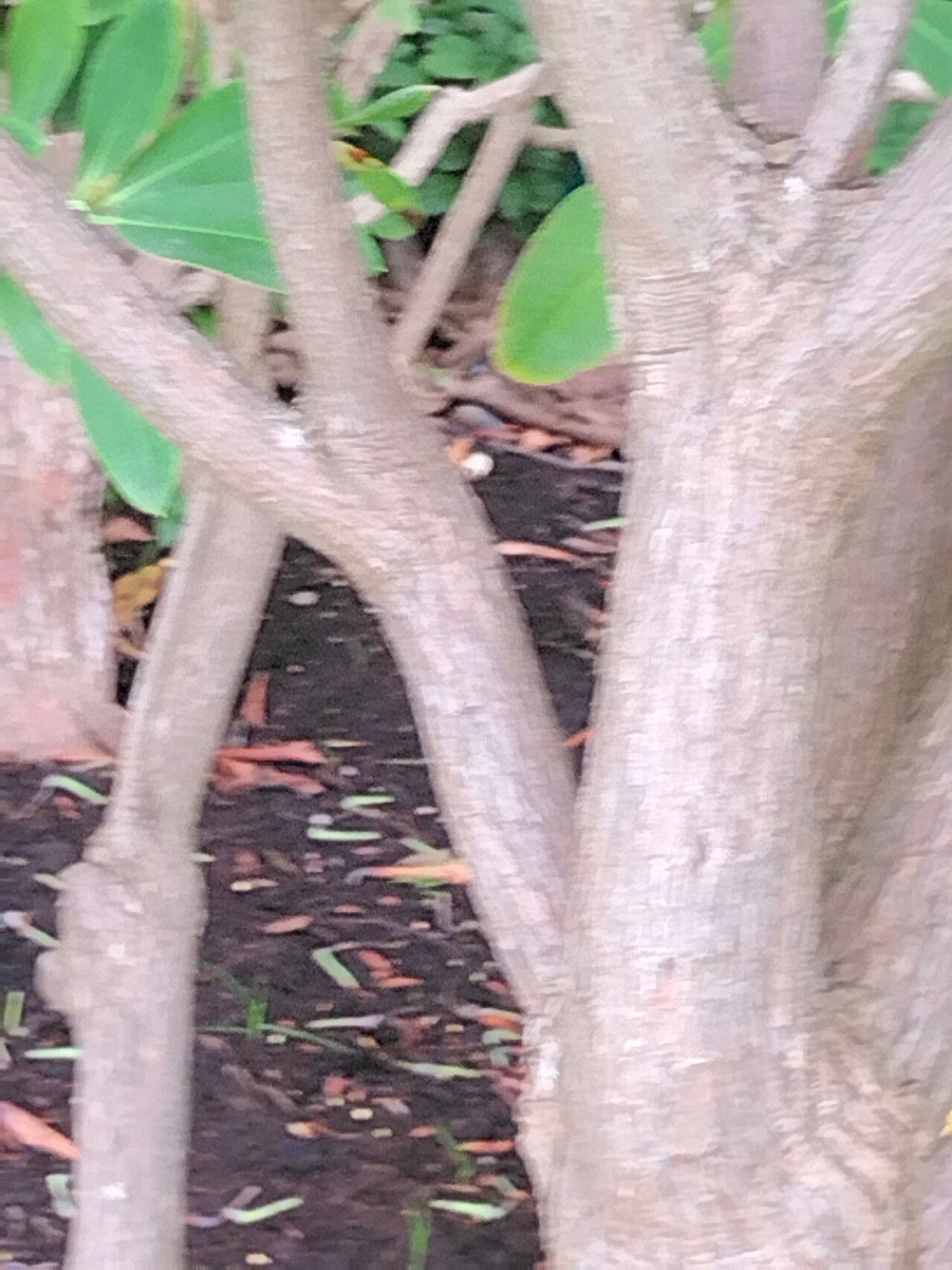
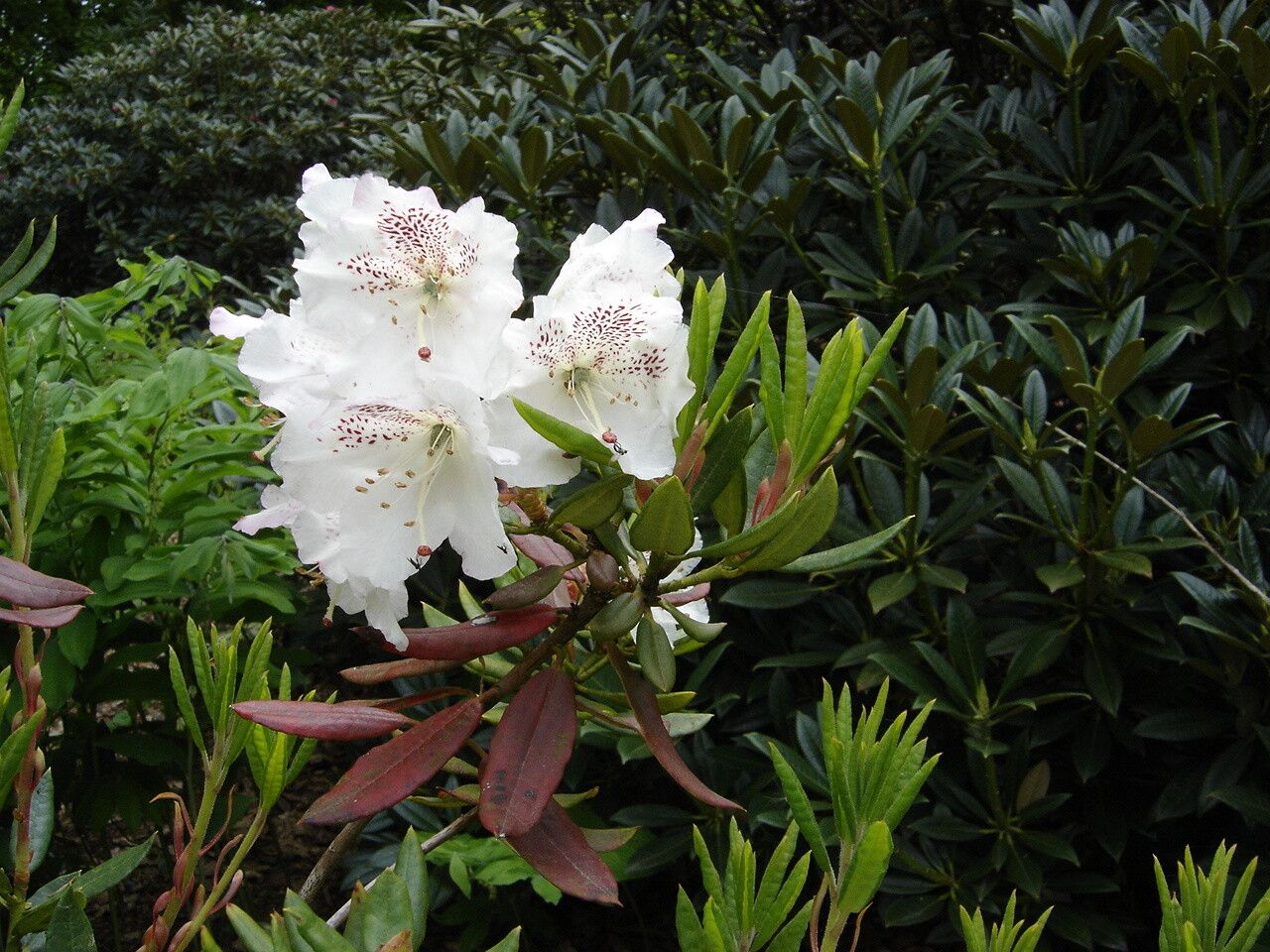
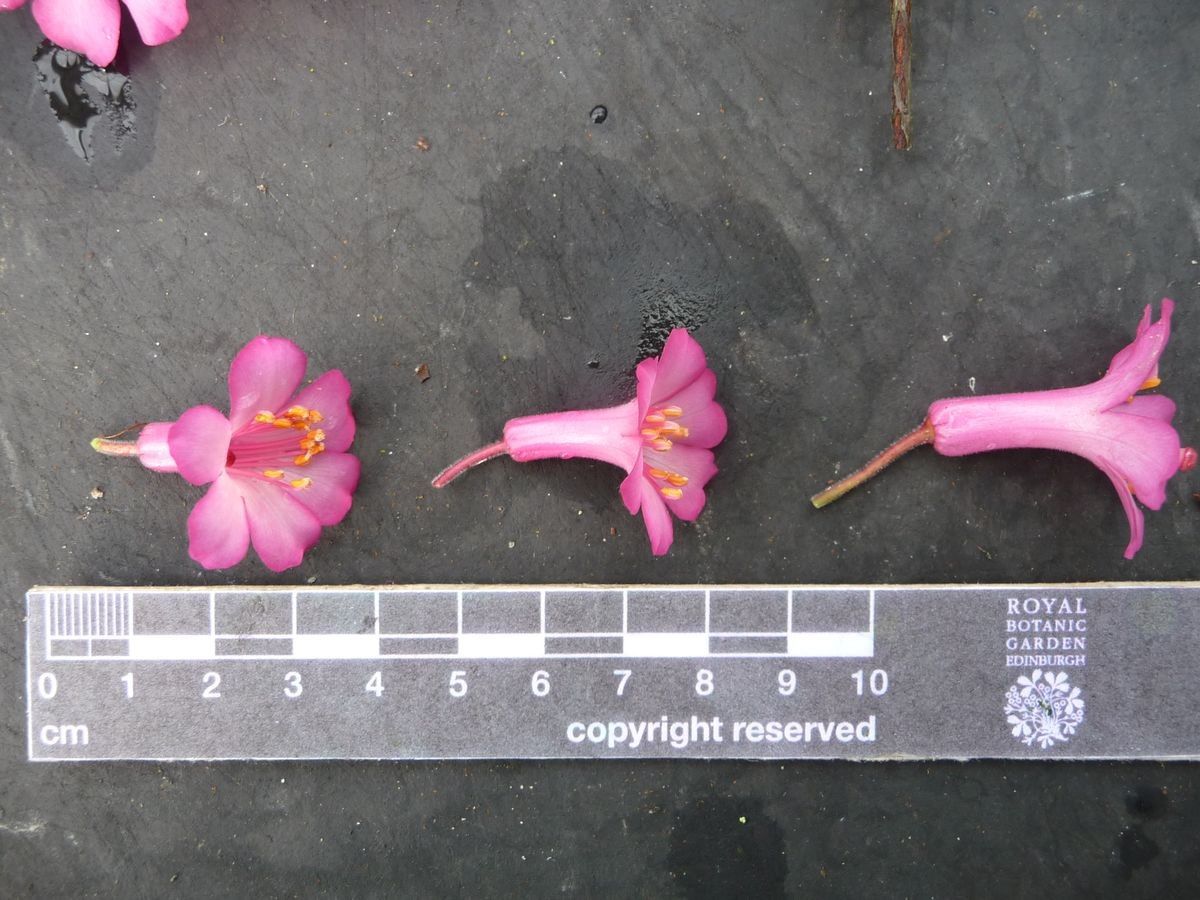
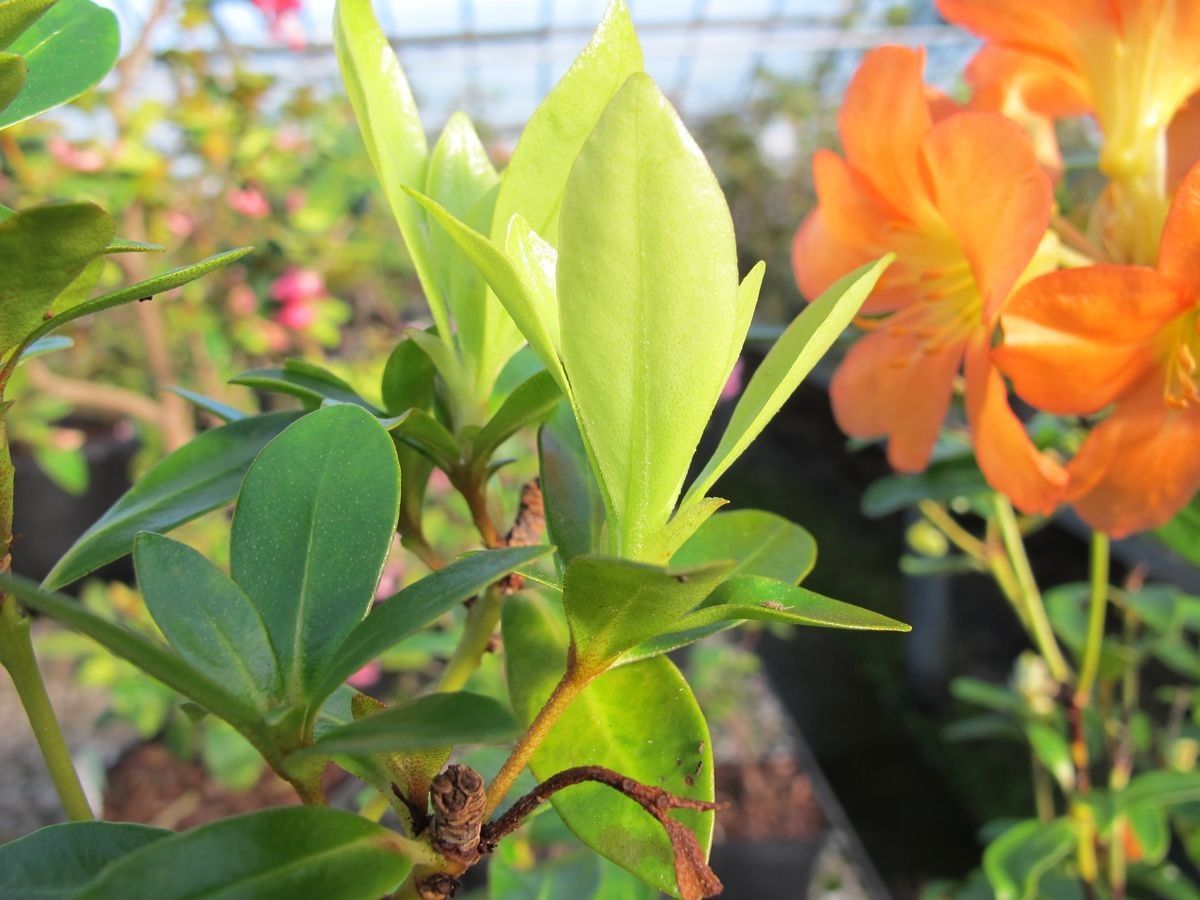
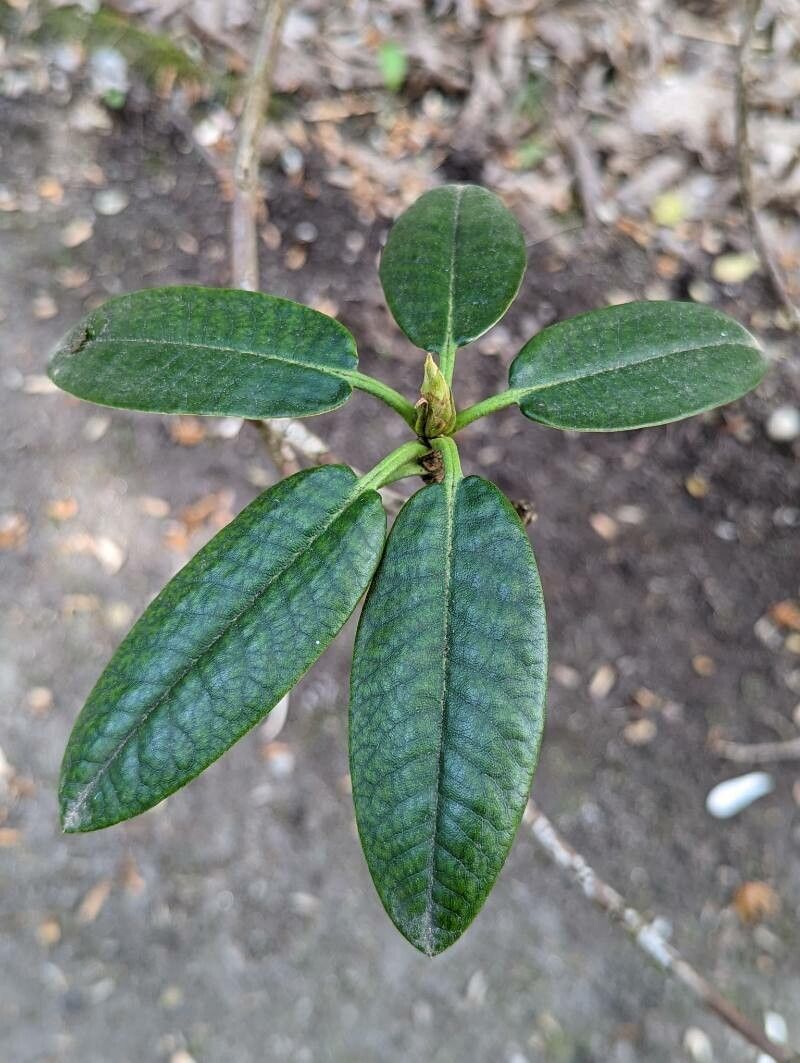
Rhododendron discolor (喇叭杜鹃) is a rhododendron species native to many regions of China, where it grows at altitudes of 900–1,900 m (3,000–6,200 ft). It is a shrub or small tree that grows to 1.5–8 m (4.9–26.2 ft) in height, with leathery leaves that are oblong-elliptic or oblong-lanceolate, and 9.5–18 cm (3.7–7.1 in) × 2.4–5.4 cm (0.94–2.13 in) in size. The flowers are pale pink to white. According to Flora of China, "Rhododendron discolor intergrades with R. fortunei, and can reliably be separated from that species only by the proportionately narrower leaves."
Rhododendron discolor is fairly disease-resistant and is usually not vulnerable to illnesses. Regarding maintenance, this plant needs relatively little care. When grown outdoors it only requires occasional watering, and larger specimens normally do not need pruning. Smaller specimens, however, should be trimmed after flowering. Rhododendron discolort is appropriate for anyone who has an outdoor area, like a garden or a deck, and does not demand extensive gardening experience.
How to keep Rhododendron Discolor.
Light
Rhododendron discolor naturally occurs in habitats like forest understories and rocky areas, where it grows in natural shade. It prefers partial sun but can adjust to full sun or full shade, reflecting its versatile and hardy nature.
Water
Use rainwater or melted snow to water rhododendron discolor plants. Avoid using alkaline or tap water, as they can damage the soil quality. Water the plants frequently during spring and summer, but reduce the frequency in winter. In summer, water them in the early morning, and in winter, water them before noon. During rainy seasons, be sure to adjust the watering schedule to prevent waterlogging.
Temperature
Rhododendron discolor is highly adaptable to a range of climatic conditions, tolerating both scorching summers and cold winters. Nevertheless, it has an optimal temperature range for growth. If temperatures become too high, the plant is vulnerable to heat and humidity stress, which can lead to its death. In areas where temperatures approach the lower limit of its cold tolerance, providing insulation is important to protect the plant.
Fertilizer
Timing is essential when fertilizing Rhododendron discolor. Apply fertilizer in early spring and continue monthly until early summer. Fertilizer promotes beautiful blooms and supplies energy during both dormant and active growth periods.
Pruning
Rhododendron discolor is known for its vibrant blooms and robust growth. To encourage healthier growth and more abundant flowering, it is beneficial to prune in early spring. Focus on removing dead branches and thinning the plant. Be sure to use clean, sharp tools to prevent disease, ensuring that your rhododendron discolor remains ornamental and continues to thrive.
Botanical profile.
- Plant Type
- Shrub
- Life Cycle
- Perennial
- Genus
- Rhododendron
- Family
- Ericaceae
- Hardiness Zone
- 5-8
- Mature Height
- 2.13 m to 3.96 m
- Mature Spread
- 2.13 m to 3.05 m
- Leaf Color
- Dark Green
- Leaf Type
- Evergreen
- Flower Color
- White
- Flower Size
- 6.35 cm to 10.16 cm
- Bloom Time
- Early summer, Mid summer
- Planting Time
- Spring
- Harvest Time
- Late summer, Early fall, Mid fall
- Native Area
- China