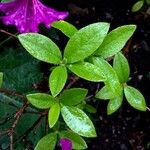
Rhododendron ferrugineum
Rhododendron · Alpine-rose · Alpenrose · Snow-rose · Rostblettrigi Alperose
Description
Source: leafsnapRhododendron ferrugineum, commonly known as the Alpine Rose, is a small evergreen shrub belonging to the Ericaceae family. Native to the mountainous regions of Europe, it thrives at high altitudes of up to 3000 meters and typically grows to a height of up to 1 meter. The leaves of Rhododendron ferrugineum are leathery and dark green with a glossy appearance. Its bell-shaped flowers, which range from pinkish-red to purple-red, bloom from May through July. This plant prefers acidic soil with good drainage and can thrive in either partial shade or full sun. Due to its attractive flowers and foliage, it is often used as an ornamental plant. However, it is important to note that all parts of Rhododendron ferrugineum contain toxic compounds called grayanotoxins, which can cause gastrointestinal distress if ingested by humans or animals. Overall, Rhododendron ferrugineum is a visually appealing shrub with beautiful blooms, but it should be handled with care due to its toxic nature.
🌳 Alpenrose carries significant cultural meaning beyond its decorative role in gardens. Seen as a symbol of the Alps, its image appears in art, emblems, and local marketing to evoke the mountains' pristine character. Additionally, because of its hardiness the plant is of interest in horticultural research and could inform breeding programs for more resilient ornamental species.
🎭 Peril, enticement, proceed with caution
Care Guide
💧 Water Every 7 days
Alpen rose, a plant native to the high-altitude regions of Europe, thrives in well-drained soils and can withstand short periods of drought. It requires consistent moisture but should not be overwatered, so watering every 1-2 weeks is ideal. Typically cultivated outdoors, alpen rose flourishes when the natural rainfall aligns with its growth cycles.
When Should I Water My Alpen Rose?
To ensure the health and vibrancy of your Alpen Rose (Rhododendron ferrugineum), it's crucial to water it correctly. The soil's top 1 to 2 inches should dry out before watering again. Look for signs like leaf wilting, lackluster appearance, or color fading as indicators that the plant needs water. It's particularly important to provide sufficient water during the pre-flowering stage and in high temperatures to prevent wilting, bud drop, or stunted growth. However, avoid watering too early when the soil is moist to prevent root diseases, and also avoid watering too late as it can cause severe dehydration or even plant death.
How Should I Water My Alpen Rose?
Watering your Alpen Rose properly involves deep, infrequent watering to keep the soil slightly dry between sessions and avoid root rot, without letting the plant dry out completely. Use a narrow-spout watering can for precision, avoiding foliage to reduce disease risk. A moisture meter can help gauge when to water next, and ensure the soil around the plant's base is the focus of your watering. Overwatering should be avoided, and bottom-watering can be a beneficial method to ensure adequate moisture absorption. However, misting is not recommended due to the increased risk of fungal diseases.
How Much Water Does Alpen Rose Really Need?
Alpen Rose requires moderate watering to thrive, being careful not to overwater since its shallow root system is prone to rot in excessive moisture. Ideally, moisten the top 1-2 inches of soil thoroughly without waterlogging it, adjusting the watering frequency based on the plant's environment. Typically, watering once every 7-10 days works well, but always check soil moisture to tailor watering to your plant's needs. Signs of both under and over-watering include wilting leaves or yellowing, respectively. Utilize well-draining soil and water in the morning for the best results.
What Kind of Water is Best for Alpen Rose?
Alpen Rose thrives with soft, slightly acidic water, making rainwater the optimal choice for watering. Distilled or filtered water are suitable alternatives. Tap water, especially if hard and chemical-laden, may harm the plant, leading to issues like leaf chlorosis. Letting tap water sit for 24 hours before use allows chlorine to evaporate, reducing potential damage. Room temperature water is ideal to avoid shocking the plant's roots. Though alpen rose appreciates high humidity, direct foliage spraying is not recommended.
How Do Alpen Rose's Watering Needs Change with the Seasons?
Alpen Rose's watering needs vary throughout the year. In spring, as growth resumes, maintain consistently moist soil and mulch to retain moisture. During summer's heat, ensure consistent but careful watering to avoid overhydration. Water less in autumn as growth slows and further reduce watering in winter, when the plant is dormant. However, even in winter, ensure the soil doesn't completely dry out. Adjust your watering schedule based on seasonal changes, always checking the soil's moisture level before watering.
☀️ Light Full sun
Alpenrose achieves optimal growth when exposed to abundant sunlight throughout the day. Nevertheless, being adaptable, it can also tolerate areas with reduced sunlight. Its native habitats are characterized by plentiful sunshine. Notably, excessively intense sunlight or overly shaded conditions can impede its growth and health.
What are the sunlight requirements for Alpen Rose?
Alpen rose (Rhododendron ferrugineum) thrives in areas that receive plentiful sunlight throughout the day, demonstrating its native preference for sun-abundant habitats. The plant's growth can be significantly affected by either excessively intense sunbeams or too much shade. In terms of sunlight specifics, 'full sun' is defined as receiving above 6 hours of sunlight daily, while 'partial sun' is about 3-6 hours of sunlight. It's recommended to observe the movement of sunlight in your garden to find the perfect spots that offer an optimal balance of light and shade, ensuring your plants' well-being.
How does artificial lighting support Alpen rose growth?
For Alpen rose plants that are grown indoors or in less sunny spaces, artificial lighting can be a crucial adjustment, especially when natural sunlight is insufficient. Choosing the right type of artificial light, such as LED lights, helps provide the wavelengths necessary for the plant's growth. Specifically, full sun plants need 30-50W/sq ft, partial sun plants 20-30W/sq ft, and full shade plants require 10-20W/sq ft of artificial light. The light source should be positioned 12-36 inches above the plant, simulating natural sunlight conditions. Additionally, the duration of artificial light should mimic natural daylight hours, typically 8-12 hours per day, for optimal growth.
What are some common symptoms of light deficiency in Alpen Rose?
Alpen rose plants that do not receive adequate sunlight may exhibit several symptoms indicating light deficiency, including subtler issues that affect future flowering and fruiting, faster leaf drop as the plant conserves resources, slower or halted new growth, and the development of lighter-colored or irregularly patterned new leaves due to insufficient chlorophyll. Chlorosis, or the yellowing of leaves due to chlorophyll breakdown, along with sunscald, which causes pale, bleached areas on plant tissue, are also common. Other symptoms include leaf curling to minimize sun exposure and water loss, wilting from overexposure to sunlight increasing water loss, and leaf scorching characterized by brown, dry edges on leaves.
How can I address insufficient sunlight for my Alpen Rose?
To counteract insufficient sunlight for Alpen Rose, consider gradually moving your plants to sunnier locations to ensure they receive at least 6 hours of direct sunlight daily. Utilizing a south-facing window and keeping curtains open can maximize sunlight exposure. Where moving the plant isn't feasible, artificial lighting such as desk, ceiling lamps, or professional plant grow lights can supplement light for at least 8 hours a day. In outdoor settings, adapting plants to increased sunlight gradually to avoid sunburn is crucial. Additionally, removing obstructions or transplanting the plant to sunnier spots can enhance light access. It's important to note that while parts of the plant affected by light deficiency may not recover, new growth should be healthy with improved lighting conditions.
🌡️ Temperature 5–35°C
The alpenrose needs a cold, moist climate and is found in Alpine areas, where summer temperatures vary from 5 to 35 ℉ (-15 to 20 ℃). It tolerates frost and favors cool summers with mild winters.
What is the ideal climate for an Alpen rose?
The Alpen rose, or Rhododendron ferrugineum, flourishes in a cold and damp climate, typically found in the Alpine regions. It thrives in temperatures ranging from 5 to 35°F (-15 to 20°C) during the summer and is resistant to frost. The plant prefers cool summers and mild winters, demonstrating strong cold resistance. Therefore, special frost protection measures are generally not required during winter. However, in cases where winter temperatures are expected to dip below -30°C, it is necessary to protect the plant by wrapping its trunk and branches with materials like non-woven fabric or cloth. Additionally, to prevent drought and water scarcity during winter and early spring, it's recommended to water the plant abundantly before the first freeze in autumn, ensuring the soil remains moist and enters a frozen state.
How does low temperature affect the Alpen rose and what are the solutions?
Alpen roses are cold-tolerant and perform best when temperatures stay above 5°C and, during winter, above -25°C. However, when temperatures fall below -30°C, while no immediate changes might be conspicuous during winter, the plant may face issues in spring. You might observe that the branches become brittle, dry, and fail to produce new shoots in the following growth season. To address this, it is recommended to prune away any dead branches that have not produced new leaves in spring. This helps in rejuvenating the plant and promoting healthy growth.
How does high temperature affect the Alpen rose and what are the solutions?
During the summer months, it's essential to ensure that the temperature surrounding an Alpen rose does not exceed 35°C. Temperatures above 41°C can result in the leaves becoming lighter in color, and the tips may appear dry and withered. High temperatures increase the plant's susceptibility to sunburn. To mitigate these issues, it's advisable to trim away the sunburned and dried-up parts of the plant. Relocating the plant to an area with shade during the midday and afternoon sun or using a shade cloth to create some shade can be beneficial. Additionally, maintaining soil moisture is crucial; therefore, watering the plant in the morning and evening is recommended to keep the soil from drying out.
💨 Humidity normal (40-60%)
This plant will thrive in moderate humidity, which is probably the level in your home. However, misting it a few times a week can be very beneficial. Make sure the room has good ventilation.
🪴 Soil 4-6
🌱 Fertilizer
Timing is essential for fertilizing Alpenrose. Apply fertilizer in early spring and continue monthly until early summer. Fertilizer encourages attractive blooms and supplies energy during both dormant and active growth periods.
Why should I put fertilizer on my Alpen rose plant?
Fertilizing your Alpen rose is important for several reasons. Firstly, it helps produce beautiful blooms. To ensure excellent flowers during the spring season, it is recommended to fertilize in early spring. Additionally, fertilizer provides your Alpen rose with the energy it needs during its dormant growth phases, which can be stored in the ground. By giving your Alpen rose extra nutrients in the fall or late spring, it will have more energy to use once active growth resumes.
When should I fertilize my Alpen rose?
To effectively fertilize Alpen rose, timing is crucial. Applying fertilizer too early, while the Alpen rose is still dormant, would be ineffective as it would be washed away by rainwater, causing waste and pollution. It is best to apply the first round of fertilizer in the early spring, and continue fertilizing once a month until early summer.
When is it best not to add fertilizer to my Alpen rose?
To ensure optimal growth and blooming of Alpen rose, it is important to be mindful of its fertilizer needs. Avoid using a fertilizer that is rich in nitrogen, as this can cause an abundance of leaves but few blooms. Instead, opt for a fertilizer that has a lower nitrogen content compared to other nutrients. Timing is also crucial when it comes to fertilizing Alpen rose. It is advisable to refrain from fertilizing after early autumn, as this can result in excessive growth just before winter, which may not be beneficial for the plant. Additionally, avoid fertilizing during hot and dry periods of the year, as dry soil does not effectively deliver nutrients like moist soil does. Fertilizing during this time can also stimulate growth, which will require more water that may not be readily available. Therefore, it is preferable to apply fertilizer earlier in the season when temperatures are cooler. Lastly, always keep in mind that Alpen rose is capable of absorbing fertilizer that has been applied to nearby plants or lawns. To prevent inadvertently overdosing the plant with fertilizer, exercise caution and ensure that the Alpen rose does not receive a double-dose of nutrients.
What kind of plant food does my Alpen rose require?
To properly fertilize an Alpen rose, it is recommended to use a fertilizer that has a balanced mix of the three main plant nutrients, with slightly more phosphorus. Alternatively, you can also enhance the soil by adding organic materials like compost, worm castings, and manure. When the flower buds begin to appear, experienced gardeners often supplement with water-soluble fertilizers containing phosphorus, which helps the flowers develop well and grow larger, resulting in longer bloom periods. There is a variety of fertilizers available for Alpen roses, but liquid or powdered forms tend to be the most effective. Regardless of the type you choose, it is important to dilute the fertilizer and apply it while watering the Alpen rose.
How should I add plant food to my Alpen rose?
When using fertilizer for your Alpen rose, it's important to carefully follow the instructions for the specific type of fertilizer you have. It's also a good idea to do some research on how to properly apply the fertilizer. Over-fertilizing can harm your Alpen rose, so finding the correct amount to use is crucial. A general guideline is to use either the age of the tree or the diameter of the trunk to determine how much fertilizer to apply. You can estimate using one-tenth of a pound of fertilizer per year or per inch of trunk, with a maximum of one pound. To apply granular or organic fertilizers like blood meal, sprinkle the substance around the base of the tree, extending all the way to the drip line (the area under the farthest-reaching branches). Make sure not to let the fertilizer come in contact with the trunk. Over time, the granules will break down and seep into the soil, where the roots can absorb them. After applying the fertilizer, spread a layer of compost around the base of the tree that's about an inch deep. Lastly, be sure to water the tree thoroughly.
🪴 Pot & Repot 2-3 years
When you repot an Alpenrose, select a container 1-2 inches (2.5–5.1 cm) larger that has good drainage. Use a well-draining potting mix. Repot in spring or fall, making sure the root ball sits slightly below the rim of the pot. Water thoroughly after repotting and place the plant in a warm spot with indirect sunlight.
✂️ Pruning
To help Alpen rose thrive, proper pruning is essential. The best time to prune is in late spring, right after the plant has finished flowering. Start by trimming spent blooms and thinning out dense areas to improve airflow. Be sure to remove any dead or diseased wood to prevent infections. This will encourage vigorous growth and ensure bountiful blooms for the next season.
🌿 Propagating
🐛 Diseases & pets
☠️ Toxicity
Characteristics
- Plant Type
- Shrub
- Life Cycle
- Perennial
- Genus
- Rhododendron
- Family
- Ericaceae
- Hardiness Zone
- 4-10
- Mature Height
- 0.49 m to 1.52 m
- Mature Spread
- 0.49 m to 1.22 m
- Leaf Color
- Green
- Leaf Type
- Evergreen
- Flower Color
- Pink, Red
- Flower Size
- 12.70 cm to 15.24 cm
- Bloom Time
- Late spring, Early summer
- Planting Time
- Spring, Autumn
- Harvest Time
- Mid summer
- Native Area
- Germany, Austria, Italy, Spain, Switzerland, France, Albania, Croatia, Slovenia, Serbia