Rhododendron groenlandicum
Labrador-tea · Bog Labrador Tea · Common Labrador Tea · Greenland Labrador Tea
Description
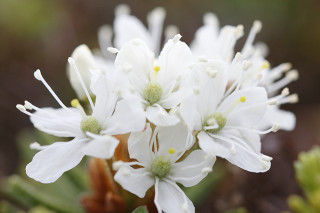
Source: leafsnapLabrador Tea (Rhododendron groenlandicum) is a low, evergreen shrub that grows in bogs and alpine summits in the Adirondack Mountains of upstate New York. It produces clusters of small, white flowers in June.
🌳 Labrador tea might offer uses beyond its established applications, for instance as a natural source of botanical insecticides. Its secondary metabolites include compounds that have been observed to discourage insect feeding, indicating it could be developed into environmentally friendly pest-management solutions.
🎭 Wealth, Bravery, Might
Care Guide
💧 Water Every 2 weeks
Labrador tea, which originates from peat bogs, thrives in consistently moist environments but can also withstand short periods of dryness. It needs watering every 2 to 3 weeks. As an evergreen plant, its waxy leaves help reduce water loss through transpiration, making it well-suited for colder climates with ice or snow.
☀️ Light Full sun
Labrador tea grows best where sunlight is plentiful and continuous throughout the day. It can tolerate areas with less light, although this may affect its healthy growth. Coming from habitats with abundant sun, insufficient light can cause stunted growth, while excessive exposure can lead to leaf burn.
🌡️ Temperature 5–32.2°C
Labrador tea is a versatile plant that thrives in ambient temperatures of 41 to 89.6 °F (5 to 32 ℃). It favors a cooler, temperate climate. In regions with harsh winters or extreme summers, seasonal temperature adjustments may be necessary.
💨 Humidity
🪴 Soil 4-5
🌱 Fertilizer
Timing matters for feeding Labrador tea. Begin fertilizing in early spring and continue on a monthly schedule through early summer. Fertilizer encourages attractive blooms and supplies energy during both dormant periods and active growth.
🪴 Pot & Repot
✂️ Pruning
Labrador tea benefits from pruning during the winter months, from early to late in the season. This process helps shape the plant and remove any damaged branches. Light pruning encourages bushier growth and improves air circulation, while avoiding heavy pruning ensures the preservation of its flowers. Regular maintenance not only enhances the plant's health and aesthetic appeal but also promotes vibrant blooms during its dormant phase.
🌿 Propagating
🐛 Diseases & pets
☠️ Toxicity
There is no sufficient data that demonstrates Labrador tea is safe to consume as toxicity varies across species and localities.
Characteristics
- Plant Type
- Shrub
- Life Cycle
- Perennial
- Genus
- Rhododendron
- Family
- Ericaceae
- Hardiness Zone
- 4-8
- Mature Height
- 0.61 m to 1.52 m
- Mature Spread
- 1.22 m
- Leaf Color
- Green
- Leaf Type
- Evergreen
- Flower Color
- White
- Flower Size
- 0.76 cm
- Bloom Time
- Late spring, Early summer
- Planting Time
- Spring, Summer
- Harvest Time
- Mid summer
- Native Area
- Denmark