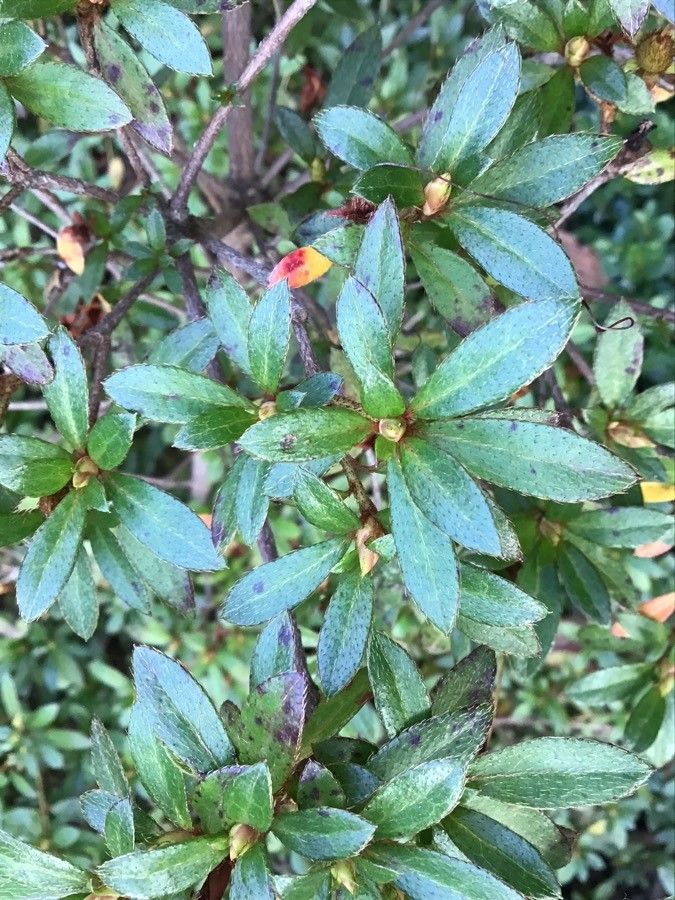
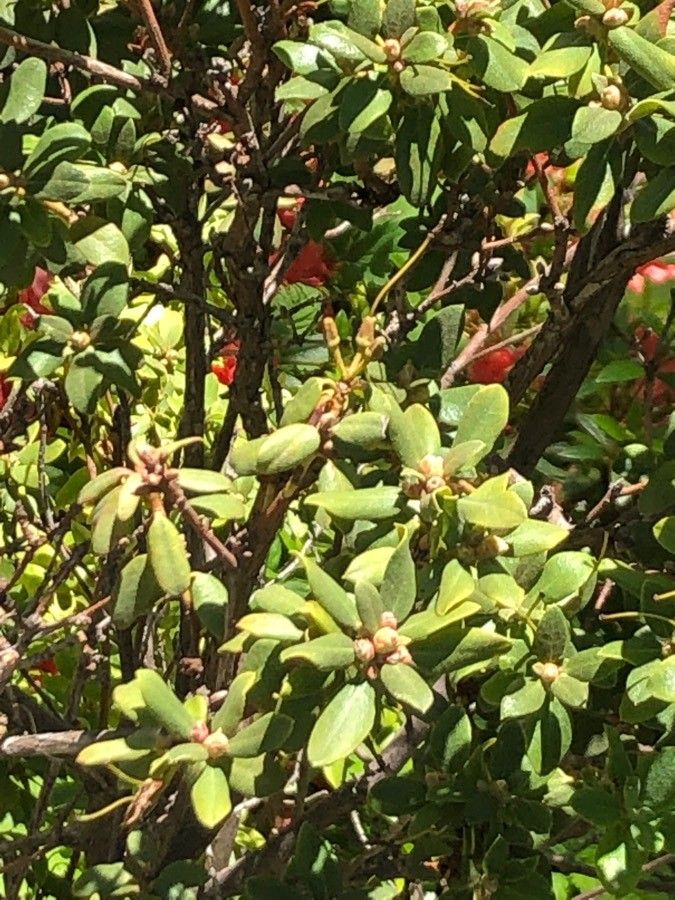
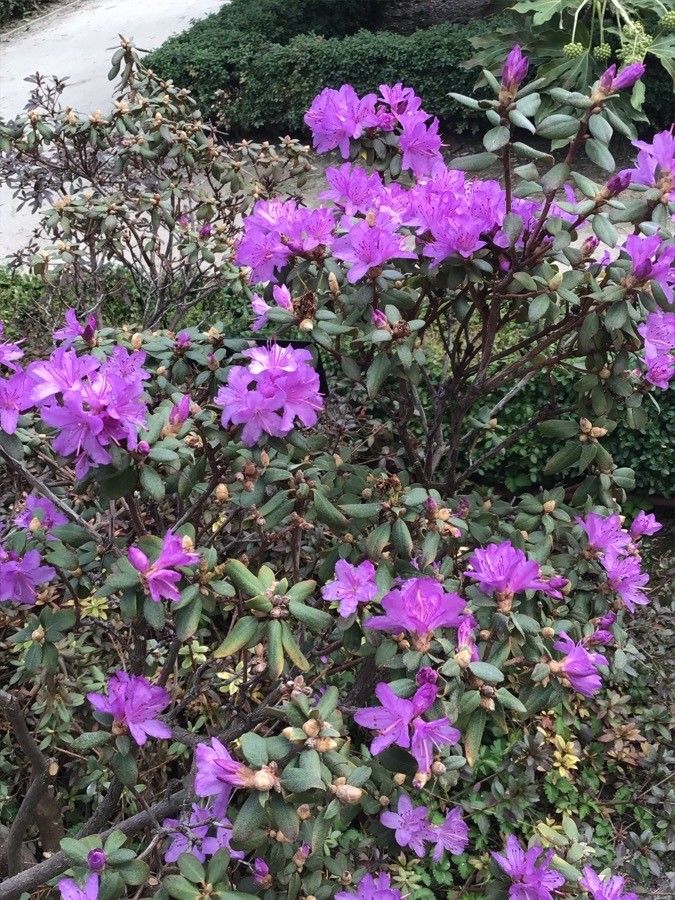
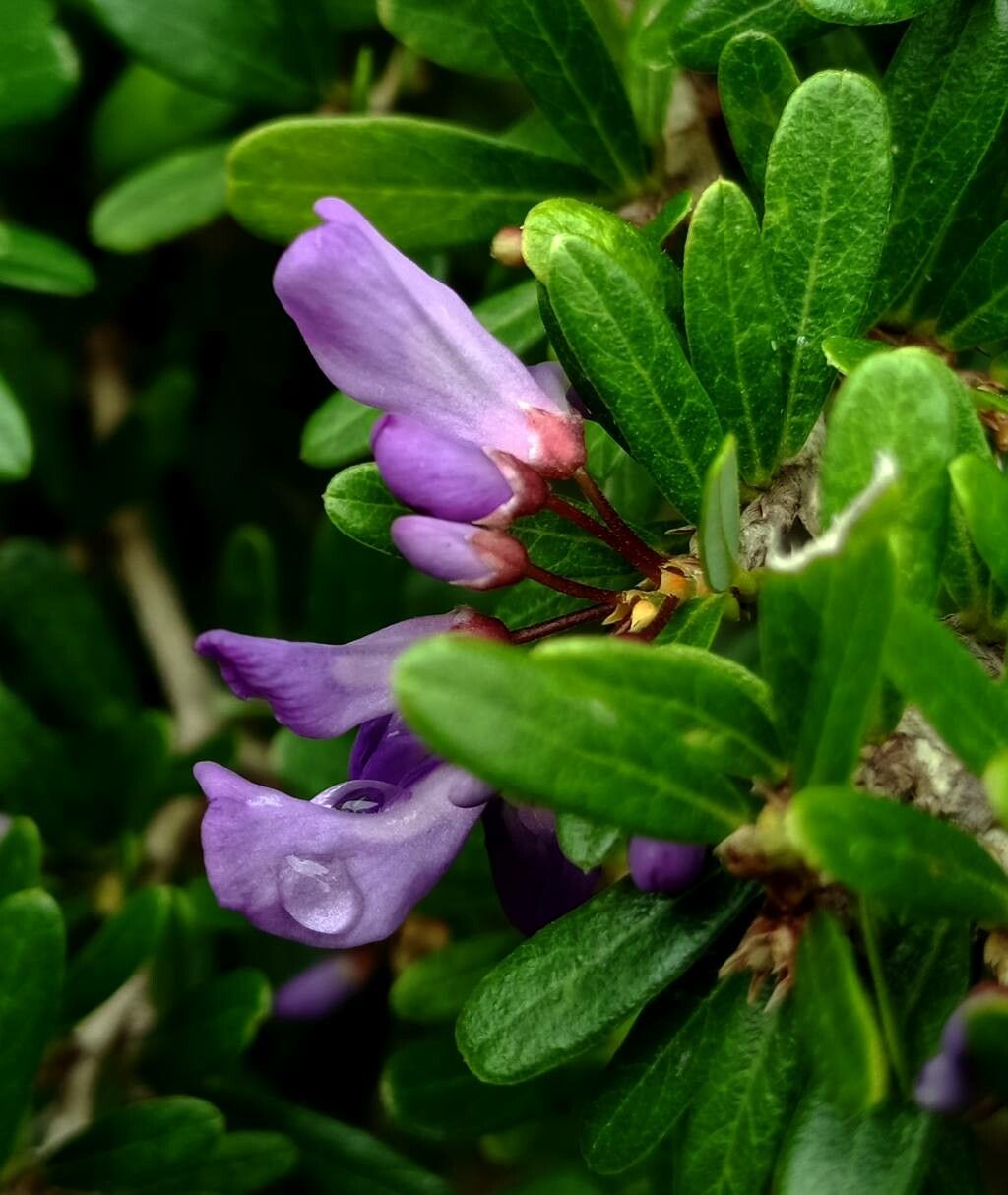
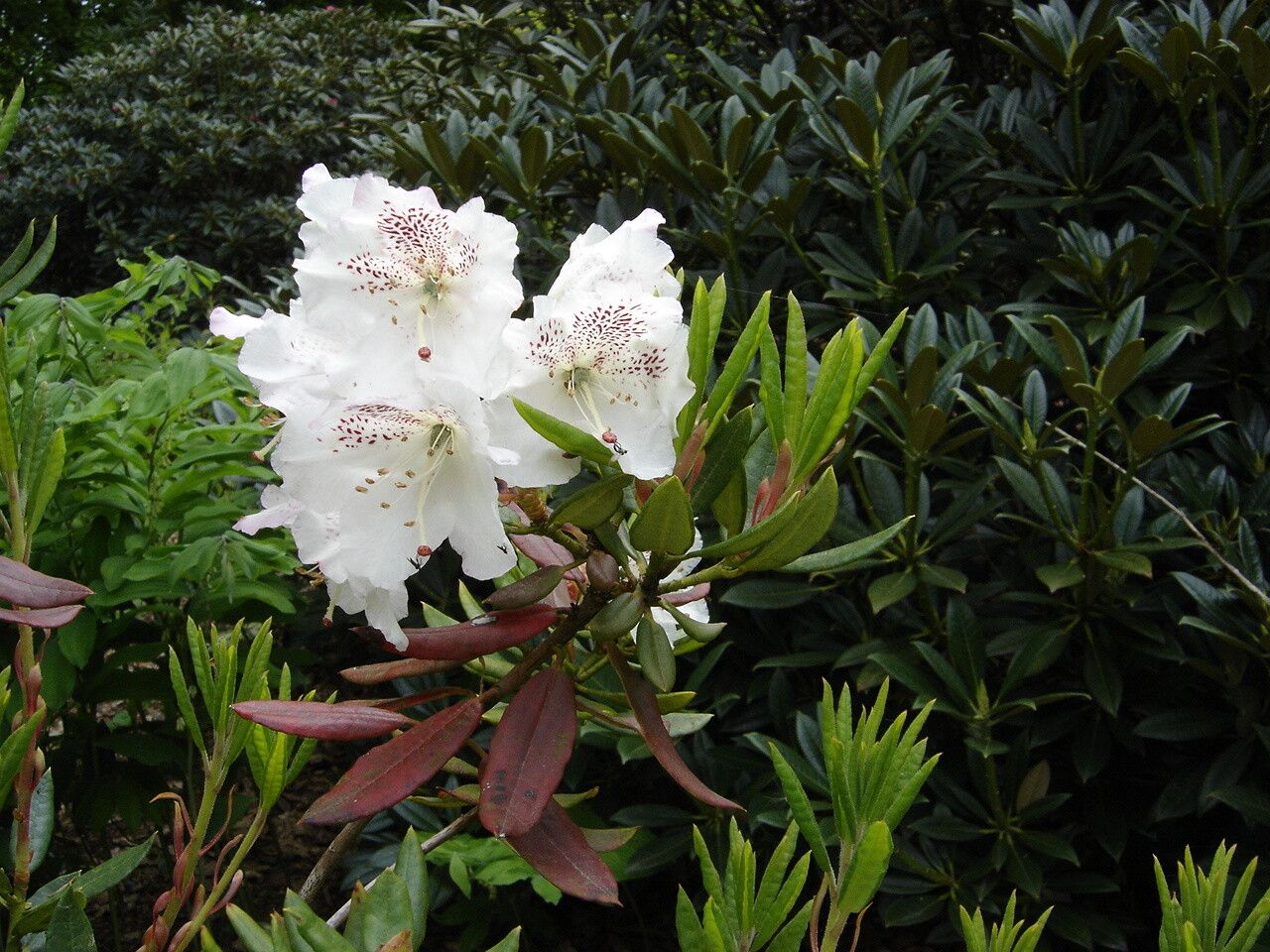
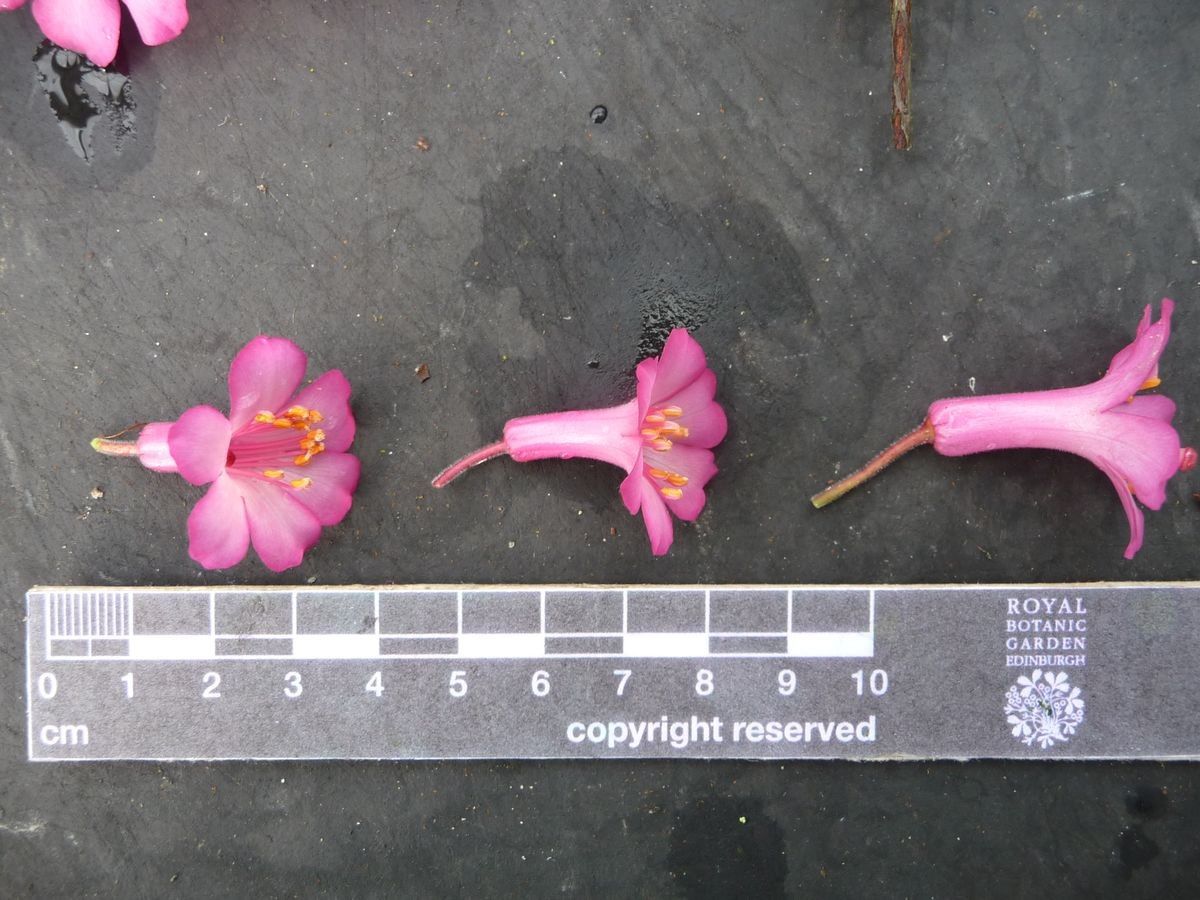
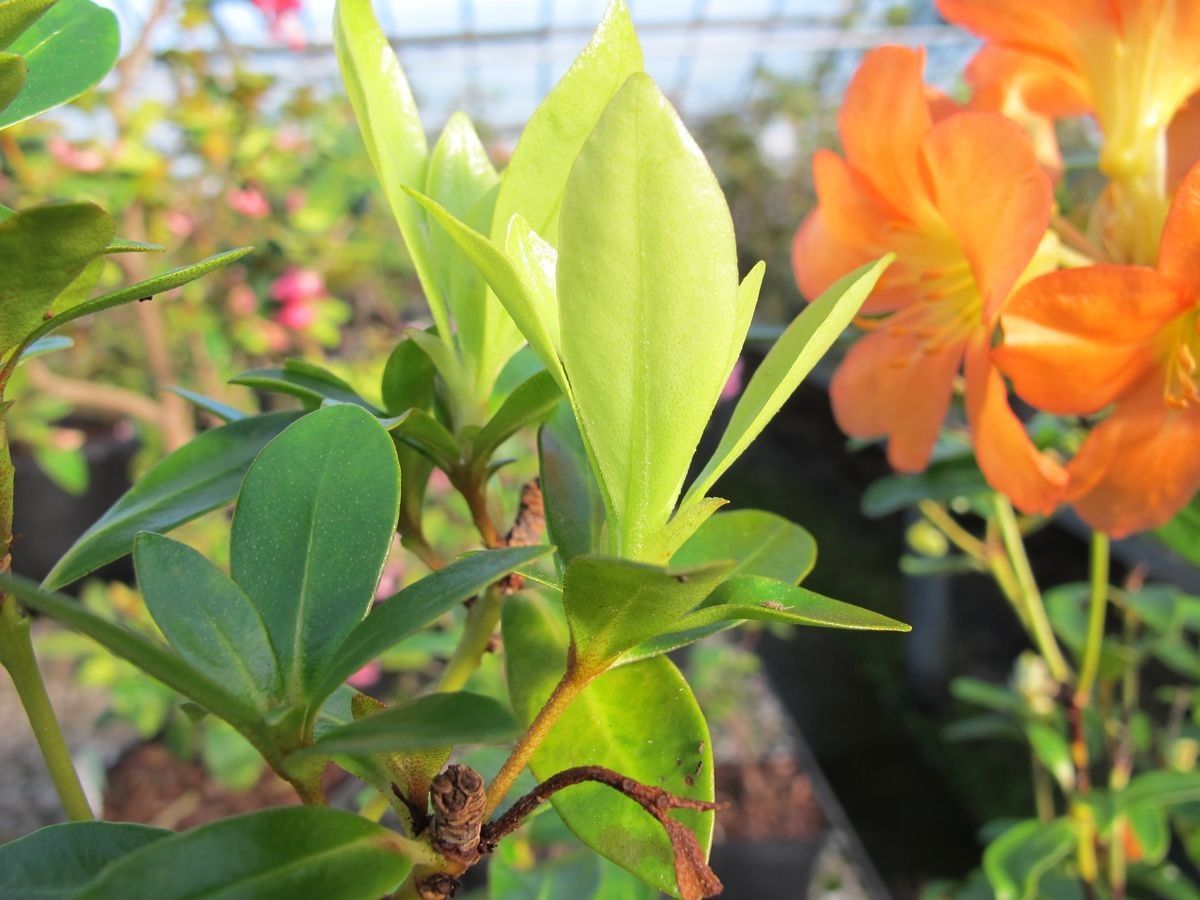
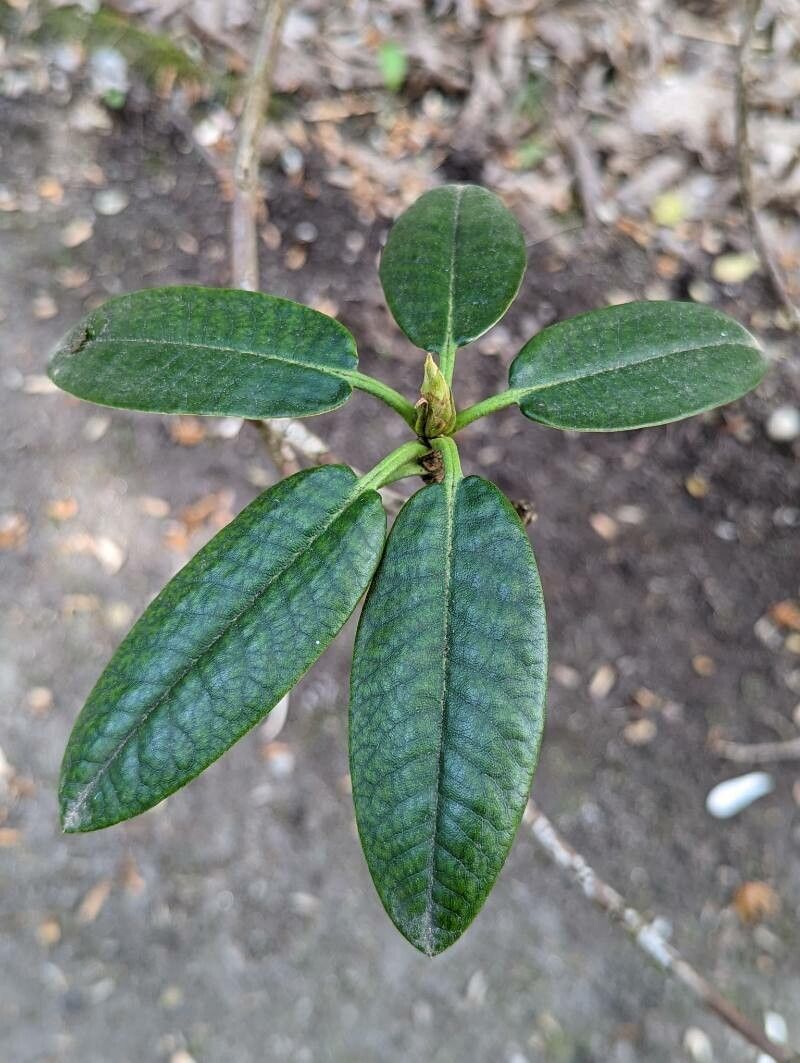
Rhododendron hippophaeoides (灰背杜鹃) is a species of flowering plant in the family Ericaceae. It is in the subgenus Rhododendron (scaly or lepidote rhododendrons), subsection Lapponica. It is a small shrub, up to 4 feet (1.2 m) tall at maturity, native to altitudes of 2,400–4,800 m (7,900–15,700 ft) in southwest Sichuan and many parts of Yunnan, China. The leaves are up to 1.5 in (3.8 cm) long, gray-green above, and with overlapping yellowish-buff scales below. The flowers are bright rose or lavender-blue to bluish purple, or (rarely) white.
Rhododendron hippophaeoides is resistant to disease and usually does not suffer from illnesses. In terms of care, this plant is fairly low-maintenance. When grown outdoors it needs little watering, and larger specimens generally do not require pruning. However, smaller plants should be pruned after they finish blooming. Rhododendron hippophaeoides is appropriate for anyone with an outdoor area, such as a garden or deck, and does not demand extensive care experience.
How to keep Rhododendron Hippophaeoides.
Light
Rhododendron hippophaeoides grows best in full sun and also tolerates partial sunlight. Excessive exposure can harm its growth, while insufficient light may cause stunted development and poor flowering. Native to habitats with ample sun, this plant has adapted to different light intensities throughout its life cycle.
Water
Rhododendron hippophaeoides thrives in humid, moisture-rich environments. To mimic its natural habitat, it should be watered every 2 to 3 weeks. Being an evergreen plant, it keeps its leaves throughout the year, allowing for continuous transpiration and maintaining its water balance.
Temperature
Originating from temperate climates, rhododendron hippophaeoides grows best at temperatures between 41 and 95 °F (5 to 35 ℃). Consider providing warmer indoor temperatures in winter, while keeping settings moderate in summer.
Fertilizer
The timing of fertilization is important for Rhododendron hippophaeoides. Apply fertilizer in early spring and then every month up to early summer. Fertilizer encourages attractive blooms and supplies energy during both dormant periods and active growth.
Pruning
Rhododendron hippophaeoides is known for its vibrant blooms and evergreen leaves. To maintain its shape and promote healthy growth, lightly prune the plant in late spring, right after it has finished blooming. This allows you to remove any dead branches. Be sure to make clean cuts, as this helps prevent infections, leading to healthier growth and improved flowering. Regular pruning also enhances air circulation, which reduces the risk of fungal issues.
Botanical profile.
- Plant Type
- Shrub
- Life Cycle
- Perennial
- Genus
- Rhododendron
- Family
- Ericaceae
- Hardiness Zone
- 4-9
- Mature Height
- 0.91 m to 1.22 m
- Mature Spread
- 61 cm to 91 cm
- Leaf Color
- Green, Silver
- Leaf Type
- Evergreen
- Flower Color
- Lavender, Purple
- Flower Size
- 3.81 cm
- Bloom Time
- Early spring, Mid spring
- Planting Time
- Spring, Summer, Autumn
- Harvest Time
- Summer
- Native Area
- China
Reader questions.
How should I water my Rhododendron hippophaeoides?
When watering your Rhododendron hippophaeoides, you have flexibility in choosing the watering tool. Whether it's a watering can, hose, or even a cup, they all work well. It's important to apply the water directly to the soil and make sure all areas are evenly moistened to provide sufficient water to the entire root system. Using filtered water is preferable to tap water as it may contain harmful particles. It's also recommended to use water at or slightly above room temperature to avoid shocking the plant. However, the Rhododendron hippophaeoides generally tolerates any type of water well.
Why should I fertilize my Rhododendron hippophaeoides?
To help your Rhododendron hippophaeoides thrive, it's important to fertilize it for a few reasons. Firstly, fertilizer will enhance the production of beautiful blooms in your plant. One of the best times to fertilize is in early spring, ensuring excellent flowers during that season. Additionally, fertilizer provides the plant with ample energy that it can store in the ground while dormant. By giving it extra nutrients during fall planting or late spring, your Rhododendron hippophaeoides will have more energy to use when it resumes active growth.
How many hours of sunlight per day does Rhododendron hippophaeoides need to grow well?
To promote healthy growth of Rhododendron hippophaeoides, it needs a minimum of 3-6 hours of daily sunlight. Most plants that can tolerate partial sun can also do well in full sun, as they need less light for photosynthesis. They are more adaptable compared to plants that specifically need full sun or partial shade.
What temperature is best for Rhododendron hippophaeoides?
The ideal temperature for Rhododendron hippophaeoides to thrive is between 65 and 80 degrees Fahrenheit (18-27 degrees Celsius). During the main growing phase, it can tolerate temperatures as high as 95 degrees Fahrenheit (35 degrees Celsius) and as low as 15 degrees Fahrenheit (-10 degrees Celsius). This species is able to endure freezing winters because it can tolerate low temperatures. The recommended temperature range is as follows: - Ideal: 65-80 degrees Fahrenheit (18-27 degrees Celsius) - Highest: 85-95 degrees Fahrenheit (30-35 degrees Celsius) - Lowest: -5 to 15 degrees Fahrenheit (-20 to -10 degrees Celsius) or below.
What do I do if I give my Rhododendron hippophaeoides too much or too little water?
Outdoor plants, especially newly planted ones or seedlings, are prone to lack of watering. It's important to water them regularly for the first few months while they are small or newly planted. Once their roots are established, Rhododendron hippophaeoides can rely on rain for moisture most of the time. However, when Rhododendron hippophaeoides is planted in pots, overwatering is more common. If you accidentally overwater your plant, there are steps you can take to remedy the situation. First, stop watering the plant immediately to minimize the effect of overwatering. Then, check the roots by removing the plant from its pot. If there are no signs of root rot, you can return the plant to its container. But if root rot is present, trim away any affected roots and apply a fungicide to prevent further damage. Lastly, repot the plant in well-draining soil. On the other hand, if your Rhododendron hippophaeoides is underwatered, the solution is simple: water it more frequently. When underwatered, the leaves may droop, dry out, and fall off. However, they will quickly regain their fullness after sufficient watering. Make sure to adjust your watering frequency as soon as you notice signs of underwatering.
When should I fertilize my Rhododendron hippophaeoides?
To ensure effective fertilization of Rhododendron hippophaeoides, timing is crucial. Applying fertilizer too early, when the plant is still dormant, leads to inefficiency as the rainwater washes it away, causing waste and pollution. The first application of fertilizer should be made in early spring, followed by monthly applications until early summer.
What kind of sunlight does Rhododendron hippophaeoides need?
Rhododendron hippophaeoides thrives when exposed to full or part sun. The plant does especially well with direct morning light; however, during summer, it requires protection from the intense afternoon sun. In temperate environments, excessive hot afternoon sun can cause the leaves to burn, thereby harming the plant's overall appearance and health.
Do I need to change the temperature for Rhododendron hippophaeoides as it grows?
According to research, if the temperatures are consistently higher for a long time, especially during the development of axillary buds and the growth of main shoots, Rhododendron hippophaeoides will show signs of stunted growth. On the other hand, maintaining cooler temperatures at around 65℉ (18℃) will promote strong growth after germination or transplanting.
How often do I need to water my Rhododendron hippophaeoides?
Most outdoor plants can grow naturally with rainfall, but if your area lacks rainfall, you need to water your plants every 2 weeks in spring and fall. During summer, you need to water them more frequently. In winter, when growth is slower, plants need less water, so water sparingly or not at all. However, if your Rhododendron hippophaeoides is young or newly planted, water it more often to help it establish and grow. For potted plants like the Rhododendron hippophaeoides, there are two main ways to determine watering frequency. One way is to follow a predetermined schedule, such as once a week or every other week. However, this may not consider the specific conditions for your plant. Another approach is to base watering on soil moisture. Wait until the top two to four inches of soil have dried out completely before watering again. This method can vary with the seasons as the plant's water needs are highest in summer.
When is it not a good idea to use fertilizer on my Rhododendron hippophaeoides?
To ensure optimal growth and blooming of Rhododendron hippophaeoides, it's important to be mindful of the nitrogen content in the fertilizer. Excessive nitrogen can result in an abundance of leaves but few blooms. When selecting a fertilizer, opt for one with a lower nitrogen level in comparison to other nutrients. Timing is also crucial when it comes to fertilizing. It's best to avoid fertilizing after early autumn, as this can promote excessive growth right before winter arrives. Additionally, refrain from fertilizing Rhododendron hippophaeoides during hot and dry periods, as dry soil doesn't effectively deliver fertilizer compared to moist soil. Moreover, fertilizing during such times can stimulate growth that requires more water, which may not be readily available. It's advisable to apply fertilizer earlier in the season when temperatures are cooler. Lastly, keep in mind that Rhododendron hippophaeoides has the ability to absorb fertilizer from nearby plants or lawns. Therefore, exercise caution and avoid accidentally providing the tree or shrub with a double dose of fertilizer.
Can sunlight harm Rhododendron hippophaeoides? How can I shield Rhododendron hippophaeoides from the sun and heat?
When you move Rhododendron hippophaeoides from indoors to outdoors, be careful not to expose it to direct sunlight as it can easily get damaged. To prevent sunburns caused by overexposure, gradually move the pots from a shaded area to a brighter spot. Even if the plants are already used to the sun, they can still be harmed by extreme heat. During a heatwave, it's important to keep the soil consistently moist so the plants can handle the excessive levels of heat. To protect sensitive Rhododendron hippophaeoides during extreme weather events, consider moving them to areas with afternoon shade or covering them with a shade cloth.
How can I make sure my Rhododendron hippophaeoides plant stays warm during cold seasons?
Rhododendron hippophaeoides can tolerate freezing temperatures when planted in the ground in areas where the temperature doesn't dip below 15℉(-10℃) in winter. However, if it's planted in pots or containers, the roots need protection from the cold. To do this, wrap the container in a blanket or bring it indoors to shield it from the elements.