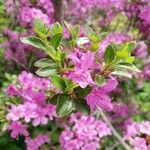
Rhododendron obtusum
Description
Source: leafsnapRhododendron ponticum, called common rhododendron or pontic rhododendron, is a species of Rhododendron native to the Iberian Peninsula in southwest Europe and the Caucasus region in northern West Asia.
🌳 Kirishima azalea might serve as a sign of particular soil characteristics, such as acidity. Not commonly used for this purpose, botanists and ecologists could use its preferred habitats to evaluate soil health and guide conservation actions, because it is sensitive to pH and soil makeup.
Care Guide
💧 Water
The Kirishima azalea thrives in moist environments and has adapted to retain water, giving it moderate drought tolerance. It should be watered every 1 to 2 weeks, ensuring the soil remains slightly moist. This plant is best grown outdoors, where it's important to consider seasonal rainfall to prevent overwatering and root rot.
☀️ Light Partial sun
The Kirishima azalea thrives in regions with medium sun exposure and can endure areas where sunlight is stronger. It comes from environments with mixed light levels, adjusting to different amounts of sunlight. However, too much sun could cause burning, while insufficient exposure might restrict robust development. Throughout its growth stages, it doesn't require variable light intensities.
What are the sunlight requirements for Kirishima azalea?
Kirishima azalea appreciates moderate sun exposure and can thrive in full sun areas which are exposed to sunlight for more than 6 hours daily, as well as in partial sun areas with 3-6 hours of sunlight. However, it is important to monitor the plant's exposure to sunlight to ensure it achieves a balance of light and shade that mimics its natural habitat. Excessive sun can cause damage, while too little can stunt growth. Artificial lighting can be a beneficial supplement for indoor plants, especially in less sunny locations or during winter, with specific wattage requirements based on the plant's sun exposure category.
How can Kirishima azalea be affected by different lighting conditions, and what are the symptoms?
Kirishima azalea is versatile and can adjust to various lighting conditions but may exhibit signs of distress if the light is not optimal. Symptoms of insufficient light include smaller new leaves, leggy growth, faster leaf drop, reduced or halted growth, and lighter-colored new leaves. In contrast, too much sunlight can lead to chlorosis, sunscald, leaf curling, wilting, and leaf scorching. These symptoms help in diagnosing whether the plant needs more or less sunlight to thrive.
What are some effective solutions for light-related issues in Kirishima azalea?
Addressing light-related issues in Kirishima azalea involves gradual adaptation to the optimal light level, use of artificial lighting, and strategic placement. Indoor plants benefit from a gradual shift to sunnier spots or the use of lamps and professional grow lights to simulate natural conditions. Outdoor plants should similarly be gradually moved to ideal locations to prevent sunburn. Additionally, reducing obstruction from sunlight, like pruning trees, and transplanting smaller plants during their dormant period to brighter areas can help ensure sufficient light exposure for healthy growth.
🌡️ Temperature 5–32.2°C
The Kirishima azalea is inherently acclimated to environments with temperatures spanning from 41 to 90 °F (5 to 32 ℃). It's a flexible plant, capable of hibernating during winter while favoring lower temperatures during spring and autumn. In hot summer conditions, it may require some shading or protection from excessive heat.
What are the ideal climate conditions for Kirishima azalea?
Kirishima azalea is well-suited to climates with temperatures ranging between 41 to 90 °F (5 to 32 °C). It is a hardy plant that endures cold winters and prefers the cooler temperatures of spring and fall. In areas with strong summer heat, providing shade or some form of heat protection is beneficial for the plant. Kirishima azalea possesses significant cold resistance, and special frost protection measures are not typically needed. However, if temperatures are anticipated to fall below -25°C, it's crucial to protect the plant by insulating the trunk and branches with non-woven fabric or cloth. Additionally, before the onset of the first freeze in autumn, it's recommended to water the plant thoroughly to keep the soil moist, aiding the plant through winter and preventing drought.
How does the Kirishima azalea react to low and high temperatures?
Kirishima azalea thrives in temperatures above 5°C and should be protected when winter temperatures drop below -20°C. Exposure to temperatures below -25°C doesn't typically show immediate damage during winter, but can result in brittle, dry branches in spring, with no new growth. To mitigate damage from low temperatures, it's advised to prune away any dead branches in spring that haven't produced new leaves. Regarding high temperatures, Kirishima azalea fares best below 32°C. Temperatures exceeding 35°C can lead to lighter leaf color, dry and withered leaf tips, and increased susceptibility to sunburn. The recommended solution for high temperature stress includes trimming sunburned and dried parts, moving the plant to a shaded area during intense sun exposure, or using a shade cloth. Additionally, watering the plant in the morning and evening helps keep the soil moist and supports plant health in high temperatures.
💨 Humidity
🪴 Soil 4-6
🌱 Fertilizer
Getting the timing right is important when fertilizing Kirishima azalea. Apply fertilizer in early spring and continue doing so each month up to early summer. The fertilizer promotes attractive blooms and supplies energy during both dormant and active growth periods.
🪴 Pot & Repot 2-3 years
To ensure the optimal health of your Kirishima azalea, repot it every 2 to 3 years in the spring, right after it has finished blooming. Choose a spacious pot filled with acidic soil, and take care to keep the soil moist without overwatering. After repotting, allow the plant to recover in partial shade. Providing attentive care during this period will help your azalea thrive and display vibrant blooms.
✂️ Pruning
To help Kirishima azalea thrive, prune it after it blooms in late spring. This shaping encourages growth and boosts future blooms. Remove any weak or dead branches to improve the plant's health and air circulation. Regular pruning not only enhances the plant's appearance but also promotes vitality, leading to a more compact structure and better flowering in the next season.
🌿 Propagating
🐛 Diseases & pets
☠️ Toxicity
Characteristics
- Plant Type
- Shrub
- Life Cycle
- Perennial
- Genus
- Rhododendron
- Family
- Ericaceae
- Hardiness Zone
- 5-8
- Mature Height
- 0.91 m to 3.96 m
- Mature Spread
- 1.22 m to 4.57 m
- Leaf Color
- Green, Blue
- Leaf Type
- Semi-evergreen
- Flower Color
- Pink, Red, White
- Flower Size
- 3.05 cm
- Bloom Time
- Late spring, Early summer
- Planting Time
- Spring, Autumn
- Harvest Time
- Mid summer
- Native Area
- Japan