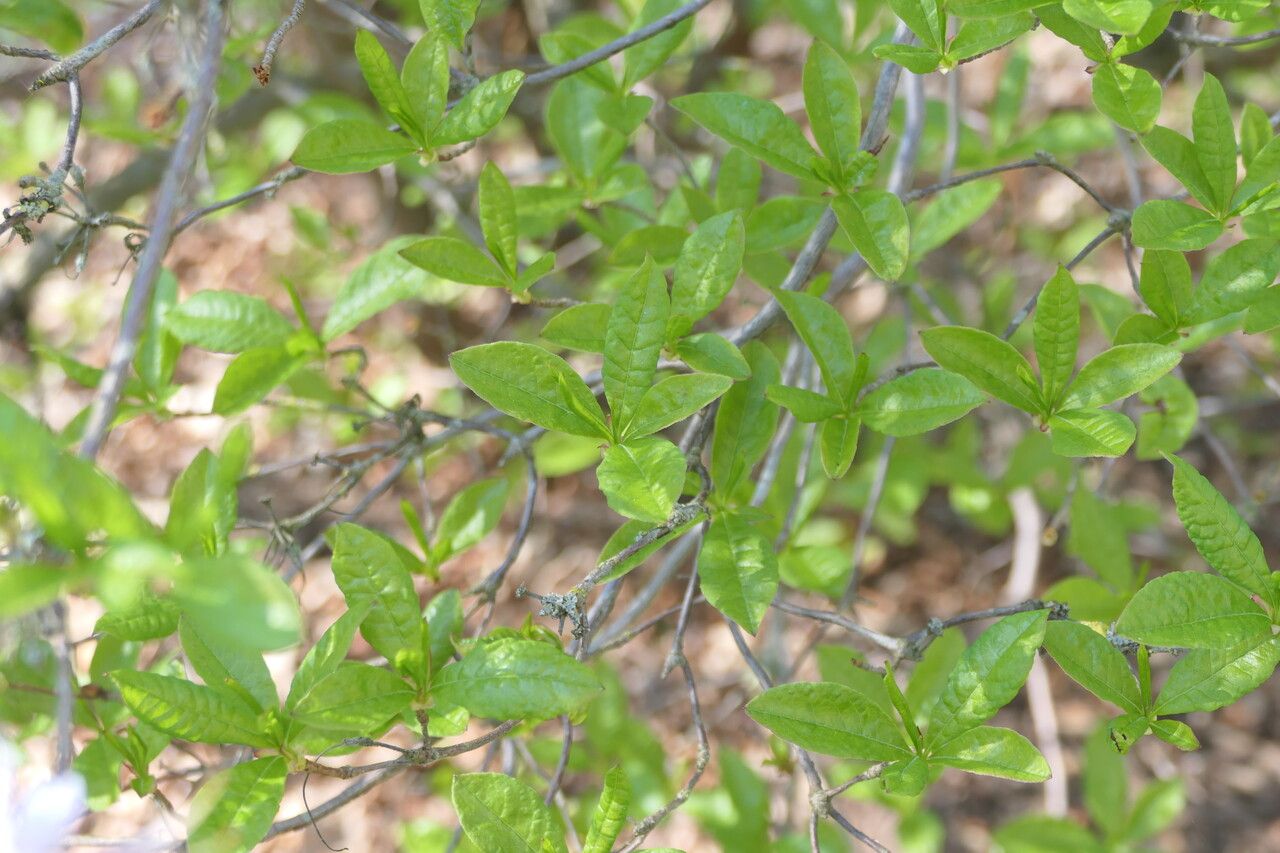
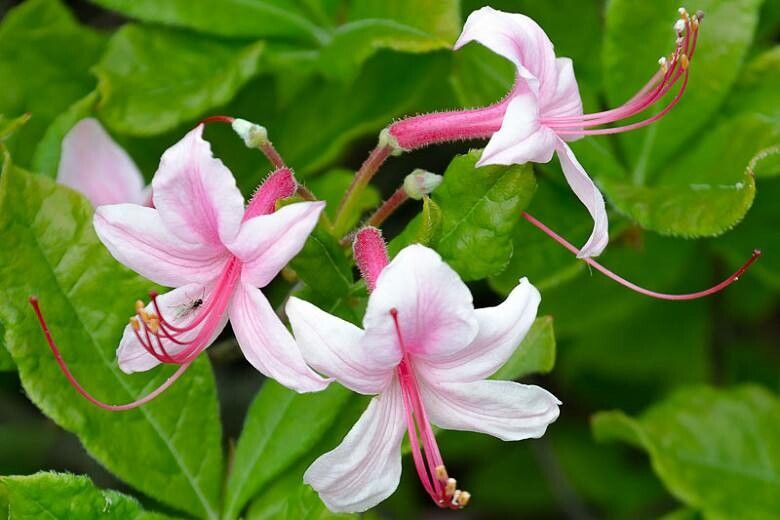
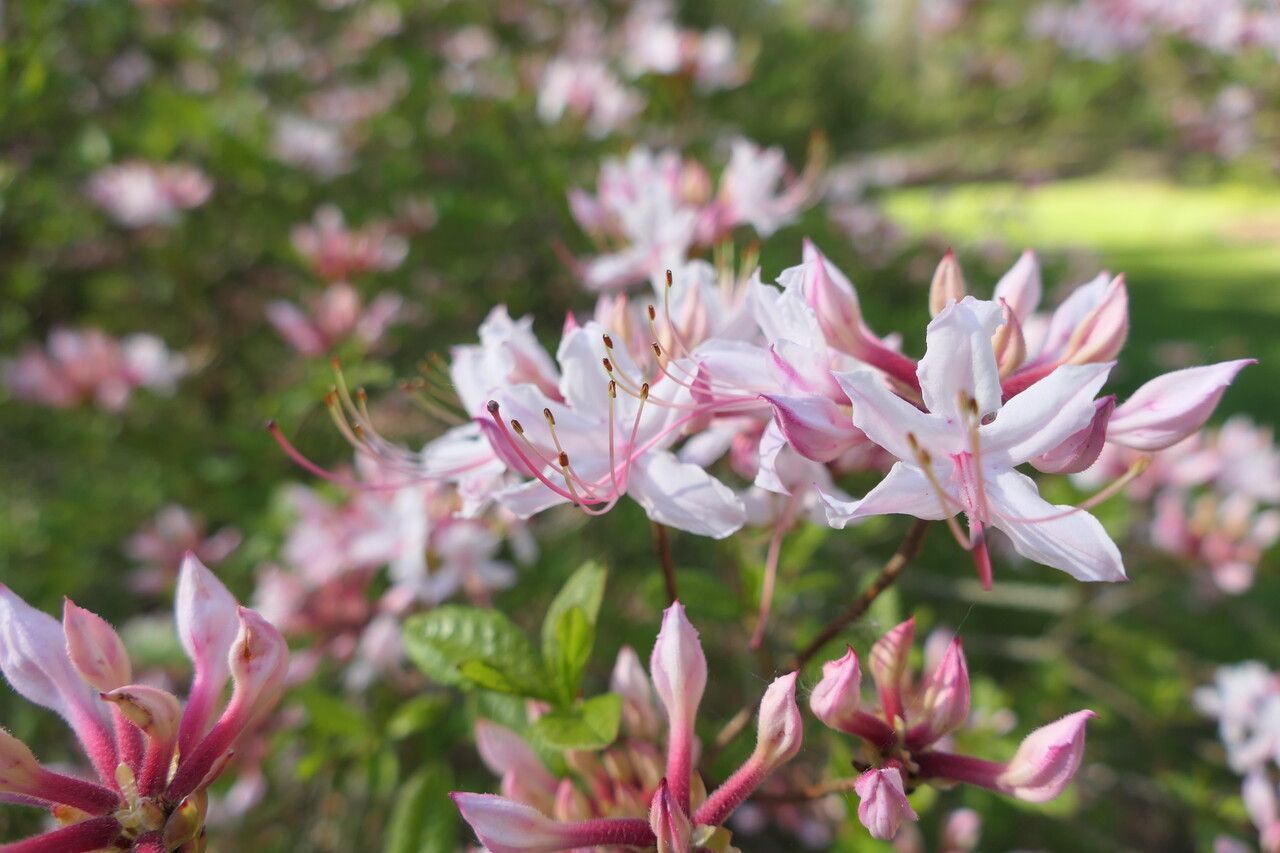
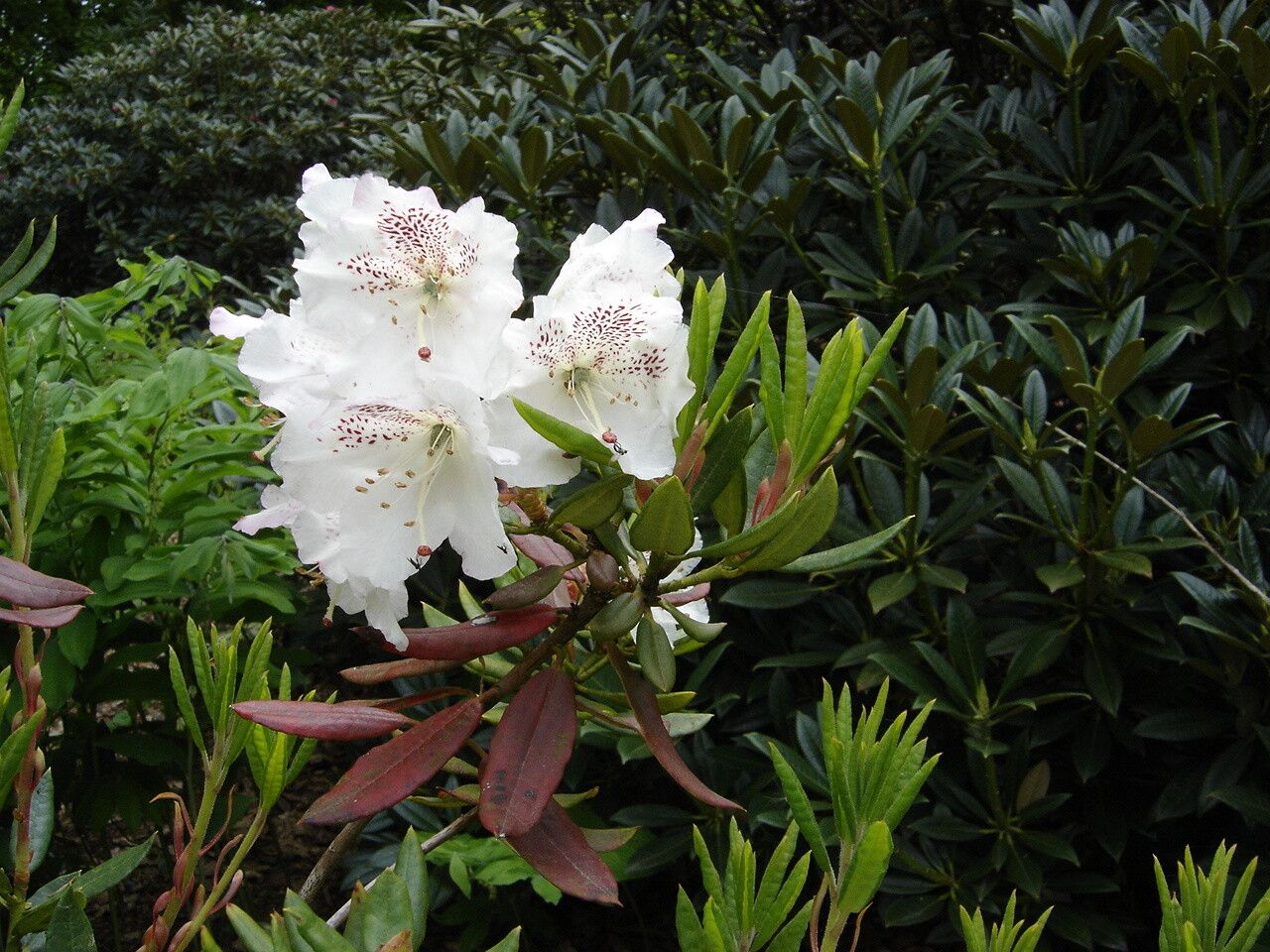
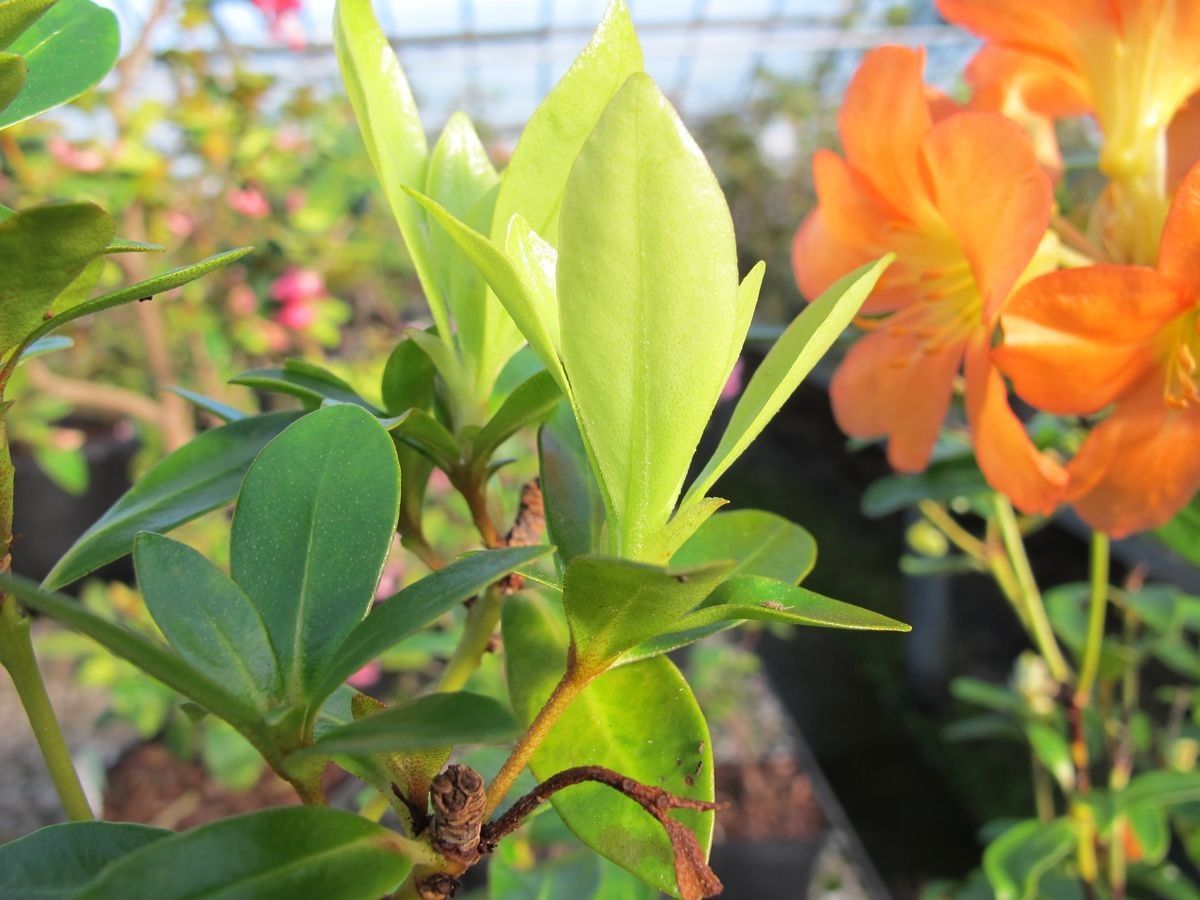
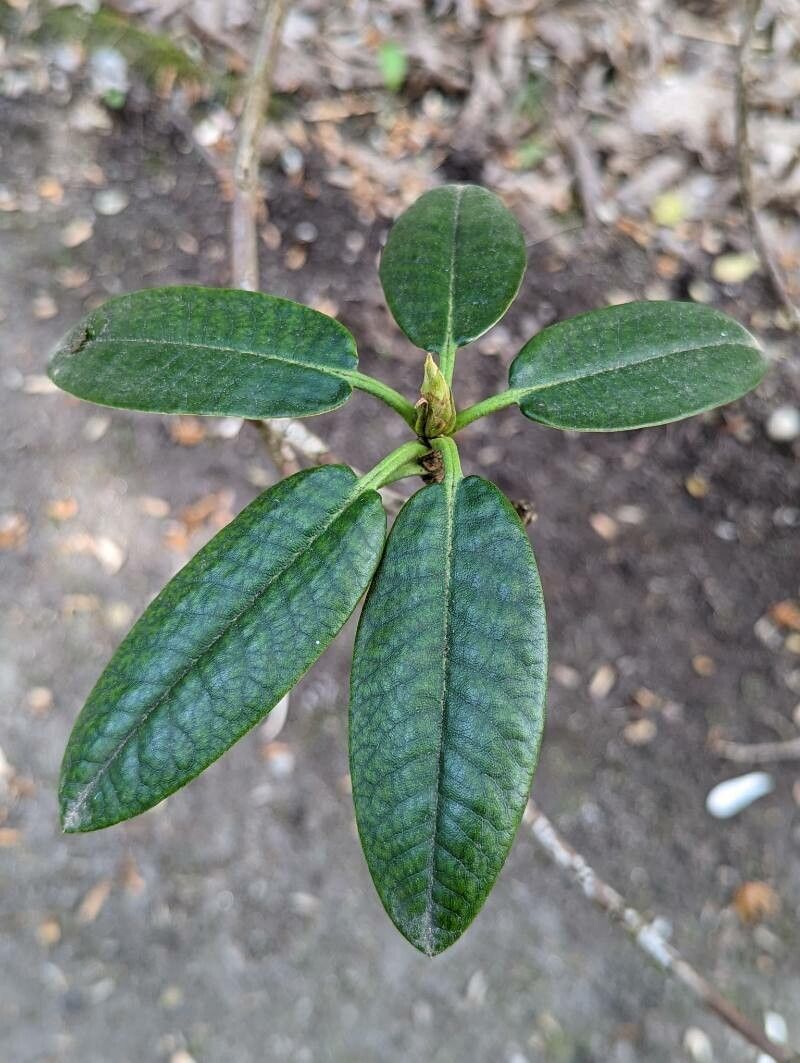
Rhododendron periclymenoides, also known as the pink azalea or pinxterbloom azalea, is a deciduous shrub native to the eastern United States. Typically, it grows to a height of 6 to 10 feet with a spread of 4 to 6 feet. In late spring or early summer, the plant produces clusters of fragrant pink flowers that attract bees and butterflies. Its dark green, glossy leaves turn yellow-orange in the fall before dropping off for winter dormancy.
This shrub prefers acidic soil with good drainage and thrives in partial shade to full sun exposure. Due to its attractive flowers and foliage, it is often used as an ornamental plant in gardens. Additionally, it can be found growing wild in wooded areas, along streams, or on hillsides throughout its native range, which stretches from Maine to Georgia.
The pink azalea is resistant to disease and is generally not susceptible to illnesses. Regarding upkeep, this plant is fairly easy to care for. Planted outdoors it needs only light watering, and larger specimens usually do not require pruning. Smaller specimens, however, should be trimmed after they finish flowering. Pink azalea is appropriate for anyone who has an outdoor area, such as a garden or a deck, and does not demand extensive care experience.
How to keep Rhododendron Periclymenoides.
Light
Pink azalea prefers partially lit locations but shows considerable tolerance for full sun or shade. Its health and growth depend mainly on moderate sunlight. Too much sun can scorch the foliage, while too little results in reduced flowering.
Water
The pink azalea flourishes in moist, well-drained environments with dappled sunlight. While it prefers consistent moisture, it can tolerate short periods of drought. To keep the soil properly hydrated, water the plant every 1 to 2 weeks. During the growing season, rainwater is particularly beneficial, often reducing the need for extra watering.
Temperature
The pink azalea does best in its natural growing environment when temperatures are about 50 to 77 ℉ (10 to 25 ℃). It favors a temperature range of 41 to 95 ℉ (5 to 35 ℃) and can withstand winter lows down to 23 ℉ (-5 ℃). In hotter months it may need additional watering or some shading to prevent leaf scorch.
Fertilizer
The timing of fertilizing a Pink azalea is crucial. Apply fertilizer in early spring and continue monthly until early summer. Fertilizer encourages lovely blooms and supplies energy during both dormant and active growth phases.
Pruning
The pink azalea is a deciduous shrub known for its stunning pink blossoms. To keep it healthy and attractive, you should use several pruning techniques: remove any dead wood, thin out the branches, and shape the plant to improve air circulation. The best time to prune is in late spring, as this encourages healthy growth and abundant flowering, while also helping to maintain the shrub's size and shape.
Pot & Repot
When repotting a pink azalea, choose a pot 1-2 inches (2.5–5.1 cm) larger with ample drainage. Use a well-draining potting mix. Repot in spring or fall, ensuring the root ball sits slightly lower than the rim of the flower pot. Water thoroughly after repotting and place in a warm spot with indirect sunlight.
Botanical profile.
- Plant Type
- Shrub
- Life Cycle
- Perennial
- Genus
- Rhododendron
- Family
- Ericaceae
- Hardiness Zone
- 4-9
- Mature Height
- 1.22 m to 3.05 m
- Mature Spread
- 1.22 m to 1.52 m
- Leaf Color
- Green, Yellow, Gold
- Leaf Type
- Deciduous
- Flower Color
- Pink, White
- Flower Size
- 2.54 cm to 7.62 cm
- Bloom Time
- Late spring, Early summer
- Planting Time
- Autumn, Summer
- Harvest Time
- Mid summer
Other names.
Reader questions.
How should I water my Pink azalea plant in the best way?
To ensure excellent root development, place a garden hose at the base of the plant. Avoid spraying the leaves directly, especially if they are exposed to direct sunlight outdoors. If needed, use bubblers or soaker hoses to moisten the roots of each plant. When adding or removing plants, use soaker hoses that cover the entire garden or bed to promote deep root growth. After watering, drain any excess water and allow the soil to dry before watering again. To prevent diseases, always water at ground level. On a sunny day, consider spraying the entire bush with water. Whether your Pink azalea is in a pot or planted in the ground, remember that it prefers deep watering rather than light sprinkling.
Why should I put fertilizer on my Pink azalea plant?
Fertilizing your Pink azalea is important for several reasons. Firstly, it helps the plant produce beautiful blooms. To ensure excellent flowers in spring, it is recommended to fertilize in early spring. Additionally, fertilizer provides the Pink azalea with energy that can be stored in the ground during its dormant growth phases. By giving extra nutrients during fall planting or late spring, the Pink azalea can store more energy to use once active growth resumes.
What are the sunlight requirements for Pink Azalea?
Pink Azalea thrives under varying light conditions, from semi-illuminated areas to full sun exposure or shade, preferring moderate sunlight for optimal growth. While it can tolerate partial sun, about 3-6 hours of sunlight daily, it also manages well in full sun or full shade conditions, which imply more than 6 hours of sunlight. However, it's important to note that excessive sun can damage its foliage, and insufficient light can diminish flowering. Observing how sunlight moves through your garden will help in selecting the perfect spot that provides a balance of light and shade for the plant.
What are the ideal growing conditions for Pink Azalea?
The Pink Azalea (Rhododendron periclymenoides) thrives best in its native growth environment, which includes temperatures ranging from 50 to 77 ℉ (10 to 25 ℃). It prefers a broader temperature range of 41 to 95 ℉ (5 to 35 ℃) and can tolerate lower winter temperatures down to 23 ℉ (-5 ℃). During warmer months, additional watering or shading may be necessary to prevent leaf scorch. Pink Azalea is known for its strong cold resistance, and typically does not require special frost protection measures. If winter temperatures are expected to be very low, protecting the plant with non-woven fabric or cloth wraps around the trunk and branches is advisable. It is also recommended to water the plant abundantly before the first freeze in autumn to maintain soil moisture and prevent drought and water scarcity during the colder months.
What should I do if I give the Pink azalea too much or too little water?
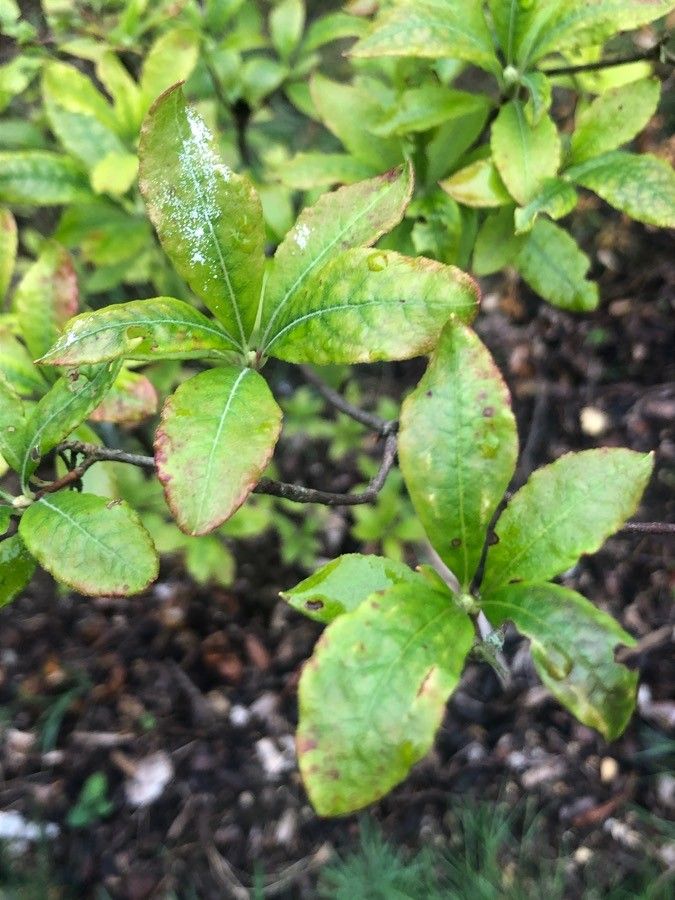
When a Pink azalea is overwatered, you may notice that its leaves turn yellow, drop off, and wilt. The plant itself may look unhealthy and dull, with mushy stems. When these signs appear, it's best to adjust your watering schedule. However, wilting can also be a sign of under watering. In this case, the leaves will become crispy and dry. To determine if your plant needs watering, check the dryness of the soil. If the soil is dry, a full watering is necessary. Although enough water will help the Pink azalea recover, the plant may still exhibit dryness and yellow leaves for a few days due to damage to the root system. Once the plant returns to normal, the yellowing leaves will stop. If you keep a Pink azalea indoors, regularly check the moisture levels in the pot and avoid overwatering. Look out for black spots, which may indicate the need for the soil to dry out for a few days without watering. Overwatering can lead to root rot, so be sure to transfer the plant to a different pot if you notice discolored and slimy roots. It is important to prevent root rot by avoiding excessively soggy soil. When planting a Pink azalea outdoors, make sure to dig deeper and check the dryness of the soil. If the soil is too dry, it may indicate that the plant is not receiving enough water. Adequate watering is necessary to help the plant recover.
What is the best time to put fertilizer on my Pink azalea?
To effectively fertilize Pink azaleas, timing is crucial. Avoid applying fertilizer too early while the plant is still dormant, as it will be ineffective and easily washed away by rainwater, causing waste and pollution. Instead, the first application of fertilizer should be applied in the early spring. Continue with monthly fertilization until early summer.
How do artificial light requirements differ for Pink Azalea?
When natural sunlight is not sufficient, especially during winter or in less sunny areas, artificial lighting becomes essential for Pink Azalea's growth indoors. It is recommended to choose the right type of light, such as LED, which can be customized for the plant's needs. Full sun plants require 30-50W/sq ft of artificial light, partial sun plants need 20-30W/sq ft, while full shade plants need 10-20W/sq ft. The artificial light source should be placed 12-36 inches above the plant to mimic natural sunlight conditions, and it should be on for 8-12 hours a day to simulate the length of natural daylight hours.
How should I care for my Pink Azalea during low temperatures?
Pink Azalea is quite cold-tolerant, performing best when the temperature remains above a minimal suitable growth temperature and should be kept above a certain tolerable growing minimum during winter. If temperatures fall below a critical growth limit, the plant generally remains unchanged through the winter; however, its branches may become brittle and dry in spring, and it might not sprout new shoots. In the spring, it is advised to prune away any dead branches that have failed to produce new leaves to maintain the health of your Pink Azalea.
How frequently should I water my Pink azalea plant?
The Pink azalea prefers deep and infrequent watering, especially when planted in pots. Since the water storage of flower pots is limited and the soil dries out faster, it is necessary to soak them in a gallon of water each time. In cold regions, watering is required every 3 to 5 days. It is best to water early in the morning when the soil is dry, whether the plant is kept outdoors or indoors. Checking the soil inside can also help determine if watering is needed. When the top 2-3 inches of soil is dry, it indicates that the plant needs a thorough watering. On hot days, it is crucial to monitor the moisture daily as the heat can quickly dry out the soil in the pot. For gardens, irrigation is necessary, especially in hot climates where watering once a week may be required. Only water when you notice that about 2 to 3 inches of soil have become too dry, either outdoors or indoors. Take into account the amount of rainwater the plant receives and avoid adding water unnecessarily to prevent root rot. If there is ample rainfall, additional watering may not be necessary. Pink azaleas generally grow during spring and fall, and when kept outdoors, adding mulch about 3 to 4 inches deep can help conserve water. In sandy soil, more frequent watering is needed as it drains faster. Clay soil, on the other hand, requires less frequent watering, allowing the plant to dry for 2-3 days without developing root rot. To keep track of watering, marking the dates on a calendar can be helpful. Additionally, if you notice the leaves drooping, it may indicate that you need to water the plant a day earlier.
When is the best time to not give fertilizer to my Pink azalea?
To ensure optimal blooming, it is important to avoid using a fertilizer with excessive nitrogen for Pink azalea. This can result in an abundance of leaves but few blooms. Instead, opt for a fertilizer that has a lower level of nitrogen compared to other essential nutrients. Additionally, refrain from fertilizing Pink azalea after early autumn as this can cause excessive growth just before winter. It is also not recommended to fertilize during hot and dry periods, as dry soil is not as effective at delivering nutrients. Fertilizing during this time can also stimulate growth, which requires additional water that may not be readily available. It is advisable to apply fertilizer earlier in the season when temperatures are cooler. Lastly, it is worth noting that Pink azalea can absorb fertilizer that has been applied to nearby plants or lawns. Therefore, exercise caution to avoid inadvertently providing the tree or shrub with an excessive amount of fertilizer.
What are the signs of insufficient light for Pink Azalea?
When Pink Azalea is grown indoors with insufficient light, it may exhibit several symptoms indicating light deficiency. These include smaller new leaves, leggy or sparse growth due to longer spaces between leaves or stems, faster leaf drop as a way to conserve resources, slower or no new growth as the plant goes into survival mode, and lighter-colored or pale new leaves due to lack of chlorophyll and essential nutrients. Additionally, chlorosis, or the yellowing of leaves, sunscald characterized by pale or necrotic areas on plant tissue, leaf curling as a defense mechanism, wilting due to increased water loss, and leaf scorching may also occur.
What care does Pink Azalea need during high temperatures?
During the summer months, it is important to ensure that the Pink Azalea is kept below a maximum suitable growth temperature. If temperatures exceed a certain tolerable growing maximum, the leaves may lighten in color, and the tips may become dry, withered, and susceptible to sunburn. To care for the Pink Azalea under these conditions, trim away any sunburned or dried parts of the plant. Relocate the plant to an area with more shade during the midday and afternoon, or use a shade cloth to protect it from the sun. Water the plant in the morning and evening to keep the soil moist and help it recover from high temperature stress.