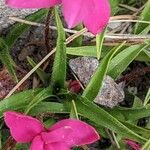
Rhodohypoxis baurii
Red-star · Rosy posy
Description
Source: leafsnapRhodohypoxis baurii, commonly known as the pink star flower, is a small, herbaceous perennial plant in the family Hypoxidaceae. Native to South Africa, this plant features a rosette of narrow, grass-like leaves that grow up to 10 cm in length. It produces small, star-shaped flowers in shades of pink or white on short stems. These flowers bloom from late spring through summer, attracting pollinators such as bees and butterflies. Rhodohypoxis baurii thrives in well-drained soil with moderate moisture levels and requires full sun to partial shade exposure. It is versatile and can be grown in rock gardens, containers, or used as ground cover due to its low-growing nature. The plant is popular among gardeners for its attractive appearance, ease of cultivation, long flowering period, and ability to tolerate drought conditions once established. It can be propagated by dividing clumps during the dormant season or by sowing seeds in the spring. Overall, Rhodohypoxis baurii is an excellent choice for gardeners seeking a low-maintenance yet visually appealing addition to their gardens. Its charming pink blooms add vibrant color throughout the summer months.
Care Guide
💧 Water Every 7 days
The Red Star plant thrives in environments that closely mimic its natural habitat. To maintain optimal health, it requires regular weekly watering. This plant can adapt well to both outdoor and indoor settings, provided there is enough humidity. Additionally, its evergreen nature allows it to retain water efficiently throughout the year.
☀️ Light Partial sun
Red star comes from habitats with dappled light—such as forest understories or rocky sites that provide natural shade. It prefers partial sun but can also tolerate full sun.
🌡️ Temperature 15–35°C
Although Red star tolerates some heat, it predominantly performs best and grows in cooler seasons and becomes dormant during summer. In very hot summer conditions, provide shade to avoid scorching from strong sunlight. Watering should be reduced or stopped during the hottest period to prevent root rot. Winter and spring are when Red star grows vigorously. So long as temperatures do not fall too low, it will continue to grow steadily.
💨 Humidity
🪴 Soil 0-0
🌱 Fertilizer
For Red star, small amounts of fertilizer once or twice a year during the growing season are sufficient. Avoid fertilizing in winter and in summer when the plant is dormant. Cut back on fertilizer for repotted plants and wait a couple of months after repotting before applying fertilizer. Fertilizing supports healthy growth and encourages blooms.
🪴 Pot & Repot 2-3 years
Red stars should be repotted every 2 to 3 years using fresh, well-draining soil. It's best to do this in the spring. Choose a pot that is slightly larger to help prevent the roots from becoming oversaturated. After repotting, water the plant lightly and place it in a spot where it receives bright, indirect light. This will ensure optimal growth and vibrant foliage.
✂️ Pruning
The Red Star plant is known for its vibrant, star-shaped blooms. To encourage strong growth and abundant flowering, prune it from early to late spring. Regularly remove spent flowers and dead leaves to enhance airflow around the plant. This practice not only promotes healthier growth but also improves its appearance, aligning with the plant's natural growth cycle and minimizing stress.
🌿 Propagating
🐛 Diseases & pets
☠️ Toxicity
Characteristics
- Plant Type
- Herb, Succulent
- Life Cycle
- Perennial
- Genus
- Rhodohypoxis
- Family
- Hypoxidaceae
- Hardiness Zone
- 7-10
- Mature Height
- 10 cm
- Mature Spread
- 20 cm
- Leaf Color
- Green, Gray, Silver
- Leaf Type
- Semi-evergreen
- Flower Color
- Yellow
- Flower Size
- 2.03 cm to 3.05 cm
- Bloom Time
- Mid spring, Late spring, Early summer
- Planting Time
- Spring, Summer
- Harvest Time
- Summer
- Native Area
- South Africa, Eswatini, Lesotho