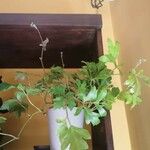
Rhoicissus rhomboidea
Kafir ropewood · Grape ivy
Description
Source: leafsnapRhoicissus rhomboidea, commonly known as grape ivy or oak leaf ivy, is a flowering plant in the Vitaceae family. Native to southern Africa, it is found in countries such as South Africa, Zimbabwe, and Mozambique. This climbing plant can grow up to 3 meters in length. Its glossy green leaves have a distinctive shape, resembling either oak leaves or diamonds, and feature serrated edges. Grape ivy is popular as an ornamental houseplant due to its attractive foliage and ease of care. It thrives in bright, indirect light but can also tolerate lower light conditions, making it ideal for indoor environments. The plant requires moderate watering, but it should be allowed to dry out slightly between waterings. Beyond its ornamental value, Rhoicissus rhomboidea has been used medicinally by indigenous people in southern Africa for centuries. Its leaves are utilized in traditional medicine to treat ailments such as stomach problems, respiratory infections, and skin conditions. Overall, Rhoicissus rhomboidea is a versatile plant that offers both aesthetic appeal and potential health benefits, making it an excellent addition to any indoor garden or collection of houseplants.
Care Guide
💧 Water Every 7 days
☀️ Light Partial sun
Bastard Forest Grape is native to habitats such as forest understories and rocky locations, where it is exposed to natural shade. While it prefers partial sun, it can tolerate full sun or full shade, reflecting its versatile and hardy nature.
🌡️ Temperature 20–37.8°C
Bastard Forest Grape shows good temperature adaptability, able to endure higher heat and larger temperature fluctuations. In hot weather, attention should be paid to watering and providing suitable shade to avoid sunburn. However, Bastard Forest Grape is relatively sensitive to low temperatures. While it can tolerate a certain amount of cold, excessively low conditions can cause frost damage.
💨 Humidity
🪴 Soil 6-7
🌱 Fertilizer
Timing is important when fertilizing Bastard Forest Grape. Apply fertilizer in early spring and continue monthly until early summer. Fertilizer encourages attractive blooms and supplies energy during both dormant and active growth periods.
🪴 Pot & Repot Every 12 months
✂️ Pruning
Rhoicissus rhomboidea is a plant known for its rapid growth and thick foliage. To maintain its size and shape, it is best to prune the plant in early spring. During pruning, remove any dead branches and thin out crowded areas to improve air circulation. Make clean cuts just above the nodes to promote strong regrowth, which will enhance both the plant's appearance and its health.
🌿 Propagating
🐛 Diseases & pets
☠️ Toxicity
Characteristics
- Plant Type
- Vine
- Life Cycle
- Perennial
- Genus
- Rhoicissus
- Family
- Vitaceae
- Hardiness Zone
- 9-11
- Mature Height
- 3.05 m to 6.1 m
- Mature Spread
- 2.13 m to 3.96 m
- Leaf Color
- Dark Green, Forest Green
- Leaf Type
- Evergreen
- Flower Color
- Green
- Flower Size
- 0.25 cm to 0.51 cm
- Bloom Time
- Early summer, Mid summer
- Planting Time
- Spring, Autumn
- Harvest Time
- Late summer, Early fall, Mid fall
- Native Area
- South Africa, Eswatini, Mozambique, Zimbabwe