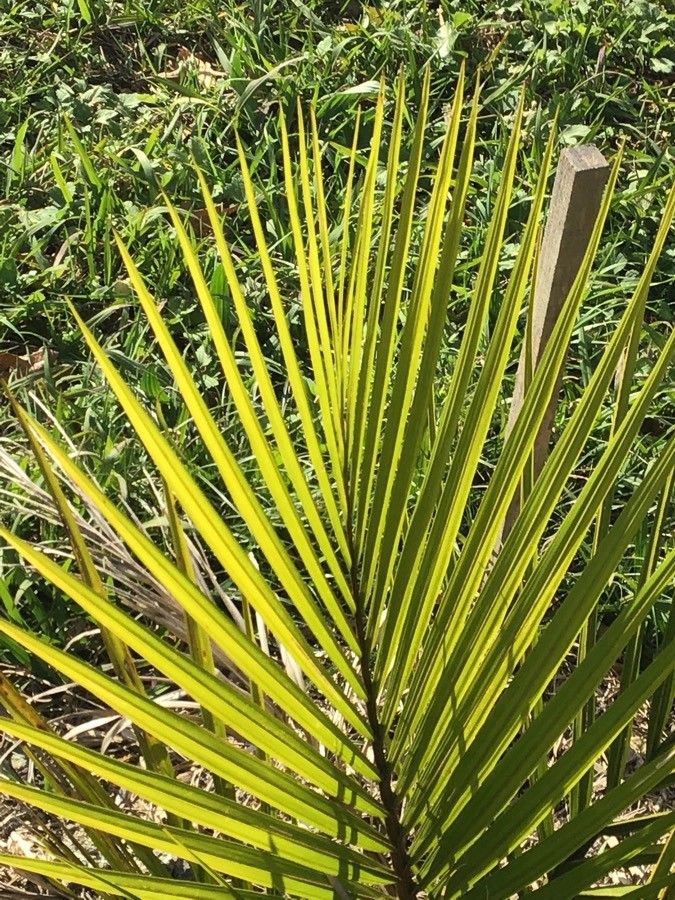
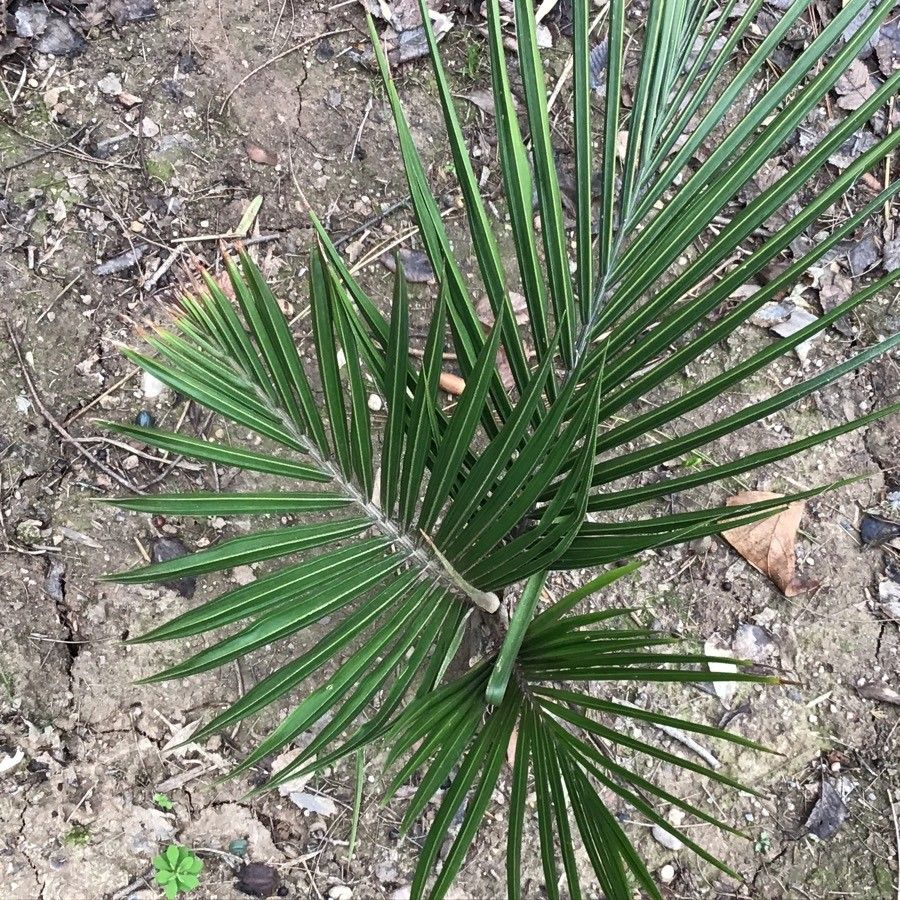
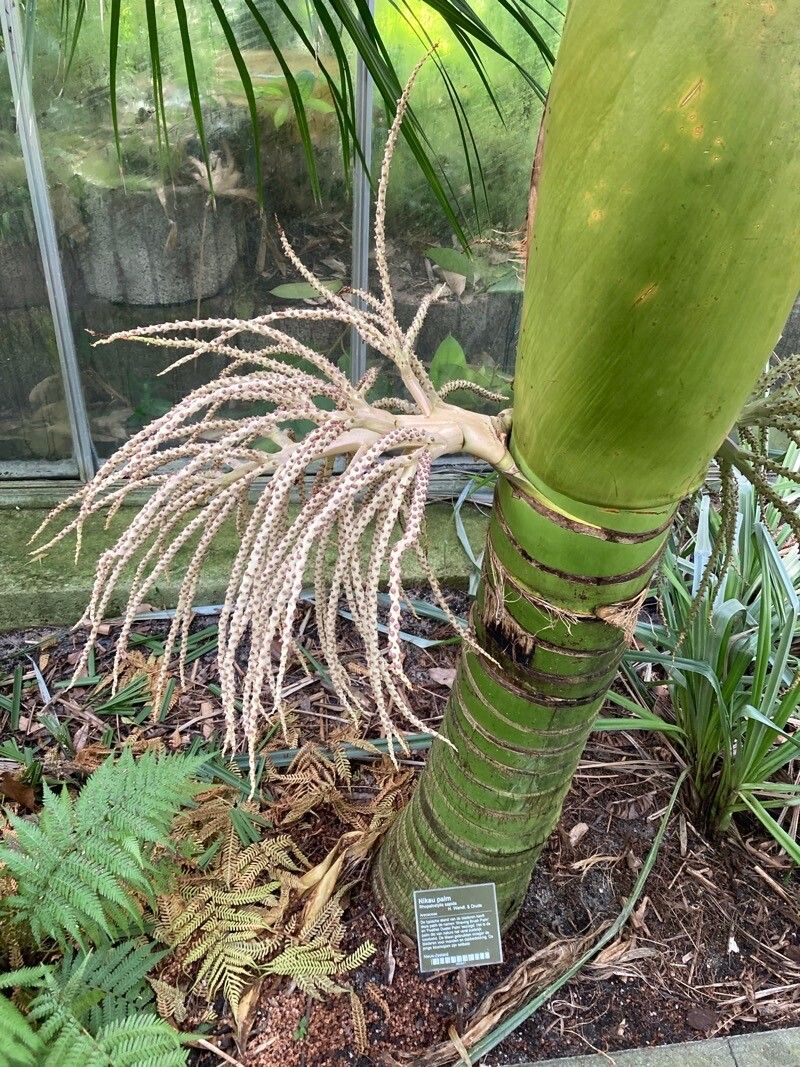
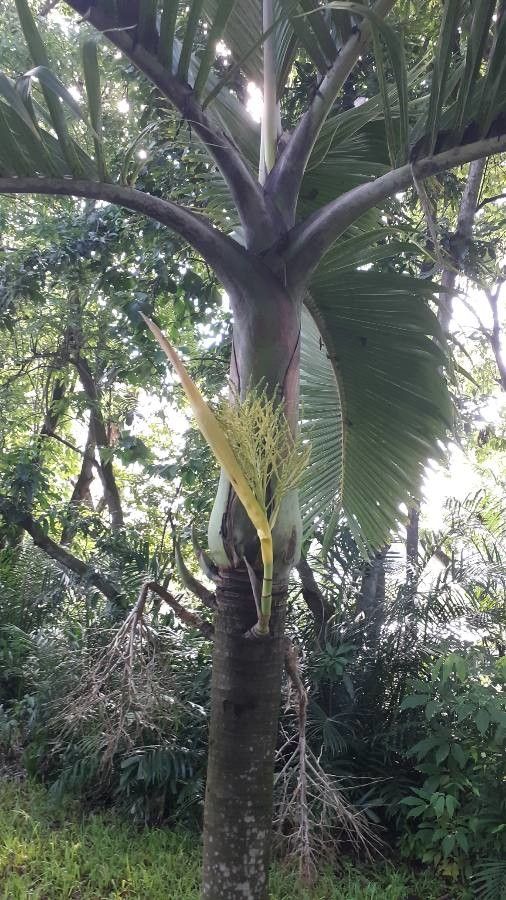
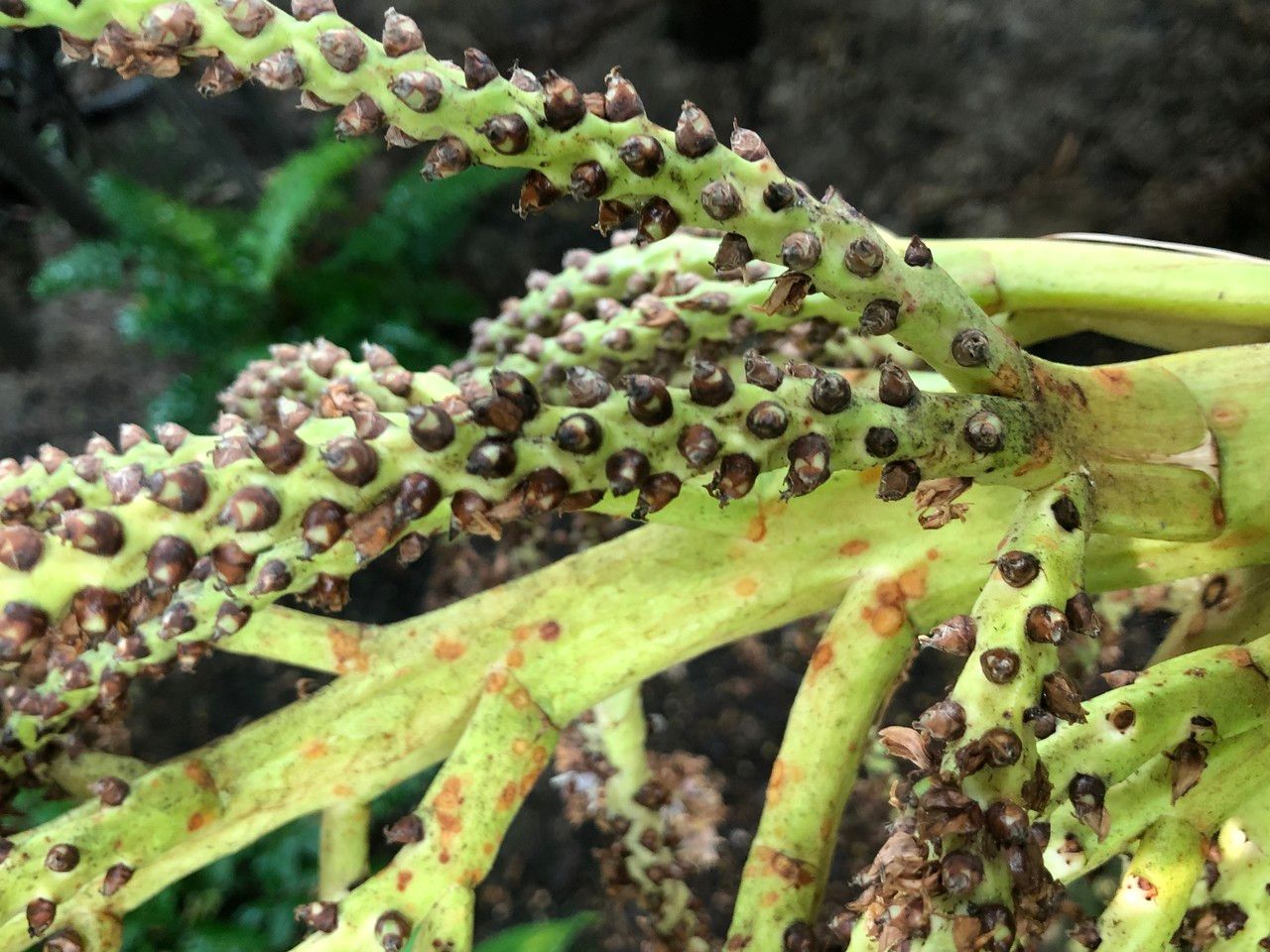
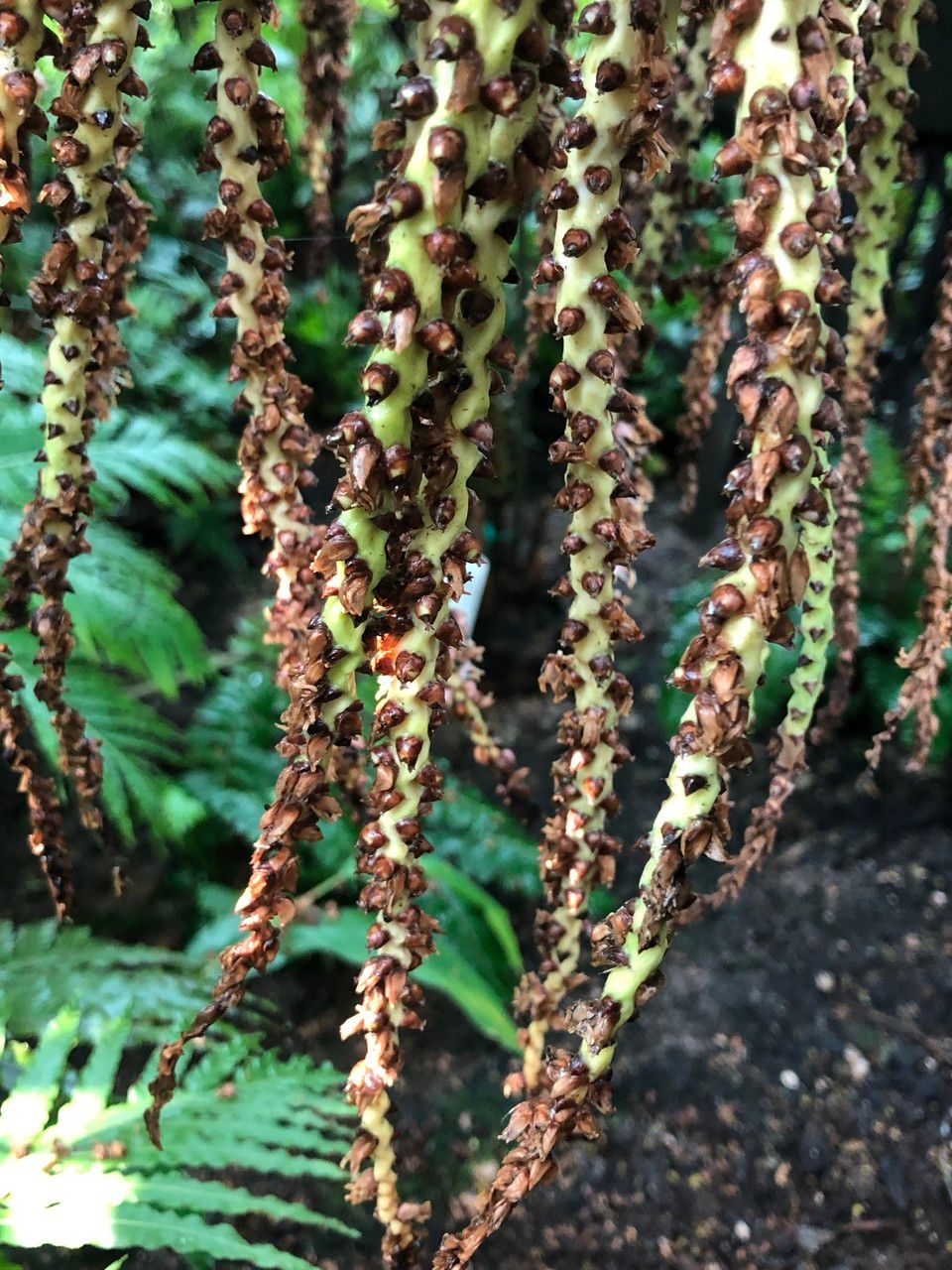
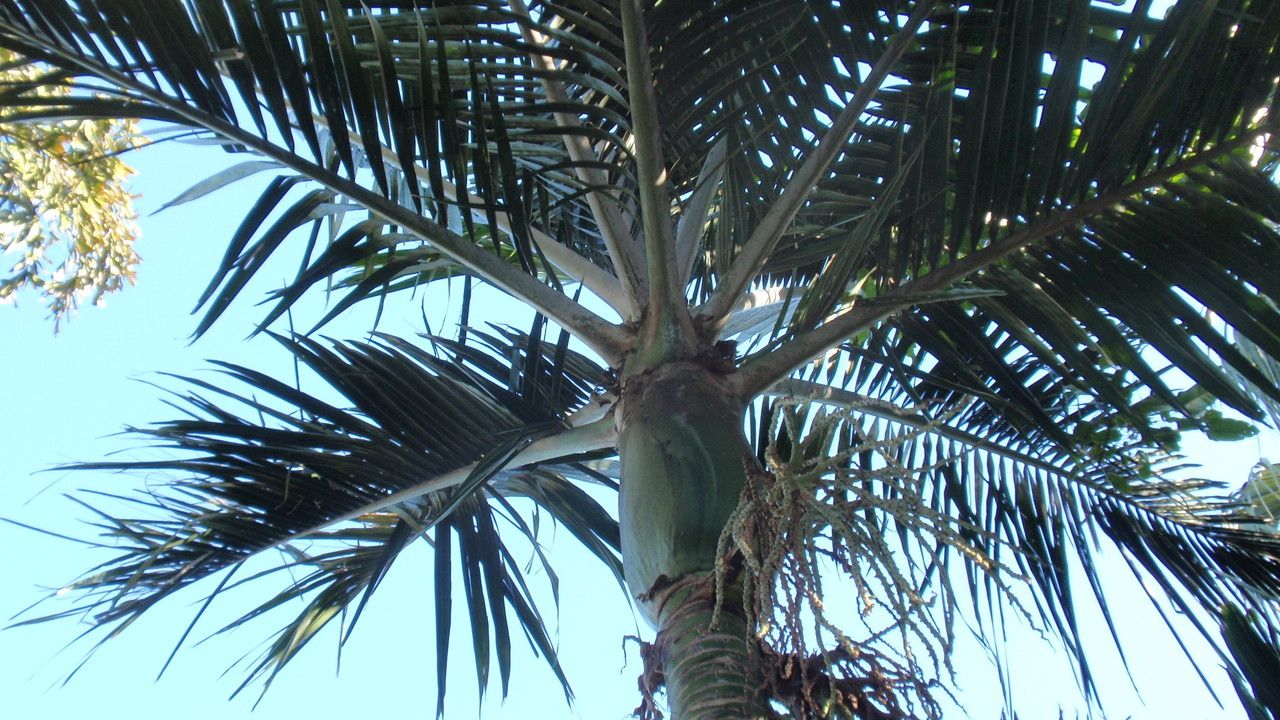
Rhopalostylis sapida, commonly known as the Nikau palm, is a species of palm tree native to New Zealand. This slow-growing tree can reach heights of up to 15 meters and features a slender trunk with distinctive bulges at the base of each leaf stem. Its large, feather-like leaves boast up to 12 pairs of leaflets that are dark green on top and silvery underneath. The Nikau palm is highly valued for its ornamental qualities and is frequently used in landscaping projects due to its attractive appearance. It prefers moist soil conditions but can tolerate some drought once established. The plant produces small white flowers that eventually develop into bright red berries. While these berries are edible, they are not commonly consumed. In addition to its aesthetic value, the Nikau palm holds cultural significance for the Maori people, who have traditionally used it for various purposes such as building materials, food sources, and medicinal remedies. However, due to habitat loss caused by human activities like logging and land development, Rhopalostylis sapida has become endangered in some parts of New Zealand. Conservationists have undertaken efforts to protect this species through habitat restoration programs and planting initiatives aimed at increasing their numbers in the wild. As these efforts continue, the Nikau palm remains an important symbol of New Zealand's unique flora heritage. It is a culturally significant plant species that requires ongoing protection from the extinction threats posed by human activities on their natural habitats across various regions.
The Nikau palm is well resistant to disease and is generally not susceptible to illnesses. In terms of care, this plant is fairly low maintenance. Planted outdoors it needs minimal watering, and larger specimens typically do not require pruning. Smaller plants, however, should be pruned after they have bloomed. The Nikau palm is appropriate for anyone with an outdoor area, like a garden or deck, and does not need extensive care experience.
How to keep Rhopalostylis Sapida.
Light
Native to environments offering a blend of sun and shade, the nikau palm prefers similar conditions to thrive. Although constant full-day sun is not harmful, the plant reaches its best health with partial daytime sun. Insufficient sunlight can lead to stunted growth, while excessive exposure may cause the leaves to scorch.
Water
The Nikau palm, native to New Zealand's lush undergrowth, thrives in high humidity and soil that remains consistently moist. It typically needs watering every 1-2 weeks, but its bulbous base allows it to withstand short dry spells. This palm is ideal for outdoor coastal regions, where frequent rain helps it flourish.
Temperature
The Nikau palm does best in temperatures from 68 to 100 °F (20 to 38 ℃), reflecting the temperate conditions of its native habitat. In cooler conditions, protect the plant to keep it within its preferred temperature range.
Fertilizer
The best time to fertilize a Nikau palm is in early spring, as it breaks dormancy. This encourages general growth and the development of flowers. Fertilizing improves the foliage, stems, and branches, while encouraging flowers that are large, vibrant, and long-lasting. It also helps transport nutrients from the roots to the flowers and enhances the plant’s health and resistance to disease.
Pruning
In early spring, prune the dead or damaged fronds of the nikau palm to promote healthy growth and improve its appearance. Be sure not to cut green fronds, as they provide nourishment for the plant. Regular pruning enhances airflow and sunlight exposure, helping the nikau palm to thrive throughout the year and reducing the risk of pests and diseases.
Pot & Repot
To support the growth of your nikau palm, it's best to repot it every 1-2 years, ideally during spring. Use a tall pot to encourage healthy root development, and make sure the soil remains consistently moist. After repotting, keep the plant out of direct sunlight to help it recover and maintain its health.
Botanical profile.
- Plant Type
- Tree
- Life Cycle
- Perennial
- Genus
- Rhopalostylis
- Family
- Arecaceae
- Hardiness Zone
- 9-11
- Mature Height
- 14.94 m
- Mature Spread
- 0 cm to 91 cm
- Leaf Color
- Green
- Leaf Type
- Evergreen
- Flower Color
- Pink, White
- Flower Size
- 1.02 cm to 2.03 cm
- Bloom Time
- Spring, Fall, Winter
- Planting Time
- Spring, Autumn
- Harvest Time
- All year round
Other names.
Reader questions.
How should I water my Nikau palm tree to keep it healthy?
Your Nikau palm doesn't have specific preferences when it comes to watering. Therefore, you can use various common watering tools, such as watering cans, hoses, or even cups, to moisten the soil of this plant. Regardless of the tool you choose, make sure you water the soil directly and evenly to provide sufficient water for all parts of the root system. Using filtered water is advisable because tap water may contain harmful particles. It's also better to use water that is at or slightly above room temperature since extremely cold or hot water can be a bit shocking for the Nikau palm. However, regardless of the water type, the Nikau palm typically responds well to any water given.
Why is it necessary to put fertilizer on my Nikau palm?
Nikau palm requires regular fertilization primarily because their showy leaves require a significant amount of energy to grow and maintain. This becomes a challenge because the palm needs to allocate enough energy not only for the leaves, but also for the growth of its stems, branches, roots, and other essential parts. Neglecting fertilization can lead to two likely outcomes. Firstly, the leaves of the palm will gradually lose their natural color and texture, resulting in an overall unhealthy appearance that significantly diminishes its ornamental appeal. Secondly, the palm may experience overall slowed growth or weak growth that is susceptible to breakage.
What are the sunlight requirements for nikau palm?
Nikau palm, or Rhopalostylis sapida, thrives in conditions that mimic its native environment, which includes both sun and shade. While the palm can withstand full sun exposure, it ideally prefers partial sun, receiving about 3-6 hours of sunlight daily. Full sun exposure is defined as receiving over 6 hours of sunlight. The balance between light and shade is crucial for the plant's health, encouraging gardeners to observe the movement of sunlight in their garden to find the perfect spot for their nikau palm.
What are the ideal temperature conditions for Nikau palm?
Nikau palm thrives in temperatures ranging from 68 to 100 °F (20 to 38 °C), which reflects its preference for a temperate environment native to its growth. It is extremely heat-loving, indicating that it does well in higher temperatures but must be guarded against cold conditions. During cooler weather, it's crucial to protect the plant to keep it within its optimal temperature range. Specifically, in autumn, it is advisable to move outdoor-grown Nikau palms indoors to a location near a bright window, ensuring the plant is not placed too close to heaters. To encourage healthy growth, maintaining temperatures above 20°C during the winter is beneficial, while any exposure to temperatures near or below 0°C can be detrimental.
What do I do if I give my Nikau palm too much water or too little water?
For outdoor plants, especially newly planted ones or seedlings, lack of watering can be a problem. It's important to water them enough for a few months while they are small or newly planted. Once the roots are established, the Nikau palm can rely on rain most of the time. When your Nikau palm is in a pot, overwatering is more likely to happen. If you accidentally overwater your Nikau palm, there are steps you can take to fix the situation. First, stop watering the plant immediately to minimize the impact of overwatering. Then, remove the plant from its pot and check the roots for any signs of root rot. If there is no root rot, you can return the plant to its pot. However, if you do find root rot, trim away the affected roots and consider applying a fungicide to prevent further damage. Lastly, repot the Nikau palm in well-draining soil. In the case of an underwatered Nikau palm, simply water the plant more frequently. It's usually a simple fix, as the leaves will droop, dry out, and fall off when underwatered, but they will quickly recover and become full again after sufficient watering. Make sure to adjust your watering frequency as soon as you notice underwatering.
When should I put fertilizer on my Nikau palm?
The Nikau palm does not require a standard feeding schedule when first planted, but occasional feedings can benefit it. One easy way to fertilize the palm is by applying the fertilizer when watering the plant on occasion. During the growing season, the palm also requires a good amount of water. It is recommended to feed the palm every two to three weeks throughout the entire period of new growth.
Can artificial lighting be used for nikau palm growth?
Yes, artificial lighting can be beneficial for nikau palm growth, especially when natural sunlight is insufficient, such as in winter or less sunny spaces. LED lights are recommended for indoor plant lighting because they can provide specific wavelengths needed for plant growth. For full sun plants, 30-50W/sq ft of artificial light is needed, partial sun plants require 20-30W/sq ft, and full shade plants need 10-20W/sq ft. The light source should be placed 12-36 inches above the plant to mimic natural sunlight, and most plants will need 8-12 hours of light per day.
How should I care for a Nikau palm in low temperatures?
Nikau palm is not tolerant of low temperatures and flourishes best when temperatures remain above 20°C. It's particularly important to keep the plant above 0°C during winter months. In cases where temperatures drop below -5°C, the leaves may lighten in color, later turning brown or black, with wilting and drooping as possible symptoms of frost damage. To care for a Nikau palm in low temperatures, trim off any frost-damaged parts and move the plant indoors to a warm environment. Placing it near a south-facing window can ensure the plant receives ample sunlight. It's also vital to avoid placing the plant near heaters or air conditioning vents, as this can cause excessive dryness in the air.
How often do I need to water my Nikau palm?
Most outdoor plants can grow normally with rainfall. However, if your area doesn't get enough rain, make sure to water your plants adequately every two weeks in the spring and fall. During the summer, you'll need to water them more frequently. In the winter, when plants grow slower and require less water, you can water them sparingly or not at all. If you have a young or newly planted Nikau palm, remember to water it more often to help it establish and grow into a more adaptable and drought-tolerant plant. For potted plants like the Nikau palm, there are two main ways you can determine how often to water them. One way is to stick to a fixed watering schedule, such as once a week or every other week. However, this may not always work for your specific growing environment. Another approach is to gauge the soil moisture. Wait until the top two to four inches of soil (about one-third to half the depth of the pot) have completely dried out before watering again. This method can vary depending on the season, as the plant's water needs will be highest during the summer months.
When is the best time to not fertilize my Nikau palm?
For most of the year, you can stick to a regular fertilization schedule for your Nikau palm. This includes spring, summer, and early fall when it is actively growing. However, in winter, it's important to avoid fertilizing the plant. During this time, the Nikau palm enters a dormant phase with little to no new growth. Since it requires less energy during this period, fertilization is unnecessary.
What are the symptoms of insufficient light in nikau palm?
Nikau palms that don't receive enough light may show several symptoms, including the growth of smaller leaves, leggy or sparse growth, faster leaf drop, slower or halted growth, and the development of lighter-colored or yellowing leaves. Excessive sunlight can also cause issues like chlorosis (loss of green color), sunscald (damage from intense light), leaf curling as a defense against extreme sunlight, wilting due to high transpiration rates, and leaf scorching characterized by brown, crispy edges on leaves.
How to prevent high temperature damage to Nikau palm?
During the summer, it's important to ensure the Nikau palm is kept below 38°C to prevent heat stress. Exposing the plant to temperatures over 43°C can lead to lighter leaf color and increased susceptibility to sunburn. To mitigate high temperature damage, trim away any sunburned or dried-up parts of the plant. It's beneficial to move the plant to an area with shade, particularly to protect it from the midday and afternoon sun. Watering the Nikau palm in the morning and evening can help keep the soil moist, providing further protection from heat stress.