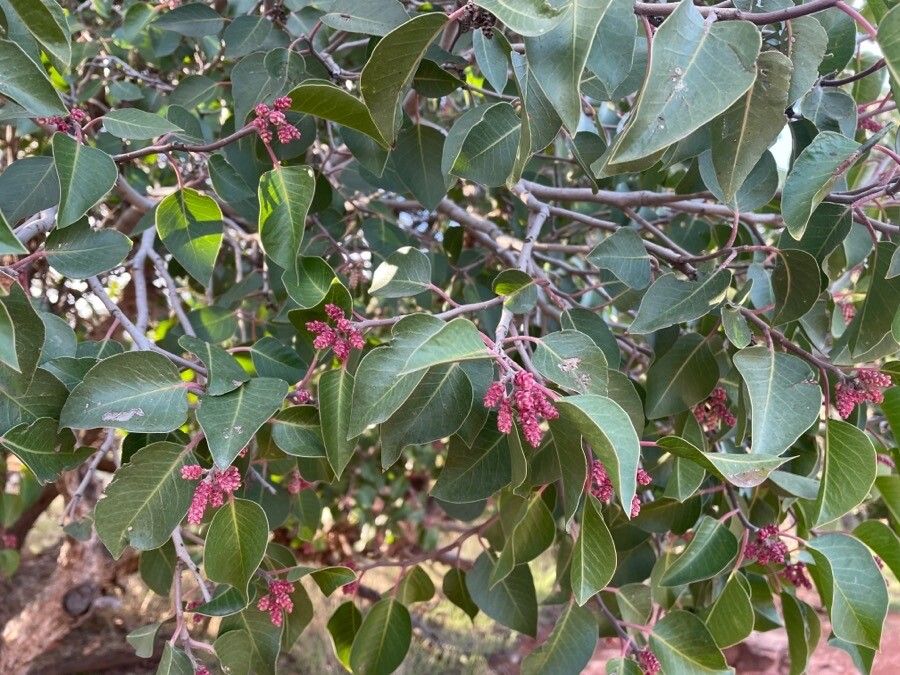
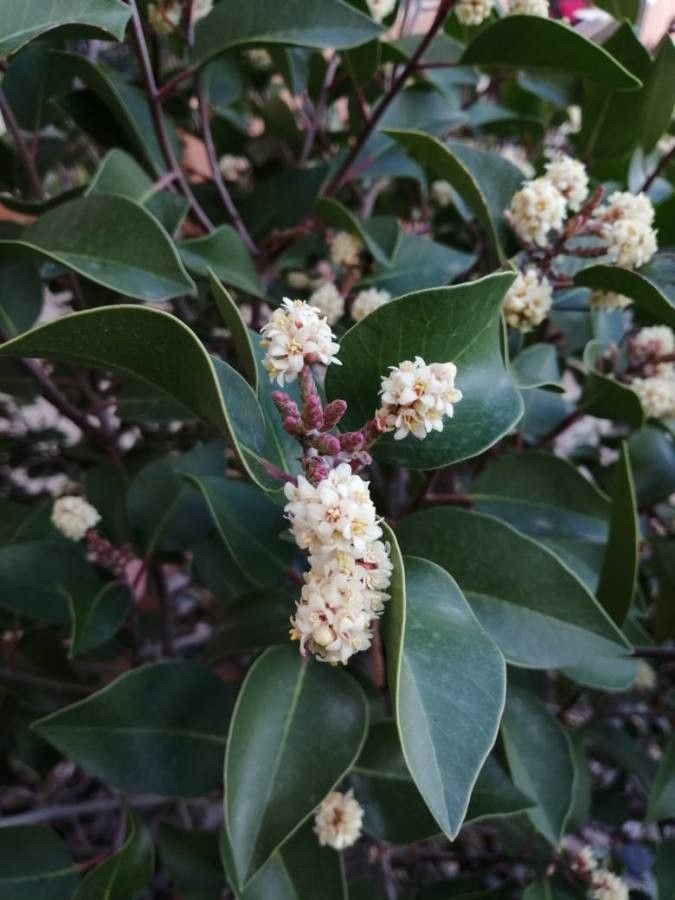
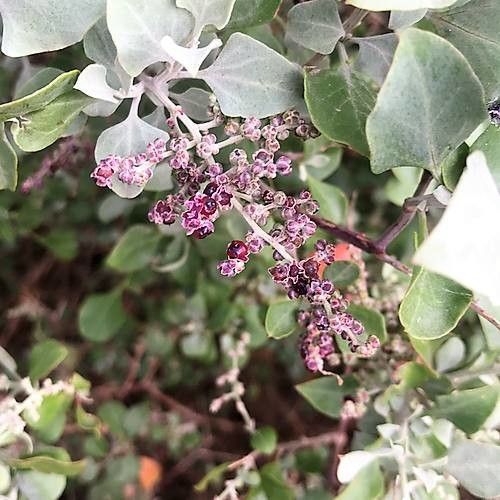
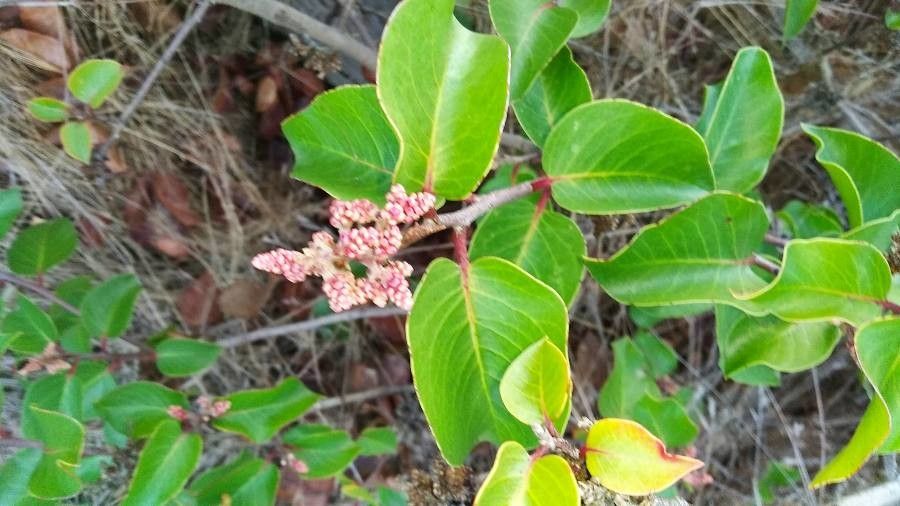
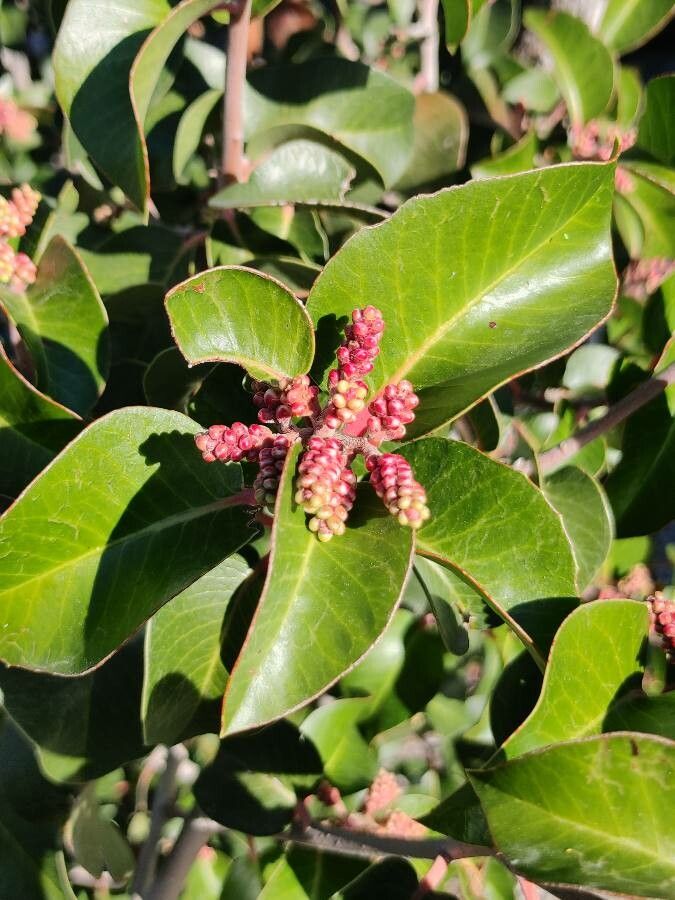
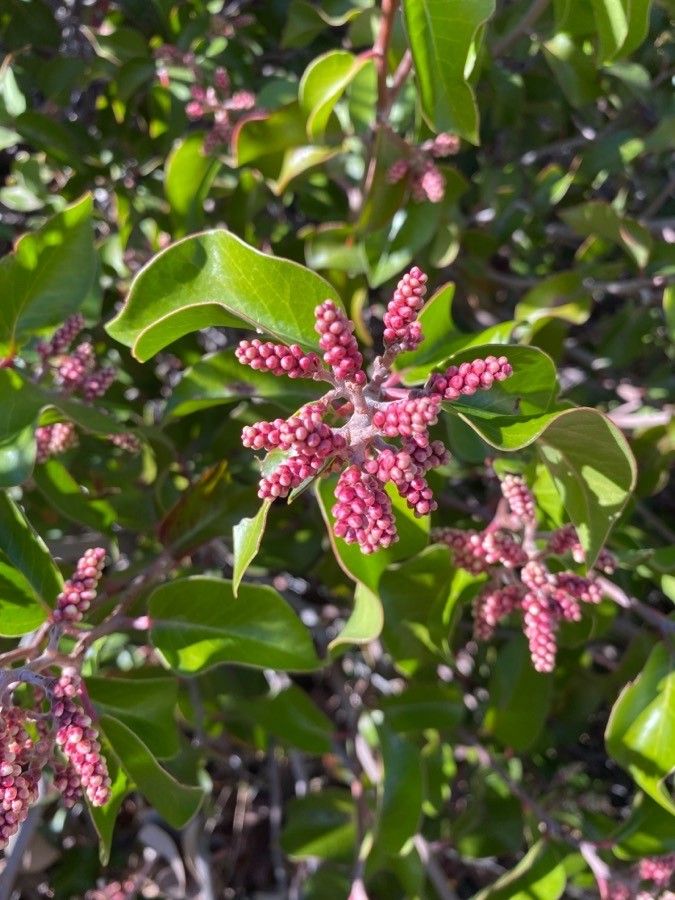
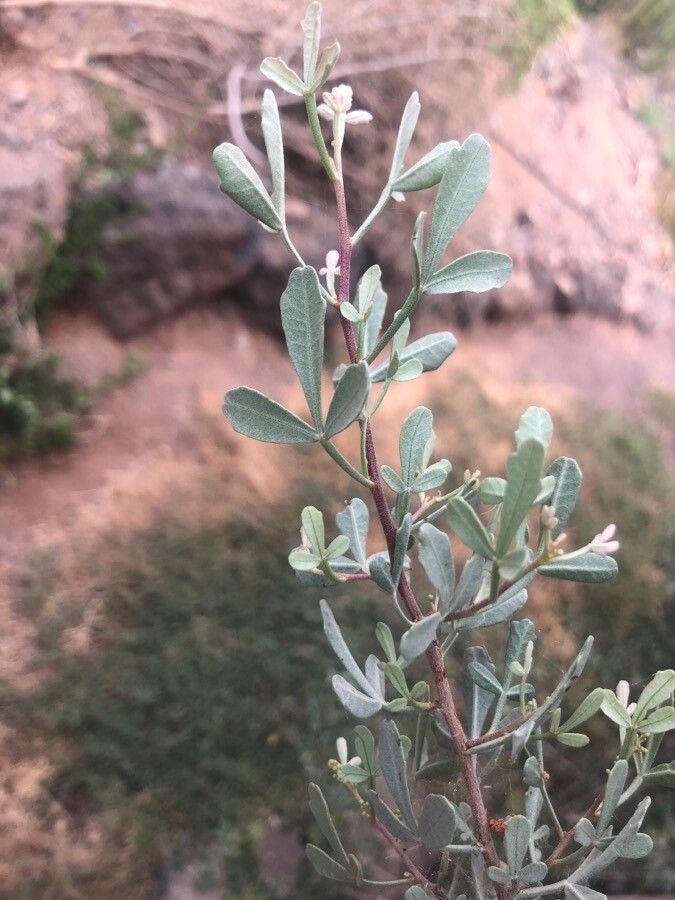
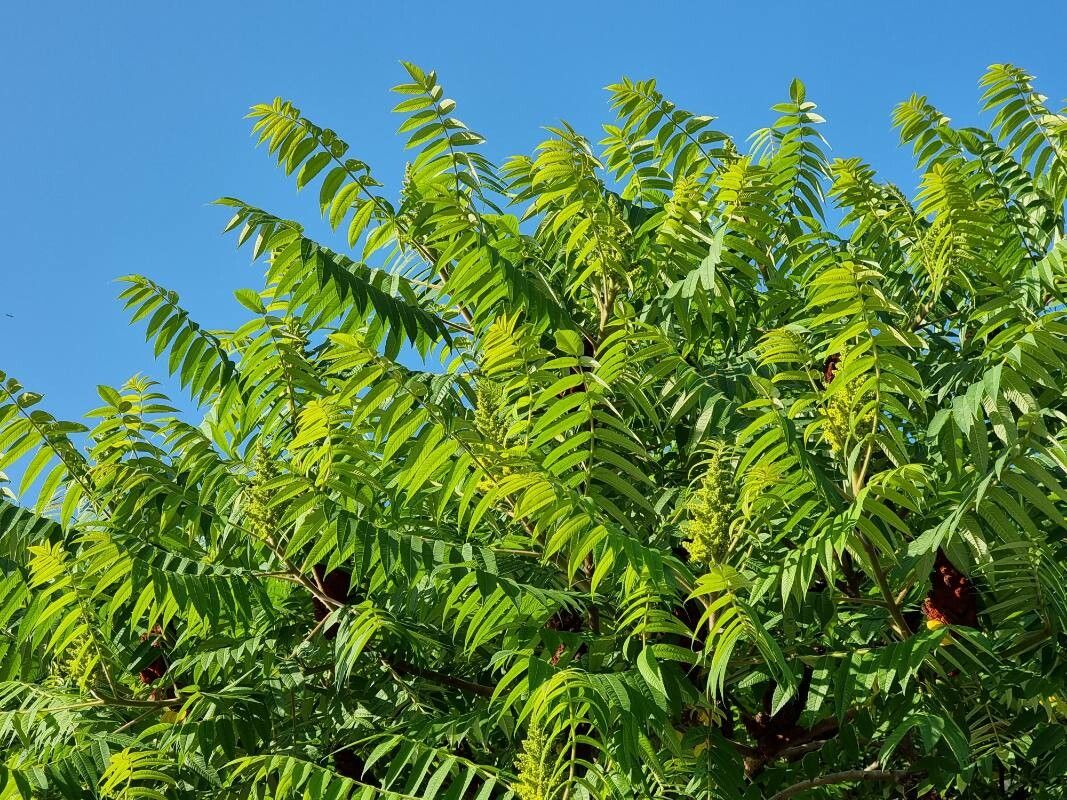
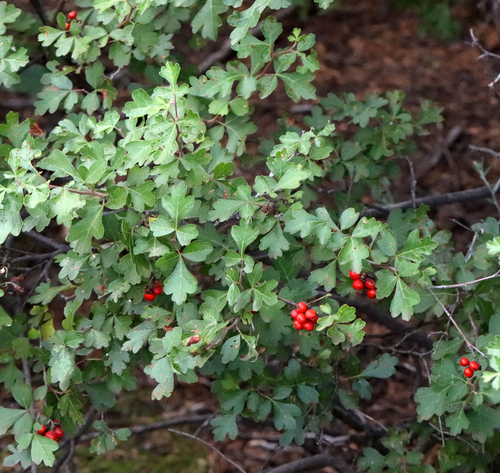
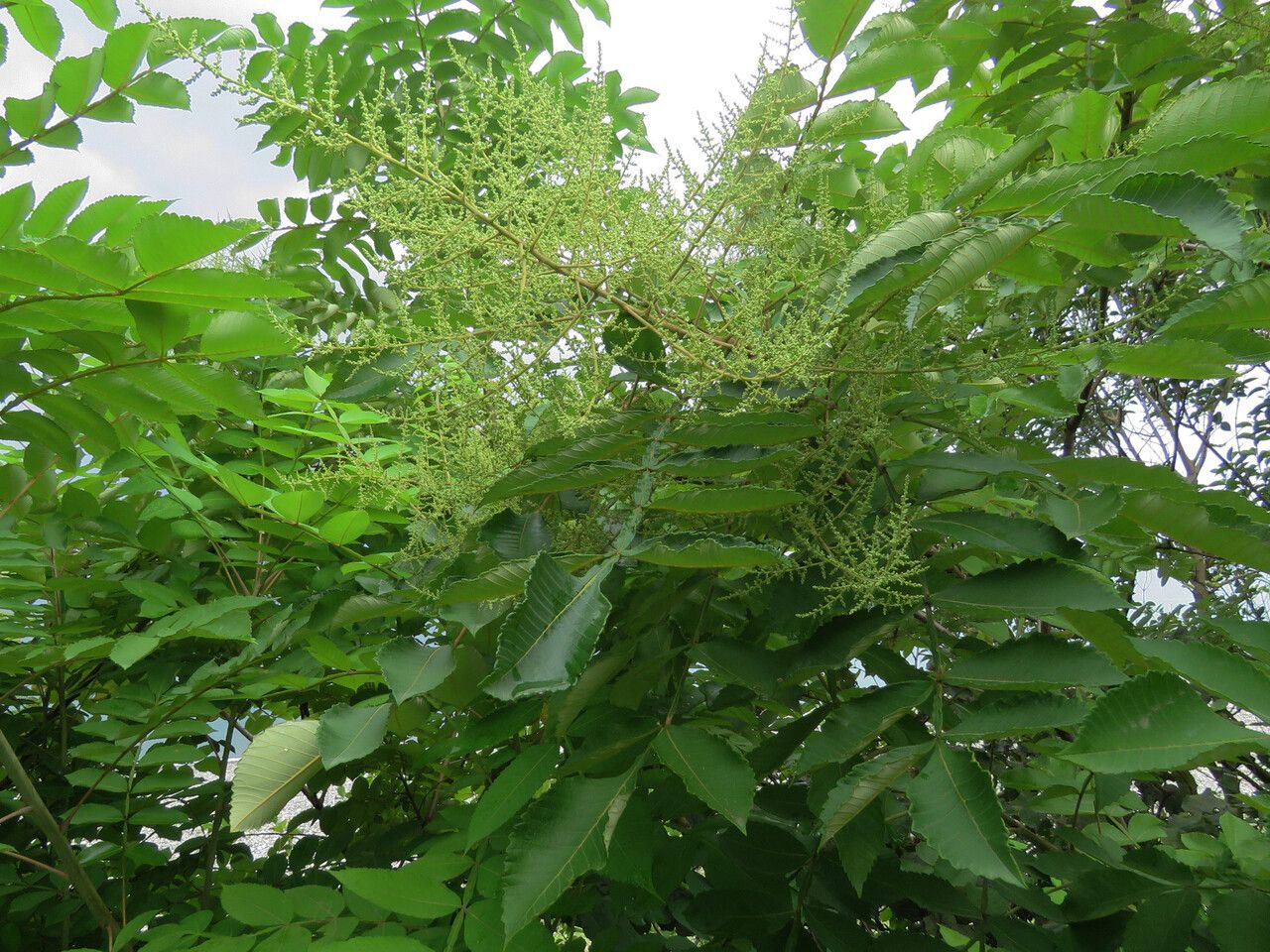
Rhus ovata, commonly known as sugar bush or sugar sumac, is a shrub native to California and Baja California. Belonging to the Anacardiaceae family, this plant can grow up to 10 feet tall. Its dark green leaves have a leathery texture and may turn red or yellow in the fall. From late spring to early summer, Rhus ovata produces small yellow-green flowers, followed by clusters of red berries that attract birds.
This drought-tolerant plant prefers well-drained soil and full sun exposure, although it can also thrive in partial shade. It is often used for erosion control on slopes due to its extensive root system, which helps stabilize the soil.
Native Americans have utilized Rhus ovata for various medicinal purposes, including treating colds, sore throats, and skin irritations. The leaves were also used as a natural sweetener because of their high sugar content.
However, it is important to note that Rhus ovata contains urushiol oil, which can cause skin irritation similar to poison ivy if touched or ingested by humans or animals.
Overall, Rhus ovata is an attractive shrub with ecological benefits such as providing food for wildlife. It also holds cultural significance due to its use in traditional medicine practices by Native Americans within its range.
Botanical profile.
- Plant Type
- Shrub
- Life Cycle
- Perennial
- Genus
- Rhus
- Family
- Anacardiaceae
- Hardiness Zone
- 7-10
- Mature Height
- 2.13 m to 10.06 m
- Mature Spread
- 1.22 m to 3.05 m
- Leaf Color
- Green
- Leaf Type
- Evergreen
- Flower Color
- White, Pink
- Flower Size
- 2.54 cm
- Bloom Time
- Early spring, Mid spring
- Planting Time
- Spring, Autumn
- Harvest Time
- Summer
- Native Area
- Mexico
Other names.