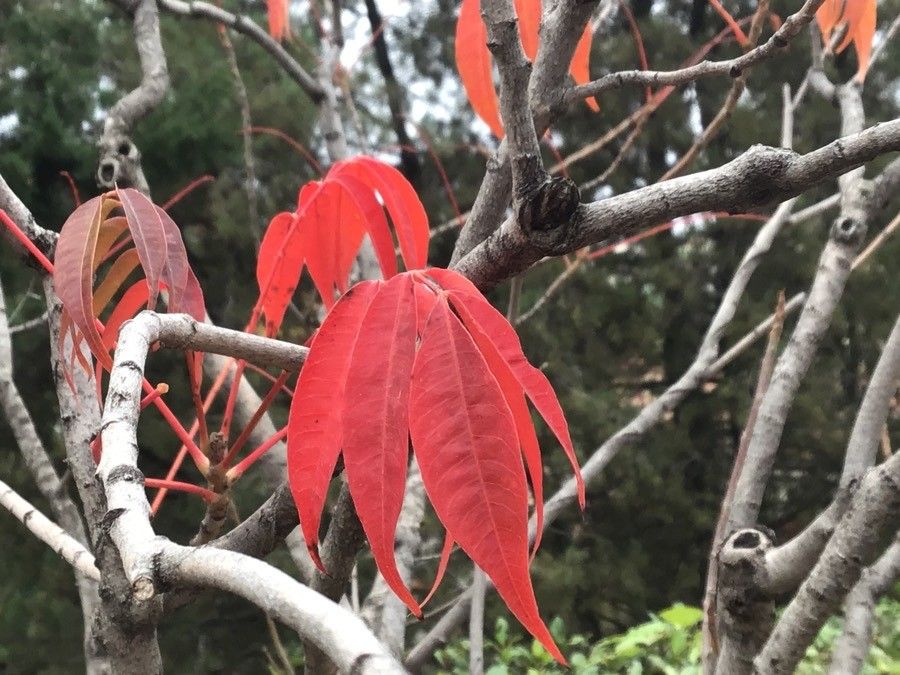
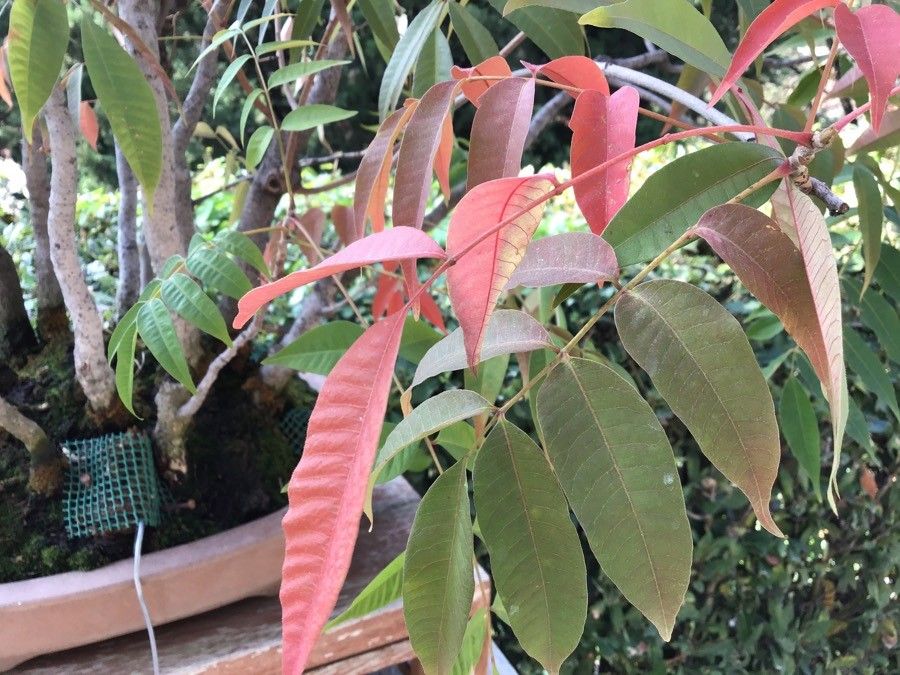
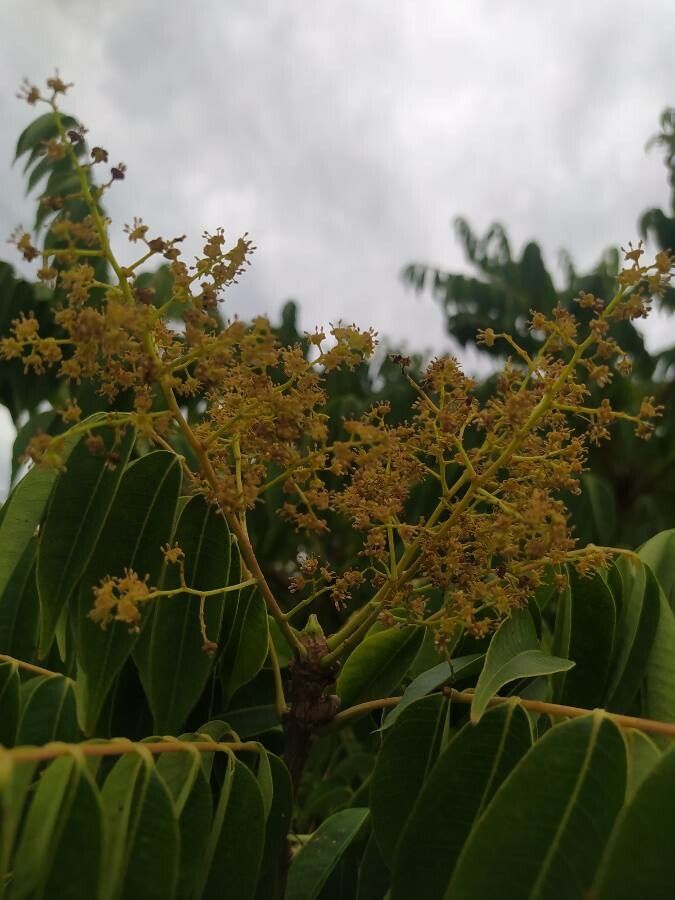
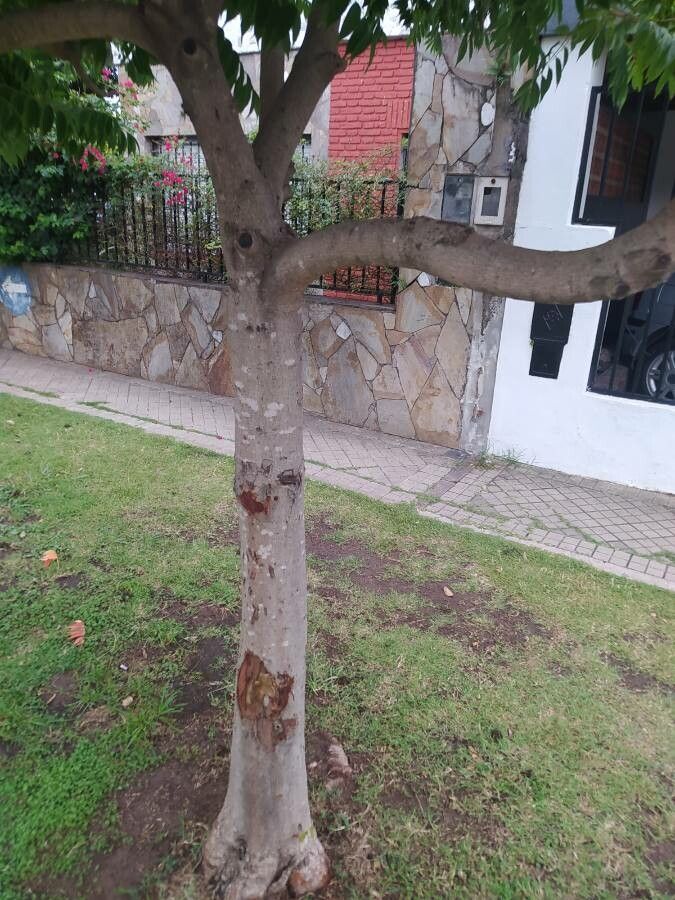
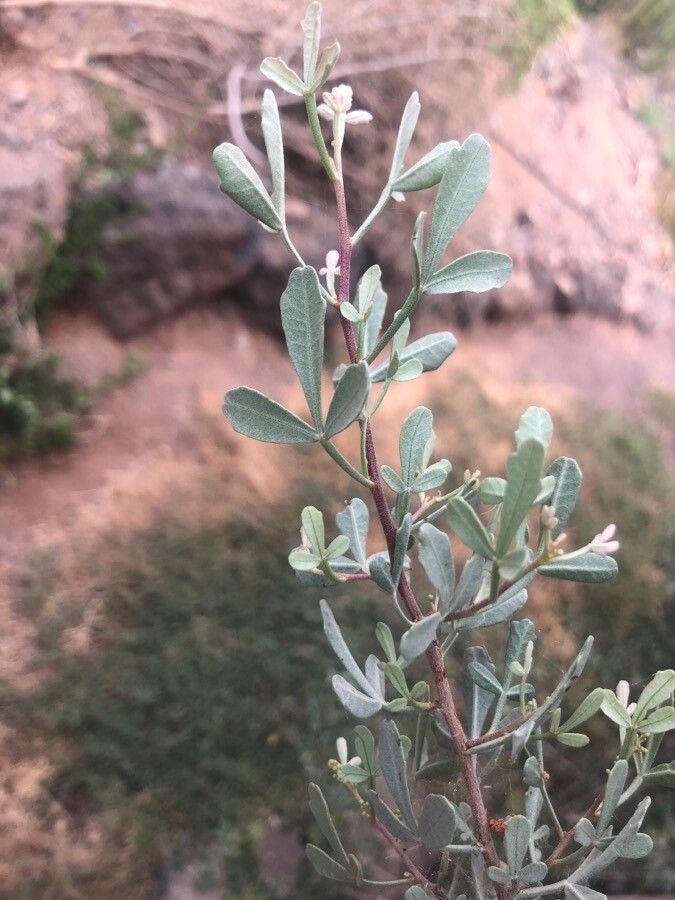
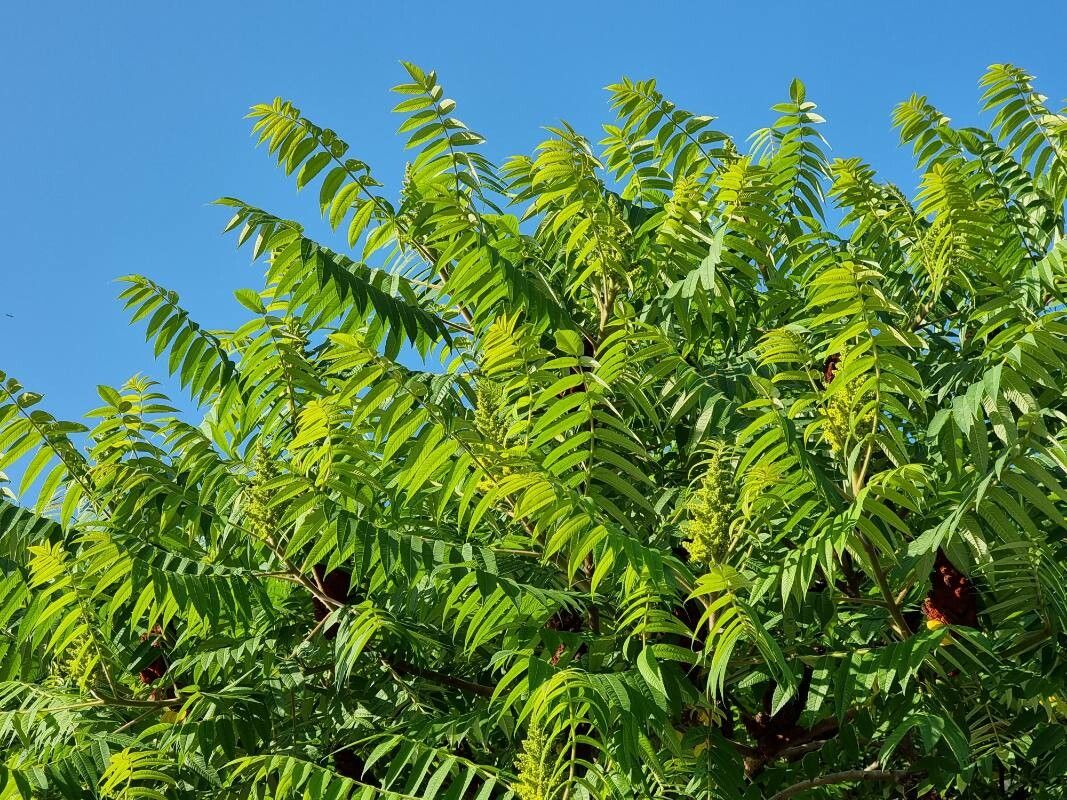
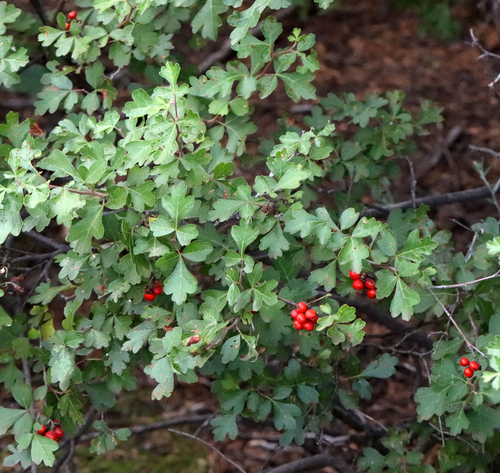
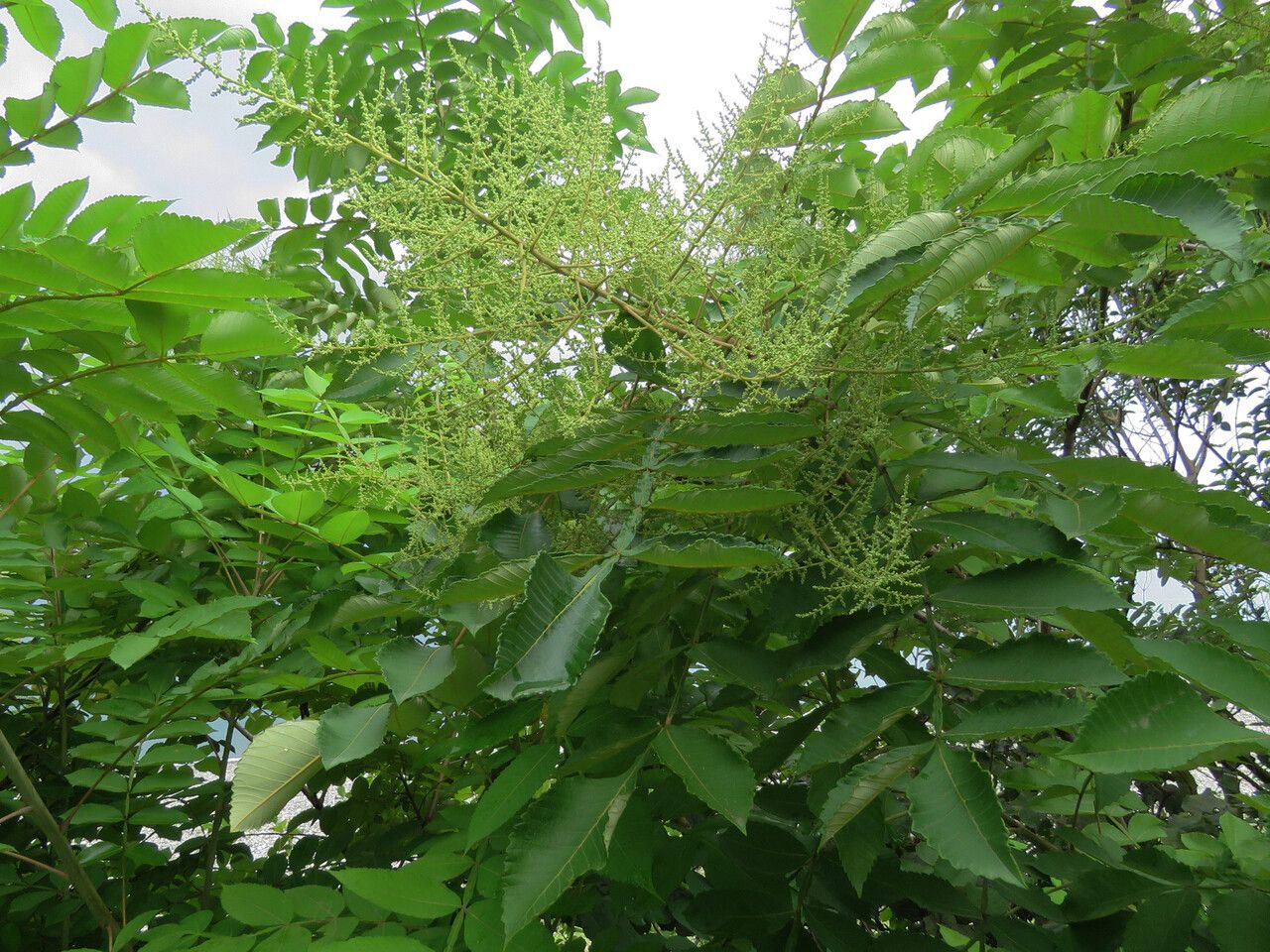
Toxicodendron succedaneum, the wax tree, Japanese Hazenoki tree (Sumac or wax tree), sơn in Vietnam or charão in Portuguese, is a flowering plant species in the genus Toxicodendron found in Asia, although it has been planted elsewhere, most notably Australia and New Zealand. It is a large shrub or tree, up to 8 m tall, somewhat similar to a sumac tree. Because of its beautiful autumn foliage, it has been planted outside Asia as an ornamental plant, often by gardeners who were apparently unaware of the dangers of allergic reactions. It is now officially classified as a noxious weed in Australia and New Zealand. It is one of the city tree symbols of Kurume, Fukuoka, Japan. The larvae of the moths Eteoryctis deversa, Caloptilia aurifasciata, Caloptilia protiella, Caloptilia rhois and Callidrepana patrana feed on T. succedaneum.
The wax tree has good resistance to disease and is generally unlikely to get illnesses. In terms of care, this plant is fairly low maintenance. When grown outdoors, it needs only minimal watering, and larger specimens typically do not require pruning. Smaller plants, however, should be pruned after they finish blooming. The wax tree is suitable for anyone with an outdoor area, such as a garden or a deck, and does not demand extensive gardening experience.
How to keep Rhus Succedanea.
Light
The wax tree prefers locations that receive steady, uninterrupted sunlight throughout the day for vigorous growth. It does not do well in shady spots; its photosynthesis performs best with plenty of sun. Its natural habitat is usually bathed in sunlight. Both too much and too little sun exposure can affect its growth and health.
Temperature
The wax tree originates from temperate regions and needs temperatures between 41 to 95 °F (5 to 35 ℃) for optimal growth. It tolerates seasonal changes well, but requires extra care during periods of extreme cold or heat.
Fertilizer
Fertilize your Wax tree in early spring to encourage healthy growth. Regular feeding improves the tree’s overall health, producing vigorous growth, greater tolerance of harsh conditions, and enhanced resistance to diseases and pests. Keep a consistent fertilization schedule for your Wax tree to preserve vibrant, deeply colored foliage and a lush appearance.
Botanical profile.
- Plant Type
- Tree, Shrub
- Life Cycle
- Perennial
- Genus
- Rhus
- Family
- Anacardiaceae
- Hardiness Zone
- 4-9
- Mature Height
- 7.92 m
- Mature Spread
- 4.88 m to 7.92 m
- Leaf Color
- Green, Dark Green
- Leaf Type
- Deciduous
- Flower Color
- Green
- Flower Size
- 0.20 cm
- Bloom Time
- Late spring, Early summer, Mid summer
- Planting Time
- Spring, Autumn
- Harvest Time
- Mid summer
- Native Area
- Nepal, India, Malaysia, Bangladesh, Pakistan, Laos, China, Indonesia, Cambodia, Vietnam, Myanmar, Japan, Koppen, Bhutan, South Korea, Thailand
Other names.