Rhus trilobata
Skunkbush sumac · Lemonadebush · Skunkbrush · Squawbush · Three-leaf sumac
Description
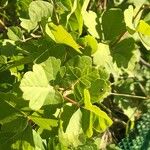
Source: leafsnapRhus trilobata, commonly known as skunkbush sumac, is a deciduous shrub native to western North America. It typically reaches a height of 3 to 6 feet and has a spreading habit, with branches that can extend up to 10 feet in length. The leaves are trifoliate and have serrated edges, with each oval-shaped leaflet growing up to 2 inches long. In the fall, the leaves turn vibrant shades of red and orange before dropping off for the winter. Skunkbush sumac produces small yellow-green flowers in late spring or early summer, which are followed by clusters of red berries in late summer or early fall. The berries are edible but have a sour taste due to their high concentration of malic acid. This plant is often used for erosion control because its extensive root system helps stabilize soil on steep slopes or hillsides. It also provides habitat for wildlife, with birds feeding on its berries. Additionally, Rhus trilobata has been used by Native American tribes for medicinal purposes, such as treating diarrhea and sore throats. Its bark can also be used as a natural dye. Overall, Rhus trilobata is an attractive shrub with ecological benefits, making it an excellent addition to gardens and natural landscapes in western North America.
Care Guide
💧 Water Every 7 days
Skunk-bush sumac thrives in arid environments due to its strong drought tolerance. It only needs watering once every one to two weeks. Although it is primarily grown outdoors, it is important to plant it in well-draining soil that resembles its natural dry habitat.
☀️ Light Full sun
Skunk-bush sumac performs best in locations that provide a generous amount of sunlight. It develops optimally with full sun exposure but can adjust to sites where the sunlight is less intense. Light intensity is crucial for its healthy growth through all stages of life. In its native habitats, sunlight is plentiful. However, too much light can cause dehydration, while too little can impede proper growth.
What are the sunlight requirements for Skunk-bush sumac?
Skunk-bush sumac requires a generous amount of sunlight to thrive, growing optimally in full sun exposure, which is above 6 hours of direct sunlight daily. It can also adapt to partial sun, receiving around 3-6 hours of sunlight. The intensity of the sun is crucial for its healthy growth at all life stages. In its native habitats, the plant enjoys abundant sunlight. However, it's important to note that excessive light might lead to dehydration, while insufficient light could hinder proper growth. For indoor plants not receiving enough natural light, artificial lighting can be a viable solution. Using artificial lights, like LED lights customized to provide specific wavelengths, helps in promoting healthier growth. The amount of artificial light required varies based on the plant's sunlight needs, with full sun plants needing 30-50W/sq ft, partial sun plants 20-30W/sq ft, and full shade plants 10-20W/sq ft.
What are the signs of improper lighting for Skunk-bush sumac?
When Skunk-bush sumac doesn't receive adequate sunlight, it may exhibit several signs indicating stress or improper lighting conditions. These signs include smaller new leaves, leggy or sparse growth, faster leaf drop, slower or halted new growth, paler new leaves indicating a lack of chlorophyll, chlorosis leading to yellowing leaves, sunscald marked by bleached areas on leaves or stems, leaf curling as a defense mechanism against too much sun, wilting from excessive water loss, and leaf scorching characterized by brown, dry edges. These symptoms suggest that the plant is either getting too much sun, leading to symptoms like leaf scorching, or not enough light, indicated by slower growth and paler leaves.
How can I address lighting issues for my Skunk-bush sumac?
To address lighting issues for Skunk-bush sumac and promote its optimal growth, consider the following solutions based on where your plant is kept. For indoor plants, gradually move them to sunnier spots until they receive at least 6 hours of direct sunlight daily. Using a south-facing window can maximize sunlight exposure, but if moving the plant isn't feasible, supplement with artificial light, keeping a lamp on for at least 8 hours a day or investing in professional grow lights. For outdoor plants, shifting them weekly to gradually sunnier locations helps prevent sunburn. If obstructions limit sunlight, prune any blocking branches or consider transplanting smaller plants during their dormant period to a location with better sunlight and drainage. Remember, while parts of the plant already affected by insufficient sunlight may not recover, new growth after adjusting light exposure should be healthy.
🌡️ Temperature 5–32.2°C
Skunk-bush sumac is native to temperate regions and does best at temperatures between 41 and 89.6 °F (5 to 32 ℃). In colder months, if temperatures fall below that range, it is recommended to move skunk-bush sumac to a warmer location.
What is the ideal climate for Skunk-bush sumac?
Skunk-bush sumac thrives in temperate climates, with ideal temperature ranges between 41 to 89.6 °F (5 to 32 °C). It has strong cold resistance and usually doesn't require special frost protection measures. However, during winter, care should be taken to ensure the plant is protected if temperatures are expected to drop below -30°C. Proper preparation includes wrapping the trunk and branches with protective materials and ensuring the soil remains moist before the first freeze, to prevent drought and water scarcity during winter and early spring.
How does Skunk-bush sumac respond to low temperature?
Skunk-bush sumac is cold-tolerant and prefers temperatures above 5°C for optimal growth. In winter, it's important to keep it above -25°C. When the temperature falls below -30°C, while there may not be noticeable changes during winter, in spring, the plant may exhibit brittleness and dryness in its branches, and fail to produce new shoots. To address this, it's advised to prune any dead branches that did not produce new leaves in the spring.
What should be done if Skunk-bush sumac experiences high temperatures?
During the summer, Skunk-bush sumac should be maintained in temperatures below 32°C to avoid stress from high temperatures. If temperatures exceed 35°C, the plant's leaves may become lighter in color, tips may dry out, and the plant may become more susceptible to sunburn. Solutions include trimming away sunburned and dried-up parts, relocating the plant to a shaded area or using a shade cloth to protect it from the midday and afternoon sun, and ensuring the soil is kept moist through watering in the morning and evening.
💨 Humidity
🪴 Soil 6-7
🌱 Fertilizer
The timing of fertilizing Skunk-bush sumac is important. Apply fertilizer in early spring and continue monthly until early summer. Fertilizer encourages attractive blooms and supplies energy during both dormant and active growth periods.
🪴 Pot & Repot
✂️ Pruning
Pruning skunkbush sumac in early spring encourages healthy growth and enhances its vibrant autumn foliage. Key techniques include removing dead branches and thinning the plant for better air circulation. A light trim is advised to prevent stressing the plant. Be sure to consult horticultural guidelines for specific pruning practices.
🌿 Propagating
🐛 Diseases & pets
☠️ Toxicity
Characteristics
- Plant Type
- Tree
- Life Cycle
- Perennial
- Genus
- Rhus
- Family
- Anacardiaceae
- Hardiness Zone
- 4-8
- Mature Height
- 61 cm to 91 cm
- Mature Spread
- 0.91 m to 2.44 m
- Leaf Color
- Green, Red, Orange
- Leaf Type
- Deciduous
- Flower Color
- Yellow
- Flower Size
- 2.54 cm
- Bloom Time
- Early spring, Mid spring
- Planting Time
- Spring, Autumn
- Harvest Time
- Mid summer, Late summer, Early fall
- Native Area
- Mexico