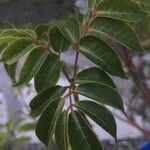
Rhus virens
Evergreen sumac · Tobacco sumac
Description
Source: leafsnapRhus virens, commonly known as evergreen sumac, is a small to medium-sized shrub belonging to the Anacardiaceae family. Native to the southwestern United States and northern Mexico, it thrives in arid regions such as deserts, canyons, and rocky slopes. This shrub features a dense growth habit with multiple stems that can reach up to 10 feet in height. Its dark green, glossy leaves have serrated edges, offering a striking appearance. In the spring, the plant produces small yellow-green flowers, which are followed by clusters of red berries that persist throughout the winter. Evergreen sumac is crucial for wildlife, providing food for birds like quail and thrashers, and serving as a habitat for insects such as bees and butterflies. Additionally, indigenous people have used it for medicinal purposes, such as treating fevers and stomach ailments. Overall, Rhus virens is an attractive shrub offering year-round interest with its glossy leaves and persistent berries, while also providing ecological benefits by supporting wildlife populations.
🌳 The evergreen sumac is a versatile plant that can be used as an ornamental border shrub or a beautiful shade tree in tropical or rock gardens. It is drought-tolerant, making it a good choice for drier climates. Although the foliage is evergreen, its most striking features are the vibrant summertime flowers and bright red berries, which attract butterflies, bees, and birds to your garden.
Care Guide
💧 Water Every 7 days
Evergreen sumac thrives in semi-arid environments that experience intermittent rainfall. It is highly drought-tolerant and needs minimal watering, roughly every two weeks. When grown outdoors, this plant benefits from natural precipitation and requires well-draining soil to avoid root rot during wetter conditions.
How should I water my Evergreen sumac plant?
Your Evergreen sumac is not very demanding when it comes to watering. You can use any common watering tool, such as a watering can, hose, or even a cup, to keep the soil moist. Regardless of the tool you choose, make sure to water directly onto the soil and ensure that all areas of the soil are equally moist to provide water to the entire root system. Using filtered water is a good idea, as tap water may contain harmful particles. It is also best to use water that is at or slightly above room temperature, as extremely hot or cold water can be a shock to the plant. However, the Evergreen sumac generally tolerates different types of water well.
What do I need to do if I give too much or too little water to my Evergreen sumac?
When it comes to outdoor plants, especially newly planted ones or plant seedlings, it's common for them to not get enough water. You should make sure to water them adequately for a few months while they're still small or just planted. Once the roots are established, Evergreen sumac can usually rely on rain for hydration. On the other hand, if you have an Evergreen sumac planted in a pot, there's a greater likelihood of overwatering. If you accidentally overwater your plant, you need to take action right away. Firstly, stop watering it to minimize the damage caused by overwatering. Then, remove the plant from its pot and check its roots. If you find that none of the roots have been affected by root rot, you can safely return the plant to the pot. However, if you do find signs of root rot, you should trim away the affected roots and consider applying a fungicide. Finally, repot the Evergreen sumac in well-draining soil. In the case of underwatering, simply water the plant more frequently. It's usually easy to fix underwatering - the leaves of the plant will droop, dry out, and fall off, but they'll bounce back quickly after sufficient watering. Make sure to correct your watering frequency as soon as you notice signs of underwatering.
How frequently should I water my Evergreen sumac?
Most outdoor plants can grow naturally with rainfall. However, if your area lacks rainfall, you should provide adequate watering every 2 weeks in the spring and fall. In the summer, you will need to water more frequently. During the winter, when growth is slower and plants need less water, water sparingly or not at all. If you have a young or newly planted Evergreen sumac, it will need more frequent watering initially to help it establish and grow into a more drought-tolerant plant. For potted plants, there are two main ways to determine watering frequency for your Evergreen sumac. The first is a predetermined watering schedule, such as once a week or every other week. However, this may not always work as it doesn't consider the specific conditions of your growing environment. Watering frequency should also change based on the season. During the summer, when the plant's water needs are highest, a predetermined schedule may not be enough. An alternative approach is to base watering frequency on soil moisture. Wait until the top 2 to 4 inches of soil (about ⅓ to ½ depth of the pots) have completely dried out before watering again.
How much water does my Evergreen sumac require?
Watering your Evergreen sumac does not always require a lot of water. If only a few inches of soil have dried since the last watering, giving it about five to ten ounces of water each time should promote healthy growth. You can determine the appropriate water volume by considering the soil moisture. Take note of how many inches of soil have dried between waterings. To ensure your Evergreen sumac receives enough moisture, water it until all the dry soil layers from the previous watering have been moistened. If more than half of the soil has become dry, give it more water than usual and continue until excess water drains from the pot's drainage holes. If your Evergreen sumac is planted in an area that receives sufficient rain, additional watering may not be required. When the plant is young or establishing, aim for 1-2 inches of rain per week. As it grows and establishes further, it can rely solely on rainwater. Only provide a full watering when there is a prolonged period of hot weather with no rainfall for 2-3 weeks to prevent stress.
How can I know if I'm giving enough water to my Evergreen sumac?
Overwatering is a common issue for Evergreen sumac, and there are signs to look for. If overwatered, the leaves will turn yellow and may even fall off. Overwatering can cause the plant to shrink and can lead to root rot. On the other hand, if underwatered, the plant will wilt and the leaves may become brown and brittle. Whether you notice signs of overwatering or underwatering, it is important to take action to restore the plant's health.
☀️ Light Full sun
Evergreen sumac needs substantial sunlight to remain healthy and does best when it gets plentiful, though not necessarily continuous, sun. Native to areas with abundant light, it can tolerate occasional periods of shade. Both excessive and insufficient light can undermine its vigor.
What are the sunlight requirements for Evergreen Sumac?
Evergreen Sumac, or Rhus virens, thrives best in full sun, requiring more than 6 hours of sunlight, but can also tolerate partial sun, with about 3-6 hours of sunlight. Observing sunlight movement through your garden helps in choosing locations with an ideal balance of light and shade, ensuring your plants' wellbeing. It's crucial as this plant originates from regions where sunlight is abundant, albeit it can manage with periodic shade. The correct exposure to sunlight is essential for its optimal health, with both excessive and insufficient light potentially hampering its vitality.
How does artificial lighting benefit indoor Evergreen Sumac plants?
For indoor Evergreen Sumac plants, artificial lighting serves as an essential substitute when natural sunlight is inadequate, especially during winter or in less sunny spaces. Indoor plants necessitate adequate lighting to foster optimal growth. LED lights are favorable for their ability to provide specific light wavelengths needed by plants. Full sun plants require 30-50W/sq ft of artificial light, while partial sun plants need 20-30W/sq ft, and full shade plants 10-20W/sq ft. Position the light source 12-36 inches above the plant to simulate natural sunlight, and ensure to mimic natural daylight hours, with most plants needing 8-12 hours of light per day.
What are the symptoms of light deficiency in Evergreen Sumac?
When Evergreen Sumac receives insufficient light, several symptoms may arise: New leaves might grow smaller, and the plant could exhibit leggy or sparse growth due to longer spaces between leaves or stems. There's also a tendency for faster leaf drop as the plant tries to conserve resources. Growth may either slow down or cease entirely. New leaves might develop with lighter colors or irregular patterns, indicating insufficient chlorophyll. Chlorosis can occur, turning leaves yellow, and sunscald might damage leaves and stems through excessive light exposure. Other symptoms include leaf curling as a defense mechanism against intense sunlight, wilting from excessive water loss, and leaf scorching, characterized by brown, crispy edges or patches on leaves due to too much sunlight.
What are the recommended solutions for improving light conditions for Evergreen Sumac?
For indoor conditions, gradually move Evergreen Sumac to sunnier spots, achieving at least 6 hours of direct sunlight daily, or use artificial light for large or stationary plants, ensuring lights stay on for about 8 hours a day. For outdoor plants, likewise, gradually adjust them to brighter locations to prevent sunburn. For ground plants, mitigating obstructions is crucial; pruning trees can increase sunlight. If dealing with smaller plants, consider transplanting them during dormant periods (late winter or early spring) to sunnier locations with good drainage. Remember, parts of the plant that suffered from light deficiency might not recover, but new growth should be healthy with improved light exposure.
🌡️ Temperature 15–32.2°C
Evergreen sumac is native to areas where temperatures lie between 59 and 90 °F (15 to 32 ℃). It grows best under those conditions, so it's important to mimic that environment by providing enough warmth. If temperatures move outside this range, be sure to adjust accordingly.
What is the optimal temperature range for Evergreen Sumac?
Evergreen sumac thrives in regions where temperatures range between 59 to 90°F (15 to 32°C). It is crucial to ensure the environment replicates these conditions to promote the plant's best performance. Even though evergreen sumac possesses strong cold resistance, and special frost protection measures aren't typically required, precautions should be taken if winter temperatures are expected to drop significantly. To protect the plant from cold, one can wrap the trunk and branches with non-woven fabric or cloth. Additionally, watering the plant abundantly before the first freeze in autumn to keep the soil moist is recommended, assisting in preventing drought and water scarcity during winter and early spring.
How to protect Evergreen Sumac from cold temperatures?
To protect Evergreen Sumac from cold temperatures, especially if they drop below the plant's cold tolerance threshold, implementing cold protection measures is advised. This can include wrapping the trunk and branches with insulating materials like non-woven fabric or cloth. It's also beneficial to water the plant abundantly before the first autumn freeze, ensuring the soil remains moist and enters a frozen state. This strategy helps prevent drought and water scarcity for the plant during the colder months.
How does low temperature affect Evergreen Sumac and what are the solutions?
Low temperatures, particularly below Evergreen Sumac's cold tolerance threshold, may not show immediate damage during winter. However, by springtime, the branches might become brittle and dry, and no new shoots will emerge. To mitigate these effects, it's recommended to prune away any dead branches that have failed to produce new leaves in the spring. This helps the plant to maintain its health and stimulate new growth.
What are the symptoms and solutions for Evergreen Sumac exposed to high temperatures?
High temperatures can be detrimental to Evergreen Sumac, causing the leaves to lighten in color, tips to become dry and withered, and increasing susceptibility to sunburn. To protect the plant under such conditions, it is advisable to trim away the sunburned and dried-up parts of the plant. Relocating the plant to a shaded area or using a shade cloth to protect it from the midday and afternoon sun can also be beneficial. Additionally, watering the plant in the morning and evening to maintain soil moisture is recommended to help the plant cope with the stress of high temperatures.
💨 Humidity
🪴 Soil 6-7
🌱 Fertilizer
Timing is important when fertilizing Evergreen sumac. Apply fertilizer in early spring and then every month through early summer. Fertilizer encourages attractive blooms and supplies energy during both dormant and active growth periods.
Why do I have to put fertilizer on my Evergreen sumac?
Regular fertilization is important for all types of Evergreen sumac to ensure overall plant health. Providing the right nutrients leads to stronger growth and better ability to withstand difficult conditions and resist diseases and pests. Keeping the foliage intact is crucial as it enhances the attractiveness of the Evergreen sumac. To achieve this, it is recommended to follow a regular fertilization schedule tailored to your specific Evergreen sumac. This will result in vibrant, lush leaves with deep color.
When should I fertilize my Evergreen sumac?
To ensure healthy growth, fertilize your Evergreen sumac for the first time in late winter or early spring. This provides the necessary nutrients for the upcoming warm weather. If you live in a warm climate, consider giving your Evergreen sumac another round of fertilizer in early fall. This not only adds nutrients for the following growing season but also helps the plant withstand the cold winter without foliage damage. Early fertilization promotes the growth of strong branches that can withstand the winter.
When is the best time to not fertilize my Evergreen sumac?
Fertilizing your Evergreen sumac at certain times of the year should be avoided. The first time is during early and mid-winter when the plant is dormant and does not require feeding. It is also not recommended to fertilize the plant in late spring and throughout summer. During these months, the weather tends to be hotter and drier, which can have a negative impact on the plant if fertilized. To prevent any issues, it is best to stick to a fertilization schedule that includes feeding only in early spring and early fall.
Which fertilizer should I use for my Evergreen sumac?
When it comes to nutrients, nitrogen is usually the most important for an Evergreen sumac. However, phosphorus and potassium should not be overlooked, as they are still necessary. Ideally, your Evergreen sumac requires a balanced fertilizer with all three main nutrients in decent amounts, like a 10-10-10 ratio. Nonetheless, a more nuanced ratio of nutrients generally results in optimal growth. Fertilizers that are slightly higher in nitrogen often yield better results, such as a 10-6-4 ratio. You can choose between a granular or liquid-based fertilizer for application.
How can I make my Evergreen sumac grow better?
To fertilize your Evergreen sumac, you have two options: granular fertilizer or liquid fertilizer. If you choose granular fertilizer, simply sprinkle it on the soil at the right time. This type of fertilizer releases nutrients slowly over time, enhancing the growth of your plants. It's advisable to water your Evergreen sumac lightly before applying the granular fertilizer. On the other hand, using liquid fertilizer is less common but still effective. Mix the fertilizer with water and pour the mixture around the base of your Evergreen sumac. This method also promotes healthy growth. Before fertilizing, it can be helpful to perform a soil test to determine whether you need to adjust the pH level.
🪴 Pot & Repot
✂️ Pruning
Evergreen sumac is a shrub that stays green all year round and has clusters of small white flowers. To keep it healthy and looking its best, prune it from early to late winter. This helps remove dead wood, improves airflow, and maintains the plant's size. Regular pruning encourages healthy growth and blooming. Always use clean, sharp tools to prevent the spread of disease.
🌿 Propagating
🐛 Diseases & pets
☠️ Toxicity
Characteristics
- Plant Type
- Tree
- Life Cycle
- Perennial
- Genus
- Rhus
- Family
- Anacardiaceae
- Hardiness Zone
- 8
- Mature Height
- 2.44 m to 3.05 m
- Mature Spread
- 2.44 m to 3.66 m
- Leaf Color
- Green
- Leaf Type
- Evergreen
- Flower Color
- White
- Flower Size
- 2.54 cm to 5.08 cm
- Bloom Time
- Early summer, Mid summer
- Planting Time
- Spring, Summer, Autumn
- Harvest Time
- Late summer, Early fall, Mid fall