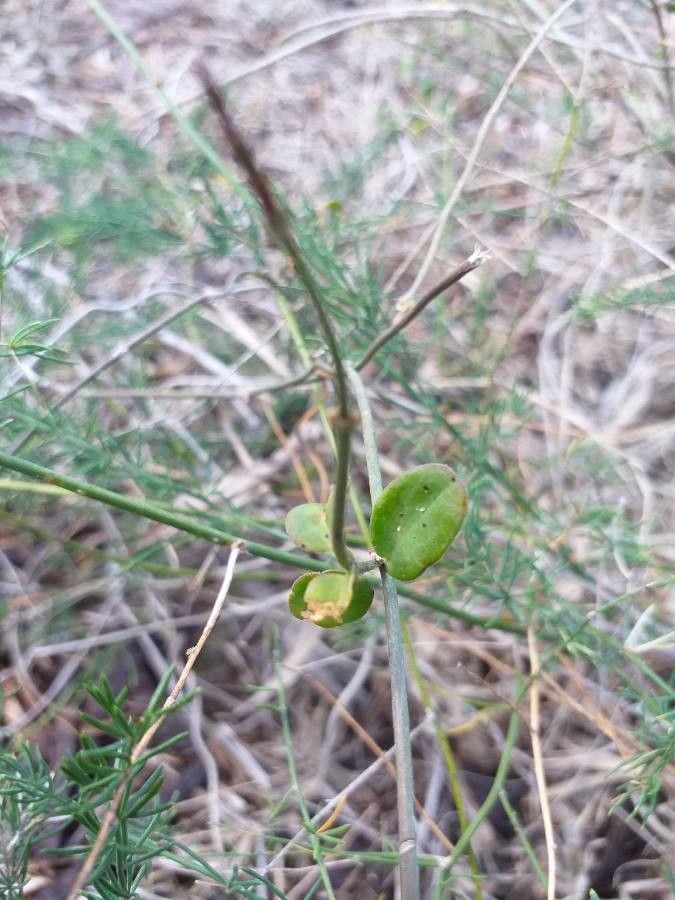
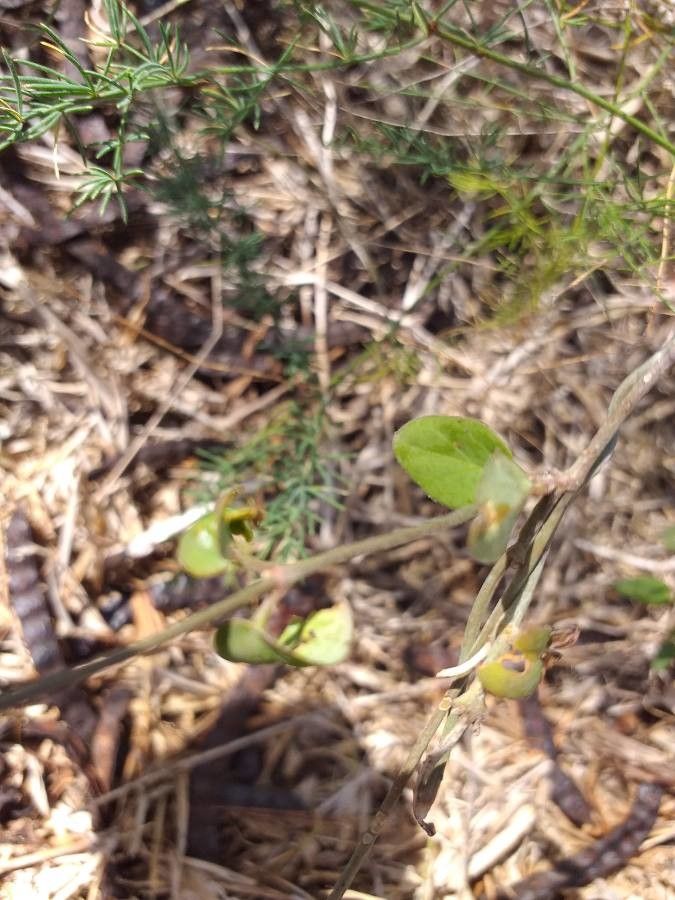
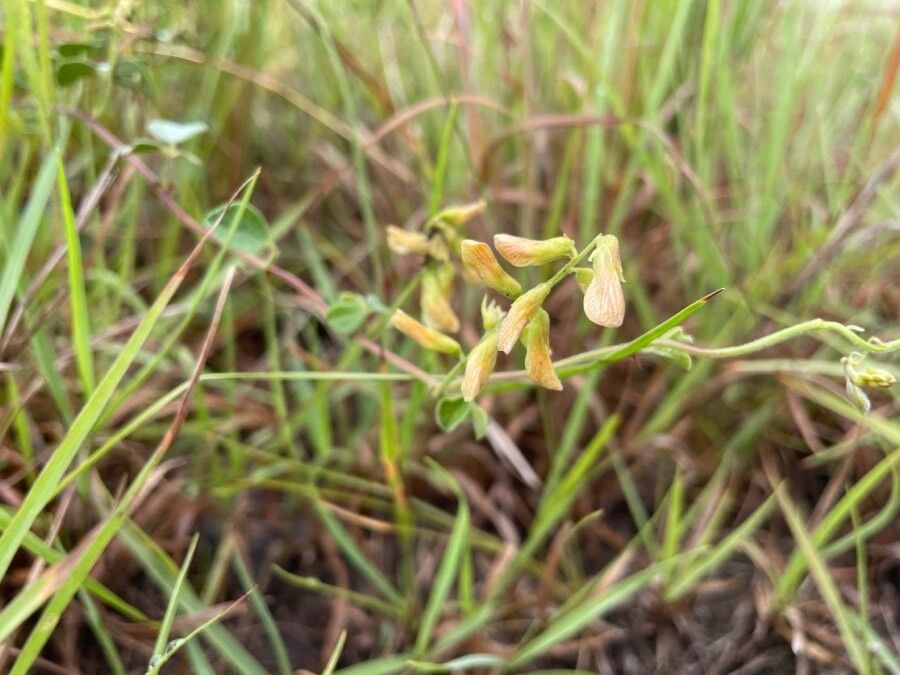
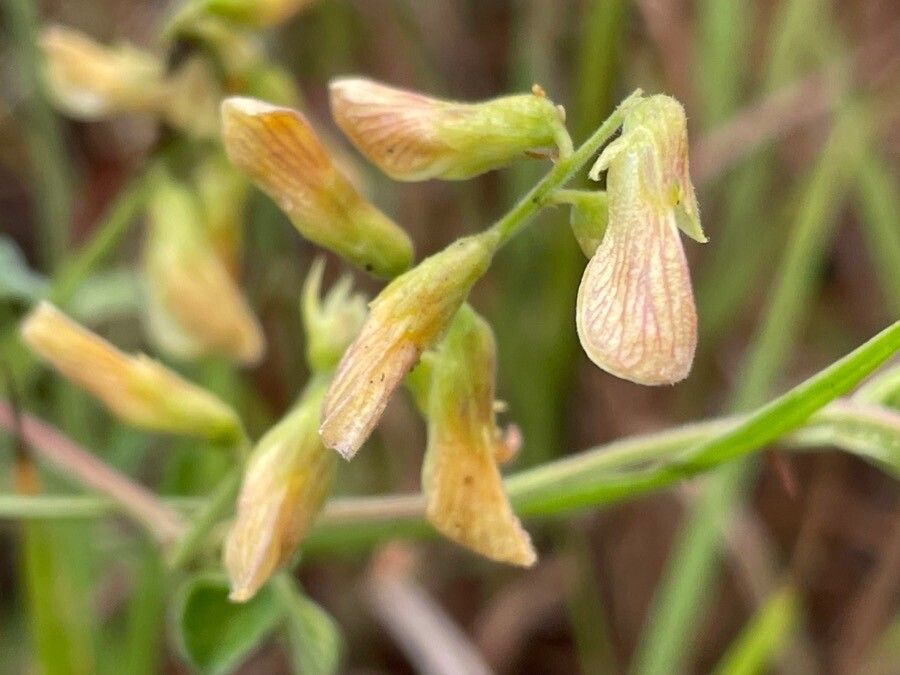
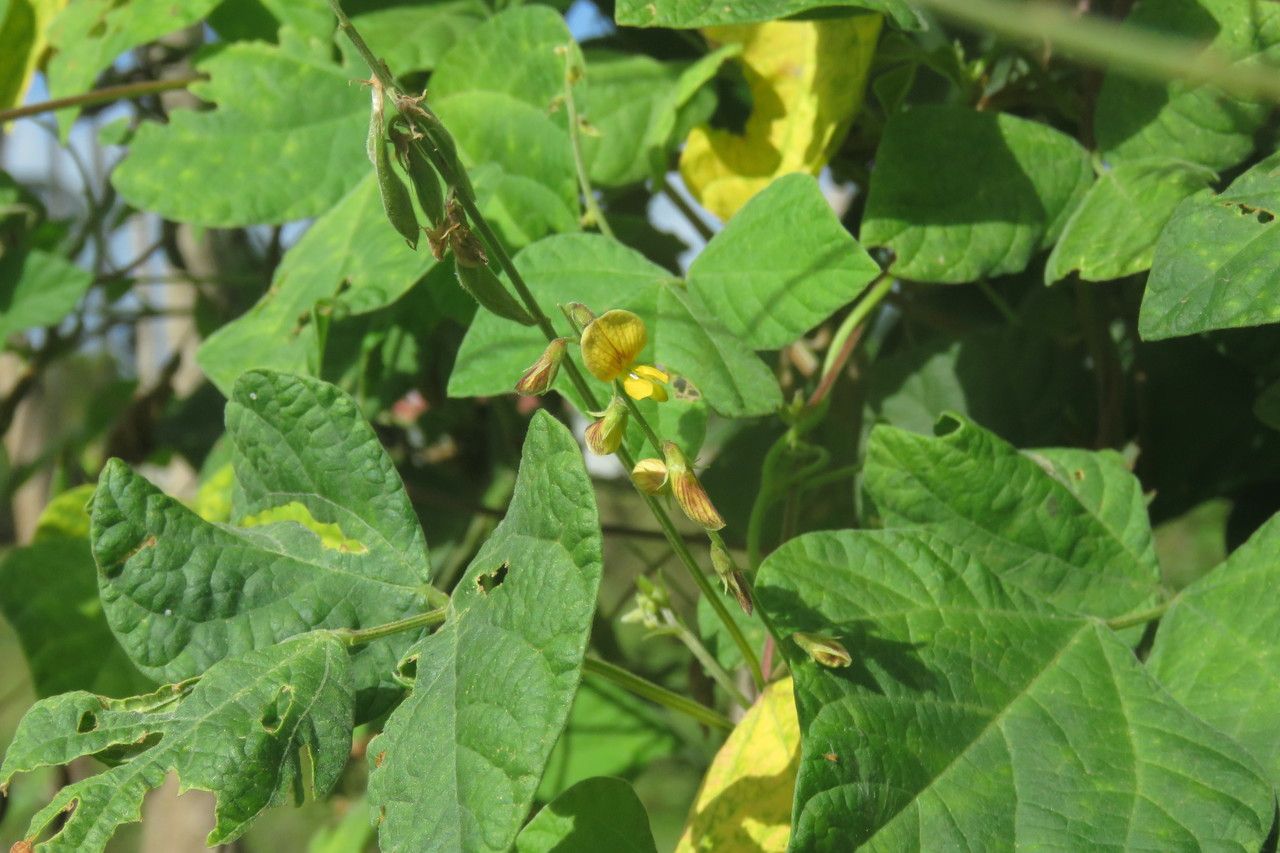
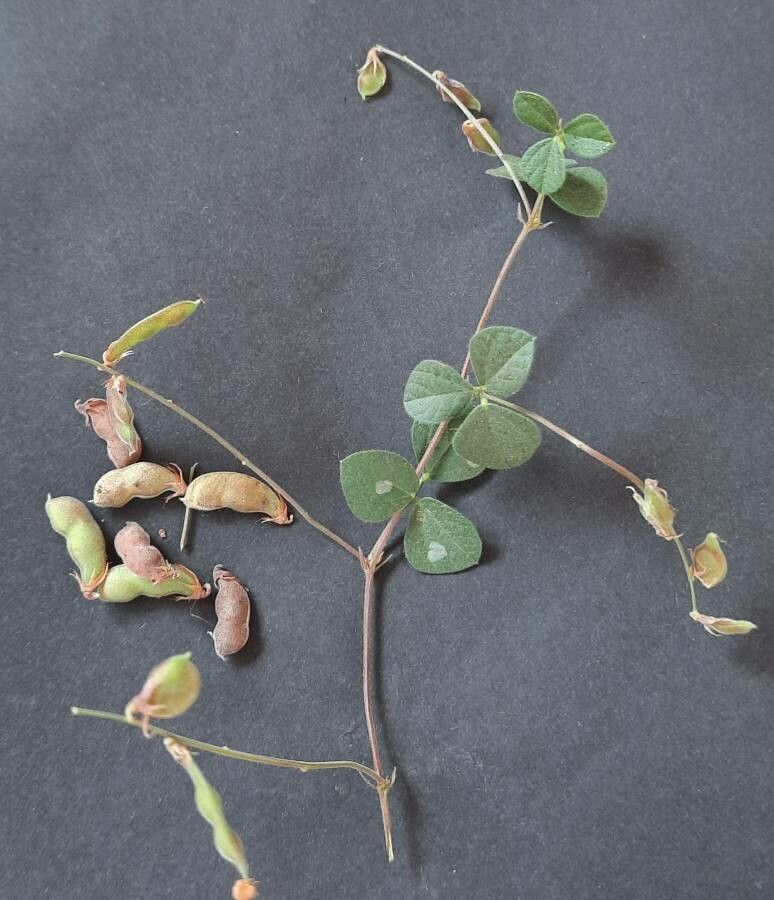
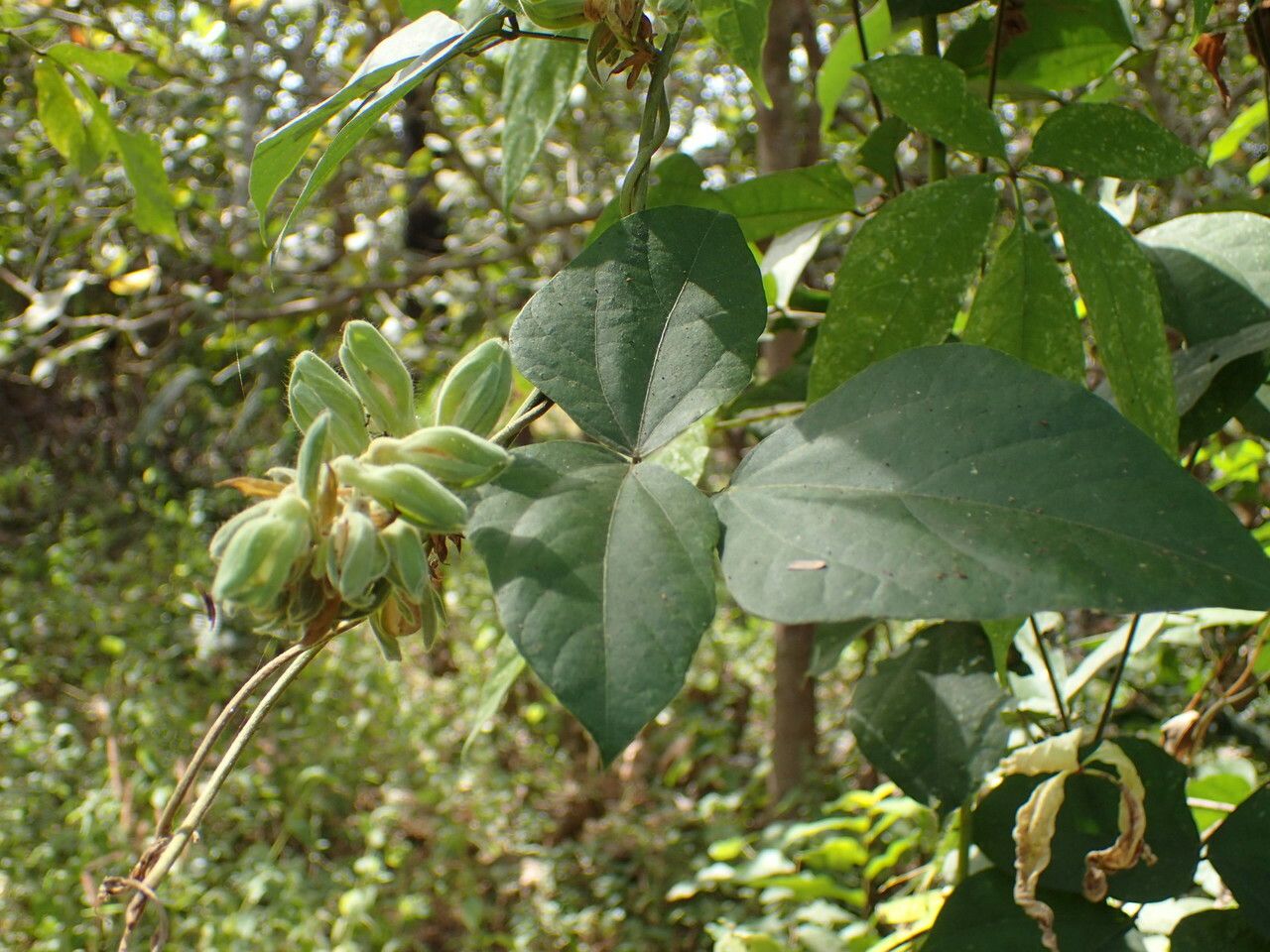
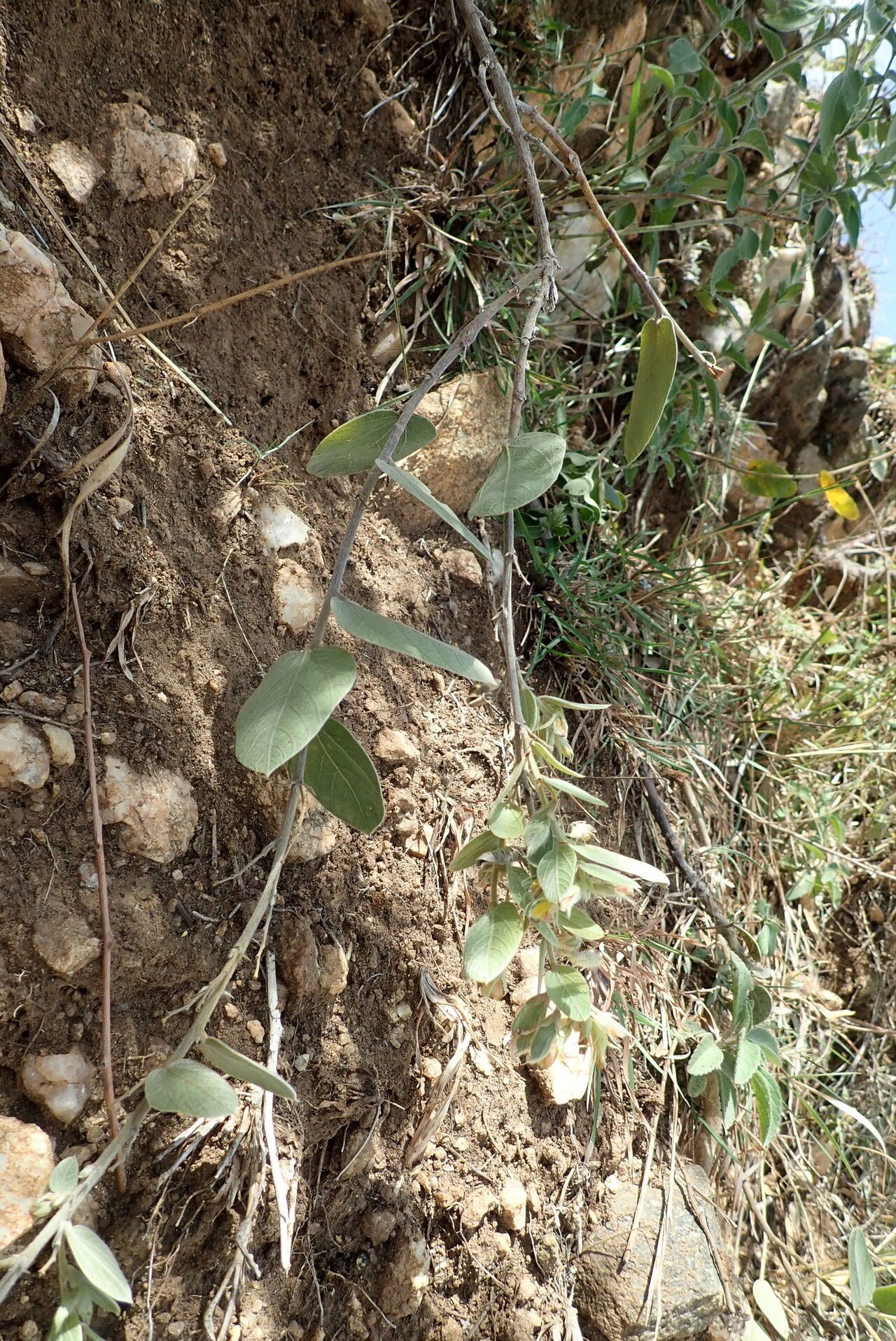
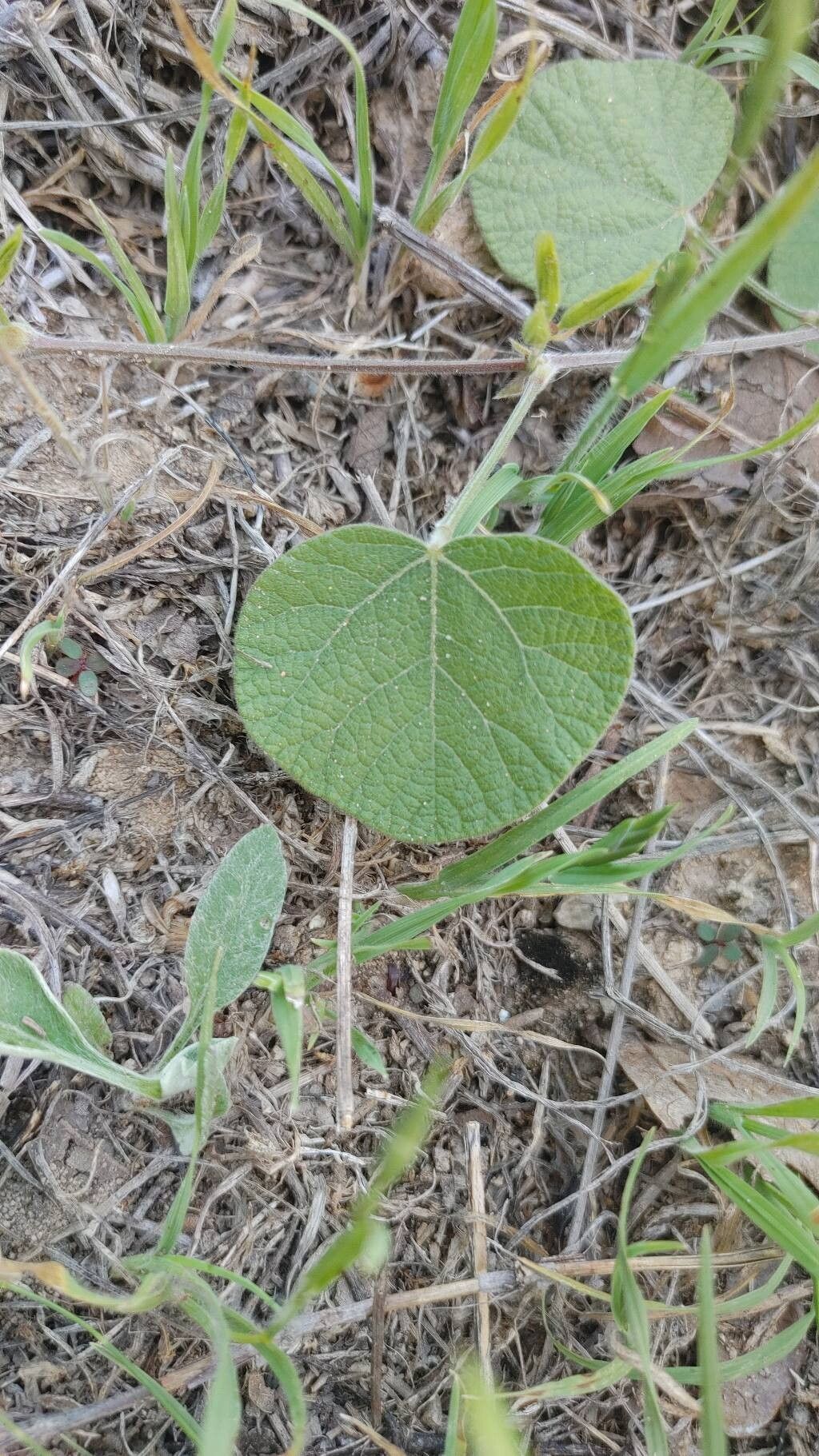
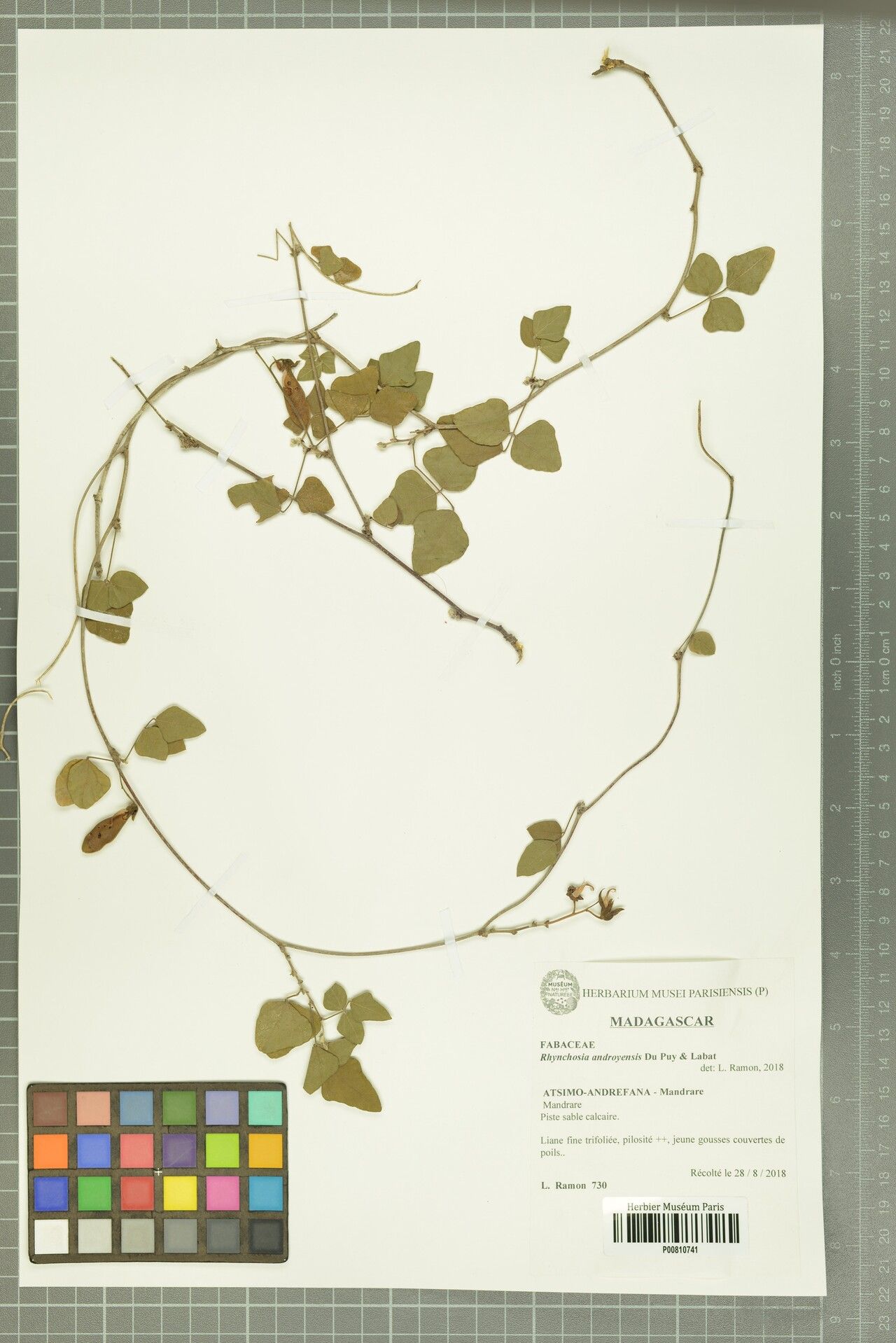
Rhynchosia minima is a species of flowering plant in the legume family known by the common names least snout-bean, burn-mouth-vine, and jumby-bean. It can be found on every continent. It is naturalized in Hawaii.This perennial herb has twining or trailing stems which can reach 1.2 meters in length. The leaves are made up of three leaflets measuring up to 3 to 3.5 centimeters long. The inflorescence is a raceme of up to 15 flowers. The flowers are yellow with purple or brown veining and measure up to 8 millimeters long. The fruit is one or two centimeters long.This common plant is used as animal forage.
Least snout-bean has good disease resistance and is generally not prone to illnesses. However, it can be affected by pests and diseases present in its surroundings. These infections are usually mild. In terms of care, this plant requires medium maintenance. It should be pruned regularly to maintain its appearance and support healthy growth. Fertilizing can also help encourage flowering. Least snout-bean is suitable for anyone with outdoor space, such as a garden or patio, and does not demand extensive gardening experience. It may need more attention when grown indoors.
How to keep Rhynchosia Minima.
Light
Least snout-bean does best in full, unshaded sunlight. Its native environment makes it dependent on abundant sunshine to grow vigorously and stay healthy. Too little light can cause stunted growth or wilting, while light exceeding its tolerance may lead to leaf burn.
Water
The least snout-bean thrives best in a balanced water supply that mimics the rainfall of its natural habitat. To ensure its health, it is crucial to water it weekly. Being an evergreen plant, the least snout-bean needs regular hydration all year round to maintain its lush appearance.
Temperature
Least snout-bean comes from tropical areas, where the climate is usually warm and humid. Consequently, it is well adapted to high heat and humidity. It does not tolerate sudden temperature changes and prefers a stable temperature, so avoiding indoor temperature fluctuations is important. It typically cannot withstand cold and needs warmer temperatures for growth. If the surrounding temperature falls too low, the plant may stop growing or even die.
Fertilizer
The least snout-bean needs the most fertilizer during its active growth period, which takes place mainly in spring, summer, and early fall. Fertilizing supplies essential nutrients the soil may lack, supporting healthy root and stem growth and encouraging the attractive foliage that is a key characteristic of this plant.
Pruning
The least snout-bean is a small perennial vine characterized by trifoliate leaves and yellow flowers. To promote growth and improve air circulation, prune the plant from early to late spring. You may also want to do some light pruning after it flowers. Always use sharp, sterilized tools to prevent disease and keep the plant vigorous.
Botanical profile.
- Plant Type
- Herb, Vine, Shrub
- Life Cycle
- Perennial
- Genus
- Rhynchosia
- Family
- Fabaceae
- Hardiness Zone
- 10
- Mature Height
- 1.22 m
- Mature Spread
- 49 cm to 91 cm
- Leaf Color
- Green, Dark Green
- Leaf Type
- Deciduous
- Flower Color
- Yellow
- Flower Size
- 2.54 cm
- Bloom Time
- Late spring, Summer, Early fall
- Planting Time
- Spring, Summer, Autumn, Winter
- Harvest Time
- Mid summer, Late summer, Fall
- Native Area
- Sri Lanka, Libya, Burkina Faso, Belize, India, Mexico, Guatemala, Madagascar, Pakistan, Nigeria, Morocco, Uganda, Tanzania, Benin, Sierra Leone, Indonesia, Cameroon, Ethiopia, Central African Republic, Saudi Arabia, Honduras, Peru, Philippines, Panama, Chad, China, Colombia, Afghanistan, Japan, Togo, Senegal, Eswatini, Iran, Ecuador, Côte d'Ivoire, Costa Rica, Congo (DRC), Somalia, Egypt, Angola, Malaysia, Namibia, Rwanda, Yemen, Kenya, Niger, Jamaica, Mali, Cuba, Burundi, Venezuela, Brazil, Oman, Ghana, Qatar, Botswana, Nepal, South Africa, Zambia, Sudan, Mauritania, Bahamas, Bolivia, Vietnam, Myanmar, Guyana, Bhutan, Nicaragua, Algeria, Thailand
Other names.
Reader questions.
How should I water my Least snout-bean plant?
To properly water the Least snout-bean, it's best to use filtered water at room temperature. Tap water may have harmful particles, so filtered water is preferred. Since the plant is accustomed to warm environments, using room temperature or slightly warmer water prevents shock. Avoid overhead watering, as it can cause problems with the foliage. Instead, apply filtered room temperature water directly to the soil until it is fully soaked. This benefits the plant by moistening the roots and allowing them to spread and collect nutrients in the soil.
What are the sunlight requirements for Least snout-bean?
Least snout-bean requires above 6 hours of sunlight to thrive, indicating its preference for full sun conditions. It's essential to observe how sunlight moves through your garden and choose spots that offer a balance of light and shade to ensure the plants' well-being. Insufficient sunlight can lead to stunted growth or wilting, while too much exposure might cause leaf burn.
What do I do if I give my Least snout-bean too much or too little water?
Overwatering is a more common problem than underwatering for the health of your Least snout-bean. When overwatered, the plant's stems and leaves may wilt and turn yellow. Over time, this can lead to diseases like root rot, mold, and mildew, which can be fatal. Underwatering is less likely, as the plant is fairly tolerant to drought. However, if underwatering occurs, the leaves may become brittle and brown. It's important to identify signs of overwatering early, as some diseases like root rot may be irreversible if not addressed promptly. If you notice these signs, reduce your watering schedule and check the soil drainage. Replace soil that drains poorly with a loose, well-draining potting mix. On the other hand, if your plant lacks water, increase your watering frequency until the signs improve.
How essential is sunlight for the health of Least snout-bean?
Sunlight is crucial for the health of Least snout-bean, as its natural habitat predisposes it to need ample sunshine for robust growth and health. Lack of enough light can cause the plant to exhibit stunted growth and wilting, whereas excessive light can lead to leaf burn. In addition to natural sunlight, artificial lighting can be utilized to support plant growth, especially indoors where natural light may be insufficient. LED lights are recommended for their ability to provide specific wavelengths needed by the plants. The amount of artificial light required varies depending on whether the plant prefers full sun, partial sun, or full shade, with specific wattage suggested for each category.
How much should I water my Least snout-bean plant?
If you have a potted plant, the most accurate way to determine if your Least snout-bean needs water is to stick your finger in the soil. If the top two to three inches of soil feel dry, then it's time to water it. If you have your Least snout-bean planted outdoors, you can use the same method. If the first few inches of soil feel dry, then it's time to water. Typically, during spring and early fall, you'll need to water this plant about once a week using this method. However, during extremely hot weather, you may need to water it twice or even more frequently in a week. Nonetheless, mature and well-established Least snout-beans have an impressive ability to tolerate drought.
What are the symptoms of inadequate sunlight in Least snout-bean?
Symptoms of insufficient sunlight in Least snout-bean include smaller new leaves, leggy or sparse growth, faster leaf drop, slower or no new growth, and paler new leaves indicating a lack of chlorophyll and essential nutrients. Conversely, excessive sunlight can cause chlorosis, sunscald, leaf curling, wilting, and leaf scorching, indicating damage from intense light exposure. These symptoms highlight the plant's struggle to adapt to inappropriate light conditions.
How much water does my Least snout-bean plant need?
When watering your Least snout-bean, don't hold back on the amount of water you give. Make sure the top two to three inches of soil are dry, and then give the plant a good, thorough watering. The goal is to saturate the soil completely, so the water should flow out of the drainage holes at the bottom of the pot. If you don't see any excess water draining out, it's likely that you haven't watered enough. On the other hand, be careful not to let the water accumulate in the soil, as this can harm the plant. It's also important to note that if the water doesn't drain well, it could mean the soil is not suitable for this plant and should be avoided. If the plant is outside, a weekly rainfall of 1 inch should be enough.
What solutions can improve the light conditions for Least snout-bean?
To address lighting issues for Least snout-bean, you can gradually introduce the plant to more sunlight or use artificial lighting. Indoors, aim to provide at least 6 hours of direct sunlight by positioning the plant near a south-facing window or employing artificial grow lights if the plant is large. Outdoors, it's vital to acclimate the plant to sunnier spots gradually to prevent sunburn. Reducing obstructions can also help by pruning trees or bushes that block sunlight, and for smaller plants, transplanting during dormant periods to areas with better sunlight exposure and drainage is beneficial. It's important to adjust the environment to meet the light needs of the plant to encourage healthy growth.
How do I water my Least snout-bean as it grows?
The water needs of the Least snout-bean can vary, depending on its growth stages. During the first few years of its life or when it is transplanted to a new location, it will require more water than usual. These stages involve the growth of new roots, which need extra moisture to support future growth. As the plant matures, it will require less water. Additionally, during the bloom period, the plant may require more water due to the significant amount of moisture needed for flower development.
How should I water my Least snout-bean throughout the year?
The Least snout-bean has the highest water needs during the hottest months of the year, particularly in the height of summer. Depending on how quickly the soil dries out, you may need to water this plant more than once per week during this time. However, the opposite is true during the winter months. In winter, the plant goes into a dormant phase and requires much less water than usual. In fact, you may not need to water the plant at all during winter. If you do choose to water it during this time, it should only be done about once per month. It's important not to overwater during winter, as it increases the risk of the plant getting a disease.
What's the difference between watering my Least snout-bean inside and outside?
The Least snout-bean is commonly grown indoors by gardeners who live in non-temperate and non-tropical regions. It's important to keep in mind that the soil in a container can dry out quicker than soil in the ground. Additionally, if there are drying elements like air conditioning units present, your Least snout-bean may need more frequent watering compared to if it were planted outside. In such cases, outdoor planting may require less watering, especially if you receive regular rainfall. On the other hand, if you are growing this plant indoors, you will need to water it more often since you won't have the option of relying on rainwater to moisten the soil.