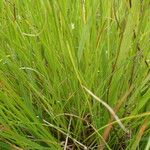
Rhynchospora alba
White beak sedge · White beak-rush · White Beaksedge · White Beakrush · White Beaked-bush
Description
Source: leafsnapRhynchospora alba, the white beak-sedge, is a plant in the sedge family, Cyperaceae. It is a tufted herbaceous perennial around 50 cm tall, with white inflorescences that flower in August. The fruit of the sedge is a small achene with a characteristic beak-like cap. It is dispersed by wind or falls by gravity, leading to individuals existing in tight clumps. The species favours wet, acidic and nutrient poor soils, thriving in Sphagnum-dominated bogs, but also peaty grasslands. As such it is often used as a positive indicator for bog and mire ecosystem health.The species was first described by Linnaeus in 1753 under a different genus and name, Schoenus albus, but was subsequently reclassified into the novel genus Rhynchospora by Vahl in 1805. It has a wide range across the Northern Hemisphere, extending from the inland wetlands of North America, across Europe to the Korean Peninsula. Due to this large range, there is considerable variation between populations, and numerous varieties have been identified. The plant has few uses, though it is used as an ornamental in the UK.
Care Guide
💧 Water
White beaksedge thrives in marshy environments and prefers consistently moist conditions. To maintain the soil moisture that mirrors its wetland origins, it needs to be watered weekly. Although it can tolerate some drought, ensuring sufficient humidity is essential for healthy growth during the growing season.
What should I do if I give too much or too little water to my White beaksedge?
Proper watering is crucial for the performance of this beautiful ornamental grass. When planted in the ground, watering issues can be addressed, but in a container, too much or too little water can quickly kill White beaksedge. Inadequate watering can cause the grass to stop growing, while overwatering can lead to yellow leaves with brown tips. Underwatering can result in drooping leaves, weak seed head production, and browning. If you suspect improper watering, first determine if it's too much or too little. If it's too much, stop watering immediately and be patient for the soil to dry. Test the soil for moisture when new growth appears, and adjust the watering accordingly. For too little water, simply give the grass a deep drink and observe if it perks up. Remember that a long, deep watering is better than frequent shallow waterings. Deep watering helps the grass develop deep roots, making it more resistant to drought and watering-related issues.
How much water does my White beaksedge need?
The watering needs of White beaksedge depend on where it is planted. In general, watering once a week is recommended. However, in hot climates, watering once or twice a week in the summer may be necessary. In moderate climates, watering every seven days or so may be enough. Grass in containers usually requires more frequent watering compared to grass planted in the ground. Additionally, the location of the grass matters. Shaded grasses need less frequent watering than grasses planted in the ground. White beaksedge should only be watered when the soil is dry. To determine if the soil is dry, you can press your finger a couple of inches into the soil. For potted grass, you can weigh the grass with a portable scale or simply feel the pot to check if it is lightweight from lack of water. When the roots lack sufficient water, the grass blades may appear folded along their centers and thinner than usual. Despite its drought tolerance, regular, deep waterings will help maintain its beautiful color. In its natural habitat of open scrubland, White beaksedge experiences extreme heat, bright sun, and intermittent rain. Although it is drought resistant, it still requires care and attention. Even in harsh, dry conditions, consistent watering is beneficial for this grass. When first planted, White beaksedge needs more frequent watering until it has established deep roots. Potted White beaksedge tends to dry out quickly, especially if exposed to hot, direct sunlight for most of the day. It is recommended to test the soil every 3 to 4 days and water only when it feels dry. White beaksedge planted in the ground generally requires less watering, but this depends on the soil type. Heavy clay soil retains water for a long time and may feel dry at the surface while still having moisture below ground. Sandy soils that drain quickly will need more frequent watering.
What do I need to watch out for when watering my White beaksedge in different seasons, climates, or during different periods of growth?
To determine if you are watering your grass enough, observe its growth rate. White beaksedge, for instance, tends to double in size during the hottest months of the year. If it isn't growing vigorously in hot weather, adjust your watering schedule accordingly. In winter, you may only need to water once a month, but check the soil for moisture. During the grass's growth cycle in warm months, it requires more water. However, during winter and cooler periods, the water needs decrease significantly. Remember that the soil for White beaksedge should always be allowed to completely dry out before watering.
☀️ Light Full sun
White beaksedge originates from habitats with plentiful sunlight, such as the shallow margins of ponds and lakes. It prefers full sun, although it can also tolerate partial sun.
What are the sunlight requirements for White beaksedge?
White beaksedge thrives best in full sun conditions, requiring above 6 hours of sunlight daily, but can also tolerate partial sun conditions, which means about 3-6 hours of sunlight. Given its adaptability, it's important to watch how sunlight moves through your garden to find spots that offer the right balance of light and shade, ensuring the plant's happiness and optimal growth.
How does artificial lighting support White beaksedge indoor growth?
Indoor White beaksedge plants require adequate lighting for optimal growth, especially when natural sunlight is insufficient, such as in winter or less sunny spaces. Artificial lights, like LED lights which can provide specific wavelengths, offer a vital solution for promoting healthier growth. Full sun plants need 30-50W/sq ft, partial sun plants 20-30W/sq ft, and full shade plants 10-20W/sq ft of artificial light. The light source should be placed 12-36 inches above the plant and kept on for 8-12 hours per day to mimic natural daylight as closely as possible.
What are common light deficiency symptoms in White beaksedge?
Signs of light deficiency in White beaksedge include the growth of smaller new leaves, leggy or sparse growth due to longer spaces between leaves or stems, quicker leaf drop as the plant conserves resources, slowed or halted growth as the plant enters survival mode, lighter-colored or pale new leaves indicating a lack of chlorophyll, and symptoms like chlorosis, sunscald, leaf curling, wilting, and leaf scorching due to inappropriate light conditions.
What are effective solutions for light deficiency in White beaksedge?
To address light deficiency in White beaksedge, gradually acclimatize plants to brighter conditions by moving them to sunnier spots each week until they receive at least 6 hours of direct sunlight daily. For indoor plants difficult to move, consider artificial lighting, keeping lamps on for at least 8 hours daily. For outdoors, move plants to better-lit areas gradually to avoid sunburn. If sunlight is blocked by trees or buildings, pruning or relocating the plant to a sunnier location with good drainage might be necessary. Note that parts of the plant that suffered from light deficiency might not recover, but new growth will be healthy once proper light conditions are established.
🌡️ Temperature 5–25°C
White beaksedge, which is native to temperate climates, does best in conditions where temperatures are between 41 and 77 °F (5 to 25 ℃). For optimal growth, keep this temperature year-round, changing it only when necessary.
What temperature is best for White beaksedge?
White beaksedge thrives in cooler weather and has an optimal temperature range for maximum growth. To keep White beaksedge healthy, it is recommended to maintain temperatures between 65-75℉ (18-25℃). While White beaksedge can tolerate higher and lower temperatures, it is best to keep the growing area within a few degrees of 65-75℉ (18-25℃). If you can't maintain this precise range, the plant will still continue to grow, but it may experience some damage or reduced growth. The upper temperature range is between 75-85℉ (25-30℃), and the lower temperature limit is as low as 5℉ (-15℃). It is important to note that exceeding the upper range can slow down growth, and temperatures above 85℉ (30℃) can cause the plant to die.
Does White beaksedge need varying temperatures during different stages of growth?
To ensure the healthy growth of White beaksedge, it is crucial to maintain a temperature range of 65-75℉ (18-25℃) in your growing space. It is recommended to keep the temperature on the colder side of this range, but be careful not to drop below -5℉ (-20℃). While extremely cold temperatures can slow down the growth of White beaksedge at any stage, they are not as harmful as extremely hot temperatures. Moreover, if the temperature remains high during the budding stage, White beaksedge may not flower at all.
Here are three tips to help you control the temperature of White beaksedge.
Here are some tips for growing White beaksedge indoors: 1. Choose the coldest room in your home: When growing White beaksedge indoors, it's important to pick a room that doesn't get too hot during the day. Look for a cooler location, typically on the side of your house that isn't exposed to direct sunlight. However, make sure the room still gets a good amount of sunlight because zero sunlight can hinder the growth of White beaksedge. 2. Avoid high temperatures: During the growing season (spring and early summer), high temperatures can negatively impact White beaksedge. Fluctuations in temperature can cause the buds to change into non-flowering buds. To prevent this, try to maintain a temperature range of 65-75℉ (18-25℃) for optimal flowering. 3. Protect from frost: While White beaksedge can handle lower temperatures as low as -5℉ (-20℃), it is not frost-resistant. If exposed to significant frost during late fall or winter, the plant will show signs of damage. Look for wilting, discoloration, and browning or blackening of the affected parts. These damaged sections cannot be saved and should be pruned to keep the plant healthy.
Does White beaksedge require different temperatures during different seasons?
To ensure optimal growth conditions for White beaksedge, it is crucial to maintain a consistent temperature in your growing area, regardless of the season. If you live in an area with extreme winters or very hot summers, it would be ideal to keep your plants indoors. This allows you to control the temperature in a cool room, providing the best environment for White beaksedge to thrive. If you choose to keep your plants outside, be diligent in monitoring the temperature. In climates with particularly hot summers, it is important to ensure that your plants are not exposed to temperatures above 85℉(30℃). This elevated heat can quickly dehydrate and harm the White beaksedge, eventually leading to their demise.
How can we keep the temperature just right for White beaksedge?
If you plan on placing White beaksedge outside, it's important to provide shade from the midday sun. While the plant needs sunlight to grow, direct sunlight can raise the temperature and harm certain parts of the plant. Look for an area with shade from structures or tall trees to protect the plant during the hottest times of the day. If your climate isn't suitable for White beaksedge or you lack space in your garden, you can also choose to plant them indoors. Indoor environments are easier to control temperature-wise, and using fans, ventilation, or an air conditioning unit will help keep the temperature between the optimal range of 65~75℉(18~25℃).
💨 Humidity
🪴 Soil
🌱 Fertilizer
🪴 Pot & Repot
✂️ Pruning
To encourage healthy growth and prevent overcrowding, it's best to prune white beaksedge in early spring. Begin by trimming away any dead stems to improve air circulation, and remove spent flowers to enhance the plant's vitality. Selective pruning will help maintain the plant's shape, reduce the risk of disease, and promote robust, flourishing vegetation.
🌿 Propagating
🐛 Diseases & pets
☠️ Toxicity
Characteristics
- Plant Type
- Grass
- Life Cycle
- Perennial
- Genus
- Rhynchospora
- Family
- Cyperaceae
- Hardiness Zone
- 4
- Mature Height
- 10 cm to 49 cm
- Mature Spread
- 10 cm to 25 cm
- Leaf Color
- Light Green
- Leaf Type
- Semi-evergreen
- Flower Color
- White
- Flower Size
- 0.51 cm to 1.52 cm
- Bloom Time
- Summer
- Planting Time
- Spring, Summer, Autumn
- Harvest Time
- Late summer, Early fall, Mid fall
- Native Area
- Turkey, Sweden, Austria, Slovakia, Montenegro, Slovenia, Croatia, Belarus, Russia, Germany, Estonia, Koppen, South Korea, Latvia, Romania, Belgium, Portugal, Netherlands, France, Czech Republic, Poland, Greece, Ukraine, Serbia, China, Lithuania, Norway, Italy, Kazakhstan, Spain, Switzerland, Denmark, Japan, Finland, Ireland, United Kingdom, Hungary