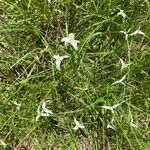
Rhynchospora colorata
Starrush Whitetop · Star sedge · White-headed rush · Mullumbimby couch · White kyllinga
Description
Source: leafsnapRhynchospora colorata, commonly known as Starrush Whitetop or White-topped Sedge, is a perennial plant species belonging to the family Cyperaceae. Native to the southeastern United States, it thrives in wetlands, marshes, and swamps. This plant features tall stems that can reach up to 3 feet in height, adorned with white-topped inflorescences that bloom from May to September. Its leaves are narrow and grass-like, displaying a bluish-green hue. Rhynchospora colorata plays a crucial role in wetland ecosystems by providing habitats for various wildlife species, including birds, insects, amphibians, and reptiles. Additionally, its extensive root system helps prevent soil erosion by stabilizing the soil. Historically, Native Americans utilized this plant for medicinal purposes, using it to treat ailments such as fever and diarrhea. The roots were also employed in basket weaving. Despite its ecological significance and medicinal properties, Rhynchospora colorata faces threats from habitat loss due to human activities like land development and wetland drainage for agricultural or urbanization purposes. Conservation efforts are underway to protect this valuable plant species through habitat restoration projects aimed at preserving the wetland ecosystems where it best thrives.
Care Guide
💧 Water Every 7 days
Starrush Whitetop flourishes in moist environments and needs consistent watering. To keep the soil hydrated, water it twice a week. This plant prefers high humidity and damp soil, making it perfect for rain gardens and other water-rich landscapes that mimic its natural swampy habitat.
How should I water my Starrush Whitetop plant?
To properly water the Starrush Whitetop, it is recommended to use filtered water at room temperature. Tap water can contain harmful particles, so it's best to avoid using it. The plant prefers water at room temperature or slightly warmer, as it originated in a warm environment. Cold water may shock its system, so it's important to use lukewarm water. Additionally, overhead watering should be avoided to prevent foliage complications. Instead, gently water the soil with filtered, room temperature water until it is completely soaked. This method benefits the plant by hydrating the roots and aiding their spread through the soil to collect necessary nutrients.
What should I do if I give my Starrush Whitetop plant too much or too little water?
Overwatering can harm your Starrush Whitetop, and it is a more common issue than underwatering. When this plant gets too much water, its stems and leaves can wilt and turn yellow. Prolonged overwatering can also lead to diseases like root rot, mold, and mildew, which can be fatal. Underwatering is less common because the plant can tolerate drought, but it can still happen. In this case, the leaves of your Starrush Whitetop will become brittle and brown. It is crucial to recognize the signs of overwatering early to prevent irreversible damage. If you notice these signs, reduce your watering schedule and check the soil drainage. Replace the soil with a well-draining potting mix if needed. If your plant shows signs of underwatering, simply water it more regularly until the signs go away.
How frequently do I need to water my Starrush Whitetop?
If your Starrush Whitetop plant is in a pot, the best way to determine if it needs water is to check the soil moisture by sticking your finger into it. When the top two to three inches of the soil feel dry, it is time to water the plant. For outdoor Starrush Whitetop plants grown in the ground, you can use a similar method to test the soil. Once again, if the top few inches of soil have dried out, it is time to water the plant. Typically, during spring and early fall, this method will indicate watering once a week. However, during very hot weather, watering may need to be increased to twice or more per week. Nevertheless, mature and well-established Starrush Whitetop plants have an impressive ability to tolerate drought.
How much water does my Starrush Whitetop plant need?
To properly water your Starrush Whitetop, don't hesitate to give it a good amount of water. Wait until the top few inches of soil are dry, then give the plant a thorough soaking, making sure the water fully saturates the soil. You'll know you've added enough water when you see excess water flowing out of the pot's drainage holes. It's important to avoid underwatering or allowing water to accumulate in the soil, as both can harm the plant. If you notice water not draining well, it could indicate a problem with the soil, so make sure it has good drainage. If the plant is outdoors, around 1 inch of rain per week should be enough.
How should I water my Starrush Whitetop at different times it is growing?
The water needs of the Starrush Whitetop can change depending on its growth stages. When it's in the first few years of its life or if you've recently transplanted it, you should provide more water than usual. During these stages, the plant focuses on developing new roots that will support future growth, and these roots require more moisture. As the plant matures over a few seasons, it will need less water. Another growth stage that requires increased watering is during the bloom period when the flower development requires a significant amount of moisture.
☀️ Light Full sun
Starrush Whitetop does best with ample light during the day and can also tolerate moderate lighting. This reflects its native habitat, which typically gets significant sun exposure. Excessive light can potentially cause damage, while insufficient light can impede its healthy growth.
What are the sunlight requirements for Starrush Whitetop?
Starrush Whitetop requires a significant amount of sunlight to thrive, reflecting its natural habitat's conditions. It prospers under full sun, which constitutes more than 6 hours of sunlight daily, but can also adapt to partial sun, with about 3-6 hours of sunlight. The essence of cultivating Starrush Whitetop lies in mimicking its natural exposure to abundant light, although care should be taken to prevent oversaturation, which might cause harm, or too little light, which can inhibit growth. It's crucial to observe the movement of sunlight through your garden to find spots that offer an ideal balance of light and darkness, ensuring the plants' well-being.
How does artificial lighting benefit indoor Starrush Whitetop plants?
For indoor Starrush Whitetop plants, when natural sunlight is insufficient, especially during winter or in less sunny locations, artificial lighting becomes indispensable. It promotes faster, healthier growth by providing the necessary light exposure. Choosing the right artificial light, such as LED lights, is crucial because it can be tuned to offer specific wavelengths needed by your plants. The amount of artificial light required varies: full sun plants need 30-50W/sq ft, partial sun plants need 20-30W/sq ft, and full shade plants require 10-20W/sq ft. The proper distance between the plant and the light source (12-36 inches) and the duration of exposure (8-12 hours per day) are important factors to mimic natural sunlight conditions and encourage optimal growth.
What are the symptoms of inadequate lighting for Starrush Whitetop?
When Starrush Whitetop is grown in conditions with insufficient lighting, several symptoms may manifest, indicating the plant's struggle. These include smaller new leaves, leggy or sparse growth, and faster leaf drop as the plant sheds older leaves to save resources. There might also be a halt in new growth, with the plant ceasing leaf production entirely and entering a survival mode. New leaves may appear pale or develop irregular color patterns due to inadequate chlorophyll and essential nutrients. Additionally, various forms of damage from excessive sunlight, such as chlorosis, sunscald, leaf curling, wilting, and leaf scorching, indicate the plant's difficulty in coping with the given light conditions.
How can I mitigate the effects of inadequate sunlight for Starrush Whitetop?
To address the issue of insufficient sunlight for Starrush Whitetop, consider gradually moving the plants to locations with more sunlight, aiming for at least 6 hours of direct sunlight daily. For indoor plants, this may involve using a south-facing window and keeping curtains open during the day. Artificial lighting, such as desk lamps or grow lights, could also supplement natural light, especially for larger plants that are difficult to move. For outdoor plants, transplantation to sunlight-rich spots should be gradual to prevent sunburn. If obstructions like trees block sunlight, pruning might help. For smaller plants, consider transplanting during the dormant period to a location with better sunlight and drainage. Remember, while damaged parts may not recover, new growth will benefit from the improved lighting conditions.
🌡️ Temperature 15–35°C
Starrush Whitetop thrives in temperate climates, naturally occurring where temperatures range from 59 to 95 °F (15 to 35 °C). Temperature changes during seasonal transitions should be managed carefully.
What temperatures are optimal for Starrush Whitetop's growth?
Starrush Whitetop is best adapted to moderate climates, thriving in temperatures ranging from 59 to 95 °F (15 to 35 °C). The plant is native to environments where it can withstand these conditions comfortably. Transition periods between seasons should be approached with care, ensuring a gradual adjustment to changes in temperature to maintain the health and growth of Starrush Whitetop.
Is any special frost protection necessary for Starrush Whitetop?
Starrush Whitetop possesses strong cold resistance, making special frost protection measures generally unnecessary. However, in regions where winter temperatures are expected to fall below -15°C, some form of cold protection is advisable. This can include covering the plant with soil, straw, or other insulating materials. It's also beneficial to water the plant abundantly before the first freeze, ensuring the soil around it remains moist. This precaution helps the plant avoid drought and water scarcity throughout the winter and early spring.
How does Starrush Whitetop react to low temperatures?
Starrush Whitetop is cold-tolerant, ideally kept in temperatures above 15°C during winter and should not be exposed to conditions colder than -10°C. When temperatures fall below -15°C, the plant may not show immediate distress, but its ability to sprout in the spring could be diminished, leading to decreased sprouting or a complete lack thereof. If this occurs, the recommended solution is to remove any parts of the plant that have failed to sprout in the spring.
How should Starrush Whitetop be cared for in high temperatures?
During summer, it's crucial to ensure that Starrush Whitetop's environment does not exceed 35°C. If temperatures rise above 41°C, the plant can suffer from lighter leaf colors, curling, sunburn, and in extreme cases, wilting and drying out entirely. To mitigate these issues, it's recommended to trim away sunburned and dried-up parts, move the plant to a shaded area or employ a shade cloth to protect it from the strongest sunlight, particularly during midday and afternoon hours. Additionally, watering the plant in the morning and evening will help keep the soil adequately moist.
💨 Humidity
🪴 Soil
🌱 Fertilizer
To promote healthy growth in starrush Whitetop, use a balanced fertilizer throughout the growing season. Before the plant blooms, add a fertilizer that is high in phosphorus. Apply a diluted fertilizer every 4-6 weeks, making adjustments as necessary during the winter months. Always follow the product instructions and wear gloves to ensure both safe and effective application.
Why is it important to put fertilizer on my Starrush Whitetop?
Fertilization is important for the Starrush Whitetop because it provides key nutrients for growth. While the overall fertilization needs for this plant are usually low, annual fertilization can greatly benefit it by promoting better flower production and overall health. Therefore, to ensure that your Starrush Whitetop looks its best, it is recommended to maintain regular annual fertilization.
When should I fertilize my Starrush Whitetop to get the best results?
Fertilizing a Starrush Whitetop is best done in late winter or early spring when the plant is coming out of dormancy and starting to grow. This time of year provides the optimal conditions for promoting healthy growth. While early spring is generally the best time to fertilize, it is also acceptable to fertilize in the fall. However, it is not recommended to fertilize during the summer or winter seasons.
When is it not a good idea to fertilize my Starrush Whitetop?
To properly care for your Starrush Whitetop, it is best to only fertilize it during late winter and early spring. This plant has low fertilization needs and a single annual feeding is sufficient. Avoid fertilizing during spring, summer, and fall as this can easily lead to overfertilization and resulting complications. However, if you missed fertilizing in spring, it is permissible to feed the plant in fall. Additionally, refrain from fertilizing during the winter as the Starrush Whitetop is in a dormant growth phase and does not require new growth during this time.
What kind of fertilizer does my Starrush Whitetop plant need?
For a Starrush Whitetop, any general-purpose fertilizer with balanced amounts of the three main plant nutrients will work well. However, there are specific nutrient blends that can be even more beneficial. Some gardeners believe that higher levels of phosphorus lead to stronger roots and better flowers. Since Starrush Whitetop is a flowering plant, using a phosphorus-rich fertilizer may be the best approach. You can choose between granular or liquid fertilizers as long as they contain ample nutrients. In addition to manufactured fertilizers, organic options can also improve the soil for your Starrush Whitetop. Compost, manure, and similar materials are effective in creating a healthy growing medium.
How can I make my Starrush Whitetop plant grow better?
To fertilize a Starrush Whitetop, the most common method is to use granular or pellet fertilizer around the soil of the plant. It's important to fertilize when the plant is transitioning from its dormant phase to active growth, typically in early spring when shoots are emerging from the soil. If you prefer liquid fertilizer, dilute it with water before application. Remember to moisten the soil before, during, and after applying fertilizers, regardless of the type used.
🪴 Pot & Repot
✂️ Pruning
Starrush Whitetop thrives in moist environments and is known for its star-shaped white bracts. To promote growth and manage its size, consider pruning between late winter and early spring. Remove any dead stems and thin out crowded areas to improve air circulation. Using clean, sharp tools will help you achieve better results and encourage more abundant flowering.
🌿 Propagating
🐛 Diseases & pets
☠️ Toxicity
Characteristics
- Plant Type
- Herb
- Life Cycle
- Perennial
- Genus
- Rhynchospora
- Family
- Cyperaceae
- Hardiness Zone
- 7-10
- Mature Height
- 30 cm to 61 cm
- Mature Spread
- 61 cm to 91 cm
- Leaf Color
- Green
- Leaf Type
- Evergreen
- Flower Color
- White
- Flower Size
- 2.54 cm to 7.62 cm
- Bloom Time
- Late spring, Summer, Early fall
- Planting Time
- Spring
- Harvest Time
- Summer, Early fall, Mid fall
- Native Area
- Bahamas, Belize, Cuba, Mexico, Guatemala, Venezuela, Costa Rica, Jamaica