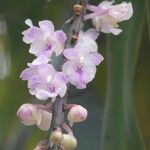
Rhynchostylis retusa
Foxtail orchid
Description
Source: leafsnapRhynchostylis retusa is a stunning orchid species native to Southeast Asia, including Thailand, Malaysia, and the Philippines. Commonly known as the foxtail orchid due to its long, slender inflorescence resembling a fox's tail, this plant is admired for its beauty and fragrance. The leaves are thin and elongated, reaching up to 30 cm in length. The flowers of Rhynchostylis retusa are fragrant and come in various colors such as white, pink, purple, or lavender. They bloom in clusters of up to 50 flowers on each inflorescence during the spring or summer months. This plant thrives in warm temperatures between 18-30°C (65-85°F) with high humidity levels of around 60-80%. It grows best in bright but indirect light with good air circulation. Rhynchostylis retusa can be grown on trees or mounted on slabs of wood using sphagnum moss as a growing medium. Rhynchostylis retusa is an easy-to-grow orchid species, making it suitable for beginners who wish to start cultivating orchids at home. With proper care and attention, this plant can bloom for several months each year, providing an impressive display of fragrant flowers that will delight any gardener or flower enthusiast.
Care Guide
💧 Water Every 7 days
The foxtail orchid, native to tropical regions, thrives in environments with high humidity and consistent moisture. It requires watering every two weeks. As an epiphytic orchid, it benefits from regular misting, which mimics its natural habitat. This practice encourages vibrant flowering and supports healthy growth.
What should I do if I give my Foxtail orchid too much or too little water?
Foxtail orchids can suffer from both overwatering and underwatering. When overwatered, the leaves of the orchid become limp and wrinkled, turn yellow or decay, and the plant generally fails to thrive. It is common for owners to assume that the plant needs more water when they see the leaves looking limp and shriveled, but adding more water only worsens the problem. In order to properly assess the situation, it is important to look at the roots. Healthy Foxtail orchid roots are silvery green, green, or white and feel firm, whereas overwatered roots appear mushy, limp, and brown or black. To rescue an overwatered Foxtail orchid, it is necessary to cut off any rotted roots using a sterile knife or garden shears and repot the plant using a new growing medium. It is best to avoid overwatering in the first place, as root rot can be difficult to treat. Therefore, it is advisable to be conservative with watering to prevent this issue from occurring. The symptoms of underwatering and overwatering in Foxtail orchids are similar, making it important to check the moisture level of the growing medium using a finger or moisture meter. If it is determined that the orchid is underwatered, the frequency of watering should be increased to bring it back on track. Checking the roots once again can help confirm the issue, as underwatered roots appear crisp, brown, and brittle, while healthy roots are pliable and green. Reviving a thirsty Foxtail orchid is relatively easy as long as there are still some healthy roots remaining. Trim off any dried up or dead root pieces that cannot be revived and repot the plant. Thoroughly watering the plant should lead to the revival of shriveled and limp leaves, which will start to firm up and look healthy within a week or two. If any leaves are too damaged to recover, they can be removed to make room for new growth.
How frequently should I water my Foxtail orchid?
To properly water your Foxtail orchid, it's important to note that you should do so when the potting mix is mostly dry, but not completely dry. The frequency of watering may vary depending on the environment, but during summer it's typically around once or twice a week, while in winter it can be as infrequent as once every 2 weeks.
How do I water a Foxtail orchid?
The Foxtail orchid is a unique plant that doesn't grow in soil like most other plants. To ensure its health, it's important to select the right growing medium. The container you use should have plenty of drainage holes. Foxtail orchid pots are designed specifically for this purpose, with a chunky potting mix that allows for good air circulation. Popular potting mediums for Foxtail orchids include bark, which drains well but requires more frequent watering, and sphagnum moss, which is lightweight and allows for less frequent watering but can lead to root rot if not managed carefully. When watering your Foxtail orchid, it's best to do it from below to avoid getting water on the leaves, stem, and flowers. Place the pot in a container of water for 10-15 minutes, making sure the surface of the sphagnum moss is wet. Ensure thorough draining before putting the plant back in its normal location, as sitting in water is not good for these plants.
☀️ Light Full sun
The foxtail orchid needs plenty of sunlight each day to stay healthy and vibrant. It tolerates moderate sun similar to the light conditions of its native habitat. Too much or too little light can impede its growth and vigor, so maintaining a proper balance of sun exposure is important for its well‑being.
What are the sun requirements for Foxtail orchid?
Foxtail orchid requires full sun, which means it should receive above 6 hours of sunlight daily, or partial sun, around 3-6 hours of sunlight. It's crucial to observe how sunlight moves through your garden to find spots that offer a balanced light environment. Adequate sun exposure is essential for the Foxtail orchid's growth and vitality. However, both overexposure and underexposure to sunlight can adversely affect its health.
How can artificial lighting benefit indoor Foxtail orchids?
For indoor Foxtail orchids, especially when natural sunlight is insufficient, artificial lighting can be a vital solution. It promotes faster, healthier growth by providing adequate lighting. LED lights are recommended due to their ability to offer specific wavelengths needed by plants. For full sun plants, 30-50W/sq ft of artificial light is needed; for partial sun plants, 20-30W/sq ft; and for full shade plants, 10-20W/sq ft. The artificial light source should be placed 12-36 inches above the plant to mimic natural sunlight, ensuring the plant receives 8-12 hours of light per day to mimic natural daylight hours.
What are the symptoms of light deficiency in Foxtail orchids?
Foxtail orchids can show several symptoms due to insufficient lighting, such as small new leaves, leggy or sparse growth, faster leaf drop, slower or halted growth, lighter-colored new leaves, and symptoms of overexposure like chlorosis, sunscald, leaf curling, wilting, and leaf scorching. These indicate that the plant is either not getting enough sunlight or getting too much, which affects its ability to photosynthesize and maintain overall health.
How can I provide adequate sunlight to my Foxtail orchid?
To ensure your Foxtail orchid receives adequate sunlight, gradually move it to a sunnier location until it gets at least 6 hours of direct sunlight daily. If indoors, use a south-facing window and keep curtains open. Consider using artificial lights for additional light if the plant is large or not movable. Outdoors, move your plants gradually to avoid sunburn. Remove any obstructions, such as trees, that block sunlight, or transplant smaller plants during their dormant period to a location with ample sunlight and good drainage. Note that parts of the plant affected by insufficient sunlight may not recover, but new growth will be healthy with increased light exposure.
🌡️ Temperature 20–41.1°C
The foxtail orchid is native to warmer climates and prefers temperatures ranging from 68 to 105.8 °F (20 to 41 ℃). During seasonal shifts, provide extra warmth in cooler periods to mimic its natural habitat.
What are the ideal temperature conditions for a Foxtail orchid?
Foxtail orchid thrives in warm environments, preferring temperatures between 68 to 105.8 °F (20 to 41 °C). In colder seasons, it's recommended to provide more warmth to mimic its natural habitat. During winter, if temperatures drop below 5°C, it's advisable to bring the orchid indoors, maintaining indoor temperatures above 20°C for optimal growth. Positioning the plant near a south-facing window ensures it receives plenty of sunlight. To help the orchid overwinter outdoors, ensure it's in a sheltered spot with sunlight exposure, and consider using a temporary greenhouse or wrapping material for extra protection against the cold.
What should I do if my Foxtail orchid is exposed to temperatures below its tolerance level?
If your Foxtail orchid experiences temperatures below its tolerance, especially below 5°C, and shows signs of water-soaked necrosis, wilting, or drooping due to exposure to temperatures below 1°C, you should trim off the frostbitten areas and bring the plant indoors to a warmer environment immediately. Place it near a south-facing window for sufficient sunlight and avoid placing it near heaters or air conditioning vents, which can cause excessive dryness.
How do I care for a Foxtail orchid during high temperatures?
During hotter months, especially when temperatures climb above 41°C, it's critical to protect Foxtail orchid from temperatures exceeding 45°C, which can halt its growth and lead to wilting leaves, increased susceptibility to root rot, and potential sunburn. You should trim away sunburned and dried parts and move the plant to a shaded location, away from the harsh midday and afternoon sun. Watering the plant in the morning and evening helps maintain moisture for both the plant and its surrounding environment.
💨 Humidity
🪴 Soil 6-7
🌱 Fertilizer
Proper fertilization is essential for the Foxtail orchid's health and appearance. Fertilize the Foxtail orchid in summer, repeating the treatment monthly throughout the season. Nutrients fuel growth and help maintain the plant's structures. Regular fertilization improves the Foxtail orchid's flower display, ensuring the best blooms.
Why should I use fertilizer for my Foxtail orchid?
Fertilizer provides the essential nutrients that your Foxtail orchid needs to grow and thrive. Plants in general take up nutrients from the soil to create new plant material and maintain their overall health. Specifically for the Foxtail orchid, fertilization is important to enhance the quality of its flowers. Since the flowers are the main attraction of this plant, most gardeners strive to ensure that they bloom at their best. Using fertilizer is a reliable method to help your Foxtail orchid produce the most beautiful flowers possible.
When should I fertilize my Foxtail orchid?
The Foxtail orchid has two main phases in a year. The first phase is the dormant phase, occurring in winter, where there is minimal new growth. The second phase is the active growth phase, happening in spring and fall, when fertilization is most needed. It is recommended to start fertilizing the orchid in spring and continue once a month until the end of summer. As fall approaches, you can decrease the fertilization rate.
When is it not a good idea to put fertilizer on my Foxtail orchid?
If you want to promote Foxtail orchid growth without causing root burn, it's important to adjust your fertilization routine based on the plant's growth cycle. During the spring and summer, when the plant is actively growing, extra nutrients are beneficial. However, in the fall and winter, when the plant enters its dormancy stage, it is best to stop fertilizing.
What kind of fertilizer does my Foxtail orchid need?
To achieve optimal growth for your Foxtail orchid, it is recommended to use a well-balanced fertilizer that contains the three main plant nutrients, with slightly higher levels of phosphorus. Another option is to improve the orchid's soil by incorporating organic materials like compost, worm castings, or manure. There are various types of fertilizers available, and most of them can be effectively used for your Foxtail orchid. However, the top choices are typically liquid or powdered forms. Regardless of the type of fertilizer you select, it's essential to dilute it and apply it while watering your Foxtail orchid.
How should I fertilize my Foxtail orchid?
Once you have found a suitable fertilizer and learned the ideal fertilization schedule for your Foxtail orchid, the next step is to learn how to apply it. The most reliable method is to mix your liquid fertilizer with water before applying it to the soil. Each fertilizer may have different directions on how to feed your plants, so it's best to follow the manufacturer's guidance. These instructions should include information on how to properly dilute the fertilizer to prevent overfertilization. Mixing your fertilizer in water is an easy process. Once it's mixed, simply pour the mixture into the soil where your Foxtail orchid lives.
🪴 Pot & Repot Every 2 years
When repotting a Foxtail orchid, select a pot that is slightly larger and has good drainage, ideally a clear orchid pot. Use a well-draining, orchid-specific potting mix that includes bark or moss. Carefully clean the roots and trim any that are dead or rotting. Repot after flowering, typically in spring or fall, water thoroughly, and place in bright, indirect light. Do not disturb the roots once repotted.
✂️ Pruning
The Foxtail Orchid is known for its distinctive, hanging flower spikes and thrives with light pruning. To encourage growth, remove any dead roots and leaves from early to late spring. This plant requires minimal maintenance, so avoid heavy pruning to maintain its health and promote future blooms. For more detailed care guidance, you can consult resources like the Royal Horticultural Society (RHS) and the American Orchid Society (AOS).
🌿 Propagating
🐛 Diseases & pets
☠️ Toxicity
Foxtail Orchids have medicinal purposes and are considered non-toxic. Your plant may even be used to treat wounds, cuts, and bruises.
Characteristics
- Plant Type
- Herb
- Life Cycle
- Perennial
- Genus
- Rhynchostylis
- Family
- Orchidaceae
- Hardiness Zone
- 10-13
- Mature Height
- 20 cm to 30 cm
- Mature Spread
- 20 cm to 30 cm
- Leaf Color
- Dark Green
- Leaf Type
- Semi-evergreen
- Flower Color
- Pink, White
- Flower Size
- 0.25 cm to 0.25 cm
- Bloom Time
- Summer, Early fall
- Planting Time
- Spring
- Harvest Time
- Late summer, Fall
- Native Area
- Nepal, Sri Lanka, India, Malaysia, Indonesia, Cambodia, Vietnam, Myanmar, Philippines, Bhutan, Bangladesh, Laos, Thailand, China